David bowie

Is Kanye West the David Bowie of his age? 

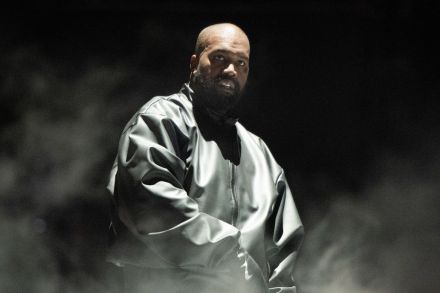
Kanye "Ye" West has been barred from appearing at London’s Wireless Festival by dint of having his temporary visa withdrawn. The move has generally been met with approval, save by those disappointed fans of his music whose pre-ordered tickets will now be refunded. “Kanye West should never have been invited to headline Wireless," said Prime Minister Keir Starmer. "This government stands firmly with the Jewish community, and we will not stop in our fight to confront and defeat the poison of antisemitism." Fair enough, many might say. Last year Ye released a single entitled "HH" (Heil Hitler) and declared himself a Nazi on social media. Ye has now made a series of groveling public apologies.
kanye west

The many David Bowies

Alexander Larman is the author of a biography of John Wilmot, Earl of Rochester, and of Byron’s Women. Reading Larman’s new biography of David Bowie, one gets the sense that this could have been the end of a trilogy, given all three men’s talent and excesses. In fact, Bowie once considered playing Byron in a movie. Larman’s focus in Lazarus is on Bowie’s career from the end of the 1980s through to his final works: the musical Lazarus and the album Blackstar, the artist’s last gift to his fans, released on his 69th birthday – two days before his death from liver cancer in 2016.

bowie

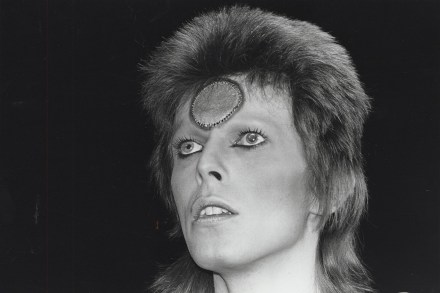
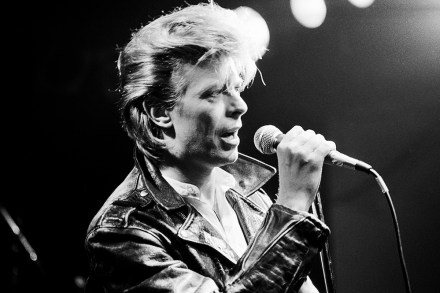
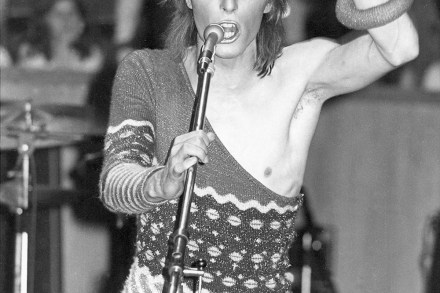
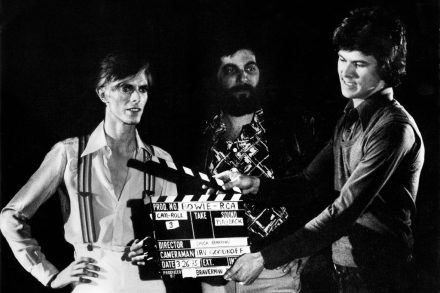
The golden years of David Bowie

This year marks the anniversaries of two of David Bowie’s most compelling and powerful albums: 1976’s Station to Station and 2016’s Blackstar. Given that they are often – rightly – described as Bowie’s crowning artistic achievements, amid severe competition from his other releases, they also have the intriguing fillip that both were originally released in January: a fortunate time for the musician, who was born on January 8, 1947, even if it was also the month in which he finally departed this Earth. Yet the comparisons between Station to Station and Blackstar, which came out 40 years apart, are far more pervasive – and persuasive – than the serendipity of their release dates.

david bowie

What is Travis Scott doing in The Odyssey?

As far as teaser trailers for summer blockbusters go, it takes quite a lot to make jaded audiences – or cynical critics – sit up and say, “What the hell?” But what’s exactly what the latest trailer for Christopher Nolan’s eagerly awaited The Odyssey has done. Not because it has featured a couple of new shots of Tom Holland’s Telemachus squaring off with Robert Pattinson’s villainous Antinous, or Matt Damon’s Odysseus participating in the bloody sack of Troy with his fellow Greeks, but because it introduces the most unexpected cameo of the year, possibly of the decade. Ladies and gentlemen, enter the latest feature of Nolan’s all-star cast: the hip-hop artiste Travis Scott, appearing in the somewhat unlikely role of a staff-beating herald.

travis scott

Cameron Crowe’s cringe magic

Cameron Crowe’s long-awaited memoir The Uncool can be read intertextually as the real Almost Famous. The Uncool is also about lush California summers, grief, the unwavering support of a mother, cool big sisters, and Almost Famous: The Musical, but when you peel back the pages like it's a vintage magazine, there’s an elegiac aroma. This is a crinkled love letter to a deceased paramour; in this case, the beating heart of rock journalism. Crowe treats writers such as Lester Bangs (“my heart was almost all Lester Bangs”) and Danny Sugerman with devotional reverence that is as uncool or “problematic” in 2025 as learning about sex from your mom in a laundromat and writing about it. Crowe’s lack of cool thus becomes the book’s artistic frame.

uncool

Loud luxury in London

If you count among the Anglophiles emerging from Downton Abbey: The Grand Finale misty-eyed, you might be interested to hear that London's cultural calendar is having a maximalist moment. Harking back to eras of pomp, excess and pouffy outfits, two exhibitions showcase icons who made extravagance an art form: David Bowie and Marie Antoinette. In South Kensington, the Victoria and Albert Museum is hosting Marie Antoinette Style, dedicated to the most fashionable teen queen in history. Across town, the David Bowie Centre in the brand-new V&A East Storehouse space (bigger than 30 basketball courts) reveals over 90,000 items from the singer’s archive.

london luxury

The closest look yet at David Bowie’s mind and imagination

What would David Bowie say? The much-missed musician – dead a decade next January – is the beneficiary of a new, bespoke space inside the Victoria & Albert Museum’s East Storehouse outpost. Although Bowie is by no means Britain’s most commercially successful rock star, he is surely its most interesting – and certainly the most chameleonic, making his legacy ripe for serious re-evaluation. Now, thanks to the David Bowie Centre, the curious public can get its closest look yet into the artist’s mind and imagination. And as a bonus, it’s free, too. The space is composed of one room with nine rotating displays showing about 200 items.

Hasn’t Salman Rushdie suffered enough?

I used to run into Salman Rushdie at London literary parties a couple of decades ago, before he became a US citizen in 2016 and largely made his life there afterwards. He was always charming and likable company, during the brief conversations that we had, and the worst that I would say of him is that he was all too aware of his own fame and reputation. Certainly, I was not the only one in a long line of admirers and acolytes wishing for a couple of moments with the great man, and Rushdie certainly paid rather more attention to the attractive women or girls than he did to the rather gauche young men who had read Midnight’s Children or The Satanic Verses.

David Bowie’s plastic soul: Young Americans at fifty

When the Puerto Rican guitarist Carlos Alomar first met David Bowie, he didn’t think a man could turn a whiter shade of pale. The singer looked emaciated; his complexion teetered on translucency, and weighing only 95 pounds, the only signs of life were a pulse and a mop of orange hair. It was the mid-Seventies, and Bowie was touring America deep in the throes of addiction — the “darkest years” of his life — surviving on a paltry diet of red peppers, cigarettes, milk and cocaine. Yet somehow, through the haze of these drug-fueled years, Bowie underwent a chameleonic reinvention of self and sound — and finally broke America. Bowie had cast a sheen of suspicion over America as an aspiring artist, even admitting to hating it initially.

david bowie

Bob Marley: One Love and the surefire success of music biopics

There is a strange rule in contemporary Hollywood that filmmakers ignore at their peril: biopics might be a popular dramatic form for directors, but they tend to be of little interest to audiences. In the past year alone, the likes of Napoleon, Ferrari, Maestro and Golda have all under-performed commercially, demonstrating that however accomplished the filmmaker (including the Oscar-nominated likes of Michael Mann, Ridley Scott and Bradley Cooper), it is nearly always a non-starter to attempt to persuade viewers to spend their $15 on watching someone’s life story for two hours at the cinema. Oppenheimer proved to be a rare exception — though that’s far from the only way in which Christopher Nolan is exceptional.

bob marley biopics

The Last Dinner Party’s Prelude to Ecstasy fizzes with wit and invention

I have lost hope in contemporary pop music. As someone who used to keep his finger on the pulse of new releases, and who went to gigs as often as I could, the absence of innovation has been one of the great disappointments of the past couple of decades. There really isn’t anything much out there, bar, of course, the sainted Taylor Swift. But ever since David Bowie’s death eight years ago (eight years...), the music industry seems to have been in a desperate downward spiral, where flair, originality and chutzpah are sorely missed. Surely it’s time that a new act could supply such things, complete with flute solos, songs sung in Albanian and an orchestral overture? No, I am not making it up.

last dinner party

Age is catching up with our much-beloved musicians

On the Who’s 1965 single “My Generation,” the band’s twenty-one-year-old lead singer Roger Daltrey half-sang, half-sneered, “Hope I die before I get old.” The song, written by the then-twenty-year-old Peter Townshend, has remained a classic for nearly sixty years, boasting both a fantastic tune and unforgettable lyrics. Yet even as the Who continue to tour the world — often in the company of that invaluable accessory for any self-regarding rock band, a full orchestra — it is now with self-aware amusement that the seventy-nine-year-old Daltrey and seventy-eight-year-old Townshend perform it.

musicians

A century of Bing Crosby

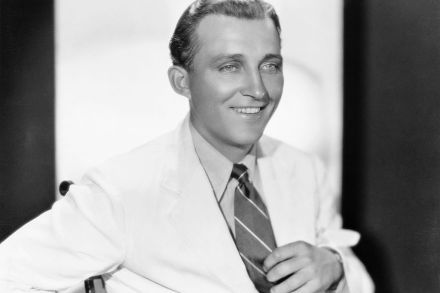
If, in the spring of 1923, you’d somehow found yourself in the tumbleweed junction of Spokane, Washington, you might have shaken the dust from your feet at the strange and magnificent Davenport Hotel. Still standing today, this vast folly, soaring up in the middle of town like a gaudily iced wedding cake, was evidently greeted by cries of disbelief upon its opening in 1914. In the rural west of the early twentieth century, the Davenport was the last word in luxury and refinement. The lobby was a work of art in itself, with lamps in alabaster shells mounted on a twisted bronze column in each corner, and an Italian marble fountain set under a chandelier that tilted at a slightly drunken angle, like one of those ghostly photographs taken onboard the wreck of the Titanic.

bing crosby

David Bowie is bigger than ever

On Sunday, November 10, 1991, the band Tin Machine played a gig at Brixton Academy in south London. Brixton then was far from the gentrified area it has become; it remained a hotbed of simmering social and racial unrest. The notorious riots of a decade before were still a recent memory, and those who ventured to the Academy did so in the knowledge that fights and aggravation were highly likely, especially after alcohol had been consumed. But if on-street scuffles were a price that gig-goers had to pay to see their musical idols, the world of Tin Machine was a much less happy one. At the beginning of the Nineties, David Bowie had to consider, for the first time since the success of the single “Space Oddity” in 1969, that he might be a spent force.

bowie

Arcade Fire: the last of the art-rockers?

After I saw the Canadian band Arcade Fire on tour in London in late 2010, I began my review of the gig by quoting Psalm 98: “Make a joyful noise unto the Lord, all the earth: make a loud noise, and rejoice, and sing praise.” My abiding memory of the evening was that it was fun. Despite the apparent solemnity of many of the act’s songs — several of which had been taken from their debut album, Funeral, and revolved around death and despair — the concert had a celebratory and upbeat aspect. It concluded (as virtually all of their shows had done) with a euphoric singalong of what has become their signature song, the cathartic “Wake Up.” A decade later, matters have changed. The world is in a considerably more anxious state than it was.

arcade fire

I’m turning Japanese

The history of late-20th-century Japanese pop music can seem like an impenetrable forest to western minds. But stare past the trees and there is light from a parallel universe. The Japanese Group Sounds records of the mid-Sixties (the Spiders, the Tempters and er, the Mops) were heavily influenced by the original moptops’ Budokan Temple show of 1966 and surf bands such as the Ventures. The university campus hard rock of Tokyo’s late-Sixties freak scene — Les Rallizes Dénudés, Flower Travellin’ Band, Speed, Glue and Shinki — and the lysergic rock soundtracks to Shuji Terayama’s revolutionary theater plays by the great J.A.

japanese

Marilyn Manson and the death of the bad boy

In a world gripped by Nineties nostalgia, everything old is new again. Bootcut jeans and birkenstocks are back; old Nickelodeon classic cartoons are being rebooted for a new generation. But the strangest renaissance in this throwback moment is a moral panic: Marilyn Manson, the creepy goth-rocker with a startling appearance and a voice like synthesized nails on a chalkboard, is once again up for cancellation. The difference is in who's doing the canceling — and that this time, it seems it might actually stick.  Once upon a time, back in the late 1990s, Manson was the guy whose albums you hid in your underwear drawer lest your parents find them and freak out. It wasn't just the music itself but the man who made it, and what he seemed to represent.

marilyn manson