Dan brown

Is Dan Brown finished?

From our US edition

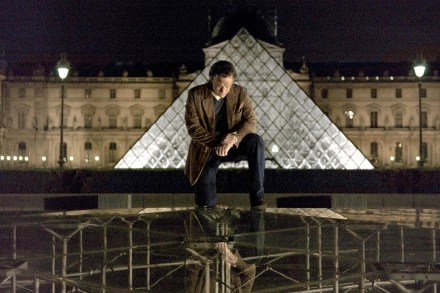
In a moment of modesty that he’s never quite been allowed to forget, Stephen King once declared himself “the literary equivalent of a Big Mac and fries.” This is self-deprecation taken too far. As the author of more than 60 books in a career that has spanned more than half a century, King’s writings have roamed over numerous genres: horror, most famously, but also mystery, suspense, science fiction, fantasy and a surprisingly dour brand of social realism. All are delivered in his trademark muscular prose, dappled with moments of stylistic brilliance. The real purveyor of literary junk food is surely Dan Brown, whose works of fiction mirror far more accurately the salt-rich, nutrition-free offerings of the hamburger giant than anything King has ever produced. If Mr.

Brown

The comfort of curling up with a violent thriller

Tsundokists of the world, unite! You have a new champion in Lucy Mangan, whose follow up to her entrancing memoir of childhood reading (Bookworm) is an unabashed paean to the pleasure of acquiring more books than you could ever possibly read in your life. That does not stop Mangan from trying, and this is a whirlwind tour through her voracious, encyclopaedic adult reading habit, one that not so much offers evidence of ‘how reading shapes our lives’, but how life shapes our reading. The ‘forced march’ of patriarchal school set texts in Mangan’s teens is relieved when she inherits a Maeve Binchy doorstopper and first encounters a book that is ‘unapologetically about women’.

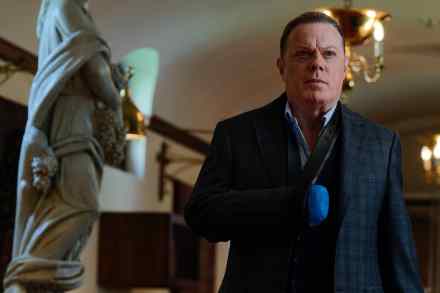
Eddie Izzard is so bad I’m hoping he gets dismembered: Sky’s The Lost Symbol reviewed

If it weren’t for this job I sometimes wonder whether I’d even bother watching TV at all. This mood strikes me particularly in those weeks when I find myself casting round for anything new and vaguely interesting to watch and I end up in front of something as epically dire as Sky’s new Dan Brown adaptation The Lost Symbol. Brown’s hero Robert Langdon, whom we first met on screen in the The Da Vinci Code, is like Indiana Jones with a charisma bypass. Remember that wonderful scene in the first Indie movie where hunky Harrison Ford is giving a lecture to some besotted female archeology students, and one girl closes her eyes to reveal that she has written ‘Love’ on one eyelid and ‘You’ on another?

The codes and codswallop surrounding Leonardo da Vinci

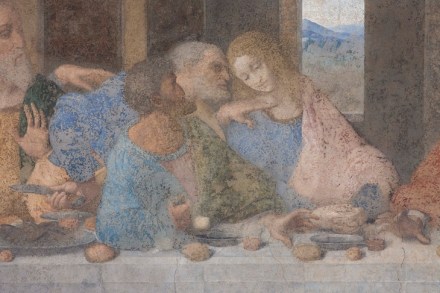
‘If you look at walls soiled with a variety of stains or at stones with variegated patterns,’ Leonardo da Vinci advised fellow painters, ‘you will therein be able to see a resemblance to various landscapes graced with mountains, rivers, rocks, trees, plains, great valleys and hills in many combinations.’ By an irony of history, Leonardo (1452–1519) has come to resemble that stained wall: a Rorschach blot in which viewers discern phantoms of their own imagination. This is, of course, to some extent the fate of all celebrities, and Leonardo was the first true artist celeb — the forerunner of a long line descending through his younger contemporaries Michelangelo and Raphael down to Picasso, Andy Warhol and Damien Hirst.