Dairyproducts

Nothing rivals a traditional Chinese banquet for opulence

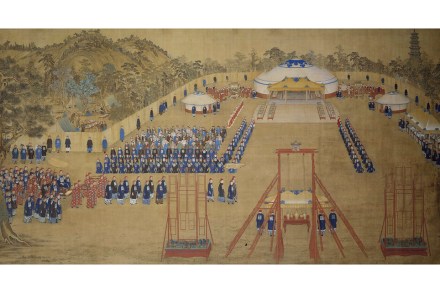
In February 1985 I had the good fortune to be a guest in Hong Kong at the Mandarin hotel’s 21st birthday celebration, a lavish three-day reconstruction of the sort of imperial banquet given during the Qing dynasty by the Kangxi emperor (1654-1722) and his grandson the Qianlong emperor (1711-1799). Kangxi started the custom of banqueting during his tours of southern China – he made six between 1684 and 1707. These provincial feasts were relatively informal affairs, often held in a tent, quite different to the stifling protocol of the imperial court at Beijing, and combined some aspects of the ruling Manchu ‘Man banquet’ with the native Han Chinese ‘Han banquet.’ The full three-day Manchu-Han feast was mostly restricted to Beijing.
Is almond milk damaging the dairy industry?

From our US edition

The Food and Drug Administration (FDA) just released draft guidelines concerning the definition of “milk,” saying that producers of alternative milk beverages derived from plants and nuts (non-mammals) can keep calling their products “milk” because, basically, they’ve been doing it for a while and the public likes it that way. The draft guidance explains “that the public already refers to plant-based milk as milk while also acknowledging the plant source it comes from, such as ‘almond milk’ and ‘soy milk,’” according to Fox Business. “Consumers reportedly favor the term ‘milk’ over plant-based ‘drink,’ ‘beverage’ or ‘juice,’ according to internal and third-party focus groups the FDA cited.” Not everyone agrees with the FDA.

How scary is dairy?

For tens of thousands of years, humans have been domesticating other mammals — cows, buffaloes, sheep, goats, camels, llamas, donkeys, yaks, horses — and keeping them for their milk. This has generated myriad products, from yoghurt and buttermilk through butter and cheese to toffee and ice cream, in many varied, culturally specific and resourceful forms. A sign of the elemental importance of this foodstuff is that our galaxy is called the Milky Way — and indeed the word ‘galaxy’ is derived from the Greek word for milk, gala. In Ancient Greek mythology, the Milky Way was formed when Hera, the goddess of womanhood, spilled milk while breastfeeding. Each drop became a speck of light, known to us as a star.

dairy Milk! A 10,000 Year Food Fracas by Mark Kurlansky reviewed