Cyber crime

Iranian hackers breach the gates of Kash’s Valhalla 

From our US edition

“See you in Valhalla” is how Kash Patel said farewell to Charlie Kirk. Unfortunately, it now seems that Patel’s own sanctum has now been breached. Iran-aligned hackers have broken into the FBI director’s personal email inbox and released the contents online. What did they leak? The un-redacted Epstein files? The truth behind the Kennedy assassination? Not quite. None of the 300 purloined emails were even sent during Patel’s time at the FBI. The hackers, no doubt cackling manically while doing so, instead released according to the Guardian: a series of personal photographs of Patel sniffing and smoking cigars, riding in an antique convertible and making a face while taking a picture of himself in the mirror with a large bottle of rum. Take that!
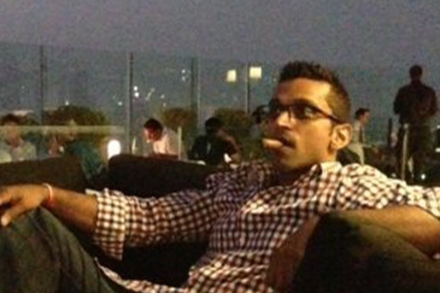
Kash Patel

Don’t surrender to soulless self-checkouts

A friend runs a small factory employing 60 skilled workers. He exports industrial components worldwide, competing with Europe for quality and China for price: a model enterprise for the productive economy we wish we had more of. Earlier this year, his top concerns were the hike in employers’ national insurance (costing the equivalent of several new apprentices) and the advent of Donald Trump’s tariffs. Since then, he’s been hit by a cyber-attack – and his story, a miniature of Jaguar Land Rover’s, is a parable for business everywhere. Like most companies today, this one is paperless: IT-dependent in everything from product design to accounting and HR. It also happens to hold ample cash, which hackers could have spotted from Companies House filings.

What was the first cyber attack?

19th-century cyber crime M &S and the Co-op have suffered cyber attacks. Cyber crime didn’t quite begin with the internet. The first record of an attack on a communications network was in the city of Tours in 1834, where the Blanc brothers traded government bonds in Bordeaux and bribed the operator of the country’s telegraph system. He placed extra characters in the telegraphs before they were sent on to Bordeaux, providing secret messages that could be read by the Blancs watching the receiving station in Bordeaux. Unlike the M&S and Co-op attacks, however, the ‘hack’ went unnoticed for two years.  All change Friedrich Merz should become only the 11th Chancellor of Germany since 1945.  How does the turnover of leaders compare with other democracies?