Culture

The two faces of Polish rebellion

From our UK edition

The narrowness of President Andrzej Duda's victory in this weekend's Polish presidential elections, where he defeated Rafał Trzaskowski, the Mayor of Warsaw, by less than 2 per cent, was God's gift to opinion commentators. What with Brexit, Trump et cetera we can write 800-1200 words about a nation being ‘divided’ and ‘polarised’ in our sleep. Why even write different pieces? Just shift the names around and you are golden. The problem with that kind of article is it often obscures national distinctions. In Poland, for example, President Duda's Law and Justice Party – unlike the Conservatives and the Republicans – is the more redistributionist of the two leading parties.

It’s time to speak out against cancel culture

From our UK edition

Our cultural institutions are facing a moment of trial. Powerful protests for racial and social justice are leading to overdue demands for police reform, along with wider calls for greater equality and inclusion across our society, not least in higher education, journalism, philanthropy, and the arts. But this needed reckoning has also intensified a new set of moral attitudes and political commitments that tend to weaken our norms of open debate and toleration of differences in favour of ideological conformity. As we applaud the first development, we also raise our voices against the second. The forces of illiberalism are gaining strength throughout the world and have a powerful ally in Donald Trump, who represents a real threat to democracy.

How not to run a literary festival

From our UK edition

Gstaad A friend of mine who lives here wants to start a literary festival and asked me if I had any advice for him. He’s a nice fellow and very friendly with my daughter, but he’s also the type who, had he been on board the Titanic, would have thought that the engines had stopped in order to take on some ice. In other words, he’s a naive man who believes in literature and writers and doesn’t realise that both commodities are unknown and probably deemed dangerous up here among the glitterati. Perhaps I exaggerate, but I have yet to see any lovers of literature among the new arrivals: pushy, hungry bankers from Geneva, newly minted Brits who can’t pronounce the letter ‘H’, vulgar short and stubby types from the Gulf, and women-abusing Saudis.

Privatisation is the best option for the South Bank Centre

From our UK edition

I must have written about this subject 100 times in 30 years and I’m still having to restate the bloody obvious. London’s South Bank Centre, which has just gone bleating to the government for more money, is the biggest subsidy guzzler in the country and the despair of the rest of British arts. The South Bank receives £19 million a year from the Arts Council, on top of the many millions that go to each of the so-called ‘resident ensembles’ that perform within it. What it does with the money is anyone’s guess because, as far as the eye can see and the nostrils can smell, the South Bank is now a fast-food mall with an occasional classical concert buried within it. How did it get so bad?

Why whales sing: it’s a question of culture

From our UK edition

A few years ago I was sitting in Carl Safina’s yard on Long Island, drinking tea, occasionally patting a dog who was lying at my feet. Safina was talking about the magnanimity of wolves. A wolf in Yellowstone National Park, known as Twenty-One, never lost a fight, and unlike most wolves, never killed a vanquished opponent. Park rangers called him the perfect wolf. ‘When a human releases a vanquished opponent rather than killing them, in the eyes of onlookers the vanquished still loses status but the victor seems all the more impressive,’ Safina said. ‘Onlookers might feel it would be desirable to follow such a person, so strong yet inclined towards forbearance.’ Safina is not some woo-woo merchant, or a new-world mist-dweller. He does proper science.

Theatre closures are not necessarily a disaster – they offer a chance to remake culture

From our UK edition

Theatre stands on the brink of ruin, says Sonia Friedman. And if you believe Twitter, so is my career. I'm apparently 'a disgrace to my profession'. 'Not fit to do my job'. I wear 'grubby' oversized T-shirts, dare to have 'an anagram for a name' (sorry for being foreign) and possess the face of an 'etiolated ferret' and, naturally, for all this, I should be fired.  Leaving aside for a moment my funny name, ferrety face and baggy clothes (all criticisms not without some merit), what was my crime? To suggest that theatre being on the brink of ruin might not be such a disaster. That tongue was firmly lodged in cheek was of course wilfully overlooked. Hey-ho. This is Twitter. Leaping on the most uncharitable interpretation of a tweet is the default setting.

The best “unwoke” comedy to watch during lockdown

From our UK edition

Comedy is booming during lockdown. The clubs may be closed, indefinitely it seems, but the internet has come into its own. And the backlash against the liberal consensus is gathering pace. Here are seven of the best unwoke comedians. All are available on YouTube. The snag is that each clip is preceded by an advert for Monday.com or a bossy lecture from a web entrepreneur eager to enrol you in a free seminar which will make you a billionaire. Indian-born Sindhu Vee makes jokes about her Danish husband which might be interpreted as racist. ‘His entire parenting method is, “Darling, please be very happy, here’s some Lego.”’. When Vee got a British passport she was infuriated that he hadn’t followed suit.

The best crime novels to read during lockdown

From our UK edition

For those with work to do and kids to homeschool, the idea that you might have lots more time on your hands amid the coronavirus lockdown probably seems like a bad joke. But for those who have a bit of extra reading time to make the most of, here are five crime fiction series to help pass the lockdown hours: The LA Quartet, James Ellroy James Ellroy L.A. Confidential (Cornerstone) James Ellroy is well deserving of his status as the pre-eminent crime fiction writer of our times, and for those yet to discover the demonic delights of his oeuvre, the original ‘LA Quartet’ is definitely the place to start.

The best underrated shows on Netflix

From our UK edition

With over 160 million subscribers – which ranks somewhere between the population of Bangladesh and Nigeria – Netflix’s biggest shows command staggering audiences worldwide. But the streaming platform has also snapped up the rights to hundreds of lesser known series, some of which are just as good. Here’s our pick of the undiscovered gems: Rectify https://www.youtube.com/watch?v=rd0_nNkdi0c When it comes to sheer critical acclaim, few shows can match Rectify. From the moment this slow-burn crime drama debuted in the US in 2013, it was praised to the hills by television aficionados. Yet even after four successful seasons, and an excellent finale, the show remains relatively unknown compared to the likes of Breaking Bad and The Wire.

The best crime series to watch on Netflix

From our UK edition

It’s no secret that people are fascinated by crime. Nor is this a new phenomenon: writing in 1946, Orwell noted that murder gave a ‘great amount of pleasure to the public’, and proceeded to identify the common features of the gruesome and grisly crimes that gave the British most satisfaction. Psychologists, meanwhile, say that murder in particular is not only ‘a most fundamental taboo’ but ‘also, perhaps, a most fundamental human impulse’. This seems plausible. We all know those people who, stuck in a queue or sat in an interminable meeting, seem moments away from indulging that impulse. At any rate, lovers of the lurid and the macabre are spoiled for choice in the streaming age.

Why I regret inventing the innocent smoothie brand

From our UK edition

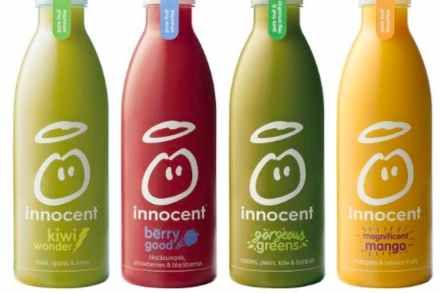
We all have secrets which, when we remember them, shroud us in shame. I’m afraid I have a particularly dark one that I’m forced to remember almost every day of my life. Twenty years ago, I was a working in a big London ad agency with a smart and ambitious young man named Richard Reed. I liked him a lot and it was clear that he wouldn’t be constrained by the advertising industry forever. Sure enough, he came to me one day and announced that he and some friends were starting a business, making fruit smoothies called ‘Fast Tractor’. Richard explained that they’d chosen Fast Tractor because the tractor that transported the fruit from field to fruit crusher was fast. Or something.

In praise of cultural elitism

From our UK edition

At present we have a series of ‘culture wars’ over a wide range of issues — race, gender, sexuality, power and privilege. But the one culture war we don’t have any more is over culture. Yes, we fight about the ideological messages of literary texts, but not about matters of personal taste. We scrutinise and interrogate works of art for their latent — or blatant — sexism and racism. Often what matters is what the work in question says about marginalised groups — not what it says about us as cultured individuals. It hasn’t always been so. There was a time when we judged people, labelled them, loved them or hated them because of their taste in literature, art and even pop music.

When did calorie counting become offensive?

From our UK edition

An author of spoofy, light-hearted mysteries, my friend Ruth Dudley Edwards has had unusual difficulty completing her new novel, Death of a Snowflake. The trouble isn’t lack of material —she’s spoilt for choice — but real life outpacing satire. As we now live in a world of ‘you could not make this stuff up’, readers looking for a laugh are spurning fiction in droves in preference for the newspaper. To wit, exam administrators rather than students are now tested. Stirring widespread consternation this month, a GCSE English exam cited a passage from H.E. Bates’s short story ‘The Mill’, which in due course —not in the passage itself — portrays a rape.

Diversity means culture, not race 

Americans have long thought that they are no different from other people, only freer and more fortunate. We pride ourselves on living independent lives in which we work out our personal destiny. We wish that everyone had these opportunities. But that individualist style of life is far less universal than most people think, and today it has come into question both at home and abroad. To recognize and address the reality of cultural difference is the leading challenge of our time. Individualism means daring to pursue our own goals and values. That culture is unique to the Western world: Europe and its offshoots, including America. It made Europe and then the United States unusually rich and powerful, so that they came to lead the world.

culture

We are all self-haters now

From our UK edition

As an American coming of age at the fag end of the 1960s, I celebrated self-loathing. Everything about the United States was shameful: its shallow consumerism, its environmental rapacity, its worship of money, its racism, its political assassinations, its catastrophic involvement in Vietnam. Everything about the American past was shameful, too: slavery, the massacre of Native Americans, the arrogance of manifest destiny. No surprises. At the time, these views constituted a set menu. Yet amid all this wallowing in ignominy, did I feel, myself, ashamed? Nah. Sure, I claimed to. But the sensation of genuine disgrace is soul-destroying. Drenched in actual shame, you don’t want to leave the house — and I was eager to hit the pavement with placards.

‘Brexit shows democracy doesn’t work’: An interview with Titania McGrath

From our UK edition

Titania McGrath, 24, is a radical intersectionalist vegan activist, feminist slam poet and the author of Woke: a Guide to Social Justice. She won’t meet me in person for security reasons – she fears doxxing – or send me a photograph of her face. Rather, she consents to an interview by email from her gîte in the Buis-les-Baronnies district of France, where she is “working on a new anthology of slam poetry which will end the patriarchy” in the nude. This is from her poem Cultural Appropriation: Plunderbeast of history. My ancestors scream in your hollow wigwam, Ghostrolling in the ectoplasm of your hate. I staunch the flow of simpering tribal sauce, A digital sombrero clings deafblind To a face falsely smeared in a coalish hue.

Universities should resist calls to ‘decolonise the curriculum’

From our UK edition

Meghan Markle has reportedly backed calls to ‘decolonise the curriculum’. This campaign to promote ethnic minority thinkers in place of 'male, pale and stale' academics also has support from the Labour party. Angela Rayner, shadow education secretary, has said that 'like much of our establishment, our universities are too male, pale and stale and do not represent the communities that they serve or modern Britain'. If Labour comes to power, Rayner promised to use the Office For Students to change things. But this move to ‘decolonise the curriculum’ is in fact a big mistake. Firstly, the campaign conjures up images of dusty old men engaged in an unconscious conspiracy to ensure ‘non-western’ worldviews are stamped out.

Girls from the black stuff

From our UK edition

‘They did not look like women, or at least a stranger new to the district might easily have been misled by their appearance, as they stood together in a group, by the pit’s mouth.’ As opening sentences go this is a cracker, but few modern readers of Frances Hodgson Burnett’s That Lass O’Lowrie’s get far beyond it because the novel’s characters speak in a Lancashire dialect that makes Mark Twain’s Huck Finn sound like a Harvard preppy. In real life, though, it wasn’t the Lancashire pit girls’ lingo that put contemporaries off so much as their costume.

There will be blood | 13 September 2018

From our UK edition

For the past few decades, admirers of video-games have every couple of years mounted a new attempt to persuade the wider arts-loving public of the form’s merits. Look, they say, games are not all about shooting people in the face! They are a dynamic fusion of animation, architecture, intellectual challenge, music and drama! They can be political and subversive! This is true, and yet somehow it never catches on. Will a new exhibition at the V&A enjoy any greater success? You walk through a series of large black rooms with giant screens that appear to be floating through the air. Along the walls are ranged game designers’ working notebooks, and concept art for the characters and landscapes, beautifully rendered in inks and watercolours.

Why the BBC weather forecasts wind me up

From our UK edition

One of George Santayana’s most famous dicta is that ‘To be interested in the changing seasons is a happier state of mind than to be hopelessly in love with spring.’ This may be a metaphor for life, but it is also literally true. It matters in countries such as ours, where no season is so extreme that it cannot be enjoyed. If you agree with Santayana, you will be irritated by our BBC weather forecasts, which misrepresent the weather as a constant, and generally losing, battle to get warmer. In their language, temperatures are forever ‘struggling’ — always to rise, never to fall.