Culture

The snobbish attacks on Nadine Dorries

From our UK edition

I see the establishment has a new sport: mocking Nadine Dorries. They really do hate her. Or rather, they love taking the mick out of her. She looks drunk! She only has one book on her shelf! She gives car-crash interviews! She wouldn’t know culture if it bit her on the behind! You don’t need a PhD in class studies to work out what’s motoring this frenzied Nadine-bashing: classic, old-fashioned snobbery. You know a political trend has taken off when it finds its way even on to Instagram, the only social media I use. When even this normally peaceful virtual world of cats and selfies is invaded by political memes, something’s afoot. The Nadine memes have come thick and fast. There’s a shot of her looking angry on Channel 4.

The Netflix generation has lost its grip on history

From our UK edition

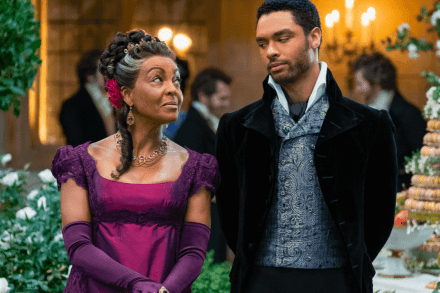
The first thing you notice about Bridgerton, Netflix’s big winter blockbuster set in Regency England, is how bad it is: an expensive assemblage of clichés that smacks of the American’s-eye view of Britain’s aristocratic past. The dialogue is execrable, the ladies’ pouts infuriating. But bad things can be good, especially when it comes to sexy period romps. Bridgerton is no different. The story follows the elder children of the Bridgerton family as they look for love in a utopian sprawl of courtly landscape and sociality.

The death of literature

The greatest men make the greatest mistakes. One thinks of the late John Lukacs, the Hungarian-American historian who claimed that the age of the book is at an end. That is far from being the case, the electronic book having failed to drive the print version to extinction as enthusiasts had predicted. Indeed, the continuing flood of printed and bound books remains among the greatest threat to books today — good books, that is, books worth an intelligent man’s time.

literature
migrants

When migrants come, their culture does too

The challenge of integrating immigrants from the non-western world is not new to Europe. But a large influx of new migrants over the last decade, and a significant increase in harassment and sexual assault against women across multiple European countries, make it one that Europe can no longer avoid addressing. This story has its origins in the decades of economic recovery after World War Two, when many European countries faced a growing worker shortage for industry work. ‘Guest worker’ programs were created, notably in Germany, on the assumption that such workers would return home. But many workers preferred to stay in Europe and pursued family reunification. Jobs and welfare entitlements made Germany preferable to Turkey, France preferable to Algeria.

When did postmodernism begin?

From our UK edition

There’s a scene in Martin Amis’s 1990s revenge comedy The Information in which a book reviewer, who’s crushed by his failures and rendered literally impotent by his best friend’s success, is sitting in a low-lit suburban room beside a girl (not his wife) named Belladonna: ‘She was definitely younger than him. He was a modernist. She was the thing that came next.’ Stuart Jeffries argues in his new book that the thing that came next was in fact a thing that started a couple of decades before Amis wrote The Information. In Jeffries’s telling, postmodernity can be dated to 13 August 1971, when Richard Nixon held a closed-door meeting that led to America’s abandonment of the Bretton Woods policy of gold-backed currencies.

The mind virus killing academia

From our UK edition

We lost a giant last month with E.O. Wilson’s passing. A man who stood on Darwin’s shoulders, Wilson had that rare distinction of inspiring a whole discipline in the form of evolutionary psychology. The great sense of loss did not seem to be shared by Scientific American, however, which soon afterwards put out a piece reflecting on the ‘complicated legacies of scientists whose works are built on racist ideas’. Among the ‘problematic’ aspects of Wilson’s work, the author argued, was the ‘descriptions and importance of ant societies existing as colonies’. This was ‘a component of Wilson’s work that should have been critiqued’ because ‘context matters’.

Most-read 2021: The Netflix generation has lost its grip on history

From our UK edition

We're closing the year by republishing our ten most popular articles in 2021. Here's number four: Zoe Strimpel writing in February about how popular portrayals of the past are being changed to fit the present.  The first thing you notice about Bridgerton, Netflix’s big winter blockbuster set in Regency England, is how bad it is: an expensive assemblage of clichés that smacks of the American’s-eye view of Britain’s aristocratic past. The dialogue is execrable, the ladies’ pouts infuriating. But bad things can be good, especially when it comes to sexy period romps. Bridgerton is no different. The story follows the elder children of the Bridgerton family as they look for love in a utopian sprawl of courtly landscape and sociality.

Why we need bullfighting

Which US state will be first to legalize bullfighting? OK, I need to qualify the question. A few bloodless corridas were held in Nevada in 2009, and some Portuguese-style bullfighting — again, bloodless — is permitted in California, legally classed as part of religious tradition. It won’t stop there, though. A friend in California breeds fighting bulls for sale to the Mexican market (bloodlines matter more than almost anything else to aficionados, each breeder seeking to stamp his beasts with his own aesthetic). My friend, the son of Mexican immigrants, is convinced it is only a matter of time before the law changes — probably through a referendum. ‘But we don’t want to win with 50 percent plus one. We want a big enough margin to settle the argument.

bullfighting

When the past becomes a page-turner: our pick of the best history books

From our UK edition

'May you live in interesting times’. So the Chinese curse goes, and we undeniably live in interesting times, alas. But that doesn't mean the past has lost any of its allure; indeed, quite the opposite. Right now, it's just the tonic we need. If you found history dull at school, being merely an endless parade of facts and heavy-handed analysis, then you are the perfect potential reader for these superb examinations of past eras by some of Britain's best popular historians.  Here are half a dozen of our favourite page-turning history books, guaranteed to have you rapt and astonished at the revelations therein. Dan Jones – The Plantagenets (William Collins, £10.99) Perhaps the most popular new historian of our generation is the medieval writer Dan Jones.

The 20th century told in 10 films

From our UK edition

Cinema came of age in the 20th century and documented that epoch in all its trials and tribulations. Movies are for the most part escapist confections but they can also reflect our world back to us. To learn about the major events of the last century, it is sometimes as useful to turn to a film as to pick up a book. The following are ten movies that tell key chapters of the 20th century. The Great War, 1917 (Sam Mendes, 2019)  https://www.youtube.com/watch?v=gZjQROMAh_s World War I is the harder of the two world wars to make a movie about. It was not a good war, easily rendered into a Hollywood morality play about monstrous Germans, cruel Japanese, plucky Brits and heroic Americans.

In defence of audiobooks

From our UK edition

A certain stigma has attached itself to audiobooks. To the old school bibliophile, they are the literary equivalent of pre-chewed steak. The sceptics may have a point. After all, reading is tiring for the same reason that chewing is - work is being done. The brain is just a lump of clever fat, of course, rather than bunched muscle, but it still uses up some 20 per cent of the calories we consume and so it shouldn’t really be surprising that we get tired reading. Taking the sequenced squiggles on the page and converting them into the architecture of a story, a philosophy or a verse, is hard. Children find it hard, students find it very hard and the vast majority of adults find it gets harder and harder as time goes on. This is bad news for books.

The Florence Nightingale museum has been abandoned

From our UK edition

The Florence Nightingale Museum is unwell. Just as the government announced that Nightingale hospitals were being ‘reactivated’ to cope with the surge in coronavirus cases, the museum’s Director David Green also had something important to say. To prevent the museum becoming financially insolvent, their galleries are closing indefinitely. Any attempt to reopen in the coming months would just be ‘prolonging the inevitable’. I hope the Prime Minister is aware of this irony. He’s certainly keen to highlight the Lady with the Lamp’s legacy.

10 films to banish the January blues

From our UK edition

At the best of times, January is a depressing month. Everyone is feeling poor and bloated after the Christmas extravaganza, and the days are still short and cold, with the nights drawing in far too early. Nobody has ever said ‘I’m really looking forward to January’. Which is why, with the spectre of illness and infection still stalking the land, the best thing that we can do is to stay at home with some of the most cheering films that we can find, and hope to banish the January blues that way. Of course, everyone enjoys a whacky comedy, or a gripping thriller, and they definitely have their place. But these films represent some of the most uplifting and purely enjoyable examples of cinema that we’ve seen over the past years.

Ten films for New Year’s Eve

From our UK edition

New Year’s Eve is bound to be less brash this year – some would ever say melancholic. Strangely many classic New Year movies tend to bend towards a sense of melancholy amid the celebrations, most memorably Billy Wilder’s classic comedy-drama The Apartment (1960). That film at least has a hopeful ending. Unlike say Sunset Boulevard (1950), Splendour in the Grass (1961), Rosemary’s Baby (1968), The Godfather Part II (1974) and especially Looking for Mr Goodbar (1977). Still, things perk up in more recent pictures set on New Year’s Eve; here’s a selection to see 2021 in with; some good, some so-so, and some, well…not so great: About Time (2013) – Amazon Prime & Netflix https://www.youtube.com/watch?

The best heist films to watch

From our UK edition

One of the first films ever produced, 1903’s The Great Train Robbery, revolved around a robbery of a steam locomotive train, and ever since then the genre has continued to be one of the most enduring in cinema. It isn’t hard to see why. The core elements of the heist film are some of the most solidly pleasurable devices in big-screen entertainment. They often consist of the wily and charismatic veteran thief, putting together a crew for a ‘last job’; a love interest who is either unaware of his or her plans or an enthusiastic participant in them; a supporting cast of various degrees of eccentricity or unreliability; an implacable nemesis, whether a lawman or a rival; thrilling action scenes; and exotic locations.

Seven films to help you escape

From our UK edition

With the November shutdown and talk of Christmas restrictions, you could be forgiven for wanting a good dose of escapism right now. If that’s you, here’s our guide to the best films to watch when you’re feeling fed up and want a break from it all: North by Northwest (1959) https://www.youtube.com/watch?v=Fx0QuZJVTFE Preserved by the United States Congress as a film of cultural significance, Hitchcock’s 1959 spy caper has been dazzling moviegoers for much of the past century, currently holding an enviable 99 per cent approval rating on Rotten Tomatoes. And quite frankly, its praises have been sung more than enough. Having said that, it’s worth noting that this classic sparkles just that little bit more during lockdown.

Ten underrated thrillers

From our UK edition

As we are now well into the unwanted Lockdown sequel and winter approaches, time perhaps to enjoy an enforced home cinema experience with a selection of movie thrillers that you may have missed the first time round. Titles range from big budget star vehicles to smaller scale pictures that introduced us to some of the possible on and off-screen icons of tomorrow. The Coldest Game (2019) – Netflix https://www.youtube.com/watch?v=12DftzVD2Gg I came across this Polish-produced Cold War thriller one night when searching for movies similar to Bridge of Spies (2015).

The best Scandi Noir to watch this winter

From our UK edition

With the dark evenings rolling in and the headlines sounding gloomier than ever, what better way to enter winter than by getting stuck into a good Scandi noir? Once the preserve of late nights on BBC Four, the genre has become a bankable success for streaming services - and a source of friendly(ish) competition between the Nordic nations. Here are eight of the best recent offerings currently available on Netflix: Bordertown https://www.youtube.com/watch?v=DjOFzeVynVY Brooding crime drama Bordertown has attracted praise from such luminaries as horror supremo Stephen King, as well as smashing viewing records in its native Finland.

From Cool to Cringe: what’s happened to American culture?

Back in March, around 4,000 years ago, the world was ending. Plague swept in from the east like a horde. Clam-tight lockdowns, unthinkable even days before, were announced everywhere. Who could save us? On March 18 our prayers were answered. An honor roll of Hollywood bluebloods took action. Assembled by Wonder Woman herself, Gal Gadot, they created a video montage cover of John Lennon’s masterpiece — yes! — ‘Imagine’, which she posted — thank goodness! — on Instagram. ‘We’re all in this together,’ said Gadot’s expensive oval face, and, in a sense, she was right. Will Ferrell and Mark Ruffalo, Sia and Zoë Kravitz, Norah Jones and Amy Adams: they were all in this big wet bathful of tears together.

cool cringe

12 items to stockpile for a No-Deal Brexit

From our UK edition

When you hear the word ‘stockpiling’, the first thought that pops into your head is probably the image of forest-dwelling folk in remote reaches of the US, usually bearded, always armed, with hunting vests, baseball caps, a few tonnes of canned food buried beneath their shack and enough kerosene to defrost Svalbard. Yet with the prospect of a hard Brexit edging ever closer, stockpiling has become a major pastime of businesses across the UK. The Economist have set aside 30 tonnes of paper to print their magazine, whilst Majestic have secured up to 1.5 million bottles of wine (should the worst happen, I know which warehouse I’ll be looting). Medicines and food are also being stored in bulk.