Culture

The feminist case for naming names in sexual assault cases

From our UK edition

Google ‘Mark Pearson’ and the first thing you will learn about the 51 year-old artist is that he was accused of a sex attack. You can read all about how at Waterloo Station Pearson supposedly sexually assaulted a woman before striking her.  Then, if you have time, read on: and you’ll also discover this never happened. That a jury, shown CCTV footage proving the incident never took place, acquitted Pearson this week. Yet while now, and perhaps forever, Pearson’s name will be linked to a crime he did not commit, what we will never know is the name of the women who falsely accused him.
Introducing the Timothy Garton Ash prize for European writing

From our UK edition

Events in Europe are unfolding rapidly, and we at The Spectator are looking for writers living abroad who would be interested in contributing occasionally to the magazine and our website. So we’re setting up a writing competition: the Timothy Garton Ash prize for European writing. It will go to the best original essay from any country in Europe, which will be published both in the magazine and online. In 1978, Alexander Chancellor was looking for someone to cover events in Europe - someone actually living out there, rather than the many eloquent writers in London who knew what these countries were like years ago. Things were changing too fast, Alexander thought: The Spectator needed a new voice. Someone who could report what he actually saw.

Why is there one rule for badgers, and another for mosquitoes?

From our UK edition

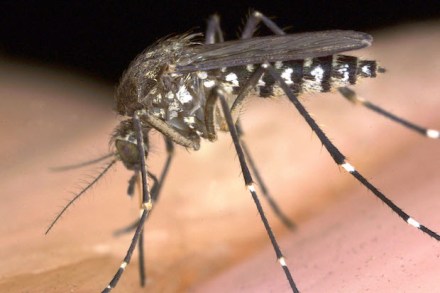
It’s unusual for a left-leaning paper to propose wiping out an entire species. Normally they’re proposing doing the exact opposite – reintroducing species that haven’t been seen there for hundreds, if not thousands, of years. But in a recent column in the Observer, Eva Wiseman decided that wiping out all mosquitoes is the best solution for humankind. Very few people like mosquitoes, that’s true enough, and there are serious and sensible reasons behind that dislike. As well as their blood-sucking tendencies, they also transmit some of the deadliest diseases on this planet – most famously malaria, but also a whole host of others, including dengue fever and the one that’s making the headlines at the moment, the Zika virus.

Twitter’s new ‘Safety Council’ makes a mockery of free speech

From our UK edition

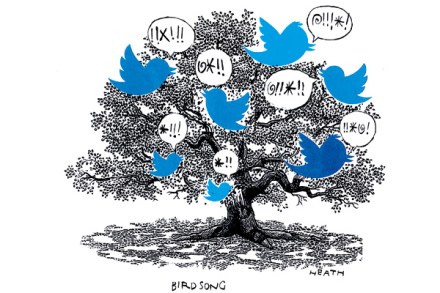
If you think it’s only crybaby students who set up safe spaces in which they might hide from gruff words and ugly sentiments, think again. More of the world beyond touchy campuses is being safe-spaced too. Consider Twitter, which this week announced the establishment of a ‘safety council’ — Orwellian much? — to ensure its users will be forcefielded against abusive, hateful or unpleasant blather. Yesterday, on Safer Internet Day — which promotes ‘safe, responsible, positive and boring use of digital technology’ (okay, I added ‘boring’) — Twitter revealed that it has anointed 40 organisations to advise it on how to make sure tweeters can ‘express themselves freely and safely’.

Are hipsters the new aristocracy?

From our UK edition

I love Twitter. Just like the historian Dan Snow, I find the social media site to be an overwhelmingly positive experience, and a great place to make friends and acquaintances and share ideas. Sure, most of the friends I’ve made are as politically insane as I am, but that’s the inevitable result of any service that allows for social sorting. However, one point with which I would disagree with Mr Snow is the idea that the site is a force for the ‘revolutionary democratisation of discourse’. In fact one of the great attractions of Twitter is how hierarchical it is, with each individual being measured by the size of his or her following, plus of course whether they have elite blue tick status.

Facebook’s ‘Motherhood Challenge’ is designed for sad exhibitionists

From our UK edition

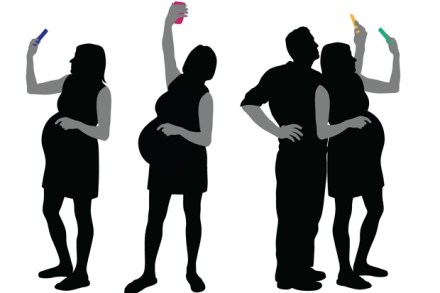
Further proof that social media is fundamentally evil comes by way of Facebook's Motherhood Challenge. It has been doing the rounds for about a week, and asks women to contribute by posting a series of photos that make them 'happy to be a mother'. They are then encouraged to 'tag' people they think are 'great mothers', so they can then post their own pictures. Duly, the exercise has been criticised by other Facebook users as smug, as well as insensitive to women with fertility problems. It’s only a matter of time before this incisive comment moves on to the issue of why fathers too aren’t outing themselves as happy, proud parents.

The London mayoral election will be a battle between whatsisface and whatsisname

From our UK edition

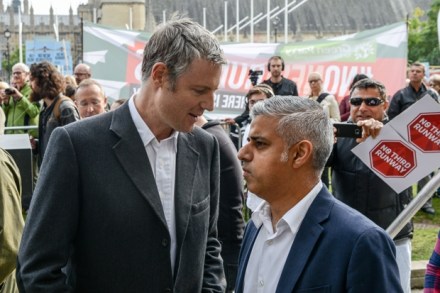
London, 2012. It’s Olympic year, and east London is sprouting anew, and our city feels like the capital of the world. And on this mighty, epoch-making canvas, two political heavyweights do battle. In the blue corner, Boris Johnson, the incumbent, and perhaps the most recognisable politician in the land. In the red, Ken Livingstone, his predecessor and opposite in almost every way, except for the reputation for shagging. He’s a little tarnished by now, Ken, true, a little old, a little Jew-hatey and yesterday-ish, but he still stands for something that Boris does not. His is a fiercely multicultural London, a little dirty, perhaps, but vibrant and arty, too; a bubbling pot of culture and faux-socialism (fauxialism?

Roaming in the gloaming

From our UK edition

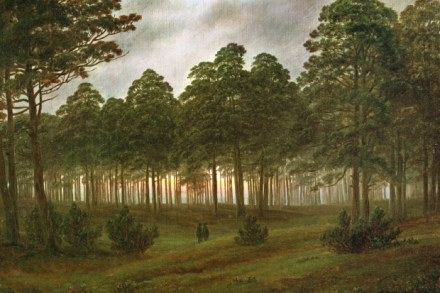
One of the epigraphs to Peter Davidson’s nocturne on Europe’s arts of twilight is from Hegel: ‘The owl of Minerva begins to fly only at dusk’, an image of philosophy as posthumous, able to explain things only after we have experienced them. Or an image of dusk as threshold, the blue hour when light transforms itself, and other worlds become possible. The Last of the Light is a cultural companion to such notions. A cabinet of curiosities — paintings, poems, music — framed by the idea of Europe as an archipelago of regret, many of whose most vital artefacts have dealt in echo and obscure longing, translated into a feeling for light. This is a trail going back to Virgil, poet of shadows, or else starting from Christian ideas of a crepuscular fallen world.

It’s depressing to see David Cameron engage in a culture war

From our UK edition

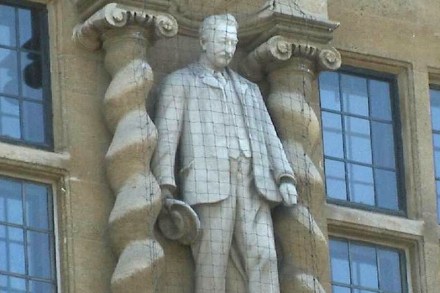
In 2000, the then Chancellor of the Exchequer, Gordon Brown, accused Magdalen College, Oxford, of class bias in failing to admit a student called Laura Spence, a pupil at a Tyneside comprehensive. This was grossly unfair — how could the Chancellor know the details of a particular case? It was also outrageous in principle: why should a politician tell a university whom to admit? This Sunday, David Cameron did much the same thing. In the middle of his EU negotiations, the migrant crisis and the other genuinely important things the Prime Minister must deal with, he found time to offer an article to the Sunday Times, headlined ‘Watch out, universities; I’m bringing the fight for equality to you’.

The collapse of British housebuilding

From our UK edition

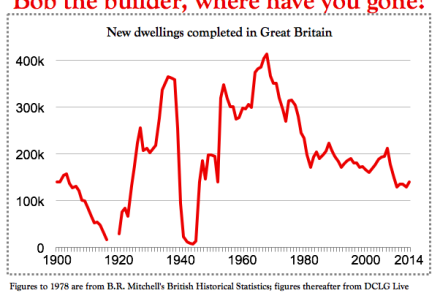
Things are pretty good in Britain right now: poverty rates are at a record low, employment is at a record high with rising wages and zero inflation. But for the young, there’s a problem: property prices are still sky high and the basic dream of home ownership (especially in London) looks cruelly unobtainable. The above graph might help explain why. The construction of new houses has been falling steadily, while the population has been rising steadily. At the same time families have been fracturing, increasing the need for more dwellings. In the last 15 years, net immigration has gone from zero to 350,000 a year. The new Brits need somewhere to live, especially as they tend to have more children.

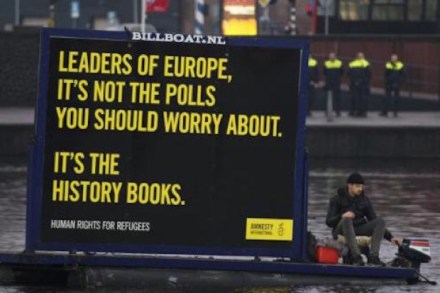
Our leaders should read history books – but not just ones about the Nazis

From our UK edition

If I was in charge of the Home Office I’d employ someone whose sole area of expertise was Hitler’s Germany and whose only job was to keep an eye out for any vague echoes of Nazism, however fatuous, in the working practices of the government or its contractors. This would have avoided Monday’s controversy over asylum seekers being made to wear red wristbands in order to receive free meals, because being asked to wear ID to qualify for things is exactly like being a Jew in Hitler’s Germany. A chilling echo, as many people commented.

President Hassan Rouhani needs to get over the shock of the nude

From our UK edition

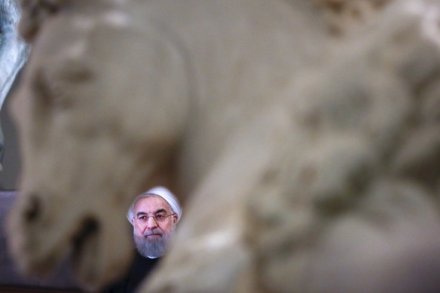
Has a new art installation opened up at the Capitoline museum? One might be forgiven for thinking so: nude sculptures were recently encased in white wooden boxes so that only their heads could be seen. So modern! So fresh! So radical! Except there was nothing radical about it. Instead, Italian authorities took the decision to cover up the ancient nude statues in honour of Iranian President Hassan Rouhani's official visit to Rome, during his first trip to Europe since international sanctions against his country were lifted. Rouhani and his entourage could not, reportedly, cope with the sight of marble sculptures of naked women, including a Venus dating back to the second century BC.

Scotland’s free-speech opponents remain as hypocritical as they are illiberal. Shame on them.

From our UK edition

Like an old friend you do not actually like very much, the Scottish government's Offensive Behaviour at Football Act will not go away. It is five years since this offensive piece of legislation was passed and time has done nothing to lessen either its absurdity or its offensiveness. To recap for readers who, for doubtless honourable reasons, have not kept up with one of the more extraordinary speech-curbing measures passed by any UK legislature in recent years, the bill's premise is that creating new kinds of thought and speech crime can eliminate thoughts and speech deemed offensive. (Some past reflections on this execrable bill can be found here, here and here.

Shivnarine Chanderpaul: The Last Man

From our UK edition

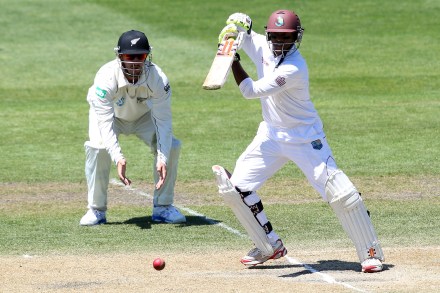
And then there were none. The retirement of Shivnarine Chanderpaul, the great Guyanese batsman, is the end of an era. He is the last of the old guard; the last of the great heroes from a time before the razzle-dazzle of the new 20/20 cricketing era. The last connection, too, to the time when the West Indies inspired terror, not pity. He was the last of my own Hornbys and Barlows; the last of the 1974 cohort to slip into the night. The torch will now be carried by other, younger, men. Many of them will prove to be wonderful but it will not be quite the same. My contemporaries no longer play test cricket. It is hard to think of a cricketer who, in recent times, has had to endure so much for so long with so little reward.

Did we really have to hear all about Crispin Blunt’s sex life?

From our UK edition

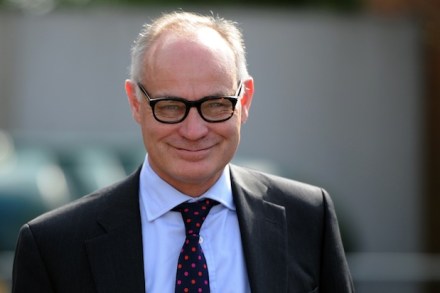
A year or so back my friend and colleague Hugo Rifkind wrote a very good piece in which he argued that the issues concerning gay rights should not be resolved simply by an elongated 'eeeeuw'. In other words, heterosexual distaste at the practices of homosexuals should not determine general policy towards this minority. A good point and well made and I agreed with much of it. But it shouldn’t stop the rest of us going 'eeeeuw' from time to time, nonetheless. So, Crispin Blunt MP feels hurt because laws proscribing amyl nitrate (or 'poppers') would criminalise the entire gay community. A jar of poppers and a tube of 'lube' are always found in the bedside drawer of a gay man, we are told.

Maxine Peake is wrong: Margaret Thatcher and Rebekah Brooks are feminist role models

From our UK edition

Margaret Thatcher has been out of power for twenty-six years and dead for three, but in our brave new world of virtue signalling (defined in this magazine by its creator James Bartholomew as ‘the way in which many people say or write things to indicate that they are virtuous…one of the crucial aspects of virtue signalling is that it does not require actually doing anything virtuous’) she has become the El Cid of politics, strapped to her trusty steed and sent out into the fray one more time. But interestingly, her corpse is being repeatedly trotted out by her enemies, rather than by those who guard her flame - and what they say tells us far more about their failings than it does about hers.

Google obeys tax laws, and gives us awesome services for free. Why complain?

From our UK edition

If Google hoped for some good PR in offering £130 million to settle UK tax claims dating back to the Labour years, it was a miscalculation: Labour regards the offer as "derisory" and the BBC is leading its news bulletins the better to sock it to its rival. Why did Google bother? It has run up against the standard anti-business narrative: that the social worth of businesses can be measured only by how much cash they give to the government. In fact, Google provides its services to millions of Britons (worth at least £11 billion, by some estimates) at no cost at all: this is its contribution to society. As for its contribution to the government's coffers, Google has - from the offset - been following the rules. And for this, it has been lambasted.

The BBC’s promises to change after Savile are as sincere as a prostitute’s smile

From our UK edition

It should be easy to admire the BBC's handling of the Savile scandal. Two of its journalists, Liz MacKean and Meirion Jones, broke the story. Panorama then ran a devastating account of the corporation’s failings which is still worth watching online. This morning the Today programme properly led with the leak of Dame Janet Smith’s report on the multiple rapes Savile committed on BBC premises, which again showed an admirable capacity for self-criticism. Unfortunately, that is all it did. Organisations and individuals are defined not just by their mistakes but how they react to their mistakes. Do they deny and bluster? Or do they confront their flaws and try to make amends? The best people in the BBC behaved superbly. Their editors were, of course, a disgrace.

The police system for handling sex abuse accusations is absurd

From our UK edition

Many have rightly attacked the police for their handling of the demented accusations against Field Marshal Lord Bramall, now at last dropped. They ostentatiously descended on his village in huge numbers, chatted about the case in the pub and pointlessly searched his house for ten hours. But one needs to understand that their pursuit of Lord Bramall — though not their exact methods — is the result of the system. Because the doctrine has now been established that all ‘victims’ must be ‘believed’, the police must take seriously every sex abuse accusation made and record the accusation as a reported crime (hence the huge increase in sex abuse figures).