Cuba

Christopher Caldwell, Gus Carter, Ruaridh Nicoll, Tanya Gold, and Books of the Year I

From our UK edition

34 min listen

On this week’s Spectator Out Loud: Christopher Caldwell asks what a Trump victory could mean for Ukraine (1:07); Gus Carter argues that leaving the ECHR won’t fix Britain’s immigration system (8:29); Ruaridh Nicoll reads his letter from Havana (18:04); Tanya Gold provides her notes on toffee apples (23:51); and a selection of our books of the year from Jonathan Sumption, Hadley Freeman, Mark Mason, Christopher Howse, Sam Leith and Frances Wilson (27:08).  Produced and presented by Patrick Gibbons.

The dark side of life in Cuba

From our UK edition

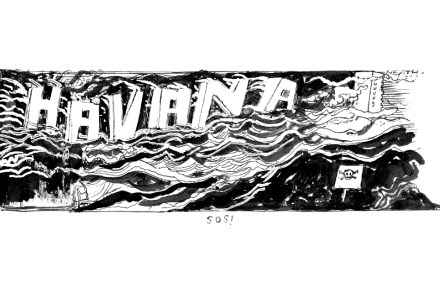
The first scent of trouble came when Cuba’s government ordered all its non-essential workers home. By packing them off (and there are plenty of them, given Cuba is one of the world’s last centrally planned communist states) the government hoped the island’s exhausted national power grid would get a breather. It didn’t work, the main power station crashed, and Cuba went dark. At first, I didn’t think it was a big deal. Power cuts in this all-but-bankrupt state have long been a daily scourge. But it turns out there’s a categoric difference between 20 and 24 hours of blackout. I came to Cuba in 2018 for a three-month stay and here I am, now married with a three-year-old son. Friends call this my ‘Cuban midlife crisis’, which I resent.

The Cuban ER doctor’s long-shot Senate bid in Washington State

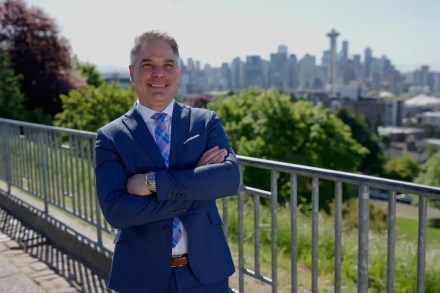
Dr. Raul Garcia seems to follow a long Republican tradition in Washington State. He’s a fifty-three-year-old, Cuban-born ER physician who’s emerged from the primaries to challenge the four-term Democratic incumbent Maria Cantwell for her US Senate seat this fall. On the face of it, Garcia’s candidacy is just the latest in a line of plucky but ultimately doomed bids by a GOP outsider to unseat a tenured politician in this part of the world. A couple of years ago, a self-described farm girl from the Seattle suburbs with the striking name of Tiffany Smiley gave Washington’s other senator Patty Murray a run for her money, but in the end the incumbent scraped through for her sixth turn at the public trough.

raul garcia

Some uncomfortable truths about World Music

From our UK edition

Joe Boyd’s masterly history of what some of us still defiantly call World Music – more on which later – takes its title from Paul Simon’s ‘Under African Skies’, but is really less about the roots of rhythm than its routes. A typical chapter will start with a song from a particular geography, then wind the clock back to the country’s history, then forward again to show how that history has contributed to the development of its music, and finally move outwards, following the trade winds as they carry the sounds around the world.

Why would anyone choose to live in Puerto Rico?

From our UK edition

From the eastern Atlantic, the US looks boringly uniform. Yet Alaska is almost as different from Alabama as Turku is from Turkey. If you travel the length of the Mississippi, food, laws, customs and lingo change as surprisingly as along the Danube. Particularism is rife. In two counties in Vermont, there are warrants for the arrest of George W. Bush. In some parts of the South, you must step across a county line to evade laws against alcohol. In Indiana, where I live, every county sets its own time zone and you have to keep adjusting your watch on your way to Chicago. In this land of anomalies, nowhere is odder than Puerto Rico. It is an ‘associated’ state, but not a state of the union.

Why Tucker Carlson should have been less excited about his groceries

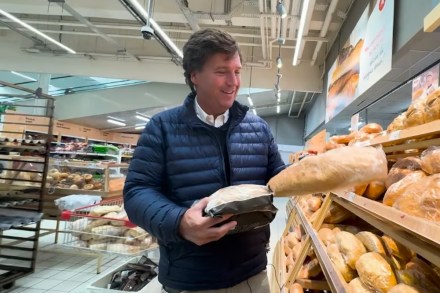
Tucker Carlson has been radicalized by a Russian supermarket. There’s a sentence you never expected to read. As part of his tour of Moscow, the week before Putin critic Alexei Navalny “died in prison,” the firebrand commentator visited a grocery store and was stunned by the low prices. “That’s when you start to realize,” Carlson marveled: …that ideology maybe doesn’t matter as much as you thought… Corruption… If you take people’s standard of living and you tank it through filth and crime and inflation, and they literally can’t buy the groceries they want, at that point maybe it matters less what you say or whether you’re a good person or a bad person, you’re wrecking people’s lives and their country.

tucker carlson groceries

Was JFK any ‘good’ as a president?

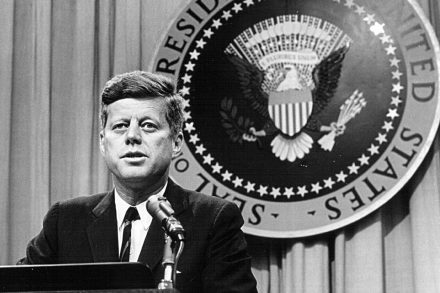
How should we assess the value of a US president? In the case of John F. Kennedy, who died sixty years ago, the box denoting youthful vigor clearly gets a checkmark. Kennedy was just forty-six at the time of his assassination, which makes him younger than Hunter Biden is now. The box denoting the “vision thing” gets checked as well, if only because Kennedy saw the potential for beating the Soviets in the race to put a man on the moon, famously declaring, “We choose to do this, not because [it is] easy, but because it is hard; because that goal will serve to organize and measure the best of our energies and skills.” Also to be considered is the collective trauma of the events of November 22, 1963.

jfk

Democracy in Peru is under attack

For over a month, Peru has been in a state of near-constant unrest. In December, as the legislature threatened to impeach President Pedro Castillo for, among other things, allegations of corruption, Castillo tried to dissolve the legislature and “govern through decrees.” By all measures, this was an attempted coup, and it resulted in his impeachment (by a vote of 101-6), arrest, and condemnation from left and right. In his place, Vice President Dina Boluarte was sworn in as president, having denounced her former boss’s attack on the country’s democracy. This was a success in a country that has seen six new presidents in the past seven calendar years. The Congress has repeatedly been at odds with the president, and scandals have rocked administration after administration.

The Pink Tide returns to Latin America

As the dust settled on Jair Bolsonaro’s seismic victory in Brazil back in 2018, one might have spared a thought for those dedicated to the cause of international socialism. Having bathed in the glory of the so-called "Pink Tide" and the commodities boom of the early 2000s that allowed socialist governments such as Hugo Chávez's Venezuela to seemingly prosper, any hopes that Latin America would forever unify in the cause of left-wing anti-imperialism seemed well and truly dashed. In many of the continent’s wealthiest countries, right-of-center politicians had swept to power with a view to restoring their nation’s former glory. These included Bolsonaro in Brazil, Sebastian Piñera in Chile, Ivan Duque in Colombia, and Mauricio Macri in Argentina, among others.

The Cuban Missile Crisis has become a cultural touchstone

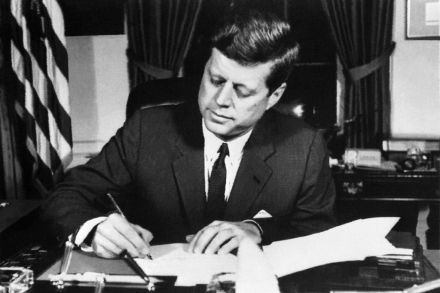
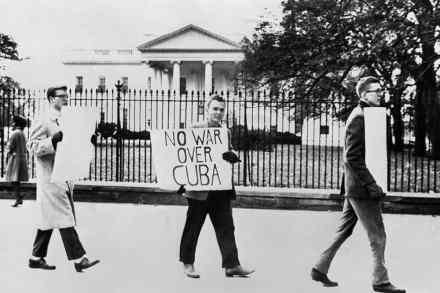
At the beginning of 1962, President John F. Kennedy had high hopes for a peaceful year with the Soviet Union, the United States’ most dangerous adversary. On December 30, 1961, Kennedy issued a statement offering his good wishes for the new year to Soviet Premier Nikita Khrushchev and the Soviet people. Ten months later, in October of 1962, the US and the Soviet Union were on the brink of war. The Soviets had moved missiles into Cuba, which initially went undetected by US intelligence. On October 14, an American U-2 spy plane took pictures showing missile base construction taking place in Cuba. The next evening, American analysts realized the implications of what that construction meant.

What Washington was like during the Cuban Missile Crisis (2002)

From our UK edition

On 27 October 1962, US Defense Secretary Robert McNamara stepped out of crisis meetings and looked up at the sky. ‘I thought it was the last Saturday I would ever see,’ he recalled.  This month marks 60 years since the Cuban Missile Crisis. In 2002, Peregrine Worsthorne wrote about what it was like to be in Washington during humanity’s closest shave. Forty years ago the Americans won what I hope will be the nearest thing to nuclear war between superpowers — of which only one is left — ever fought; and the fact that they won it without firing a shot should not diminish but rather increase the extent of the victory. What I am referring to is known, of course, as the Cuban Missile Crisis, which is how it will go down in history.

Sanctions on Russia won’t work

Another battle in the West’s sanctions war against Russia is set to begin. The US and its NATO allies have put together what they’re calling a strong package of economic restrictions on Russia in response to its military buildup near Ukraine’s border. What’s in the package remains a secret but it appears to focus on Russia’s energy sector. A State Department spokesperson told NPR on Thursday that the Nord Stream 2 pipeline from Russia to Germany would remain inoperable if an invasion happened. The Financial Times suggested that other new Russian gas developments are also on the sanctions list. The UK wants Russia booted from SWIFT, the Belgian financial messenger services company, while the West also floated the idea of sanctioning Russian President Vladimir Putin.

Kamala Havana?

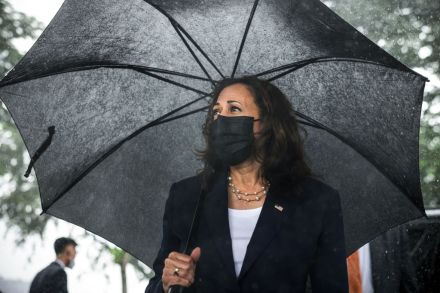
It was supposed to be a welcome break from serving as the Biden administration’s stooge. Instead of being the mascot for the Biden administration’s busted border policy, Kamala Harris would get a pleasant little trip to Singapore and Vietnam, to shore up her foreign policy experience just in case, God forbid, the Democratic party has to actually rally behind her as president. But instead of gaining experience, Harris has to worry about US diplomats being shot with a laser beam, or something. Yes, that’s right, the latest incident of Kamala’s ill-starred vice presidency is an outbreak of Havana syndrome. US State Department officials announced that it was investigating a 'possible anomalous health incident’ in Hanoi, the preferred euphemism for the mysterious disease.

kamala havana

Getting UN help on American civil rights is a great idea

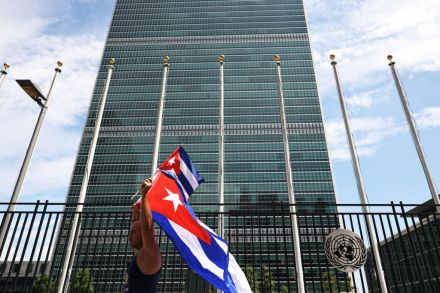
The small-minded people who believe in freedom and democratic self-government have their shorts in a bunch over the Biden administration’s invitation to the United Nations to review our country’s civil-rights record. What a superb idea. Long overdue. The countries filling the human rights bodies at the UN have the kind of expertise you can’t get by reading books or following the rule of law. You have to get that kind of experience in the streets. Police brutality? All you have to do is ask the leading members of the UN Human Rights Council like Cuba, Libya, Pakistan, the Philippines, Russia, Somalia, Sudan and Venezuela. They know a thing or two about protecting civil rights. But why stop there?

un

Why are Labour MPs excusing Cuba’s authoritarian regime?

From our UK edition

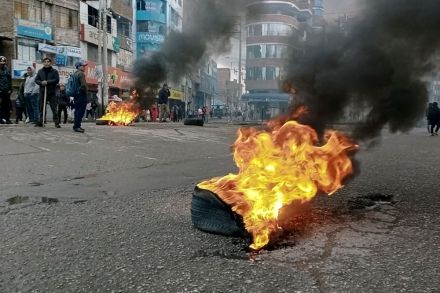
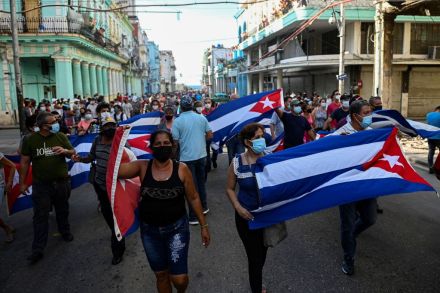
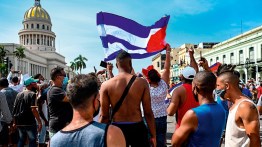
Thousands have taken to the streets in Cuba this week to protest against the authoritarian government that rules over them. The Covid-19 crisis has exacerbated Cuba’s already bad living conditions, and anger at the government’s handling of the situation reached a point where it could no longer be contained. Cuba’s one-party state has cracked down hard on the protesters, by beating, shooting and imprisoning its own citizens. Last night, Cuban president Miguel Diaz-Canal took a novel step and admitted that his government’s handling of the crisis had possibly not been as brilliant as his people should have expected. ‘We have to gain experience from the disturbances,’ he said during a televised address to his people.

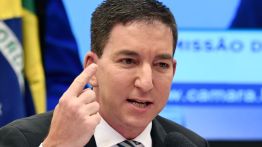
Glenn Greenwald: America First conservatives shouldn’t support unrest in Cuba

Glenn Greenwald wants right-wing populists to understand that the CIA is not their friend. On Sunday thousands of Cubans swarmed the streets of Havana amid ongoing blackouts, food shortages and rising prices. Increasing COVID infections have strained the island's healthcare system and put medical care at a standstill. The protests are the largest of their kind in over a decade. In turn, the government began a crackdown. More than 100 activists and journalists are reportedly in custody. One male protester was shot in his home on Wednesday during a police raid. Facebook and Twitter played a crucial role in allowing the rest of the world to witness the unrest — so of course the Cuban government has banned those platforms in the last 72 hours.

greenwald

Portrait of the week: Mixed messages on masks, protests in Cuba and good news for pandas

From our UK edition

Home England expects everyone to wear masks in crowded places, Boris Johnson, the Prime Minister, said in a televised address, even though the law requiring it was to be dropped on 19 July. He said: ‘We’re removing the government instruction to work from home where you can but we don’t expect that the whole country will return to their desk as one from Monday.’ He added that the ‘single most crucial thing’ people could do was to get vaccinated. He declared it ‘a matter of social responsibility’ for nightclubs and other venues to demand a Covid pass, proving vaccination or a recent negative test, to allow entry. The Night Time Industries Association resented being used as a cat’s paw.

Cuba libre: why Cubans have reached breaking point

From our UK edition

Havana There is an astonishing patience in the Cuban people, born of endless waiting. When a store has, say, chicken, people queue, often for days. But on Monday, outside the Zanja police station in central Havana, people weren’t waiting for food. They were waiting — patiently — for news of family members who had been arrested during unprecedented protests at the weekend. The demonstrations flared like a petrol fire. Cubans had settled down for lunch, many preparing to watch the Euro 2020 final, when news spread of a march in the town of San Antonio de los Baños on the outskirts of Havana.

Major League Baseball goes dark on Cuba

Major League Baseball’s All-Star Game was never supposed to be political. It was designed as a casual gathering of the league’s best players to showcase their best skills. That all changed of course when the MLB decided to move the game out of Atlanta over Democrat calls to boycott the state over Georgia’s new voting law. The decision was rash, illiterate to the text of the law and based mostly on tweets and half-truths from popular celebrity Democrats like Stacey Abrams, along with Georgia senators, who later backtracked. When the MLB changed its mind, it transformed itself into a political league and its All-Star Game into a political lightning rod. Therefore the league has no excuse for dodging the political issues of the day.

all-star major league baseball cuba

Could street protests finally topple Cuba’s communist regime?

From our UK edition

Could the growing tide of protests finally topple Cuba's communist government? Many Cubans are certainly angry: Sunday marked the largest-ever demonstration against the island’s regime. Organised through social media, the protests, which began in a town twenty miles outside Havana, quickly spread across Cuba. Thousands of demonstrators marched along some of Havana’s most iconic streets, chanting ‘Freedom!’, ‘Fatherland and Life’ and ‘Down with the dictatorship!’ Discontent with the regime, which took power in 1959, has been rising for the past year. Before this weekend, the most high-profile protests had been from artists and intellectuals demanding freedom of expression. But this discontent is spreading rapidly.