Crime

Brits are being kept in the dark about asylum crime

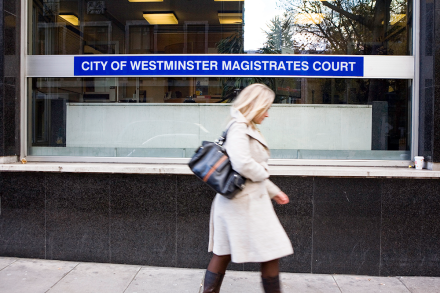
As long as Britain’s official orthodoxy remains that diversity is its "strength," will the authorities ever be straight with the public about the realities of migration-linked crime? This week, a Pakistani national, Sheraz Malik, was found guilty of two counts of raping an 18-year-old girl in Nottinghamshire. The woman had been drinking at a park in Sutton-in-Ashfield when she was attacked by Malik. She had already been taken to an isolated area and raped by another man he was with, who has yet to be identified. Malik followed proceedings at Birmingham Crown Court via a Pashto interpreter. These crimes are sickening enough in themselves.

asylum

Horror in Victorian Hampstead: Mrs Pearcey, by Lottie Moggach, reviewed

From our UK edition

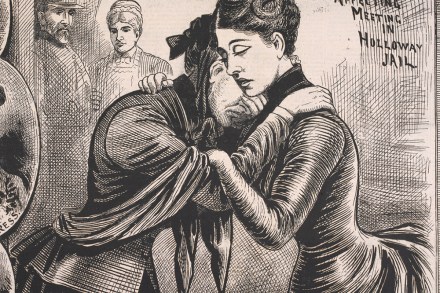
Our appetite for true crime is nothing new. The Victorians devoured it and, as Lottie Moggach’s fourth novel shows, they were as gawking and prone to erroneous judgments as any crowd on social media. Mrs Pearcey is about two women in 1890s London: sparky young Hannah Teale, engaged to a rising journalist on the Star and living with her widowed mother in Camden Square; and impoverished Mary Pearcey, who lodges in a Hampstead boarding house and is accused of the grotesque murder of a woman and her baby. It was a celebrated case in its day, coming soon after the Ripper murders, and it is now revived in Moggach’s vivid, immersive imagination. Part of the novel’s attraction lies in its setting in and around Camden Town.

America is far safer than you think

"If it bleeds, it leads." Skim through the headlines of today’s papers and you’ll struggle to find much that’s positive. Coverage of the fatal shooting of Alex Pretti in Minneapolis on Saturday might make you think the United States is on the brink of widespread civil disorder, but the truth is that America is set to have its safest year since 1900. Last week, a report by the Council on Criminal Justice examining 40 cities across the US found that homicides in the fell by an astounding 21 percent in 2025. The Trump administration, of course, was quick to take credit. "Deporting criminal illegal alien murderers reduces murders," tweeted Immigration and Customs Enforcement, next to a chart from the study.

Am I a libertarian after all?

From our UK edition

I have never been the greatest fan of libertarianism as a political ideology. Libertarians seem to me to be the bisexuals of politics – they want a bit of everything. But even I felt a slight twinge of libertarian sentiment this week when I read some remarks by our Home Secretary, Shabana Mahmood. The Labour minister had told MPs that artificial intelligence is an ‘incredibly powerful tool that can and should be used by our police forces’, though she added that it must be regulated in a way that is ‘always accurate’. I have never before read the words ‘police’ and ‘always accurate’ in the same sentence, so the novelty grabbed my attention.

What’s the future of the Scottish Tories?

From our UK edition

19 min listen

The leader of the Scottish Conservatives, Russell Findlay MSP, sits down with James Heale to look ahead to May's pivotal Holyrood elections. He pushes back against the threat from Reform, arguing that Nigel Farage is trying to be 'all things to all people', and he is scathing about the lack of loyalty shown by those who have defected from the party – not just to Reform, but to the Liberal Democrats too. But with the collapse of the support Labour received in the 2024 general election – which Findlay calls their 'loveless landslide' – why aren't the Tories benefitting more? Plus, how did being the victim of a vicious acid attack in 2015 shape his politics? Produced by Patrick Gibbons.

Crime in London is worse than Khan admits

From our UK edition

‘Whatever your business in London is’, claimed the capital’s police chief Mark Rowley yesterday, ‘we’re creating a safe environment for you to thrive.’ In fact, he argued, London is an ‘extraordinarily safe global city’. For his part in Monday’s media blitz, Mayor Sadiq Khan wrote in the Guardian that ‘Londoners are safer in their homes and on our streets.’ This analysis is at best extremely misleading – at worst, it is deliberately ignorant of the experiences and concerns shared by Londoners and visitors alike. Indeed, the facts suggest quite the opposite of Mayor Khan and Commissioner Rowley’s comments. Recent statistics show that our capital is experiencing a theft epidemic. The police are doing almost nothing to stop it.

Is this the end of the cold case?

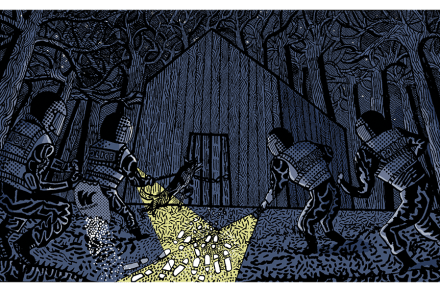
On March 6, 1959, nine-year-old Candice "Candy" Rogers of Spokane, Washington, went out after school to sell campfire mints door-to-door. Sweet-natured with strawberry blonde curls and a button nose, she was small for her age. Her mother, Elaine, had one clear rule that Candy must be home before dark. But Candy never came home. Her disappearance triggered a 16-day manhunt involving thousands of people, the Marines and the US Air Force. In fact, three airmen lost their lives on the second day when their helicopter hit high tension cables and plummeted into the Spokane River.  After two weeks of searching for Candy, all detectives could find were her scattered mint boxes.

A supernatural western: Tom’s Crossing, by Mark Z. Danielowski, reviewed

From our UK edition

Mark Z. Danielewski is best known for his House of Leaves, a typographically delirious horror novel about a manuscript written by a blind man describing a film which showed an impossible house. It seemed to exhaust a particular kind of postmodernism of footnotes, cryptography, metatexts, pop culture and more, yet remained at heart a story about grief. Tom’s Crossing is more immediately accessible, but it is every bit as clever and even more emotionally devastating. The bulk of the action takes place over five days running up to Halloween in 1982, although with a preface, ‘Some of what happened before’, and a longer epilogue, ‘Some of what happened after’.

What’s wrong with the West?

It is 25 years since Theodore Dalrymple published Life at the Bottom: The Worldview that Makes the Underclass. In this now famous set of essays, Dalrymple, who worked as a psychiatrist in British prisons, describes the damage done to the poorest in society by the West’s progressive middle-classes, who encourage criminals to see themselves as victims and cheer on the destruction of the traditions and norms that once guided working-class life. On the other side of the Atlantic – and the other side of the middle-class divide – the writer Rob Henderson came to the same conclusions as Dalrymple.

The art of owning up

From our UK edition

Though Rebecca Culley is obviously a wrong ’un – having stolen £90,000 from her dear old gramps while pretending to care for him and only spend a minimum of his cash on ‘bits and bobs’ – I couldn’t help feeling a flash of admiration for her. When she was caught bang to rights, she diagnosed herself as a ‘spoilt brat’. At last, a person with lousy personality traits – in this case acquisitiveness, laziness and dishonesty – has refused to reach for some bogus medical synonym to justify their behaviour and has used words which all of us can read and think: ‘Yep, sounds about right.

How many illegal migrants does Britain return?

From our UK edition

Condemned leaders Former Bangladeshi prime minister Sheikh Hasina was sentenced to death for crimes against humanity, for using lethal force against student protests last year. But on past records, she might yet live to an advanced age. The last national leader to be executed was Saddam Hussein in 2006, during the Allied occupation of Iraq. Other leaders sentenced to death in their country’s courts have fared better: — Emile Derlin Zinsou, installed as president of Dahomey (now Benin) after a coup in 1968, was sentenced to death in 1975. That was rescinded and he returned to Benin in 1990. He died aged 98 in 2016. — Chun Doo-hwan, who led a coup in South Korea in 1979, was sentenced to death in 1996, later commuted to life imprisonment. He died in 2021 aged 90.

A Faustian pact: The School of Night, by Karl Ove Knausgaard, reviewed

From our UK edition

The fourth novel in Karl Ove Knausgaard’s spooky supernatural series differs from the others in that it is a standalone and doesn’t involve previous characters. Gone, too, are the multiple narrators; and there is only the briefest mention of a new star in the sky – which in the other three books coincided with all sorts of inexplicable occurrences. But it is no less compelling. This is the story of an arrogant young Norwegian, Kristian Hadeland, who arrives in London in 1985 to study photography at a prestigious art college. Though enthusiastic about his subject, he finds it hard to accept the constructive criticism of his lecturers.

Did the Louvre robbers want to get caught?

It is more than a month since thieves stole the crown jewels from the Louvre and the chances of recovering the loot, worth an estimated €88 million, diminish with every passing day. The robbery was initially dubbed the “heist of the century,” a brazen theft in broad daylight as visitors strolled through the world’s most famous museum. There were up and down the ladder and in out of the museum in seven minutes, giving the impression that this was the work of villains well-versed in daring robberies. But soon details emerged that suggested the gang of four weren’t quite of the caliber of the thieves immortalized in the Hollywood movie Ocean’s Eleven.

How popular is the British royal family?

From our UK edition

Austere environment Who introduced the word ‘austerity’ into the political lexicon? While chiefly associated with attacks on the Conservatives, and subsequently Reform UK, by Labour and other left-wing parties, it was David Cameron who brought the word back into common parlance. In a speech to the Conservative party forum on 26 April 2009 he declared: ‘The age of irresponsibility is giving way to the age of austerity.’ He went on to say: ‘We’ve made it clear that a Conservative government would spend less than Labour. We’re not frightened of their idiotic ritual chants about “cuts”.’ An analysis by the LSE found that in the election year of 2010, right-leaning thinktanks mentioned ‘austerity’ nearly as frequently as left-leaning ones.

We have to stop looking away

From our UK edition

I learnt not to intervene on a late summer’s afternoon nine years ago. My son was still a baby and I was pushing him in his pram across a busy road in a responsible way, only after the green ‘walk’ man had lit up. I was about halfway over when a boy of about 14 on a moped scorched through the lights and past us, nearly hitting the pram. I yelled at him, and as I yelled felt the spirit of civic duty rise within me. If we middle-aged mothers don’t set the kids straight, who will? The boy skidded to a stop and turned to face me. I can’t now remember what he said, but the gist of it was that I’d radically misjudged the situation and that if I didn’t show him some respect, he’d have to hurt me.

Rachel Reeves’s Budget ‘bollocks’ & Britain’s everyday crime crisis

From our UK edition

48 min listen

To submit your urgent questions to Michael and Maddie, go to: spectator.co.uk/quiteright This week on Quite right!: Rachel Reeves goes on the offensive – and the defensive. After her surprise Downing Street address, Michael and Maddie pick over the many kites that have been flying in advance of the Budget at the end of the month. Was she softening the public up for tax rises, or trying to save her own job? Michael explains why Reeves is wrong to say that Labour’s inheritance is the reason for our current economic misfortune and says that it is ‘absolute bollocks’ that Brexit is to blame. Next, a chilling weekend of violence sparks a bigger question: are we witnessing the rise of nihilistic crime in Britain?

The cost of Zohran

William F. Buckley Jr. once quipped that he would rather be governed by the first 2,000 names in the Boston phone book than by the Harvard faculty. New York City is about to be governed by the Columbia University student body. A city that used to think of itself as grown up has just elected a mayor who seems the very embodiment of the American college student: uninformed, entitled and self-important, enjoying a regal quality of life that depends parasitically upon a civilization about which he knows nothing, yet for which he has nothing but scorn. American college students regularly act out little psychodramas of oppression before an appreciative audience of diversity deanlets and associate vice-provosts of inclusion and belonging.

meth

Where can I get some meth?

I was born in Santa Monica, California. So were four of my children. When I was little, Santa Monica was still a sleepy backwater with mom-and-pop stores, a quiet local beach that was never crowded and virtually zero crime. A place where murder or mayhem or even robbery were unthinkable. Then, sometime in the 1990s, Santa Monica was discovered by the rest of the city as a “really nice place to live” and was targeted for destruction. In Los Angeles you are not allowed to have nice things. Every Christmas, Ocean Avenue along the coast was lined with 13 historic, life-size scenes depicting the complete life of Jesus. These famous and beloved displays started in 1953, but in 2015 the city banned them after atheist groups complained.

Goodbye and good riddance to ‘non-crime’

From our UK edition

The congratulatory messages started pouring in shortly after 5.30 p.m. on Monday. The Metropolitan Police had just issued a press release saying that the force would no longer investigate ‘non-crime hate incidents’ (NCHIs) and people were chalking this up as a victory for the Free Speech Union, the organisation I run. That may seem a bit of a stretch, but the Met linked the decision to its failed pursuit of Graham Linehan, the comedy writer it arrested at Heathrow airport in September over three tweets taking the piss out of trans-rights activists. It was thanks in part to the FSU, which pulled together Graham’s legal team, that the Met decided to abandon the case. In fact though, the person who deserves most of the credit is Sir Mark Rowley, the Metropolitan Police Commissioner.

How bad do things have to get before the police show up?

From our UK edition

Earlier this year, I wrote here about the arsonist who'd left our neighbourhood looking post-apocalyptic. In the months that followed, the pyromaniac grew ever more reckless. Initially, he'd stuck to torching vehicles on the road, which was bad enough. But then he took it a step further. He set fire to a car on a driveway, which in turn set the house alight. The young family, who were asleep upstairs, escaped with their lives, but their home was destroyed. A collection was started, and we dropped in some cash. The organiser said that in 20 years in the area, he'd never seen things as bad as they were now. He'd installed CCTV after burglars had smashed their way through the bifold doors – now it might come in handy for identifying the pyro.