Covid

The danger of following ‘the science’

From our UK edition

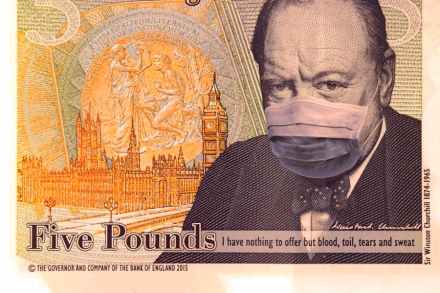
I have decided to divorce my wife after 31 years on scientific grounds. Though perfectly happy, on reassessing my original decision to enter matrimony it has emerged that at no point was that choice subject to peer review, there was no randomised control trial, the experiment could not be replicated and the data-set on which I based my decision failed to provide the levels of statistical confidence required. In reality, what you don’t know is always more critical than what you do I don’t think my decision to marry was bad, but it was definitely unscientific. Most important decisions are. Indeed if one phrase has most irritated me in the past few months, it is ‘the science’. What is ‘the science’ on masks?

How scared are we still about Covid?

From our UK edition

Pink and twisted Bernard Matthews, which stopped making Turkey Twizzlers in 2005 after criticism about unhealthy school dinners from Jamie Oliver, announced it is reintroducing the product. It will contain up to 70% turkey, compared with 34% originally. — Bernard Matthews came up with the idea of making twisted pieces of turkey, allegedly as an accidental by-product from a machine which stamped out imitation drumsticks from reconstituted turkey meat. — The name ‘Twizzler’ was also used by a Pennsylvania confectionary company, Y&S Candies, from 1929. The product, still sold in the US, is made from corn syrup, flour and sugar, with strawberry flavouring. Covid courage How brave have the British public been feeling over Covid-19 in the past week?

If the office is ‘too dangerous’, why is everyone jetting off on holiday?

From our UK edition

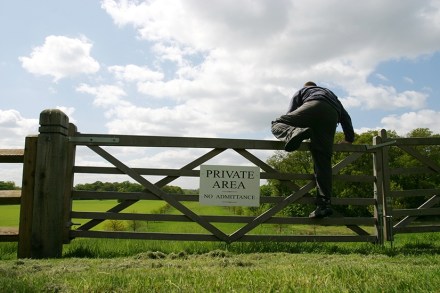
The whole of Surrey and south-west London seem to have gone abroad on holiday so I’ve got my sanity back. All the people who were working from home because they couldn’t risk Covid-19 but who had to go out walking and cycling in the countryside all day long have simply vanished. Anecdotal evidence suggests that many of the Covid-phobics have got on planes and enthusiastically breathed as much re--circulated air as it takes to get them to a villa by the sea. The cyclists and the runners and the ramblers with backpacks with cooking pots sticking out of the top have all evidently decided they didn’t need to bother me any more by trespassing through my horses’ field, and have gone somewhere they really wanted to be. That was half the problem.

The dying need real conversation, not false cheeriness

From our UK edition

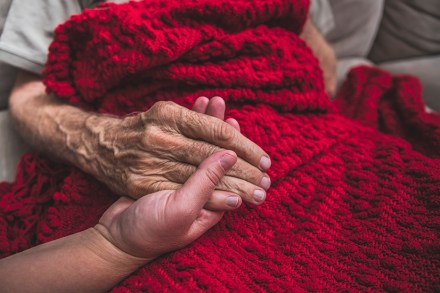
A nurse friend recently finished six weeks in a Covid intensive care unit where she witnessed many deaths and always ensured that nobody died alone. She sat holding a hand, listening, reassuring. Now on leave, she is writing down some of her experiences with the dying. A wise priest I knew said that no matter how strong your faith, your view of what happens at death and ‘the life of the world to come’ should be an agnostic one. But he still recounted some remarkable things he witnessed when sitting with the dying, and my nurse friend described similar experiences.

No place but home: how Covid will change the property market

From our UK edition

It took a trip to the Land of Oz to make Dorothy value her home. For the rest of us, it took a global pandemic. During the past two months, our residence — whether that be a mortgage-free house or shared rental flat — has become our entire world: office, restaurant, cinema, gym and shelter, all rolled into one. If we didn’t know the ins and outs of our quarters before, we do now. Many people have developed a more personal understanding of a market that has played a vital role in shaping the British economy for decades. Housing costs in Britain are some of the highest in the world, more than quadrupling since the 1970s.

What will happen to your savings after coronavirus?

From our UK edition

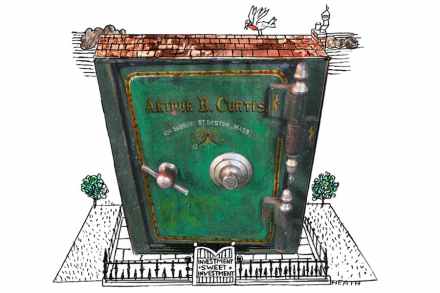
What joy it has been to have some cash over the past two months. For gamblers, to be sure, there have been opportunities to take advantage of a volatile stock market (and even more opportunities to get it wrong and lose a packet). But cash is cash – it just sits there holding its value, without having to watch the markets with dread every day. Well, certainly over the short term. But history teaches us a painful lesson in these circumstances: while investing in stock markets is full of sorrows, investing in cash offers few pleasures. It is ordinary savers ultimately who were made to pay for the economic crisis of 2008/09, and doubtless it will be they who are made to pay for this crisis, too. Cash hasn’t been all that steady over the past two months, in any case.

What the country needs most is Boris Johnson back at his desk

From our UK edition

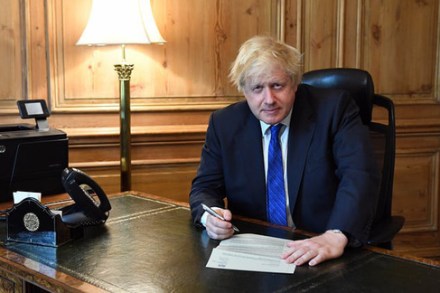
Boris Johnson has been out of action for almost a fortnight. His last meaningful act before going into hospital was to force frazzled Health Secretary Matt Hancock to ditch a threat to ban outdoor exercise that he’d made live on TV in response to some tweeted pictures of people sunbathing in a park. In place of that threat, Johnson’s Downing Street changed the tone by sending out a message telling the British public 'thank you, thank you, thank you' for their efforts. Though the Government initially claimed Mr Johnson would work on his red boxes and receive briefings while in hospital, this did not actually happen (no doubt due to his rapid deterioration). Downing Street confirmed on April 13: “He didn’t receive any papers while in hospital.