Covid

The Beeb could turn this script into TV gold: Howerd’s End reviewed

From our UK edition

It’s touch and go whether the theatre will survive this latest assault. Some venues have pushed back their entire programme by four weeks, which is chaotic but manageable. Theatres mounting a panto are in a trickier position because they can’t trust Gove and Johnson not to extend the curfew into the festive season. November is the month when companies start to book venues for the Brighton Festival in May. What to do? Take the plunge or wait it out for another year? And the big decision about Edinburgh 2021 will have to be faced before the winter is over. The lockdown in spring was a financial and professional calamity but this new onslaught adds a spiritual element — despair.

Dear Mary: Why is my brother making me pay £400 for a drawing of my cat?

From our UK edition

Q. I would welcome your advice on a tricky family matter. For my 70th birthday earlier this year my brother gave me a voucher for £100. This could be used as credit towards a drawing of my cat to be commissioned from an artist friend of his. I duly provided photos, only to learn that the £100 would represent just 20 per cent of the list price, and the balance to be paid by me would be £400. I am wondering whether my brother is doing his friend a favour at my expense — indeed in my most churlish moments I doubt whether my brother even paid £100 to his friend, and instead just negotiated a 20 per cent discount.

Finally a lockdown drama that will endure: James Graham’s Bubble reviewed

From our UK edition

Theatres can open if they want to. That’s the current position. The only factor keeping a playhouse dark is a lack of guts or imagination on the part of its leadership. A small pub in Vauxhall, The Eagle, is mounting new plays in its garden space to raise everyone’s morale. Punters must wear masks and sit in bubbles. ‘We’re adhering to the government guidelines,’ announced the artistic director before the start, ‘which are changing all the time.’ The show is a feelgood musical about drifters and dreamers in their twenties trying to make it in New York. Waverley wants to be an actress but her plans are blown off course by a tempting job offer from a law firm. What to do?

Will Spain’s nation of rogues comply with the curfew?

From our UK edition

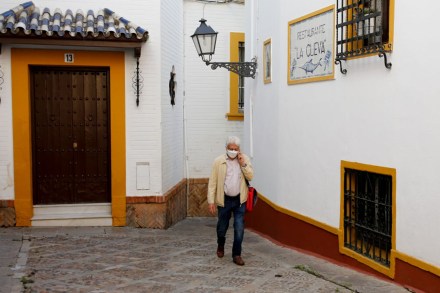
A few years ago, when I was in the queue to catch a plane, a Spanish lady caught me watching her as she surreptitiously removed a sticker from her hand luggage, which meant it would have been stored in the hold. ‘Los españoles somos muy pícaros’ (we Spaniards are real rogues) she told me with a smile of complicity and a rueful shake of the head. Spaniards sometimes point out with a touch of pride that it was their country which pioneered the picaresque novel – a literary genre which tells the story of an ingenious rascal who lives by his wits, sometimes on the wrong side of the law. My own experience is that Spaniards are no more rascally than other nationalities – but some of them like to think they are.

Portrait of the week: A Manchester stand-off, a Presidential showdown and a Brexit culture clash

From our UK edition

Home After ten days spent trying to persuade Andy Burnham, the Mayor of Greater Manchester, to accede to the city entering Tier 3 (which entails the closing of pubs and betting shops), Boris Johnson, the Prime Minister, announced that it would happen anyway, from 23 October. ‘I am deeply sorry,’ he said. Manchester had wanted £65 million in support first. Liverpool complained that it was not allowed to keep gyms open when Lancashire was. The nine million people of London languished in Tier 2, forbidden to meet anyone at home or in a pub, except if they pretended it was a business meeting. Scotland hatched plans for its own tiers.

Letters: why Scots want independence

From our UK edition

State of the Union Sir: Writing in a week that an opinion poll shows 58 per cent support for independence in Scotland, it seems bizarre for Professor Tombs to claim that commentators are ignoring ‘the death throes of separatism’ (‘Out together’, 17 October). He argues that nationalist supporters rely on the Brexit and Covid-19 crises to advance their cause, and that they will be in retreat once things return to normal. Then, once doubts begin to bubble up about the financial and economic uncertainties of independence, Scottish voters will return to the unionist cause. These arguments may give him some comfort, but here in Scotland they seem unreal.

The joy of drinking alone

From our UK edition

Thanks to a combination of night-time curfews, social-distancing rules, pubs closing, restaurants failing, the ‘rule of six’ and compulsory mask-wearing, that basic and necessary human need for people to meet for a drink has never been so difficult. Now, with the government’s new three-tier Covid strategy in place, anyone at any moment could find their local pub shut, their parties cancelled, and all forms of indoor mixing prohibited. Millions in the UK are already living under these restrictions. It’s a fair bet that millions more will soon join them. And if the government gives in to demands for a ‘circuit breaker’ — a short-term lockdown — it would in effect totally suspend social drinking as we know it.

Boris Johnson needs to face down his own people

From our UK edition

To beat the virus, the government is asking us to keep to simple hands-face-space guidelines. When these are not followed, the virus spreads, but it is still (apparently) the government’s fault, i.e. the people can do no wrong. That was the case too in Athens’s direct democracy, where anyone whose proposal was ratified by the people’s assembly, but then turned out badly, could still be prosecuted for ‘misleading the people’. Even Pericles. In 431 bc war broke out between Athens, a sea-based power, and Sparta, a land-based one. Since Athens’s walls embraced its harbour Piraeus, Pericles proposed withdrawing the whole population inside the walls, and using their marine dominance to supply Athens and attack Sparta and its allies by sea.

London’s war on motorists isn’t helping anybody

From our UK edition

Late one evening in Yangon in Myanmar a few years ago, I noticed a grey Morris Minor van patrolling the streets. It had an old-fashioned double--ended trumpet loudspeaker on its roof blaring out an amplified voice. ‘What’s it saying?’ I asked my guide. ‘It tells the people “It’s late! Stop drinking and go to bed! You have a busy day tomorrow!”’ That’s the spirit. We should get some of that in London. ‘Stop eating! Get on your bike! Pedal faster!’ Why has Covid brought out a rash of virtuous bullying? I have lost count of the number of times that Radio 4 has asserted that this plague needs to create a better, more caring, more aware, lovelier human race. (And if not, we can, of course, be ordered to be so.

Why isn’t the germaphobe President afraid of coronavirus?

From our UK edition

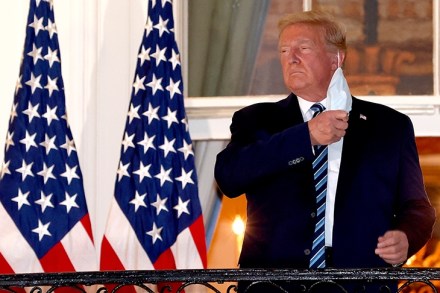
The weird thing about Donald Trump’s handling of Covid-19, alongside all the other weird things, is that he has always been a near-pathological germaphobe. He likes fast food, we’ve been told, in part because it is barely touched by human hands; he prefers not to press the lowest button on an elevator; he asks Oval Office visitors to wash their hands in a nearby bathroom; he routinely has a bottle of Purell sanitiser available whenever he has to touch hoi polloi; he lost some real estate deals in the past because he wouldn’t shake hands. Last year, Politico called him ‘the most germ-conscious man to ever lead the free world’.

Why we should consider testing Covid on prisoners

From our UK edition

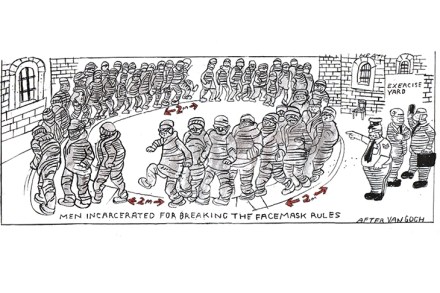
The Covid problem lies as much in the delayed action of the virus as in the virus itself. Since symptoms emerge only days after infection, testing often comes too late to reveal how transmission occurs, and often too late to prevent onward transmission, since many people may be most contagious before symptoms appear. This delay makes the targeting of restrictions far more complex — like weather-forecasting in reverse. (For this reason, what we may have to fear most from bioterrorism is not pathogens that are most deadly but those with delayed action.) If Covid had immediate effects (your hair instantly turned purple) we might have cracked the problem by now. Yet we still don’t know, say, whether the size of the initial dose affects the severity of the disease.

Covid has killed off our civil liberties

From our UK edition

It started with smoking. The 1960s and 1970s saw little popular objection to legislation restricting advertisements by private companies purveying a legal product. Little objection was raised thereafter when these same companies were banned from promoting their wares at all. Broadly shamed, even smokers have mutely accepted confiscatory taxes on cigarettes. As laws to protect the public from passive smoking have extended parts of the US to beaches, parks and even one’s own apartment balcony — locations where the danger to others is virtually nonexistent — few have cried overreach. It’s a truism: tobacco companies are evil (and so are smokers). The suppression of smoking is widely regarded as a public health triumph.

Students who catch Covid may be saving lives

From our UK edition

It is counterintuitive but the current spread of Covid may on balance be the least worst thing that could happen now. In the absence of a vaccine, and with no real prospect of eradicating the disease, the virus spreading among younger people, mostly without hitting the vulnerable, is creating immunity that will eventually slow the epidemic. The second wave is real, but it is not like the first. It would be a mistake to tackle it with compulsory lockdowns (even if called ‘circuit breakers’), whether national or local. The cure would be worse than the disease. If you cannot extinguish an epidemic at the start, the best strategy is for the healthy to get infected first. Lockdowns ensure that the vulnerable and the healthy both get infected with similar probability.

The jackboot zealotry of ushers is ruining theatre

From our UK edition

Southwark Playhouse has revived an American show, The Last Five Years, whose run was cancelled in March. In advance, I received an email outlining the theatre’s new rules, which appeared to exceed the minimum legal requirements. At the venue, I found that the main entrance had become the exit while the side door had become the main entrance. What for? Perhaps an unsubtle reminder that ‘everything’s changed now, pal, so get used to it’. The queue on the pavement moved at a turtle’s pace because the usher gave each playgoer a homily about the new regime before allowing them to pass through Checkpoint Charlie. Inside it was like an army hospital. Sentries in the corridors regulated our access to the loos.

Letters: what unites the two sides of the mask debate

From our UK edition

Wind worries Sir: You are right to side with the 2013 version of Boris Johnson, when he claimed that wind power could not pull the skin off a rice pudding (‘Boris’s second wind’, 10 October). However, it was wrong to claim that offshore wind at £40 per megawatt hour makes Hinkley Point C, at over twice that price, look like a bad deal. The nuclear plant will be able to provide reliable, constant baseload power for up to 50 years. A wind plant will provide power only when the wind is blowing (and not blowing too hard). To provide reliable baseload requires fossil-fuelled backup. Second, the £40 per megawatt hour is the current strike price offered by the winners of projects to build new capacity.

Who will have more informants: the Stasi or Covid marshals?

From our UK edition

Information overload The government’s plan to put ‘Covid wardens’ on the streets to enforce the new rule against more than six people meeting in public has been likened to the practice of the East German Stasi relying on mass informants. How many East Germans worked on behalf of the Stasi? — According to historian Helmut Mueller-Enbergs, 620,000 Germans acted as informers during the 51-year history of East Germany, including 12,000 West Germans. — When the Berlin Wall fell in 1989, 189,000 East Germans were Stasi informants, just over 1 per cent of its 16 million population, and one in 20 Communist party members. Back in business? In which sectors is the jobs market recovering most strongly?

Why I’ve given up on handbags

From our UK edition

I have given up handbags. Men may think this a trifling thing. Women will understand it was not a painless decision. In my adult life I had rarely left home without a bag. Sometimes just a small clutch bag, but more likely a bucket bag which hung, with the weight of a Yorkshire terrier, from my shoulder. I have a dent in my collarbone to prove it. Then came Covid. You may remember that obsessive hand-washing was the first thing asked of us. It preceded social distancing, mandatory masks and the proscription of everything that makes life enjoyable, and though I’m not a herd animal I did give some thought to my normally relaxed attitude to germs. For one thing, I use public transport a lot. Wherever I went, my bag went with me.

Letters: Why does No.10 seem so oblivious to the threat of Scottish independence?

From our UK edition

Referendum risk Sir: James Forsyth’s excellent analysis (‘To save the Union, negotiate independence’, 5 September) has one flaw: it is not quite correct to say that ‘there is no way a legal referendum can take place without Westminster’s consent’. That is true for a decisive referendum that would commit the UK to the outcome, but not necessarily true for an advisory one. The Commons Library briefing paper (29 May 2019) says that the devolution legislation is unclear and the matter ‘has not been resolved’. This view is supported by the Institute for Government. Nicola Sturgeon is likely to take the issue to the Supreme Court which, with its two Scottish judges, is quite likely to side with Edinburgh.