Covid-19

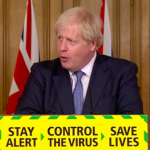
Boris hints at a ‘no jab, no job’ policy

From our UK edition

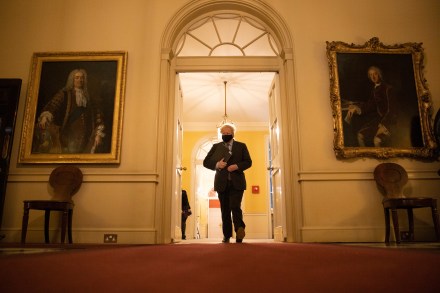
The most striking moment of Monday night's press conference was Chris Whitty’s declaration that it was the ‘professional responsibility’ on health and social care staff to get the vaccine. Whitty stressed that the question of contracts — whether there should be a contractual obligation to take the jab — was a political decision and so not one for him. Boris Johnson then followed up by talking about ‘very high quality care home groups’ that were looking at making vaccination a condition of employment. The significance of these exchanges is that they suggest the government is moving towards the idea of allowing hospitals and care homes to insist employees are vaccinated. If this happens, it will be a highly significant moment.
The lockdown roadmap explained

From our UK edition

Boris Johnson's roadmap for emerging from the pandemic shows us quite how bad his sense of direction has been at times over the past few months. The Prime Minister and his colleagues in government have repeatedly insisted that they won't be introducing vaccine passports — but today's document confirms that ministers are in fact establishing a programme of work on 'Covid status certification', which is a rose by another name. Johnson has also had to deal with a conflict between his advisers (and within his own mind) over whether or not it is — as he has repeatedly suggested — possible to vaccinate one's way out of this lockdown.

Britain’s class of Covid is in a race against time

From our UK edition

Winning the war is one thing, winning the peace is quite another. Time and again through history, national governments have thrown everything into a wartime effort, only to forget that there will be a country – or countries – to rebuild once victory has been secured.  This is why the Prime Minister is so keen to talk about Building Back Better and the Green Skills Revolution that he promises will follow just as soon as the vaccine has worked its magic. We are, we are told, going to create a better Britain once we’ve seen the back of Coronavirus. And of course much of Johnson’s blue sky ambition is admirable, and his famous optimism could prove important in the months and years ahead.

Is Israel’s green pass the key for lifting lockdown?

From our UK edition

Coronavirus rates in Israel right now are among the highest in the world. But that didn't stop the Israeli government from lifting its strict lockdown and, yesterday, reopening most of its retail economy. Non-essential shops, shopping centres, libraries and museums reopened to the general public after being closed for more than six weeks, despite the fact that daily cases and hospitalisation numbers remain at pretty much the same levels as when the lockdown began. The streets were packed as people tried to catch up on nearly two months' worth of shopping. The reason – or, perhaps, the justification – for this reopening is Israel's successful vaccination programme.

Latest vaccine data is even better than we had hoped

From our UK edition

The two vaccines approved and in use in Britain showed high efficacy rates in trials, but it takes time for data to creep through on efficacy in the real-world. We are, however, getting the first figures trickling through. This morning comes a paper evaluating the effectiveness of the Pfizer-BioNTech and AstraZeneca-Oxford vaccines in preventing hospitalisation rates in the Scottish population, using a dataset that covers 5.4 million people, 99 per cent of the population. The Eave II study, led by the University of Edinburgh, followed the 650,000 people who received the Pfizer vaccine between 8 December and 15 February and the 490,000 people who received the AstraZeneca vaccine between 4 January and 15 February.

Do we really want lockdown to end?

From our UK edition

Despite it being highly unfashionable to change your opinion, my lockdown stance has shown agility. For most of last year I was a ‘lockdown sceptic’. Not quite retweeting Piers Corbyn’s views on 5G, but equally not thrilled about spending every morning doing star jumps with Joe Wicks. I suspected lockdowns may ruin our children’s future forever, but was keen to not to be called a granny murderer. However, there was something about the words ‘deadly new strain’ which had an effect on me. Say what you want about epidemiologists, they know how to scare people. So I settled into being what I’d call a Covid ‘Centrist Dad’.

Vaccination offers us a road out of lockdown. Let’s take it

From our UK edition

As an epidemiologist and doctor who volunteered to return to the frontline in both waves, I have seen first hand the death and suffering from Covid. And, also, the knock-on effects on those affected by cancelled services. Deciding when to end lockdown is, of course, a difficult decision, but I now fear the costs of lockdown will soon start beginning to outweigh the benefits. There is no doubt that Covid-19 has the capability to rapidly overwhelm our healthcare system and cause unprecedented casualties. Indeed, what has transpired over the last year suggests that Neil Ferguson’s figure – that the virus was capable of taking 500,000 lives – looks fairly accurate. Covid clearly had to be suppressed to stop the NHS being overrun and to keep all emergency services running.

Starmer’s fundamental economic mistake

From our UK edition

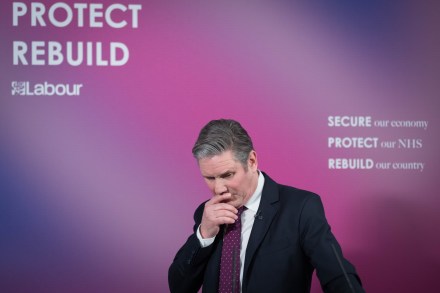
Keir Starmer’s speech on economic recovery, delivered at Labour’s Southside HQ on Thursday, was hyped as one of the most pivotal moments of his leadership so far. A Labour insider told Politico it had been 'six months in the making with a huge amount of work going into it’. It was designed to establish a clear ‘fork in the road’ between the Conservatives’ and Labour’s economic visions, both in the short term — leading up to the Budget next month — but also in the future, as Starmer pledged to shape the economy ‘to look utterly unlike the past’. But for a speech that was supposedly months in the making, there was surprisingly little substance.

Covid cases have collapsed

From our UK edition

Last month, Imperial College’s React study claimed that new cases of Covid were static or even rising slightly. This contradicted the figures for confirmed new cases, obtained through the Test and Trace system, which had shown a sharp fall in new cases from the second week of January onwards. Given that React tests a randomised sample of the population to arrive at an estimate for prevalence of the disease — and is therefore not capable of being skewed by the number of tests being performed — some were more inclined to believe that this, and not the number of confirmed cases, showed the genuine picture. However, February’s React study, published this morning, shows a very different picture.

Test and Trace was an expensive failure

From our UK edition

Before we had vaccines, NHS Test and Trace was supposed to be the breakthrough that would return us to a normal life. After all, testing, tracing and isolating contacts of infected people was credited with keeping Covid infections down in South Korea, Taiwan and elsewhere, so why wouldn’t it work here?  Instead, we had a second wave and the return to normality was reversed. In September, Sage, the government’s scientific advisory committee on emergencies, was dismissive, saying Test and Trace was having only a 'marginal effect’. A report by the National Audit Office in December, by which point the system had already cost taxpayers £22 billion, was equally scathing.

Dutch descend into curfew chaos

From our UK edition

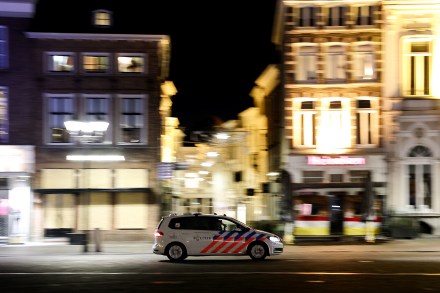
Police were ready and supermarkets closed their doors, but on Tuesday evening it was unclear if a controversial curfew in the Netherlands would be respected. Earlier in the day, a court ruled that the legal basis for the curfew was invalid: it rests on a particular type of emergency ruling when instead it should have gone to a vote in the lower house. This was, ruled the court in the Hague, 'absolutely not' the kind of situation for which the emergency law was intended, such as the breach of a dyke. Meanwhile, the court said the 9 p.m. to 4.30 a.m. curfew, which sparked nationwide hooliganism and riots after it was introduced in late January, constituted an 'extreme breach' of freedoms enshrined in Dutch law.

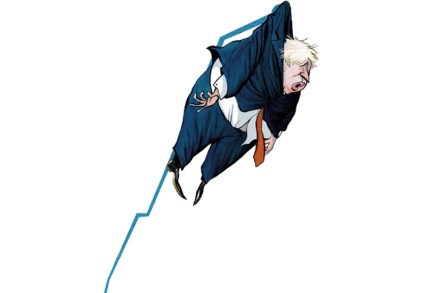
Boris Johnson hints at Covid exit strategy

From our UK edition

What will the government's roadmap out of lockdown look like? That's a question being asked frequently as ministers get to work on a plan for easing restrictions. Given that Boris Johnson isn't due to announce the details until next Monday, it's a moving picture — with new data continuing to inform the proposals. Speculation aside, the Prime Minister spoke in a broadcast interview today over his strategy for easing the lockdown.  Johnson said that he would be pushing for a 'cautious but irreversible' approach — in the hope that a cautious approach would mean that a fourth lockdown was avoided.

Why are so many health workers turning down the vaccine?

From our UK edition

On Saturday the government hit its target of administering a first vaccine dose to 15 million of the highest-risk groups for Covid 19. By now, everyone over the age of 70, all healthcare workers and vulnerable groups should have been offered a vaccine. It is an impressive achievement which stands in contrast to many of the other things that have gone wrong over the past year. But there is a rather large fly sitting in the ointment. While 90 per cent of eligible members of the general public have turned up for their appointments (97 per cent in the over-80s), the same is true of only 80 per cent of healthcare workers. In some places, the take-up among healthcare workers is even lower.

Staycations are second best – why won’t we admit it?

From our UK edition

The vagaries of the great British summer are uncertain enough without a deadly pandemic and lockdown thrown into the mix. Health Secretary Matt Hancock has revealed that, while there is still 'a lot of uncertainty' about booking holidays at home or abroad, he has already booked his own summer break in Cornwall. Frankly, if I wasn’t already put off the idea of a summer break in Blighty, the prospect of bumping into Matt Hancock and his knobbly white knees while paddling in the chilly Atlantic surf was the final nail in that coffin. I have the most wonderful childhood memories of holidays in the golden age before foreign package holidays were even a glint in Michael O’Leary’s eye.

France’s vaccine volte face

From our UK edition

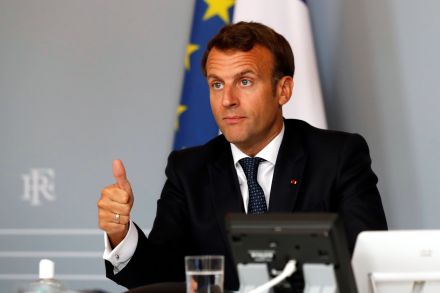
France has become the first country in the world to recommend a different vaccine regime for those who have recovered from the virus. The country’s public health authority has recommended that people previously infected with Covid-19 only receive one jab, rather than two. The advice is based on preliminary data, including two studies from the United States, that show the combination of antibodies built up from having the virus, plus one jab, creates immunity that ‘is equal to or even exceeds’ having two vaccines. It wasn’t long ago that French ministers were publicly criticising the UK’s strategy It’s too early to definitively say whether France’s strategy will work. For one thing, the government hasn't signed it off yet.

Tory nerves are growing over Boris Johnson’s Covid strategy

From our UK edition

When the third lockdown was voted on in the House of Commons last month, there was a smaller Tory rebellion than the previous two votes. A combination of the arrival of an exit strategy through vaccines, the new Kent variant and the sharp increase in hospital admissions meant that many MPs previously critical of lockdown as a tool against coronavirus, supported the measures. However, with Boris Johnson due to set out a roadmap later this month on the path out of lockdown, the mood is now beginning to change. Tensions increased this week when Matt Hancock announced new border measures. Controversially, this included a potential ten year prison sentence for those who lied about where they had travelled to the UK from.

What a record GDP slump means for economic recovery

From our UK edition

It’s been no mystery that the UK economy took a severe beating in 2020: two lockdowns, a host of circuit-breakers and fire-breakers, Christmas cancelled for millions of people. The experience of an economy forced to hibernate for months on end last year is reflected in today’s GDP update from the Office for National Statistics, showing the economy contracted 9.9 per cent last year — the ‘largest yearly fall on record’ and biggest contraction in 300 years. The fall isn’t quite as stark as the Office for Budget Responsibility forecast alongside the Chancellor’s spending review last November (an estimated 11.3 per cent), but it still represents one of the largest economic hits among the big economies.

‘Then the roof fell in’: My Covid fight

From our UK edition

There was all this talk about Covid, claiming that chaps who were over seventy and not underweight were vulnerable. I would nod sagely, never thinking that this could apply to me. Like a lot of men, when it comes to physique or romance I have a secret appeal court, to override the harsh judgments of birth dates and the shaving mirror. It assured me that I would not catch Covid.  Yet around the turn of the year, I kept on getting intimations and twinges. Full-blown Covid symptoms? No. Taste? Fine. Smell? Fine. Occasional cough but hardly so you would notice. But I was not happy. Was this plague, or hypochondria? The latter did not seem impossible. I was tested – a brush at the back of the throat variety – and passed, without feeling reassured.

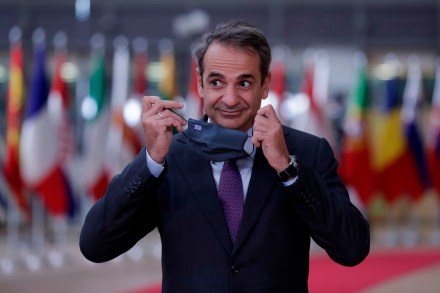
Greek PM’s lockdown larks

From our UK edition

To break your own lockdown rules once could be seen as a mistake, to do it twice might suggest a hint of arrogance. Although who could blame Greek PM Kyriakos Mitsotakis when faced slap-up Mediterranean lunch on an Aegean island? Well, it seems quite a few Greeks can and do.  The centre-right politician was also snapped in December, stood side-by-side with a group motocross racers sans masks (against his own rules) — at a time when his government was inforcing a €300 fine for those who left their homes on non-essential journeys. https://www.youtube.com/watch?