Countryside

Trump’s comeback, Labour’s rural divide, and World of Warcraft

From our UK edition

37 min listen

This week: King of the HillYou can’t ignore what could be the political comeback of the century: Donald Trump’s remarkable win in this week’s US election. The magazine this week carries analysis about why Trump won, and why the Democrats lost, from Freddy Gray, Niall Ferguson and Yascha Mounk, amongst others. To make sense of how Trump became only the second President in history to win non-consecutive terms, we’re joined by the journalist Jacqueline Sweet and Cliff Young, president of polling at Ipsos (00:58).Next: is Labour blind to rural communities? The changes to inheritance tax for farmers are one of the measures from Labour’s budget that has attracted the most attention.

Labour’s war on the countryside

From our UK edition

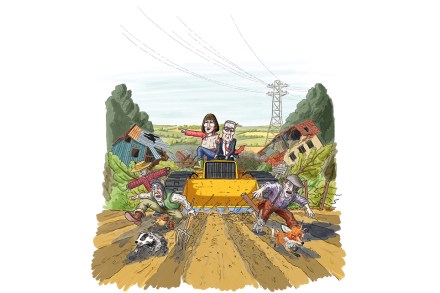
Two miles from where I am writing, the neighbouring village is plastered with posters demanding ‘Say No to Pylons’. The object of loathing is a 112-mile power line from Norwich to Tilbury that would carry wind-generated electricity from the North Sea to a supposed 1.5 million homes. As a concession to the famous landscape of Dedham Vale on the Essex-Suffolk border, the cabling will run underground for 3.3 miles. But because of John Constable’s inexplicable failure to paint the rest of the route, people living near the other 108.7 miles must have their vistas ruined by 160ft pylons. The developers claim it is twice as expensive to bury power lines than to hoist them on great metal towers. Objectors disagree and demand more consultations.

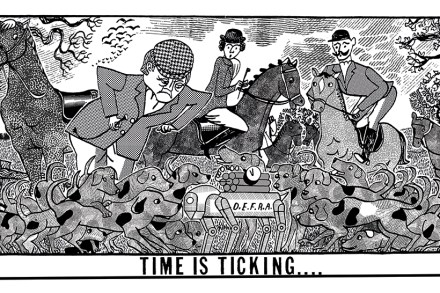
It may be too late to save trail hunting

From our UK edition

There’s a grumble, often repeated among country folk, that ‘hunting people got hunting banned’. What they mean (I think) is that a combination of complacency, arrogance and the failure to get the public onside is what did for hunting. It’s not really fair: arguably, without the disaster of the Iraq war, Tony Blair may not have felt he needed to chuck a piece of legislation at his backbenchers, like a juicy bone to a pack of hungry hounds. The hunting ban never was about animal welfare, but class hatred, Dennis Skinner declaring that the bill was ‘for the miners’. The ban, Blair later admitted, was ‘one of the domestic legislative measures I most regret’.

Starmer’s double standards

From our UK edition

Sir Keir Starmer’s readiness to do ‘whatever it takes’ to support Ukraine seems to be qualified by his fear of offending the Biden administration. He wants to let Ukraine use British Storm Shadow missiles inside Russia but dares not, for fear of the White House. Surely if the special relationship were really strong, its junior partner would be confident enough to diverge occasionally. Think of Mrs Thatcher saying to George Bush senior, at the time of the first Gulf war, ‘This is no time to go wobbly’. In fact, however, Sir Keir is not even consistent: he is prepared to annoy the United States by making the worthless gesture of an embargo on tiny, selective arms-related sales to Israel, but not on missiles which could work decisively against Vladimir Putin.

The science behind Olivia Colman’s left-wing face

From our UK edition

The new hunting year formally began last week. Should I resubscribe? Politically, the outlook is bleak. In February, Steve Reed, the shadow environment secretary, announced that Labour would implement a ‘full ban on trail and drag hunting’, on the grounds that there were ‘loopholes’ in Labour’s hunting ban. This even though, when advocating the original ban, Labour said it favoured drag hunting (trail hunting had not then been invented) and was worried only about live quarry. Mr Reed included his ban promise in a speech in which he announced that his party would treat rural voters with ‘greater respect’. His two aims conflict.

Life on the margins pt II: Li Ziqi and the phenomenon of the rural influencer

From our UK edition

23 min listen

In the last episode, I discussed Chinese rural lives with Professor Scott Rozelle. One point he made which particularly stuck with me was the dying out of farming as an occuption – he'd said that most rural people under the age of 35 have never farmed a day in their lives. So that got me thinking, what do they do instead? In this episode I’ll be looking at one, very high profile, alternative – vlogging. I’ve noticed through my hours of scrolling through Chinese social media that there is a huge genre of rural, pastoral content.  This is an interesting phenomenon both for what it says about the rural population today, as well as what it reveals about the – often – urban viewers on the other end.

Why won’t Tesco bank let me change my address?

From our UK edition

‘Thanks for calling Tesco bank,’ said the voice, before rather lavishly promising to get me to a member of the team who was going to help me. This wasn’t quite how it turned out, although I would say, up until the moment I asked to change my address I was a very satisfied customer. If any of these questions did not suit me, I would be allowed to object, he said, as though reading me my rights This credit card has a very reasonable interest rate, and a nice big limit. However, it has decided that I do not have the security clearance to change my address because I have never logged into its website. I haven’t felt the urge to. I pay by direct debit and receive a letter each month which is perfectly adequate.

Have I cursed myself by drinking holy water?

From our UK edition

The mountain spring that feeds our house froze during the first ground frost, and we had no water. The builder boyfriend filled a bucket from the fountain in the garden so we could flush the loo. This really is living in faded grandeur. I spent the evening worrying about how we had cursed ourselves by drinking and bathing in holy water We are waiting on various tradesmen to turn up and do things to the plumbing in our run-down Georgian pile. We know we might have to drop a bore hole. But until then the water coming out of our taps is from a ‘holy well’. The stream pools into a grotto on the lane, a shrine with rocks around it that occasionally attracts a pilgrim who comes with a bottle and fills it from the waters.

In search of deep England

From our UK edition

I am wary of mentioning General de Gaulle in these pages, if for no other reason than remembering Auberon Waugh many years ago arguing against a statue of the leader of the Free French being erected in London. Waugh’s objections were based firstly on the fact that statues only worked with togas because statuary did not favour the trouser leg. His second objection was that this country had fought a long and costly war to get General de Gaulle and his friends out of London. That notwithstanding, I dare to mention de Gaulle here because he has been on my mind. Or at least one aspect of him has been on my mind. That is that glorious appeal he made to ‘La France profonde’. Anyone who has spent time in France – especially rural France – will know exactly what he was talking about.

Is it really un-Christian to listen to social media gossip?

From our UK edition

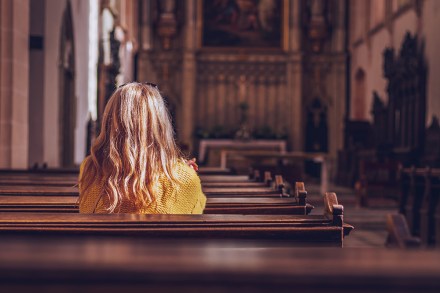
‘Let’s get out of here,’ I whispered, almost in tears, as the priest finished his horrible homily. Standing at the altar in front of a stained-glass window showing Jesus with his arms outstretched, this priest was telling us all off for what had happened in Dublin, three hours’ drive away. I suppose we expected a bit of a lecture, going by the speeches about Palestine that we had been subjected to in previous weeks. We did so want to fit in by going to Mass, which had been noted by our Irish neighbours as a good thing. The priest told us how un-Christian we were being for listening to social media gossip But this was too much. We couldn’t be doing with an extended political manifesto extolling the virtues of Leo Varadkar and open borders on a Sunday morning.

I’m taking on the Hilton through its breakfast buffet

From our UK edition

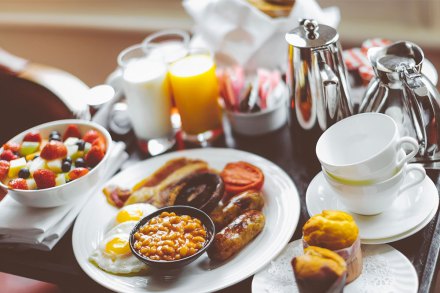
‘Have you ever eaten breakfast at the Hilton before?’ shouted the woman on the door of the restaurant, as a guest attempted to gain entry. She told me I could help myself to coffee and I said I would, because I had As he mumbled something, she shouted: ‘And how are you this morning?’ He mumbled something else, and looked scared. I was already sitting down, having dodged the Cerberus of the breakfast bar because, when I entered, she had been marching around the diners shouting, ‘Anything else? More coffee? No?’ and I managed to help myself to what I wanted from the buffet and choose a table. This did not go down well. When she worked out that I had breached her barriers, she marched up and shouted: ‘Room number!

My battle to get hold of the good stuff

From our UK edition

In the pitch dark, we stormed from the house to the pick-up truck and screeched out of our farmyard with me shouting: ‘Come on! This is our only chance! If we don’t get there now we’re done for!’ ‘They won’t sell to us because we’re English. It’s like those stories you hear about idiots who move to Wales’ It was nearly 10 p.m. and I had just scored something on the phone so elusive on this remote hillside that I was physically itching from the desperation of trying to get it. The dealer concerned had answered his phone after I had rung him repeatedly, on the hour every hour, like a stalker. When it came to it, I burst into tears. ‘I’m desperate,’ I sobbed. ‘Please help me.

The covert campaign against field sports

From our UK edition

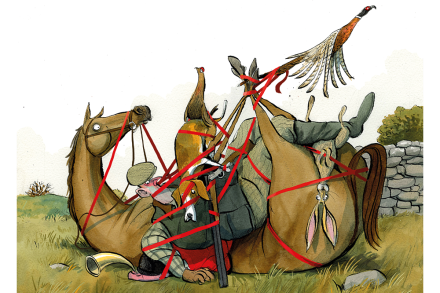
If a general election is held, as is rumoured, in November next year, Labour could return to power exactly 20 years after the Hunting Act was passed, and there is the very real possibility of field sports being finished off altogether. Then, the government’s assault on hunting was a long, bloody, open conflict. Today, the campaign against countryside pursuits is more covert – a gradual process of lawfare. Over the past two decades, more and more regulation has crept in. Field sports and the rural economy that surrounds them are suffering. The groups set up to protect rural England often now work against the interests of both gamekeepers and farmers, with the result that the countryside is being drained of the people who understand and can conserve it best.

The trouble with wild campers

From our UK edition

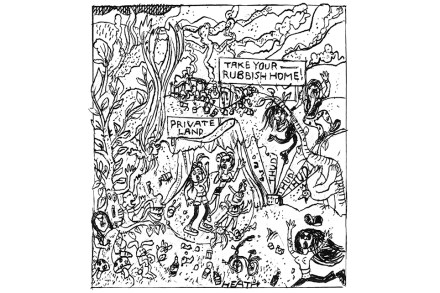
It’s not just bears that squat in the woods, as you’ll discover if you ever have the pleasure of a visit from wild campers. Other disfigurements to the land have included scorched patches of grass, which luckily didn’t become full-blown wildfires, branches severed from trees (presumably for wet firewood), stakes removed from young saplings (ditto), and the inevitable beer can and ‘disposable’ barbecue pyramid. I recently found a lacy, magenta-coloured bodice hanging from a tree, but that may have been left by an even wilder breed of camper.

Why house-hunters are heading to Derbyshire

From our UK edition

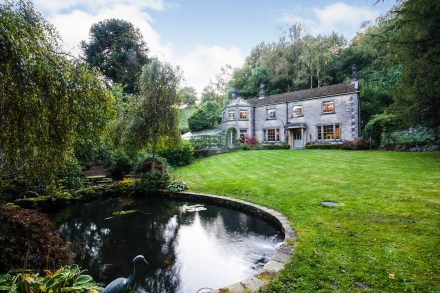
You don’t get much further from the seaside than Derbyshire, a county landlocked at the heart of England. During lockdowns house-hunters simply couldn’t get enough of coastal property, and prices in Wales and the West Country boomed. But three years after the start of the pandemic, a new property powerhouse is emerging.  According to the latest UK House Price Index, prices in North East Derbyshire are up by almost 20 per cent year on year, to £259,000. Across the way, prices in the Derbyshire Dales are up 18 per cent year on year, to an average of £362,000. This performance would be impressive in a strong economy, never mind against the backdrop of rising interest rates and spiralling inflation.

The battle to restore Britain’s hedgerows

From our UK edition

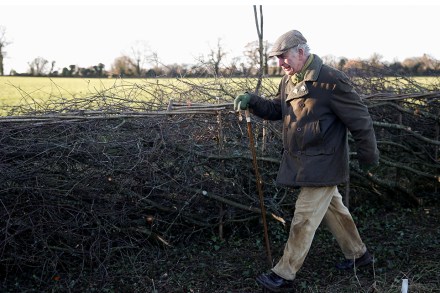
‘I don’t know if hedgelaying is a dying art. But there’s a lot of old hedgelayers that are dying,’ says David Whitaker to chuckles from some of his fellow craftsmen. The occasion is the annual hedgelaying championship, organised by the National Hedgelaying Society, of which Whitaker is secretary. In a good year, the event draws around 100 competitors and a few curious spectators to a marquee in a muddy field in Hampshire. Britain’s oldest hedge dates back to the Bronze Age. Thousands of miles of hedgerow were laid in the late 1700s after the Enclosures Act carved up the countryside.

How the bottom fell out of the prime country market (again)

From our UK edition

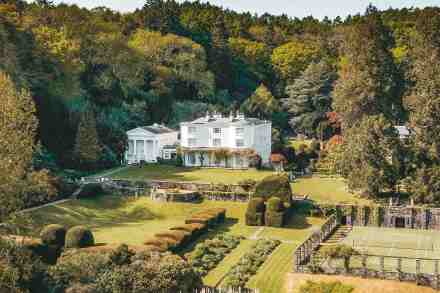
As trophy homes go, the Grade II*-listed Glen Usk is hard to top. Set on the west bank of the River Usk in Wales, it is a white rendered neoclassical fairy-tale of a Georgian country house and its current owners have thoroughly renovated the eight-bedroom home, set in 35 acres.  At the tail end of 2021 it went on the market with estate agent Fine & Country for £6.5 million. In November the Monmouthshire property’s price was dropped by £2 million after failing to find a buyer (and also to reflect a decision to reduce the amount of land to be sold with it from 75 acres to 35). Three months later, it is still on the market.

The art of shooting (and cooking) game

From our UK edition

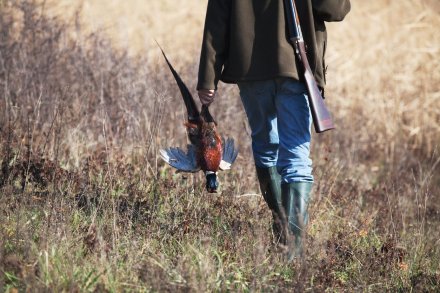
I love game, me. Not the great game, of course, which is football. But game, real game, the sort that was running about in hedgerows and copses, and in fields of spent brassicas and wintry stubbles, until you shot it. At this time of year there's nothing better, to my mind, than a day out in the country with a gun and a dog, shooting a few brace of pheasant or duck, and then taking them home for a bit of butchery. People talk about from farm to fork. Good for them. I think from trigger to tongue is even better. I know that butchery sounds grisly and may be shocking to the sanitised ears of Tesco man or Waitrose woman. But the fact is eating meat or fish is a grisly business. Regardless of the posh packaging, there’s been blood spilled along the way.

Why Warwickshire rivals the Cotswolds for rural living

From our UK edition

Have we reached peak Cotswolds? Not if the queues outside Diddly Squat Farm Shop near the village of Charlbury are anything to go by. Locals bemoan the traffic jams around Jeremy Clarkson’s estate as fans flock from far and wide to take home a bottle of the ‘cow juice’ from the Clarkson’s Farm TV series. Clarkson’s tongue-in-cheek product is a wry nod to the area’s reputation for rural chic, forged by the likes of Lady Bamford’s Daylesford Organic farm shop – where a scented candle will set you back £49 – and Nick Jones’s Soho Farmhouse, where a stay in a luxury ‘piglet house’ costs £395 a night.

In praise of farm shops

From our UK edition

As a city-dweller for 34 years, I am used to the hustle and bustle of other people. Cars, sirens, strangers chatting in the street: it’s the background noise of everyday life, a comforting reminder that you’re never alone. So when I moved to the Suffolk countryside in April last year, I found it a bit of a shock. Pregnant, freelance, with a husband often in London for work, I had a two-year-old for company, few friends and a big empty house overlooking fields, sky – and not much else. It's a 20-minute drive to the nearest town, and there’s nothing but a ramshackle pub in walking distance. We switched to online shopping for convenience, so I didn’t even have the weekly trip to the supermarket to fall back on.