Coronavirus

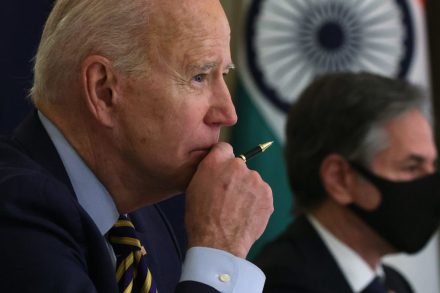
Joe Biden is letting India down

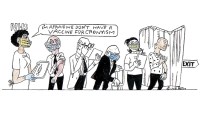
With 40 percent of the population vaccinated, a palpable sense of normalcy has returned to America. The young are now getting their turn at the COVID vaccine and in almost every city, restaurants and bars are back in full swing. But while selfies of joyful reunions with older relatives flood social media here, in India, the picture is grim. The country reported world record-breaking coronavirus infection rates for four days in a row. Hospitals in several cities are grappling with severe shortages of beds, medicines and oxygen. For a country widely seen as the pharmacy of the world (India produces 60 percent of the world’s total vaccines), it is a sad irony that just 8 percent of its own population has been vaccinated thus far.
india

Hospital wards are filling up again – with fakers

From our UK edition

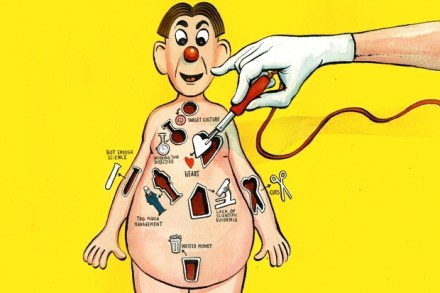
How do I know that Britain’s Covid crisis is over? The fakers are back. The hypochondriacs, the psychosomatics, the pseudo-fitters, the attention-seekers and the lonely. They’ve started to return to the acute medical ward where I work. They’ve been gone so long I actually almost missed them. This collection of patients, who take up time and resources inversely proportional to the state of their physical health, simulate symptoms for gain (malingerers), simulate/induce their symptoms for the pleasure of the sick role (Munchausen’s syndrome) or genuinely experience symptoms such as pain, seizures or paralysis in atypical ways with no physically identifiable or treatable cause (now vaguely termed ‘functional disorders’).

Why I don’t regret leaving the BBC

From our UK edition

I have just had my second jab and it poses a dilemma. As an assiduous Covid rule-taker, I have been appalled by those — including friends and relatives — who have flouted or sidestepped the regulations and guidelines in the belief that they don’t apply to them. ‘We know we shouldn’t but it’s good for us’ or ‘We use our common sense’, they say. Since the issue is as incendiary as Brexit, I have fumed in silence. Of course the rules are anomalous and inadequately explained by ministers but I tend to trust the scientists. That said, the mantra ‘no one is safe until we are all safe’ is clearly nonsensical. Unlike those who are still waiting, I am now as safe as I am ever going to be. Hence my dilemma.

Portrait of the week: Covid pills, Chauvin’s conviction and a red card for the Super League

From our UK edition

Home Boris Johnson, the Prime Minister, announced the hunt was on for two effective pills to treat Covid, to be ready (after clinical trials) by the autumn. He had cancelled a visit to India, which has seen an increase in Covid deaths, with Delhi put into lockdown. Scarcely was his trip off than India was added to a ‘red list’ of countries from which most travel to Britain is forbidden. Sir Keir Starmer, the leader of the opposition, visited The Raven public house in Bath only for the landlord to shout at him: ‘Get out of my pub!’ He left. By the beginning of the week 9,416,968 people had received both doses of coronavirus vaccine, 17.9 per cent of the adult population; 60.8 per cent had received one dose. The number with both doses soon rose above ten million.

Who gave Abba ‘nul points’ in 1974?

From our UK edition

Falling from grace Six Premier League football clubs had announced their intention to join a European Super League, from which it would be impossible to be relegated, before changing their minds. When were they last relegated from anything? — Manchester United were relegated from the top tier of English football in 1974, and promoted back the following season. — Manchester City were relegated to the third tier in 1998, climbed back to the second in 1999 and the Premiership in 2000. They were relegated again in 2001, and promoted again the following year. — Liverpool were relegated to the old Second Division in 1954, and promoted to the First in 1962. — Chelsea were relegated for a season to the Second Division in 1988.

Where life is normal

Left-wing magazine Slate took the stunning and brave step Saturday of publishing an article outlining the case for no longer wearing masks outside. 'As we’ve come to know more about the virus, as vaccinations are ramping up, and as we’re trying to figure out how to live with some level of COVID in a sustainable way, masking up outside when you’re at most briefly crossing paths with people is starting to feel barely understandable,' the author reasoned. Mask enthusiasts melted down in response, insisting that Slate's article was 'irresponsible', 'going to get people killed' and 'misleading'. Others celebrated the article as 'a good sign of progress'. A Harvard infectious disease specialist asserted, 'I am generally a hawk about maintaining rules with a clear benefit.

normal

My painstaking preparations for Prince Philip’s funeral

The files arrived marked ‘STRICT EMBARGO’ and ‘CONFIDENTIAL’ and ‘FORTH BRIDGE REVISED’ and stamped with various crests and insignia. My dog Mot was intrigued and sniffed the stack warily. I have a few days to ingest this mass of information — ceremonial detail, armed forces involvement, order of service, processional arrangements, musical selections, historical precedent, the unabridged chronicle of Windsor and its College of St George and its splendid chapel — before hosting the BBC’s coverage of the funeral of the Duke of Edinburgh. In four hours of live broadcasting, watched by an audience of millions, the focus is on accuracy and tone.

Let’s show vaccine passports for football fans the red card

As I’ve written before, the thing I’ve missed the most in the past 12 months is going to see QPR with my son Charlie. So I’m alarmed about the prospect of having to produce a ‘Covid status certificate’ every time I want to go to a game. That was the advice in a recent letter signed by various sporting panjandrums and I fear it will also be the recommendation of the taskforce set up by the Department for Culture, Media and Sport to look into reopening sports venues. The first and most obvious objection is that it’s a breach of my liberty. It’s an inversion of the Common Law principle that everything should be permitted unless the law specifically prohibits it.

Britain is in danger of repeating its post-war mistakes

In search of wisdom about how an officious government reluctantly relaxes its grip after an emergency, I stumbled on a 1948 newsreel clip of Harold Wilson when he was president of the Board of Trade. It’s a glimpse of long-forgotten and brain-boggling complexity in the rationing system. ‘We have taken some clothing off the ration altogether,’ he boasts, posing as a munificent liberator. ‘From shoes to bathing costumes, and from oilskins to body belts and children’s raincoats. Then we’ve reduced the points on such things as women’s coats and woollen garments generally and... on men’s suits.’ Does this remind you of anything?

Portrait of the week: Duke of Edinburgh dies, Covid retreats and questions for Cameron

From our UK edition

Home The Duke of Edinburgh, who was married to the Queen for 73 years, died at Windsor Castle, aged 99. The Queen was said to feel ‘a huge void’. Union flags flew at half mast; gun salutes were fired. For a day the BBC cancelled television schedules and broadcast the same programmes on all its channels. Parliament was recalled a day early. No laws would be passed until after the funeral on 17 April at Windsor, to be attended by no more than 30, in compliance with coronavirus legislation. As a mark of respect, the Prime Minister thought better of being photographed drinking beer in a newly liberated pub garden, though he did have his hair cut. The nation learnt from endless newspaper pages and broadcast media what a difficult and dutiful life the Duke had led.

The truth about Russia’s hidden Covid deaths

From our UK edition

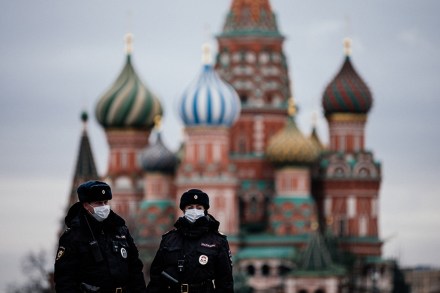
The secret is out: the Russian government has been lying to its people. Officially, Russia’s coronavirus death toll for last year — as reported on state television and logged at the World Health Organisation — was an impressively low 86,498 for a population of 146 million. In his traditional December press conference Vladimir Putin proudly reeled off statistics on how quickly Russia’s economy was recovering from the pandemic, and last month he made a triumphant address to a packed public concert to celebrate the anniversary of the annexation of Crimea in 2014. ‘Today is a holiday for our entire vast country,’ Putin told an 80,000-strong, maskless crowd at Luzhniki stadium. ‘Please, take a deep breath and answer this: Do we love Russia?

The perpetual pandemic

The coronavirus pandemic was a black-swan event the likes of which this planet hadn’t seen in almost a hundred years. It caused the deaths of hundreds of thousands of people and crashed the global economy, resulting in the largest socioeconomic change since 2008. It was, in short, not good. Yet there are pockets of public health experts and corporate media pundits who seem content to play out an endless cycle of pandemic porn. This runs contrary to what the majority of the population wants to watch and how most Americans are choosing to live their lives.

pandemic

Show us the money

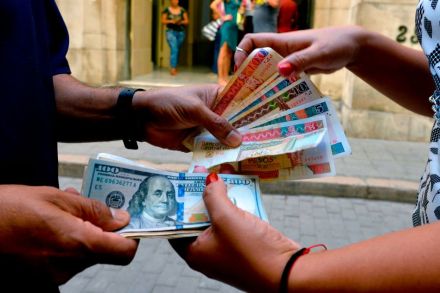
No one likes to waste a good crisis, and the digital-payments industry is certainly trying its hardest to spin the narrative that COVID-19 is about to deliver the coup de grâce to cash. Various lobbying efforts culminated in a recent CNBC report claiming we have all switched to payment apps to avoid catching the disease from dollar bills. A ‘cashless customer’, Heima Sritharan, supposedly speaks for the entire millennial generation: ‘Not that I was using cash that much before, but I find that during Covid especially, I just don’t want to use cash as much because of the germs aspect.’ The report quotes a figure from the Pew Research Center suggesting that 34 percent of consumers under the age of 50 went the previous week without making a single purchase with cash.

money cash cashless

Three cheers for federalism!

For all that has gone wrong in America in the last year, the main thing that has gone right is our system of 50 independent states has endured and prospered. The COVID-19 pandemic was a challenge to our federalist system. The impulse in March 2020 was to have all states respond in the same way to the virus. Of course, in a country with large cities and small cities, sprawling suburbs, small towns, extremely rural areas and everything in between, that made little sense. We quickly corrected it and governors took control of COVID-19 policies for their states. The results of that have been astonishing. States that had tight lockdowns, such as New York, New Jersey and Michigan, did not see better outcomes than states which loosened their lockdowns early on.

federalism

The competitive cult of cosiness

From our UK edition

Do you remember the first wave of hygge, in 2015? It seems a long time ago — back in the freewheeling technicolour of a pre-Covid world — but at that time hygge was the hottest thing to come out of Denmark. The country already attracted envy for its vigorous welfare state, covetable knitwear and high rating on the international happiness index, but the new export outshone them all. It roughly translated as ‘cosy’, people said, but the English word was frail and puny next to the soul-feeding, friendship-cementing, quasi-spiritual force that was hygge. The latter signified home-baked bread and cakes, hand-knitted socks and friends laughing around a wooden dinner table as a hotpot bubbled on the stove.

Portrait of the week: Vaccine passports, Northern Ireland riots and a cocaine-smuggling kayaker

From our UK edition

Home The government sketched a scheme for a coronavirus passport, or ‘Covid status certification’, to be tried out at the FA Cup Final on 15 May. It would record vaccination, a recent negative test or natural immunity after recovering from Covid and might admit the bearer to public places, such as pubs or soup kitchens. Dozens of MPs opposed the passport, including Jeremy Corbyn, the former Labour leader, who sits as an independent, and Iain Duncan Smith, the former Conservative leader. In the meantime everyone could have two lateral flow tests a week at pharmacies or at home, and would have to self-isolate if the result was positive.

Can Boris beat the vaccine passport rebels?

From our UK edition

No prime minister wants to be dependent on the opposition to get the government’s business through the House of Commons. But it is likely that Boris Johnson will be in this position when it comes to ‘Covid status certificates’, other-wise known as domestic vaccine passports. More than 40 Tory MPs have already signed a pledge to oppose them, and the government’s majority is 80. ‘It is just down to Starmer. If he whips against, Boris will lose,’ says one of the leaders of the Tory rebellion. The policy has hit a nerve in the Conservative party. The view in government is that these MPs are unlikely to change their minds. They won’t be assuaged by promises to limit the scheme to mass events or anything like that.

Britain’s vaccine success was supposed to lead to freedom. What happened?

From our UK edition

In November, when cases were surging and a second lockdown was under way, Boris Johnson made a big promise: things might look bleak, he said, but the ‘scientific cavalry’ would arrive. It duly did, with a vaccination programme that became the envy of Europe. The mood of the country lifted. Today, Britain is still on course to become the first country in Europe to vaccinate its way out of the pandemic — and lockdown. The economy can reopen in time for summer: truly a great escape. Science achieved the seemingly impossible. Produced in record time, Covid vaccines are proving more effective than most predicted. In Britain, cases and deaths have fallen by 95 per cent since the latest peak, a stunning descent.