Cornwall

What makes a pasty Cornish?

From our UK edition

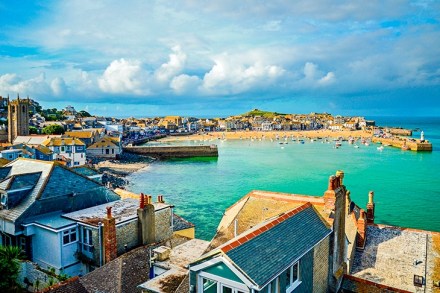
This week, world leaders are doing what countless Brits do every summer: unpacking their bags in a charming corner of Cornwall. The G7 summit — Joe Biden’s first, and Angela Merkel’s last — is taking place in the resort town of Carbis Bay, a stone’s throw from St Ives. Between the speeches and the roundtables, will the world leaders find time to tuck into Cornwall’s proudest and most popular export, the Cornish pasty? Boris Johnson talked about the region’s industrial history in the run-up to the event: ‘Two hundred years ago Cornwall’s tin and copper mines were at the heart of the UK’s industrial revolution and this summer Cornwall will again be the nucleus of great global change and advancement.

carrie

Carrie and Jill: the real summit

All eyes today are on…Carrie and Jill, as the remainder of the G7 summit is effortlessly overshadowed by the leaders’ spouses. The First Lady of the US is having tea today with Carrie Johnson — this being Cornwall, it will be a cream tea, with scones. This is pretty well obligatory when you visit Cornwall. Mrs Johnson is not actually first lady of the UK, since no such role exists, and the only First Lady is the Queen, but irritatingly the British media have adopted the Americanism, so stand by for headlines along the lines of 'First Ladies Meet’. Thank goodness, then, the British prime minister got round to marrying his girlfriend just last Saturday, before the summit — in fact, one wonders whether the nuptials were timed precisely to avoid any awkwardness.

A second home in Cornwall is nothing to be proud of

From our UK edition

Last week there was a public toilet for sale on the coast of Cornwall. The Kent-based auctioneer called it ‘an exciting and rare opportunity’, although its video tour of the property did not even undo the padlock on the security door. It was on the market for £20,000, which was a bargain — the last exciting and rare toilet block to be auctioned in Cornwall went for five times its asking price, even though it didn’t have as nice a view. It did, however, have windows. It’s undeniable that the property market in Cornwall is overheating. The backlash to the toilet auction was such that it was withdrawn from sale, but house prices in parts of the county are increasing at double the national average.

How to try Cornwall’s new 150-mile cycle route

From our UK edition

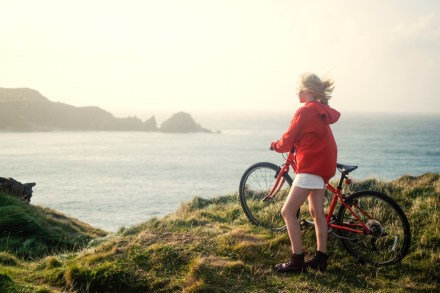
With many people having taken up cycling during lockdown, the West Kernow Way is bound to prove popular this summer. A new initiative from Cycling UK, it’s one that I'm surprised hasn’t come sooner. This part of the world is awash with bridleways, cycle-able terrain and quiet backcountry roads suited to bikes. It’s also part of the world best explored slowly - drive past this landscape without stopping at the ruins, the pubs and the hamlets and you’re missing a fundamental part of what makes this area of Cornwall special. It’s set to be a popular route, intended to be covered over four days. So what are the highlights and where should you start?

Out of order

From our UK edition

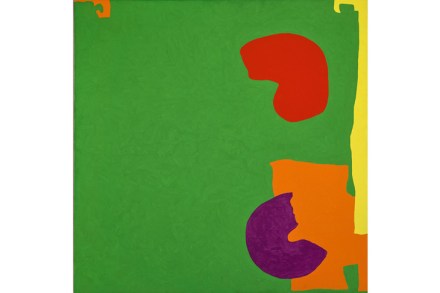
Patrick Heron’s paintings of the 1950s melt like ice creams. You want to run your tongue along the canvas and catch the drips. They capture a sense of summer holiday sea-and-scampi freedom. When Heron (1920–99) was five, his father, a blouse and silk-scarf manufacturer, moved from Leeds to St Ives in Cornwall. Heron played with the children of the potter Bernard Leach, and with Peter Lanyon, a friend from Sunnycroft primary school and a future painter, founded the Golden Harp Club, a society for the preservation of culture in England. After the Slade School of Fine Art in London, Heron returned to St Ives in 1944 on an ‘approved placement’ for conscientious objectors at the Leach Pottery. He met Ben Nicholson, Barbara Hepworth and Naum Gabo.

Jon Lansman finally gets a left victory

From our UK edition

While the Conservatives in Cornwall may celebrate winning control of the council in last week’s election, they had one notable setback: Liberal Democrat Thalia Marrington won the Mousehole, Newlyn and St Buryan division, which has been Tory for as long as anyone can remember. What did it take for the Tories to lose England’s biggest fishing port? According to those sages at the Guardian it was the Cornish fishing vote turning against the government after the Brexit deal. Others argue that the traditional rivalry between farmers and fishermen means they were never going to vote for a farmer like William Bolitho.

Cornwall, but not as the locals know it: Stein’s at Home reviewed

From our UK edition

The Stein’s at Home steak menu box (£65) says ‘Love from Cornwall’: it is not for people who live in Cornwall. It is, rather, a cardboard mirror of Padstow, Rick Stein’s slate-covered, teal-painted, monstrous Cornish Center Parcs for upper-middle-class holiday-makers, and it has its own whimsical map of Rick Stein outlets in case you stray too far from the Rick Stein path, like Dorothy heading to her death. I went to Padstow during the first lockdown and heard guilty testimony: some natives enjoyed pandemic because Padstow was almost real again. But that is over now, and here comes the counter-revolution to reassert itself in cardboard. People will follow later.

One of the greatest of all outsider artists: Alfred Wallis at Kettle’s Yard reviewed

From our UK edition

Alfred Wallis (1855-1942) should be an inspiration to all late starters. It was not until he had passed the age of 70 that, after his wife of many years had died and having previously worked as a sailor, fisherman and rag and bone merchant, he decided to take up art. ‘Aw! I dono how to pass away time,’ he explained to a shopkeeper in his native town of St Ives. ‘I think I’ll do a bit a paintin’ — think I’ll draw a bit.’ Three years later, his work was spotted by the leading British modernists Ben Nicholson and Christopher Wood. By and by, Wallis’s pictures were being exhibited in London, and Nicholson presented one to the Museum of Modern Art, New York.

An extraordinary debut: Make Up reviewed

From our UK edition

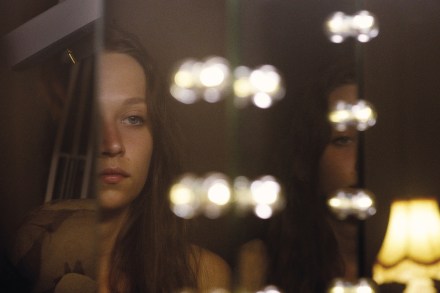
Make Up is the first full-length film from writer--director Claire Oakley, set in an out-of-season holiday park on the Cornish coast where the wind blows, waves crash, rain lashes and gulls screech so you know it’s not a rom-com (foxes shriek in the night too). But while it’s easy to say what it isn’t, it’s harder to say what it is. It’s a thriller but not quite a thriller, and a horror flick but not quite a horror flick, and a psychosexual fantasy but not wholly a psychosexual fantasy… It may be we can settle only on one thing, and the one thing is this: it is very, very good.

Hope in a takeaway bag: Mackerel Sky reviewed

From our UK edition

You don’t dine in the age of pandemic: you scuttle about in the wreckage. If you can afford food, and you aren’t afraid of your neighbours, who don’t understand the government strategy and believe that if they stay indoors for eight years they will survive, and so should you, you can eat out; or rather you can collect takeaway in the comforting dusk. It is not because I want the food. My husband, with whom I re-enact Sunset Boulevard in lockdown, each taking it in turns to be crazy Norma or Max the butler, is a superb cook. It is that I want local restaurants to survive. It is my version of painting a rainbow in a window and calling it political activism, which it isn’t. It is praying with crayons.

Six places in Britain that make you feel like you’re abroad

From our UK edition

Even when lockdown ends in Britain it may be a while longer before international borders begin to reopen. But not being able to hop on a flight doesn’t mean you can’t enjoy an exotic escape. There are plenty of beautiful spots across the British Isles that make you feel as though you’re hundreds of miles from home. Here is our pick of the best. Somerset Lavender Farm, Somerset Sipping a coffee al fresco and gazing over the lilacy haze of fields at this family-run farm, you’d think you were in deepest Provence. In fact you’re just 10 miles from the UNESCO world heritage city of Bath and right on the fringes of the Cotswold Hills. The working farm has around 50,000 plants, including five acres of different types of lavender and a rose garden.

The Cornish revolt against second-home owners

From our UK edition

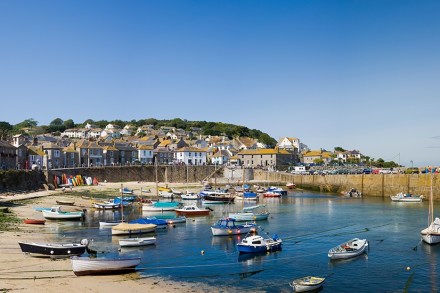
It was sunny on Monday so I took the children swimming in Mousehole harbour. It was almost empty but a woman sanding a boat on the quayside scowled at me. She couldn’t hear the children’s Cornish accents, which might tell her that I live here. There have been tensions for years between native Cornish and the incomers who buy houses and drape them with nautical-themed junk. With pandemic, they have developed into hostility. A sign appeared on the bus stop in Mousehole: ‘If you have travelled from a hotspot area outside Cornwall (like London) you are putting vulnerable people in this village at risk of death. Please come back when the virus peak has passed, until then travel is selfish and unkind.’ But it was grey and windy that day, and the sign blew away.

Dining in the time of pandemic: takeaways reviewed

From our UK edition

I love eating while watching bad films like Battleship, so I love takeaway food from local restaurants. I am not rich enough to like the idea of takeaway from Simpson’s in the Strand and a plastic lid does not have the drama of a silver-plated dome. But eating takeaway food while watching Battleship is not my job, or at least it wasn’t until now, in the era of pandemic. The fine restaurants shuttered swiftly but the local restaurants offered takeaway, and I supported them. It is not indolence to order takeaway in the time of pandemic and, if you don’t, when this is over there will only be either Simpson’s in the Strand or KFC and Domino’s Pizza, and that is not a world anyone would wish to live in.

I wouldn’t suggest you eat here, but I doubt there’s a better place to drop acid: Camelot Castle reviewed

From our UK edition

The Camelot Castle Hotel is a pebble-dashed late-Victorian excrescence on a cliff. It overlooks the ruins of Tintagel Castle. A baby-blue Rolls-Royce Wraith and a floral Aston Martin are parked outside. They are the owners’ cars. Everyone else is in a banger. This hotel played the lunatic asylum in the 1979 Dracula starring Frank Langella, and this is more apt than you can know. Inside there is faded Victorian grandeur mashed with Arthurian legend mashed with Kazakh oil baron chic mashed with three-star hotel in fading south coast resort. There is sinister tiling, dark wood, fraying carpets, staff dressed for serving tea at some ghostly parallel Claridge’s and, from every window, the sea.

A bridge to the past: Tintagel’s complex history

From our UK edition

Halfway across the brand new bridge that links the two halves of Tintagel Castle, there’s a gap where you can look down at the waves crashing on the rocks below. Don’t worry; it’s only a few inches wide so there’s no danger of falling through it. But it’s a thrilling reminder that you’re suspended between an island and the mainland; between the present and the past. Like a lot of places in Cornwall, Tintagel has a complicated history. It was a big settlement during the Dark Ages, bigger than London at the time, and very well connected with the lands around the Med. More Mediterranean pottery has been found here than anywhere else in Britain. Why was Tintagel so important? No one seems sure.

Morwenstowe

From our UK edition

The first time I encountered Morwenstowe on Cornwall’s north coast I was alone. It was early spring and the church wore a fresh skirt of primroses. As I crossed the stone stile next to the lych-gate, the churchyard inclining before me, I glimpsed beyond the sturdy grey church tower a triangle of greenish blue, a patch of sea tantalisingly held between the sides of the combe. The faint but undying roar of the Atlantic rolled in across the pastureland. Here was a scene of raw beauty preserved by isolation, a fortuitous harmony of landscape, architecture and perspective where something of the spiritual, the poetic undeniably lingered. Now in early autumn I return, greeted by rooks loitering by the gate like bored pall-bearers.

A cold coming to Cornwall

From our UK edition

In 1939, Barbara Hepworth gathered her children and her chisels and fled Hampstead for Cornwall. She expected war to challenge her passion for abstract form. But her commitment deepened. The solid ovoids she sculpted carried the weight of grief and the hope of eggs. To Hepworth, they became ‘forms to lie down in, or forms to climb through’. They were a means of retaining freedom whilst carrying out what was demanded of me as a human being… a completely logical way of expressing the intrinsic ‘will to live’ as opposed to the extrinsic disaster of the world war.

Never knowingly understated

From our UK edition

At one uncharacteristically low-key point in Sunday’s Poldark — back for a third series on BBC1 — Ross (Aidan Turner) left off the brooding and cliff-top galloping for a while to review his finances. They were, his genial banker Harris Pascoe told him, in good shape. Hearing that Ross’s marriage was going through one of its happier phases too, Harris then turned even more reassuring. ‘What could possibly go wrong?’ he concluded with a cheerful smile. Which just goes to show that Harris Pascoe must never have seen Poldark — because the answer to his question was, of course, ‘Almost everything’.

Static electricity

From our UK edition

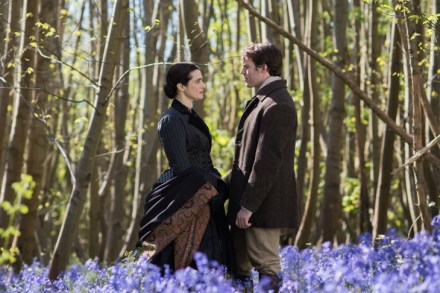
My Cousin Rachel is an adaptation of Daphne du Maurier’s mystery-romance and, even though it stars the forever wonderful Rachel Weisz, it’s more sedate than suspenseful, more tasteful than dangerous. This should be a creepy, gripping tale of paranoia, deception, lust, and suspicions that are founded, unfounded, founded, then unfounded again. (There is a great deal of founding and unfounding on the suspicion front.) But the high-end, glossy period trappings — the frocks; the stately mansions; the teal drawing rooms; the horses galloping along scenic cliff paths; that wisteria — don’t play into a dark, gothic atmosphere. It is highly watchable, I have to say, but it won’t have you biting your nails to the quick, as it should.

Duchy original

From our UK edition

The Cornish nationalist party Mebyon Kernow (‘sons of Cornwall’) is not contesting any seats in the general election. Its leader of 20 years, Dick Cole, said its members were ‘exhausted’ after their local election campaign — it retained four councillors at ‘County Hall’ (Cornish nationalists always put County Hall in inverted commas, to avoid the inference that the Duchy is a mere county), and were only six votes shy of getting as many seats as Labour. It did not have the resources to fight an election so soon after 2015, when all its candidates lost their deposits. You might find it less surprising to learn that Mebyon Kernow is not standing than that Cornwall has its own party at all.