Cooking

All I dream of is becoming a tradwife

‘A woman’s place is in the House and the Senate’, read the shirts assembled by slave labor in Myanmar, the messaging likely dreamed up by graduates of a small liberal arts school whose annual tuition would make a generous stimulus package for a city in any developing country. I like seeing women in the Senate, don’t get me wrong. I just see the former option, the house, as much more preferable for myself for a variety of reasons. I went through my Girl Boss phase in my late teens — my hard working immigrant parents, the descendants of a long, long line of ‘tradwives’, wanted different things for their only daughter.

tradwife

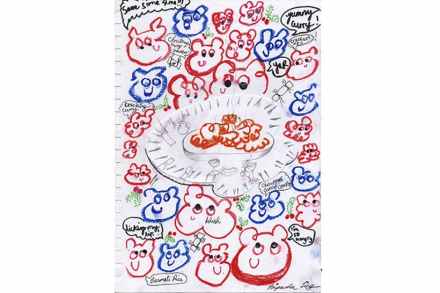
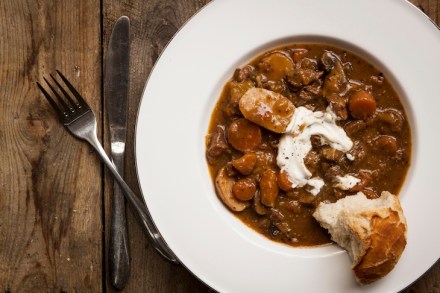
‘Cook it like a prayer’: Bip Ling’s Christmas curry

From our UK edition

This dish is refreshing and super yummy. It’s a recipe that Didas (my Indian grandmother) taught me. The zesty tomato flavour makes my mouth water. You can’t go wrong with this curry. Everyone loves it and always asks for more! It’s comforting and warm, especially when it’s cold outside during Christmas time. Cook the dish like a prayer. The more you enjoy the process, the better it will taste. You can use the same recipe with different meat, or try it with vegetables. Make sure you taste the sauce as you cook, and add more spices if you desire. It’s even more fun to cook with the song ‘Curry’ by Bip Ling in the background.

Rachel Johnson: everyone in my family is getting quince paste for Christmas

From our UK edition

Brrring! Freddy Gray of this parish is on the blower. ‘How about a piece for this week saying he’s won, I’ve lost, let’s Get Brexit Done, that sort of thing,’ he pitched. ‘Sorry Freddy, can’t talk, am making membrillo,’ I snapped as I gazed down into my second batch of chopped quinces, vanilla, lemon and sugar — which were rendering down in my magic machine to be set into claggy slabs of mahogany fruit fudge — while snorting the heady, tangy fumes as if they were mummy’s special marching powders. ‘You what?

A Cook’s Notebook

From our UK edition

In the past few weeks, on three separate occasions, I have met three different women who for years (one for more than 30 years) volunteered for the Samaritans. All three have now quit. One, Sarah Anderson, said: ‘Chad Varah [the founder] must be spinning in his grave.’ The Samaritans has changed, they say. It still provides a vital service, being the only 24/7 helpline for potential suicides or other desperate people — but it’s become a one-number call-centre, where the call goes to the next available volunteer, probably hundreds of miles away. Face-to-face conversations are now rare, and they’ve given up their old ‘absolute confidentiality’ policy.

Two great ladies

From our UK edition

Mary Berry’s dependable The Aga Book — a book of the last century and part of my kitchen library — is full of the good sense of a domestic science instructor. There’s little hint Mary would later be crowned glam granny celebrity judge on TV’s The Great British Bake Off; neat as a pin in floral jacket, tough but twinkly, fair but firm. The iron hand in a pastry glove. Post-Bake Off, she is still unstoppable. There has been a surge of cookery programmes, accompanying hardbacks and further explorations into her life, her garden, her travels — recently being zoomed around Rome on a motorbike. Wherever we turn, there smiles Mary, instructing us beneath eyelashes rivalling those of Barbara Cartland.

Sweet nothings

From our UK edition

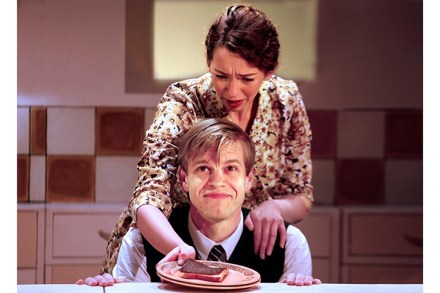
Nigel Slater is popular because he’s an exceptionally meek cook. Not for him the sprawling restaurant empire or the transatlantic TV career to excite envy and loathing. He writes about his trade in simple vivid prose and his bestselling memoir, Toast, has become a play. Young Nigel enters as a 1960s schoolboy, with shorts and a side parting, living in a posh suburb of Wolverhampton. Dad is a kindly but remote presence, an alien in his own home. Mum is a braindead kitchen-limpet who encourages Nigel’s first culinary experiments. The family are adventurous. They try spaghetti bolognese. Dad takes charge at the dinner table and loads each plate with a heap of yellow string topped by garnish the colour of lava spewed from a volcano. Nigel pronounces the dish quite good.

Old flame

From our UK edition

It was a close-run thing for my friend who’s having a new kitchen installed in her house in Chiswick. After a persuasive campaign by her eloquent architect, who has an induction hob in his own house and loves it for its clean lines and hyper-efficiency, she had got as far as ordering one for herself. Having placed the order, she couldn’t sleep. She tossed and turned, worrying about the imminent change to her cooking life that the induction hob would (literally) induce, let alone the need to buy a whole new set of ‘induction-ready’ pans. No more knobs to turn a fraction to the left while frying an omelette, ever again? Just a plus and minus touch-screen sign to jab with the ball of the index finger, 9-8-7-6-5-4 and down to 3?

My Christmas nightmares

From our UK edition

Christmas in our family seems to guarantee tears and tantrums as well as jingle bells and jollity. Indeed, in my childhood, ‘feeling Christmassy’ meant feeling thoroughly overwrought or bad tempered, the antithesis of the ‘Christmas Spirit’. I think my father invented it when my mother, who was a terrible cook, spent all day making marmalade to give as Christmas presents and was then beside herself with anger when she burnt the lot. My earliest Christmas disaster was my first attempt at cake icing. I’d proudly come home from school with a Christmas cake. It was covered with smooth royal icing on which I’d painted the Three Kings — but I’d omitted the teaspoon of glycerine in the icing which would have stopped it drying to concrete.

Low life | 15 February 2018

From our UK edition

I’m cooking almost full-time for my poor old Mum and learning on the job: shepherd’s pie, roast pork, cauliflower cheese. I’m slaving over the stove and recipe book for hours and she hardly touches any of it. ‘Come on. Eat up. Do you good,’ I say, not unconscious of the role reversal. The other day I tried a slow-cooked beef casserole. The BBC website advised browning the meat first. Sheer political correctness. I simply lobbed the ingredients in a pot, poured on the boiling water, shoved the pot in the oven, got in my car and drove to the pub. About once a week, I drive over to my petrolhead friend Charlie’s posh little village pub for six o’clock. His village is colonised by wealthy and well-fed Londoners who are all in love with the pub.

Cabbages and kings

From our UK edition

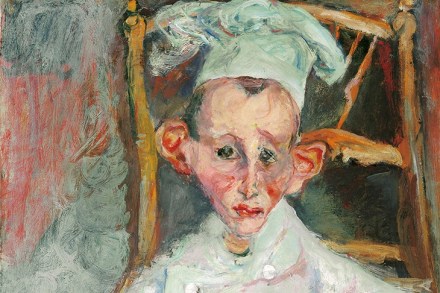
The first pastry cook Chaïm Soutine painted came out like a collapsed soufflé. The sitter for ‘The Pastry Cook’ (c.1919) was Rémy Zocchetto, a 17-year-old apprentice at the Garetta Hotel in Céret in southern France. He is deflated, lopsided, slouch-shouldered, in a chef’s jacket several sizes too big for him. His hat is askew, his body a scramble of egg-white paint. Soutine painted at least six cooks in their kitchen livery. In their chef’s whites they look like meringues that have not set (‘Pastry Cook of Cagnes’, 1922), îles flottantes that do not float (‘Cook of Cagnes’, c.1924), and, in the case of the ‘Little Pastry Cook’ (c.

Dear Mary | 8 June 2017

From our UK edition

Q. We have received a ‘save the week’ card from friends who take a villa abroad every year. We usually like their other guests but my husband has developed a near-phobia of one of their friends, a man who holds opposing political views from his own and is vocal about them. This man is in great demand socially, probably because he’s single and supposedly eligible, and we suspect he may be going too. My husband says that whatever the result of the election, he can’t face being trapped in a house party with this man for a week and won’t go if he is. I think my husband is behaving badly — obviously, when the firm invitation comes in, I can’t say: ‘We’ll only come if X isn’t.

Could Health and Safety kill off home cooking?

From our UK edition

If Health and Safety is (are?) your thing, you must always be dreaming, like Alexander the Great, of new worlds to conquer. The next one, I predict, will be cooking at home. Recently I have noticed talk about the bad effect of ‘particles’ produced by hot food cooked in or on ovens. The sequence will go thus: a study will prove that people who cook at home inhale more particles than others, reducing their life expectancy. A woman seeking divorce will win a higher settlement because, she says, she was forced to spend hours of each day in such dangerous culinary conditions, suffering various ‘harms’. Then it will be shown that children are the innocent victims of passive cooking. Ovens, except for microwaves, will be forbidden in new-build homes.

The Spectator’s notes | 23 March 2017

From our UK edition

We keep being incited to find it heartwarming that Martin McGuinness and Ian Paisley were known as the Chuckle Brothers. But what were they chuckling about? Their shared success at outwitting the British state. Both, though for opposite reasons, had made their careers out of harassing Britain, and both, in their later years, had acquired money, power and status by doing so. In the case of McGuinness and his gang, Britain greatly underplayed its hand. Having militarily beaten the IRA, successive British governments could have marginalised them, but instead they accepted them as authentic representatives of the Irish people who had to be included in any settlement. The process for doing this systematically disadvantaged the moderates and bigged up the thugs.

Real life | 20 October 2016

From our UK edition

After the Fawlty Towers incident, I decided it was best to research the origin and extraction of all future B&B guests on arrival, before the builder boyfriend got stuck in. You may remember that he accidentally on purpose got a piece of gaffa tape caught on his top lip and held some ceiling felt at a jaunty angle during the stay of the Airbnb customers from Bavaria. Thankfully, they were in another room and didn’t see but I had to shush him because he was making a bad job of whispering, ‘Don’t mention Brexit! I mentioned it once but I think I got away with it!’ A girl from Taiwan and a gentleman from Zimbabwe then came and went with no major incidents. But when a young chap from Israel booked in I thought I had better be careful.

Cooking the books | 15 September 2016

From our UK edition

Cooking really shouldn’t make good radio. On television, it’s already frustrating that you can’t taste what you’re seeing, but on radio you can’t even see it. ‘I’m just cracking an egg,’ they tell you. ‘And now I’ll crack another egg.’ The sounds — violent thuds, hissing gas, moist chewing — are more ominous than appetising and the commentary (‘I’m just mixing those eggs together now’) can’t help but be comically sedate (‘OK — they’re mixed’). So it’s a miracle that The Food Programme (Radio 4), after three decades of this sort of experiment, is as good as it often is, and Cooking for Poldark, this week’s ingenious episode, was really very good indeed.

Aga can’t

From our UK edition

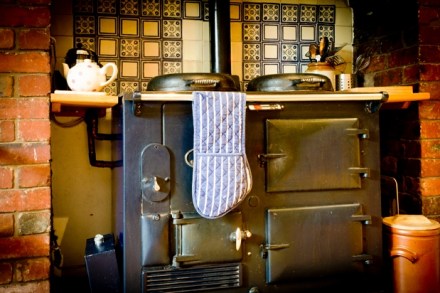
Earlier this year my partner paid several hundred thousand pounds for an Aga. There’s no other way of putting it. A major cause of her excitement about our new house was the presence in its kitchen of the whacking great oven. I, on the other hand, was unsure how I felt about it — Aga-nostic, if you like. Six months later I’m sick of the bloody thing. What’s more, I’ve worked out why Aga lovers go on about them so much. For those of you fortunate enough never to have encountered one of these beasts, the facts are these. An Aga has to be kept on constantly, sapping your fuel source (ours is electric) 24 hours a day. My model has two ovens, one at a fixed high temperature, the other at a fixed low temperature. There are two hotplates, ditto. And that’s it.

When autumn comes

From our UK edition

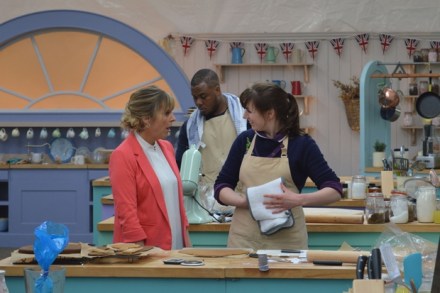
You know when late summer has arrived because conkers are starting to form on the horse chestnuts, your eagerness to get the kids back to school has reached fever pitch, and another season of The Great British Bake Off (BBC1, Wednesdays) has begun. If it feels like there has never, ever been a time when GBBO wasn’t on, this is because there hasn’t. Here are some key facts about our favourite telly comfort blanket you won’t find on Wikipedia. 1. Mary Berry has barely aged at all since the show’s first edition was broadcast in 1946 immediately after Muffin the Mule.

Penelope Lively’s notebook: Coal holes and pub opera

From our UK edition

I have been having my vault done over. Not, as you might think, the family strong room, but the place beneath the pavement — the former coal cellar — pertaining to an early 19th-century London house. The vault opens onto the area — mine is the last generation to know that that is what you call the open sunken space between the basement and the pavement — and has been given the latest damp-proof treatment, plus shelving and smart lighting, so that I can use it for storage. Others use their vault more creatively: a couple next door had theirs excavated several feet and made into a troglodyte bedroom. No, they said, they couldn’t hear feet overhead, but wheeled suitcases could be tiresome.

What Quique Dacosta knows that Picasso didn’t

From our UK edition

Chefs have a problem. Think of much of the best food you have ever eaten. Caviar, English native oysters, sashimi, foie gras, truffles, jamon iberico, grouse, golden plover, properly hung Scotch beef; Stilton, the great soft cheeses: all have one point in common. They require minimal intervention from the kitchen. With the assistance of one female sous-chef, even I could roast a grouse. The chef would come into his own over pudding, and indeed with Welsh rarebit, but one can understand why this does not provide enough outlet for creativity. There are always the great French bourgeois dishes, which few of us eat often enough. Navarin of lamb, blanquette de veau, suprêmes de volaille, daube de boeuf: all splendid. But they are not a new challenge to a cook.

Rory Sutherland: Why don’t Americans have kettles?

From our UK edition

I enjoy reading reviews of kitchen gadgetry. Clever new kitchen products are often under-appreciated. Many rituals around food preparation are intended to signal personal effort, rather than to produce edible food with a minimum of fuss. There is hence a tendency towards bogus authenticity among amateur cooks which causes them to eschew labour-saving devices in favour of doing everything in a faux-Victorian fashion. Professional chefs, who must produce food in quantity every day, do not suffer this delusion: one Michelin-starred chef, when asked to name his favourite item of kitchen equipment, replied ‘the microwave’. Two new devices I particularly recommend are the air-fryer and the soupmaker. Both are commonplace in parts of Asia but were until recently unknown in Britain.