Contemporary art

In defence of deaccessioning

From our UK edition

There’s more than a grain of truth in the popular caricature of a curator as a mother hen clucking frantically if anyone gets too near her nest – not that her eggs are about to hatch, let alone run. The recent threat of the British Council to ‘deaccession’ – to put it more bluntly, sell – its 9,000-strong collection of British art has caused a predictable flurry in the curatorial world. Doesn’t the British Council know that public art collections are sacrosanct and must be preserved for all time? When I was director of Glasgow’s museums and art galleries, I remember talking to my committee about my long-term plans for the city’s great permanent collection when the leader of the council, Pat Lally, commented drily that there was no such thing as ‘permanent’.

Presenting our planet and perilous situation as art

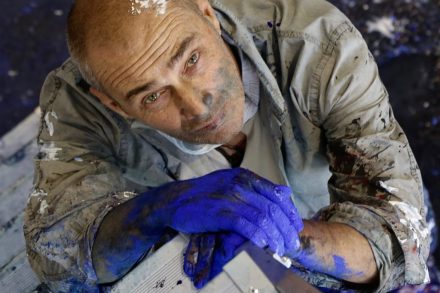
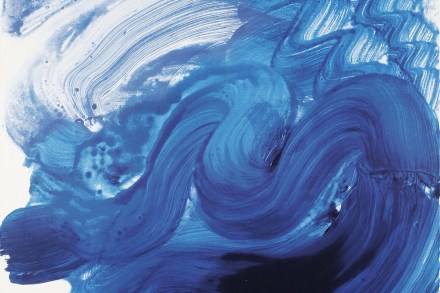
Philippe Pastor is an artist on a mission to educate, alarm and call to action. His subject: our planet and the perilous situation we find ourselves in at this moment of time.  Pastor’s latest works, installed to coincide with Climate Week in New York, are a clear indication of where he sees the state of play. The first enormous canvas, ominously titled La Fin Du Monde, seems to depict an apocalyptic clash of water, fire and ice. Heavy brush strokes are densely laid on with glue and pigment, giving a sense of the swirling waters enveloping us all. “I start the paintings with a story in my mind,” he said, speaking from his studio — a former seventeenth-century farm near Cadaqués.

A classic monument for World War One

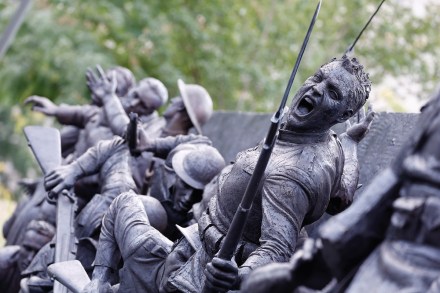
I was standing in front of “A Soldier’s Journey,” the centerpiece of the new National World War One Memorial in Washington, DC, chatting with its creator, sculptor Sabin Howard, when I raised a question. “So, are you the new Saint-Gaudens?” I asked. “No! No, God no!” exclaimed Howard. “That guy sucks.” Sabin Howard is nothing if not direct in expressing his opinions, which are refreshingly free of the artspeak that saturates most of the contemporary art world. It’s a frankness that is best appreciated by examining his current commission as well as trying to understand the artist himself.

Memorial

Are kids’ games under threat?

From our UK edition

We hear a lot about the rights of the child, but the first I heard of the child’s right to play was at the Barbican’s latest exhibition. Among the games-related facts in Francis Alÿs’s new show is a quote from Article 31 of the United Nations Convention on the Rights of Children, confirming a child’s right ‘to engage in play and recreational activities’. Barbie has stood seven times for the US presidency. (As a young looking 65, she could do well) Are children’s games under threat? Alÿs thinks so. Children in Europe today, he laments, have a tenth of the freedom to roam that he enjoyed growing up in the 1960s in a Belgian countryside virtually unchanged since Bruegel.

The mesmerising Olympic posters designed by the likes of Warhol and Whiteread

From our UK edition

You could be forgiven for assuming that the citizens of Paris weren’t exactly bursting with joy at the prospect of this summer’s Olympic Games. They’re annoyed at everything: road closures, public transport price hikes and – would you believe it? – the prospect of their country being taken over by extremist cranks before the month is out.  Bref, or indifference towards the Games is the prevailing attitude – and should you need (flimsy, anecdotal) evidence, I offer you the fact that when I visited an exhibition devoted to the Olympics the day before the first round of voting in the election last week, I had the space entirely to myself. Beyond a single wall down by the Seine, you won’t see the artist posters displayed much around Paris It was a shame.

The brilliance of Beryl Cook

From our UK edition

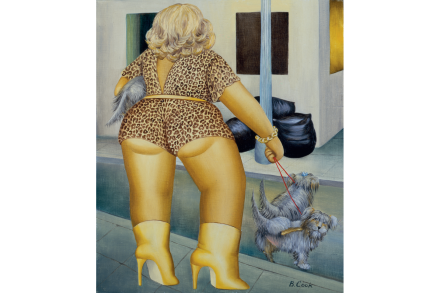
Nobody claims Beryl Cook was an artistic genius, least of all the artist herself. ‘I think my work lies somewhere between Donald McGill [the saucy postcard artist that George Orwell wrote so lyrically about] and Stanley Spencer,’ she once told me. ‘But I’m sorry to say I’m probably nearer McGill.’ She was, as ever, being modest. I actually think she’s nearer Spencer – and Hogarth, come to that. Cook’s paintings make us laugh but that doesn’t stop them from being art. (Few would say Shakespeare’s comedies are as profound as his tragedies, but they’re brilliant creations, nevertheless.) Though Victoria Wood dubbed her work ‘Rubens with jokes’, there aren’t actually any jokes in her pictures; they’re all direct observations, not double entendres.

It’s time to free art from being ‘interactive’ and ‘immersive’

From our UK edition

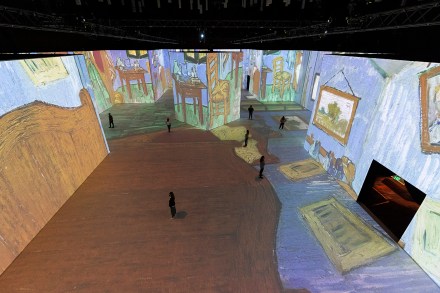
The American artist and critic Brad Troemel once pointed out that art galleries have all turned into a kind of adult daycare, and ever since then I haven’t been able to visit a gallery without noticing it. Nearly two decades ago, Carsten Höller installed a set of big aluminium slides in the Turbine Hall at Tate Modern, and they were undeniably good fun because going down slides is fun. It’s also fun, although maybe for a different type of person, to ask if going down slides counts as art. These days, though, you can hardly move for this stuff. The world is already interactive. You walk around in it. You can steal things from shops Last summer the Turbine Hall hosted a set of giant building blocks by Rasheed Araeen.

The latest Venice Biennale is ideologically and aesthetically bankrupt 

From our UK edition

Last week’s opening of the 60th edition of the Venice Biennale marks a watershed for the art world. In much of the festival’s gigantic central exhibition, curated by the Brazilian museum director Adriano Pedrosa, as well as in many of the dozens of independently organised national pavilions and countless collateral events, it more obviously than ever before didn’t so much matter what was on show, but why. The politics of visibility and representation has been eating away at the arts for at least a decade, most recently under the banner of ‘decolonisation’. The now nearly complete abdication of aesthetic criteria in favour of a decolonial organising principle is here finally exposed as a wholly inadequate rationale for presenting contemporary art.

Winning: When Forms Come Alive, at the Hayward, reviewed

From our UK edition

In case you didn’t know, we live in a ‘post-minimalist’ age, sculpturally speaking. Not a maximalist age, though some of the works in the Hayward’s new sculpture show are huge – an age of revolution against neatness. Who’s to blame for this call to disorder? Women. The two prime movers of this movement, if you can call it that, could not be more different, but both rebelled against minimalist geometry. As a student at Black Mountain College in the late 1940s, Ruth Asawa travelled to Toluca, Mexico, and saw villagers looping wire to make baskets for eggs. It struck her as a way of drawing in three dimensions and later, after becoming a mother of six, of working from home.

How does the global art market move?

Art market reporting tends to be more sensationalist than, say, the news about corn futures. Breathless accounts of high-stakes bidding abound, remarkable discoveries of forgotten treasures in thrift shops get big headlines, and who’s up or down and how much money the fluctuation involves become fodder for salacious gossip. Interesting though these tales undoubtedly are, though, they don’t provide a realistic picture of the art business. While they may be less gossipy, some nuts-and-bolts stories away from the headlines can be just as compelling for those with an interest in the art market, and how what we see displayed in our homes, public spaces and cultural institutions depends upon very practical considerations to get there.

art market

‘You cannot begin by calling me France’s most famous living artist!’: Sophie Calle interviewed

From our UK edition

‘You cannot begin by calling me France’s most famous living artist!’ Thus Sophie Calle objected to the first line of the obituary I wrote for her, commissioned for the enormous exhibition, À toi de faire, ma mignonne (‘Over to you, sweetie’), that currently occupies the whole Musée National Picasso-Paris. But modesty aside, it is a fact that no other French artist alive today is so celebrated, loved, debated, denounced and, indeed, imitated, around the world as Calle. Having long mined her own life for her work, Calle now happily mines her death This year is the 50th anniversary of Picasso’s death and that his most important museum should officially mark this by inviting Calle to take over its institution, replacing all his work with her own, is a brilliant provocation.

The value — and worthlessness — of contemporary art

“This is why I hate art.” “Why, because this is pants?” A friend and I were at a contemporary art show, standing before a mixed-media work featuring trite sayings, glittery flowers and a spaniel. A few days earlier I had suggested to her — once rather ominously described to me as an “art philistine” — that a visit to a few local galleries might provide an opportunity to acquire art for the new home that she and her fiancé recently purchased in the area. Somewhat to my surprise she agreed, so one evening we trundled along to some exhibition openings, to see what we might find. Our first venue, housing three exhibition under one roof, was quite crowded when we arrived. The works ran the gamut from installations and video art to painting, drawing and collage.

art

The greatest artist chronicler of our times: Grayson Perry, at the Edinburgh Art Festival, reviewed

From our UK edition

The busiest show in Edinburgh must be Grayson Perry: Smash Hits which, a month into its run, still has people queuing at 10 a.m. His original title, National Treasure, was rejected because ‘national’ is a politically loaded term in Scotland. But Perry’s lens is resolutely fixed on England and Englishness. Seen from a Scottish perspective, this riot of rococo folkishness is familiar and exotic. Grayson Perry is the greatest artist chronicler of our times, with an omnificent style that’s all substance The exuberant exhibition, which is curated by the National Galleries of Scotland but showing at the Royal Scottish Academy and ends on 12 November, slaps the viewer around the face with its huge narrative tapestries, prints and pots.

The demands and joys of contemporary art 

The career of artist Alberto Guerrero has been driven by an overarching desire to look for what is behind everything that we merely, and only dimly, perceive at present. The work of the forty-something Madrid-based Guerrero ranges from abstract, highly textured canvases and three-dimensional images which he calls “spherical paintings” to realistic presentations of daily life — such as his illustrated book Diary of a Quarantine showing life in the Guerrero household during Covid — and deeply reflective images of sacred art. There are few contemporary artists who have such a broad range and vision.

Guerrero

Policed conviviality: Serpentine Pavilion 2023 reviewed

From our UK edition

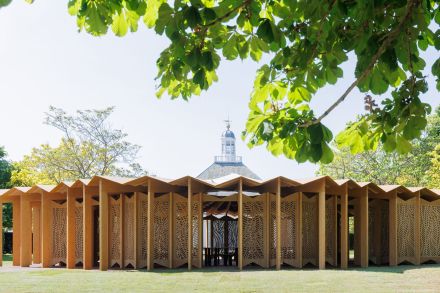
As I sat down at this year’s Serpentine Pavilion, I overheard a curious exchange. ‘You mustn’t create art within art,’ said an invigilator frostily. He was telling off Fred Pilbrow, an architect, who had been taking in the Pavilion’s sociable atmosphere with friends and painting a watercolour of the scene. They proceeded to enter a perverse negotiation as the invigilator struggled with the theoretical parameters of his orders; apparently the watercolour may stain the furniture but dry media like pencils aren’t allowed either; actually, all art-making is not allowed in any of the exhibitions, ‘but photography is OK’.

As seductive as Chagall: Sarah Sze’s The Waiting Room reviewed

From our UK edition

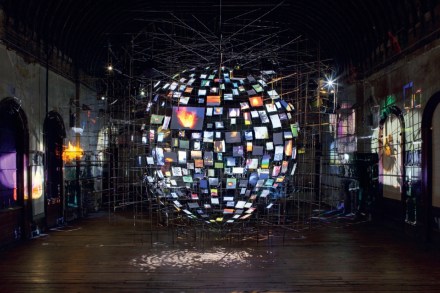
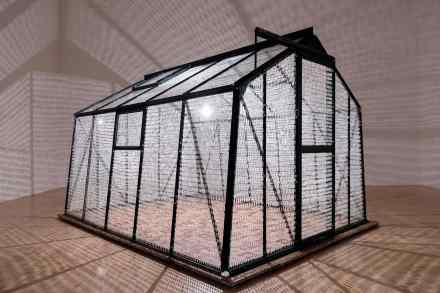
Exiting Peckham Rye station, you’re not aware of it, but standing on the platform you can see a mansard roof with ornamental railings silhouetted against the sky like a French chateau. Designed in the 1860s by Charles Henry Driver, architect of Sao Paolo’s Estacao da Luz, it once covered a vaulted waiting room which, after an intermediate existence as a billiard hall, was closed to the public in 1962. In short, it is just the sort of hidden space to tickle the fancies of impresarios-at-large Artangel, who have made it the site of the first UK installation by American artist Sarah Sze.

At her best when lightly ruffling the surfaces of things: Cornelia Parker, at Tate Britain, reviewed

From our UK edition

Cornelia Parker wasn’t born with a silver spoon in her mouth, but when she was growing up her German godparents sent her a silver spoon or fork every birthday. She seems to have had a thing about silverware ever since. She used to sell it on Portobello Market, and it formed the basis of her first large installation. ‘Thirty Pieces of Silver’ (1988) could be viewed as an elegy to the fish knife and all those other superannuated aids to aspirational dining whose genteel functions are now all but forgotten – salvers, sauceboats, toast racks, sugar tongs and those scalloped silver shells holding coils of butter beaded with condensation from the fridge – if it wasn’t in practice a mass grave.

Exquisite and deranged: two glass exhibitions reviewed

From our UK edition

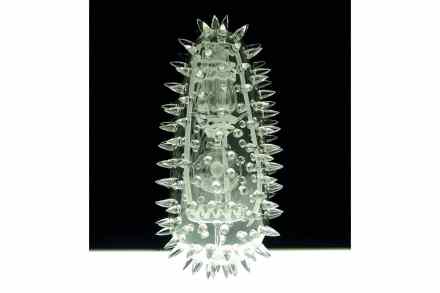
A ‘Ghost Shop’ has appeared between Domino’s Pizza and Shoe Zone on Sunderland High Street. Look through the laminated window glass and you’ll see more glass: glass shop fittings, a glass cheese plant, a glass pedal bin spilling disposable glass cups, glass chocolate wrappers and glass betting slips littering the floor. Ryan Gander likes the fact that there’s no explanation of his see-through betting shop: ‘If you tell everyone it’s a contemporary art project, they’d run away.’ Gander is one of four artists commissioned by Sunderland’s National Glass Centre to make works inspired by the history of the north-east.

Fails to dispel the biggest myth of all: Whitechapel Gallery’s A Century of the Artist’s Studio reviewed

From our UK edition

Picture the artist’s studio: if what comes to mind is the romantic image of a male painter at his easel in a grand interior with an admiring audience and a nude model at his elbow, you’re in the wrong century for the Whitechapel Gallery. Its new exhibition, A Century of the Artist’s Studio, runs from 1920 to 2020, and there’s precious little romance about it. To be honest, the studio was never that romantic; Gustave Courbet’s ‘The Artist’s Studio’ (1855), the main source of the stereotype, was itself a send-up. The Whitechapel’s show sets out to complete Courbet’s work, dismantling the myth cliché by cliché.

Saudi Arabia’s burgeoning art scene

From our UK edition

A little more than a century ago, a charismatic British army captain called T.E. Lawrence and fearsome Bedouin warriors swept through the sublime canyons around the desert city of Al-’Ula where I stroll today. They blew up the Hejaz railway, built to transport hajjis from Damascus towards Mecca but repurposed during the first world war by Turks to ferry munitions and troops. Such was the 1916-18 Arab Revolt that threw off Arabia’s Ottoman yoke. Today a very different kind of Arab uprising is sweeping through Al-’Ula. The canyons resonate not with bombs but with art. Dubai-based Zeinab Alhashemi has constructed boulders made from camel hides for a piece called ‘Camouflage 2.0’.