Conservatives

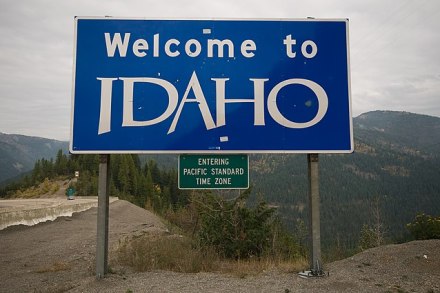
Heading west to escape liberal tyranny

As our nation navigates a “return to normalcy” in a post-Covid world, one return most workers won’t be making is to the office. And as an estimated 40.7 million American professionals plan to be working fully remotely within the next five years, expect the great political divide to widen as liberals and conservatives move farther apart, both ideologically and physically. With working from home becoming the norm, “home” for many people is changing. “Anywhere from 14 to 23 million Americans are planning to move as a result of remote work,” an Upwork.com study taken at the height of the pandemic found. “[N]ear-term migration rates may be three to four times what they normally are.” Where are workers moving to? Away from cities, for starters. A majority (52.

Tory backlash over Channel 4 privatisation

From our UK edition

Downing Street's plan to privatise Channel 4 is already facing a Tory revolt – less than 24 hours after the plans were confirmed. On Monday night, the channel's chief executive told staff that the government plans to proceed with privatisation. The official line from Culture Secretary Nadine Dorries is that this will ‘give Channel 4 the tools and freedom to flourish and thrive as a public service broadcaster long into the future’ and compete with streaming giants like Netflix. Only the broadcaster takes a different view: that this is a mistake – and plenty of senior Conservatives agree.

Fight for the right

Sohrab Ahmari Modern American conservatism is composed of three distinct traditions: libertarian economics, foreign-policy hawkism and social traditionalism. This “fusion” was born of a contingent historical moment, the Cold War, when the Soviet threat forced different social classes and their ideological spokesmen to band together in common cause. There was no eternal principle demanding that these groups tie their destinies together — a fact that became apparent with Donald Trump’s rise, which divided the three camps along various axes of alliance and enmity. Fusionism is dead. Well and truly dead.

conservatism fusionism

Sunday shows round-up: Sunak says Ukraine and Brexit are not ‘analogous’

From our UK edition

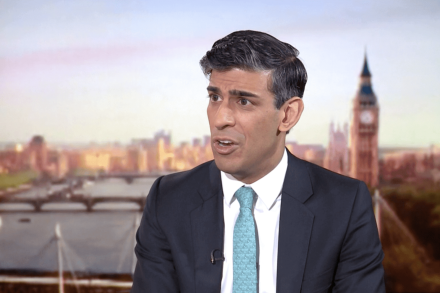
Rishi Sunak – Brexit vote and Ukraine resistance 'are not analogous' The Chancellor was in the TV studios this morning, ahead of the Spring Statement that he will deliver on Wednesday. Economic issues, like much else, have been cast into the shadows over recent weeks as the spotlight has inevitably focused on the Russian invasion of Ukraine. Even today was no exception, as in his interview with the BBC's Sophie Raworth, Rishi Sunak was first asked to address a stir caused by the Prime Minister’s remarks at the Conservative’s spring conference yesterday in Blackpool: https://twitter.com/BBCPolitics/status/1505486969094168581?

No. 10 is gearing up for the next election

From our UK edition

As the Conservative party’s Spring Forum gets underway in Blackpool, attention is turning back to domestic politics, with cabinet ministers publicly suggesting partygate is over – or more specifically that it is ‘fluff’ according to Jacob Rees-Mogg. A debate about tax is also underway on the fringes as Rishi Sunak continues to insist that he is a low tax Tory despite much of his behaviour since entering No. 11 suggesting the opposite. When the Chancellor unveils the spring statement next week, MPs hope there will be an indication of Sunak’s alleged tax cutting preferences. While the National Insurance hike is now viewed as baked in, there’s speculation that there could be some form of tax cut elsewhere when it comes to boosting enterprise.

Rishi Sunak is no Gordon Brown

From our UK edition

How at home Rishi Sunak looks in the company of academics. The chancellor delivered the 34th Mais Lecture this afternoon at the Bayes Business School in east London. Standing at the lectern in his dapper blue suit, he had the air of a cerebral super-monk bred on figs and yogurt. He’s the first British chancellor to hold an MBA from Stanford and he seemed perfectly at ease in this warm, well-lit room full of brain-boxes with double-firsts in economics. He speaks their jargon fluently. Instead of a ‘job’ he talks about ‘an employment outcome ’. His term for a ‘career’ is ‘a fulfilling professional experience.’ And when he refers to education he says, ‘upskilling’ or ‘support for learning.

Ending restrictions won’t save Boris

From our UK edition

Boris Johnson certainly managed to rally the troops on their first day back from recess this afternoon as he told the Commons that all remaining domestic Covid restrictions were coming to an end.  The most explosive moments of the past few months haven't been about the continuation of Covid restrictions From this Thursday, the legal requirement to self-isolate following a positive test will come to an end. Until 1 April, people who test positive will be advised to stay at home, but after that 'we will encourage people with Covid-19 symptoms to exercise personal responsibility, just as we encourage people who may have flu to be considerate to others'.

Boris Johnson’s fightback has been cut short

From our UK edition

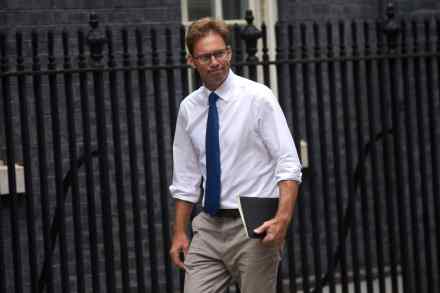
Tobias Ellwood, the chair of the defence select committee, has this morning announced that he is sending a letter to the 1922 chairman calling for a no confidence vote in Boris Johnson. In a way this is not a surprise: Johnson cut Ellwood from the government when he became Prime Minister and the two are temperamentally very different. But the worry for No. 10 is that there are rather a lot of former ministers on the backbenches these days, and if a lot of them start writing letters then a no confidence vote will become a near certainty. Another concern for No. 10 this morning is whether they can live up to the expectations set in terms of the government’s change of direction and personnel.

The last conservative critic?

The death of Terry Teachout has put me in a funk. In 2019, we lost Clive James and John Simon. In 2020, we lost Roger Scruton and George Steiner. In 2021, Adam Zagajewski, Denis Donoghue, and Joan Didion all passed. Now we start 2022 with the sudden death of Terry Teachout. Most of these critics (though not Teachout) came of age in the late 1940s and early 1950s during one of the great periods of literary criticism in the last two hundred years. Consider some of the works that were published between 1947 and 1957. We have Cleanth Brooks’s The Well Wrought Urn in 1947 and F. R. Leavis’s The Great Tradition in 1948. Rene Wellek and Austin Warren published their influential Theory of Literature in 1949.

Rishi, it’s not the 1980s anymore

From our UK edition

The stench of death clings to Boris Johnson. Bury South MP Christian Wakeford has crossed the floor to join Labour. David Davis has told him to resign ‘in the name of God’. Tory MPs reportedly continue to hand in letters of no confidence to the 1922 Committee. Once they reach 54, there will be a vote of confidence. Fresh polling on the Red Wall, conducted by JL Partners for Channel 4, puts Labour at 48 per cent and 37 per cent for the Tories, a near inversion of the 2019 election result. Sir Graham Brady — and Sir Keir — should expect some more knocks on their doors. The revelation that Downing Street held lockdown-breaking parties, while the rest of the country was banned from being next to dying loved ones, is anathema to Red Wall voters.

Did Johnson mislead the Commons?

From our UK edition

Boris Johnson had hoped to move attention this week from parties — with a series of policy announcements planned as part of 'Operation Red Meat', his fightback plan. Nadine Dorries this afternoon told MPs in the Commons of plans to freeze the BBC licence fee for two years while No. 10 plan to bring the military in to tackle the channel crossings — a move that led MPs to congratulate the government on the Tory WhatsApp group. Yet as No. 10 waits for Sue Gray's report into Partygate, the situation is moving.

It’s getting worse for Boris

From our UK edition

Talking to Tory MPs this morning, it is clear that the mood today is even worse than yesterday. Even one of those MPs closest to Boris Johnson thinks that it is now 50/50 whether enough letters go in to force a no confidence vote. Ironically, the improving Covid numbers are changing the calculus for some Tory MPs about a contest. A few weeks ago, even the most ardent Boris critics didn’t think you could have a no confidence vote, given the situation with the soaring Omicron variant. But now it is somewhat in retreat, and that restrictions are likely to go on 26 January giving hostile MPs the chance to do so. PMQs today is, obviously, an important moment. Lots of Tory MPs are holding off on replying to angry constituents until after it.

January 6 and the coddling of the conservative mind

There are very few uncontroversial takes on what happened on January 6, 2021. Perhaps the only one is that that tumultuous day gave Americans a rare glimpse into what their republic looks like when its institutions fail. On the right, this would be taken to mean that the US election system, made up of fifty different state election regimes, failed to secure the ballot and that the mainstream media refused to report on obvious issues with the franchise. Even the judiciary, flush with judges appointed by President Trump, didn't hear the people. On the left, the same events are evidence that elections ought to be federalized to protect the vote, and that the Fourth Estate as a pillar of democracy requires buttressing against “disinformation” and outright sedition.

Rayner hits Johnson where it hurts

From our UK edition

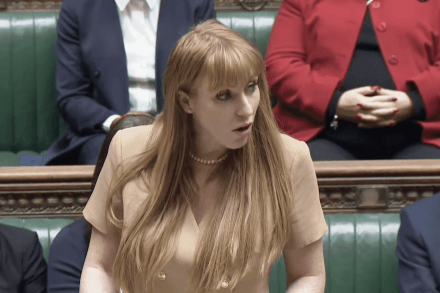
The first PMQs of the year gave us a preview of the political debate we’ll be having for the next few months. Labour went after the government on inflation. Angela Rayner asked Boris Johnson why he had dismissed fears over it as unfounded back in October: Johnson denied he had said it — which is an odd claim given what he said in that interview. She then punched the Tory bruise, by asking why Johnson wasn’t cutting VAT on fuel, as he had said he would do during the EU referendum. Johnson made the point that this help wouldn’t be well targeted, which is true. But the political pressure for this from Labour and his own backbenchers are going to make it very hard for him to resist.

Can Boris really blame the press for his defeat?

From our UK edition

When asked what went wrong in North Shropshire, Boris Johnson gave a fascinating answer: journalists. Apparently, they have been reporting the wrong kind of stuff. He told Sam Coates of Sky News: Basically, what’s been going wrong, Sam, is that in the last few weeks some things have been going well. But what the people have been hearing is just a constant litany of stuff about politics and politicians. Stuff that isn’t about them. And isn’t about the things that we can do to make life better. The job of the government is to make people like you, Sam, interested in the booster rollout. And in skills. And in housing. And in everything else that we’re doing. And unfortunately we haven’t been able to get the focus on those issues.

Conservatives should support ending the debt ceiling

Just in time for the holidays, lawmakers will soon approve another increase to the country’s debt limit, perhaps by as much as $2.5 trillion. And like so many of us this time of year, Uncle Sam will continue running up his credit card, spending money on things he can’t afford and often doesn’t really need. That said, there’s little doubt that the coming debt ceiling hike is a necessary (if self-serving) gift from our nation’s capital. After all, legislators from both parties have already authorized trillions in spending, knowing full well the country’s dismal fiscal situation.

What conservatives get right about masculinity

Conservatives are taking a lot of heat these days regarding masculinity. David French in a recent piece at The Atlantic criticized Josh Hammer, David Azerrad, and Donald Trump, among others, for promoting what French labels a false view of manliness — namely, one that is unafraid to speak unpopular truths regardless of the consequences. It is a farcical “Trumpist toughness” that “treat[s] Twitter as their Omaha Beach.” Washington Post columnist Christine Emba, meanwhile, recently mocked Republican Senator Josh Hawley for being a “champion of masculine virtue” but failing “to engage more deeply on the level of policy and ideas.

trump

Why shouldn’t conservatives ‘build their own Twitter’?

Taco Bell Patron in the year 2032: "What would you say if I called you a brutish fossil, symbolic of a decayed era gratefully forgotten?" John Spartan: "I don’t know…thanks?" — Demolition Man “Right wing builds its own echo chamber,” warns the headline from a short piece in Axios about conservatives creating their own media outlets and other institutions like publishers and cryptocurrencies and social networks. The headline is a play on a trope of the Big Tech age (provided you believe Axios is capable of such self-awareness).

truth social

Stratton resigns – but the row isn’t over

From our UK edition

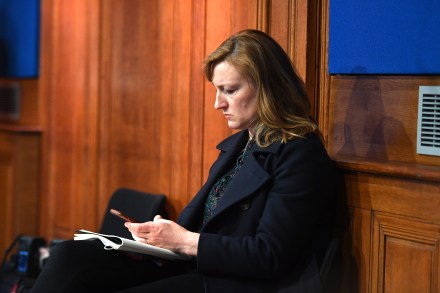
The row over the Downing Street 'party' has claimed its first victim. On Wednesday Allegra Stratton announced that she was resigning from government. Her decision followed the leaked footage of a practice press briefing in which Stratton — then spokeswoman for the Prime Minister — appeared to joke about a lockdown breaching No. 10 party four days after is alleged to have taken place. Addressing reporters outside her home, Stratton — who most recently has been working on the COP26 summit — said she was deeply sorry for her comments:  My remarks seemed to make light of the rules, rules that people were doing everything to obey. That was never my intention.

The Tories’ crime crackdown

From our UK edition

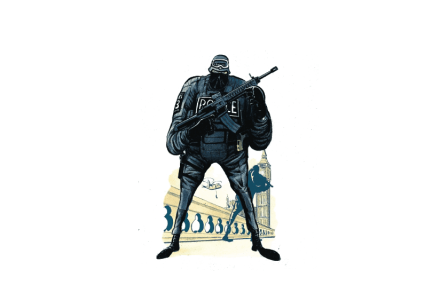
Dealing with crime is a political necessity for the Tories, I say in the Times today. Whenever Labour outflanks them on the issue, as Tony Blair did, the Conservatives are in trouble. But law and order has taken on even more importance for this government because of its link to levelling up: Boris Johnson is convinced you can level up only if you deal with crime. He believes that places are poor because of crime, rather than the other way round. So, next week we’ll see a slew of announcements, with a particular focus on increasing drug rehabilitation efforts. Tackling crime and antisocial behaviour can show rapid progress The public are not sure what levelling up means but, as far as anyone can guess, dealing with disorder is seen to be part of it.