Conservative party

Why the Midlands will matter on June 8th

From our UK edition

It is no coincidence that Theresa May chose to hit the campaign trail in Wolverhampton and Dudley last weekend; both are areas where Ukip did especially well in 2015. What is emerging is that the West Midlands – particularly the Labour-held Midlands marginals – will be the key battleground in this coming election. From the creation of the Mercian kingdom by Alfred the Great, to the Battle of Bosworth and Germany’s bombing of Coventry in 1940 – not to mention the 2015 election which led to Brexit – the Midlands has provided the backdrop against which the future of our country has been shaped. The election on 8 June will be no exception.

Why Tories are talking up Labour

From our UK edition

Considering that their party is expected to win by a landslide, the Tory spin doctors sound unusually panicked. They are keen to point out that the polls aren’t always right, and the pollsters are still trying to correct what they got wrong at the last general election. They insist that national voting tells you little about what will happen in the key marginal seats. These are normally the pleas of a party that is failing, and trying to persuade voters that it is still in the race. But Labour isn’t doing a good job of spinning its own prospects — so the Tories are doing it for them. This is not as odd as it first sounds. The Tories are worried about complacency, about their vote not turning out.

How to vote to save the Union

From our UK edition

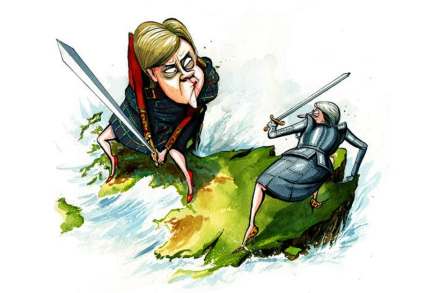
When launching the Scottish National Party’s election campaign, Nicola Sturgeon said the word ‘Tory’ 20 times in 20 minutes. For much of her political lifetime, it has been used by the SNP as the dirtiest word in Scottish politics. Nationalists have long liked to portray the Conservatives as the successors to Edward Longshanks: an occupying army with little affinity for the people they were trying to govern. But things are changing fast in Scotland. Amid the other political dramas of the past few months, the revival of Tory support north of the border has gone relatively unnoticed. They had only one MP after the last election, but a poll this week puts them on 33 per cent in Scotland — enough to win 12 seats.

Labour’s Brexit plan was doomed before Keir Starmer even opened his mouth

From our UK edition

Brexit comes in all shapes and sizes: hard, soft, clean. Today, Labour added a new type: a ‘reckless Tory Brexit’. That’s what Keir Starmer accused the Government of trying to drive through as he detailed Labour’s plan for waving goodbye to the EU. The main purpose of Starmer’s tour of the airwaves was to clear some of the mud out of the water of Labour’s Brexit tonic. To be fair to Starmer, he did manage to offer some clarity: there would be no second referendum under Labour, which puts helpful space between the party and the Lib Dems who have promised voters a second say. Staying in the single market also remained an option that was ‘on the table’ if it was Corbyn doing the deal making in Brussels, according to Starmer.

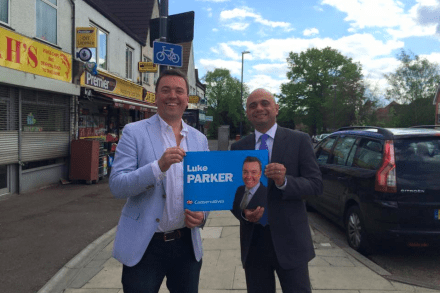
The Tories don’t need Zac back in Richmond. They need Luke Parker

From our UK edition

Are the Conservatives sharp enough to be able to beat the Liberal Democrats in battleground Remain-voting seats? We hear today that they might put forward Zac Goldsmith as their candidate for Richmond Park - the same Zac Goldsmith who quit the party in protest at the Heathrow decision, then triggered a by-election and ran as an independent. But he lost to a Lib Dem. So now he has decided to rejoin the party and run again - and oddly, they've let him. He's in the final three. To select him would be a huge tactical own goal for the Tories: as Neil Kinnock found out, when voters turn something down, they don’t like to be asked again. And as Zac found out, it's hard for an arch-Brexiteer to win in an arch-Remain constituency: a new fact of political life.

Why Matthew Parris is wrong about a Tory lurch to the right

From our UK edition

Exaggeration is the political pundits' stock in trade: nobody built a loyal readership on equivocation. But Matthew Parris' recent commentary about the Conservative Party's direction under Theresa May borders on the hysterical. A few weeks ago he used his Times column to hyperventilate about a Conservative Party 'paralysed in the headlights of a dangerous surge of reckless populism and in thrall to its own right wing'. Last Saturday, he returned to the theme and wrote of a 'deep, deep shift under way in our party...leaving anyone once attracted to the strong strand of tolerance and moderation we found powerful in the Conservative tradition feeling cowed, discouraged'.

Hold the front page: energy providers are against plans to cap bills

From our UK edition

I am inundated with press releases, emails and phone calls from PRs, all wanting to talk about their clients, the latest piece of 'ground-breaking' research or a news story so innovative that not to publish would have disastrous consequences. While some of these communications are useful and thought-provoking, a fair few are, to use the vernacular, total pants. In journalism, we have a number of phrases to describe these releases, from 'no shit sherlock' to 'night follows day'. Decorum prevents me from mentioning the other, swearier, descriptions. It's safe to say that Scottish Power's response to Conservative plans to cap energy prices falls into the 'night follows day' news category. Wait, a big six energy provider thinks maximum price caps are a bad idea? Hold the front page!

Theresa May’s great gamble

From our UK edition

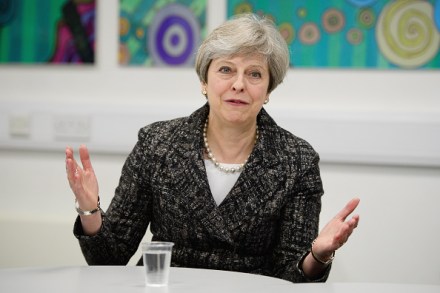
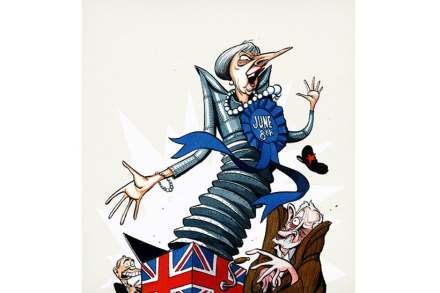
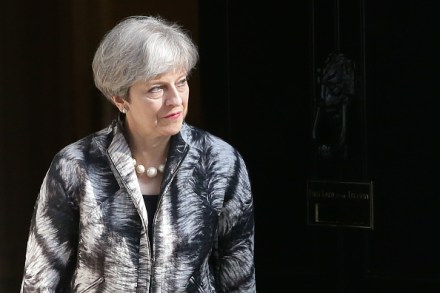
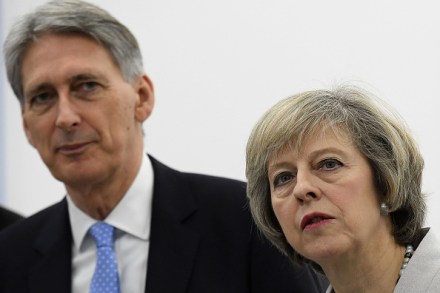
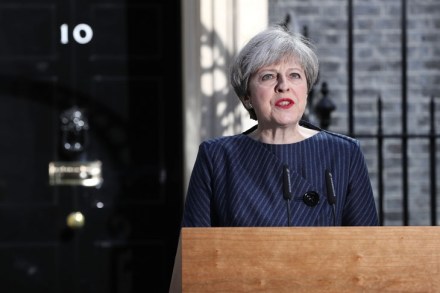
Theresa May has long been clear about what sets her apart from other politicians: she doesn’t play political games. When she launched her bid for the top job last year, she was clear that — unlike her rivals — she hadn’t succumbed to the temptations of Westminster. She told us that she didn’t drink in the bars or gossip over lunch. She invited the TV cameras into her first Cabinet meeting as Prime Minister to record her telling ministers that ‘politics is not a game’. The danger for May in calling an election three years ahead of schedule is that it looks a lot like game-playing. Has a 20-point poll lead proved too much of a temptation, even for this vicar’s daughter?

Those who want a clear Brexit will need to make sure it is in the manifesto

From our UK edition

Mrs May’s decision to call a snap general election is not very welcome, and I had thought she would think it too risky, but it makes sense — obviously because of Jeremy Corbyn and, a bit less obviously, because of public attitudes to her. She has brilliantly convinced people that she is a straightforward, unpolitical person who doesn’t descend to political games. This is untrue. She is, however, a person without childish vanity, celebrity hunger or media obsession. She benefits from a big cultural change, which descends from Mrs Thatcher, via all sorts of others — Angela Merkel, Ruth Davidson, Nicola Sturgeon. Women are now seen as stronger, more real and less silly than men. This is an old folk wisdom, but it only recently became the orthodoxy in politics.

The Tories don’t need silly pledges to scare off Labour in this election

From our UK edition

We are coming to the end of the first week of an election campaign that few were expecting when this week began. The parties are drawing their battle lines: the Tories are warning of a happy Vladimir Putin and a 'coalition of chaos' involving the SNP, Labour and the Lib Dems, while Labour is making this an anti-establishment election (though what precisely the Establishment is up to and which naughty coffee chains it involves remains vague, even for the party's MPs promoting that message on the airwaves). The Lib Dems, meanwhile, had long worked out their pitch as the anti-Brexit party. Of course, not all Labour MPs are talking about the way the Tories are 'rigging' the system or how Jeremy Corbyn proposes to solve that.

Theresa May doesn’t trust enough people for a power ‘circle’. A triangle, maybe

From our UK edition

The fact that nothing leaked about Mrs May’s snap election tells you much of what you need to know about her. It shows how iron is her discipline and how close her inner circle (so close, in fact, that it is a triangle rather than a circle). It suggests that she takes neither her cabinet nor her party into her confidence. It shows that if she wins the general election, her control of her administration will be much tighter than that of Margaret Thatcher (which was surprisingly loose) and even than that of David Cameron (which was surprisingly tight). Finally, it shows that if she loses, or gets a result no better than the present parliamentary arithmetic, she will find herself friendless.

The Spectator Podcast: Election special

From our UK edition

On this week's episode, we discuss the two European nations that are are heading for the polls in the next couple of months. First, we look at Theresa May's shock decision to hold a snap election, and then we cross the channel to consider the French election as they get set to whittle the field down to just two. With British news set to be dominated until June 8th by election fever (yet again), there was no place to start this week but with the fallout from the Prime Minister's stunning U-turn on an early election. It's a gamble, James Forsyth says in his cover piece this week, but with a portentially enormous pay off. James joins the podcast along with Bobby Duffy from Ipsos MORI and Richard Angell director of Progress.

What I expect from this pointless election

From our UK edition

A general election is called and in a matter of hours a neutral and unbiased BBC presenter has likened our Prime Minister to Recep Tayyip Erdogan. Governments rise and governments fall, but some things stay just as they always were. It was Eddie Mair on Radio 4’s PM programme who made the comparison, while interviewing the Home Secretary, Amber Rudd. In fairness to Mair, he had been alluding to Theresa May’s apparent wish to create ‘unity’ within Westminster, a truly stupid statement within an address which sometimes made no semantic sense and sounded, to my ears, petulant and arrogant. Then along came the opinion pollsters to tell us exactly what will happen on 8 June — except they declined to be too explicit.

Can Labour survive this general election?

From our UK edition

'There are times, perhaps once every thirty years, when there is a sea-change in politics,' reflected James Callaghan in 1979, conscious he was about to be turfed out of Number 10. He didn’t know the half of it. While Margaret Thatcher’s election did herald the end of the post-war consensus, it kept the Conservative/Labour ‘mould’ intact, despite later attempts by the SDP/Liberal alliance to break it. But with a ‘Brexit election’ now called for 8 June, Labour will be fighting for its very survival. The last great national political realignment was the 1922 general election in which Labour beat the Liberals into second place for the first time.

Even a crushing election defeat might not spell the end of Jeremy Corbyn

From our UK edition

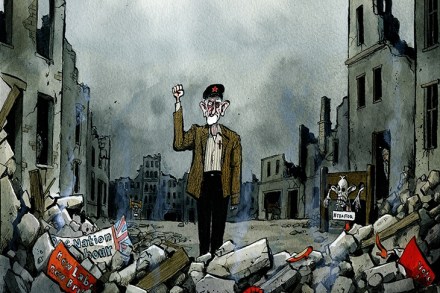
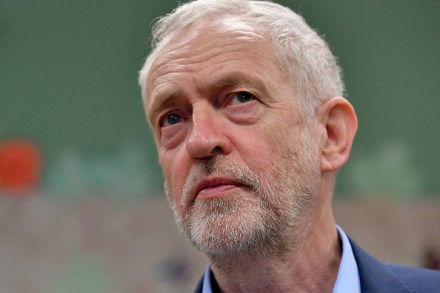
After the referendum, Jeremy Corbyn said that Labour was ‘very, very ready’ to contest a general election. Which is good news, because that’s precisely the task he now faces. In the world of Corbyn’s most ardent supporters, the snap election has been greeted with something like glee. Their greatest fear – that Corbyn may not survive in the leadership long enough to face the public at large – has been alleviated. Momentum's Michael Chessum tweeted that there ‘absolutely is a path to victory for Labour... We'll have to be bold, but it's there’, while Paul Mason said that ‘a progressive alliance can beat the Tory hard Brexit plan’. That jubilation on the hard left is typical of the movement’s resilience.

Like them or not, Theresa May’s grammar school plans will end the postcode lottery of education

From our UK edition

Grammar Schools. Now there’s a potent pair of words. Mention them, and genial conversation will instantly shift into awkward silence or seething torrents of passion. In either case, reasoned argument is in short supply. Yet now that Theresa May seems committed to overturning Labour’s ban on opening new grammar schools, discussion is vital. But instead of rehashing the same arguments in favour of academically selective schools, or raking over the same problems they can cause, it’s important instead to look carefully at the evidence about whether grammar schools really do promote ‘social mobility’. One of the major themes of anti-grammar salvos is that they don't. And to make this point, the crudest approach is typically taken.

The National Trust could teach Theresa May and the Tories a thing or two

From our UK edition

What drove Theresa May to break off from a trade trip to the Middle East to chuck a half-brick at the National Trust over some Easter bunnies? Maybe Dame Helen Ghosh, the Trust’s Director General, knows. When the two worked together at the Home Office, they got along like a house on fire: there were flames, some screaming and eventually someone (Dame Helen, as it happens) left the building through a window. Given that history, it’s probably unwise to suggest that Mrs May might learn something from Dame Helen and the Trust instead of battering them, but I’ll give it a go anyway. The lesson is about members. The Trust has lots of them: more than four million, in fact.

Regressive Conservatism

From our UK edition

Jeremy Corbyn’s leadership of the Labour party is coming to resemble a drunk trying to get home on a bike. Most of the time he just pushes it along, but occasionally he mounts the saddle and whirls into action — only to find himself swiftly spread-eagled on the road. Take next month’s local elections. Corbyn launched his party’s campaign trying to bemoan the state of Britain. There are plenty of statistics which he could have trotted out to depict a country underperforming on living standards, debt levels and social mobility. But he chose to cite a supposed decline in life expectancy — which is demonstrably and famously wrong.

Mark Reckless’s defection presents the Tories with a conundrum

From our UK edition

Mark Reckless infuriated many Tories when he defected to Ukip. Now, he’s defected again - and made few people happy in the process. The Ukip AM has announced that he is joining the Conservative Group in the Welsh Assembly, where he sits as a regional representative. Not for the first time, he is following in the footsteps of Douglas Carswell - this time by leaving Ukip behind. And his reasons for doing so are similar to Carswell’s: Brexit means that it's mission accomplished. In his statement, he says: ‘I am joining the Conservative Group in the Welsh Assembly. I leave Ukip positively, having achieved our joint aim, a successful referendum to leave the EU. For me it is job done now that Article 50 has been triggered.

Should conservatives fear new working-class support? Some clearly do

From our UK edition

In America, an argument has broken out among journalists, writers and intellectuals in the aftermath of the presidential election about whether Trump’s white working-class voters were decent, upright citizens let down by the supercilious liberal establishment or whether they were, in Hilary Clinton’s words, a racist, sexist, homophobic basket of deplorables. The curious thing about this debate is that the defenders of Trump’s supporters are, for the most part, left--wingers, like the Berkeley sociologist Arlie Russell Hochschild, who spent five years chronicling a depressed blue-collar community in Louisiana, while those who disparage them as ‘in thrall to a vicious, selfish culture whose main products are misery and used heroin needles’ are conservatives.