Conservative party

The liberals and the deplorables

From our UK edition

In America, an argument has broken out among journalists, writers and intellectuals in the aftermath of the presidential election about whether Trump’s white working-class voters were decent, upright citizens let down by the supercilious liberal establishment or whether they were, in Hilary Clinton’s words, a racist, sexist, homophobic basket of deplorables. The curious thing about this debate is that the defenders of Trump’s supporters are, for the most part, left--wingers, like the Berkeley sociologist Arlie Russell Hochschild, who spent five years chronicling a depressed blue-collar community in Louisiana, while those who disparage them as ‘in thrall to a vicious, selfish culture whose main products are misery and used heroin needles’ are conservatives.

Revealed: the 63 Labour seats the Tories could snatch at the next election

From our UK edition

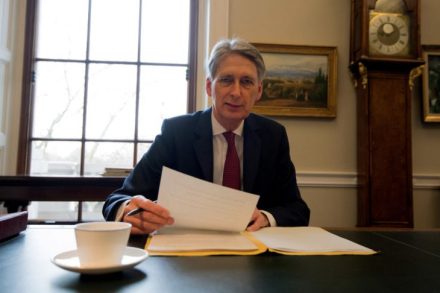
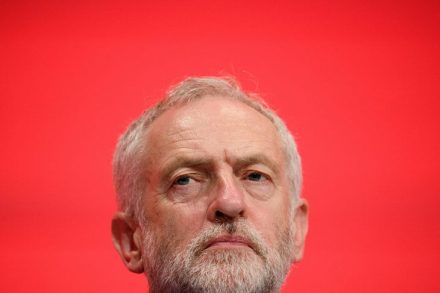
Theresa May has once again ruled out a snap general election but that doesn’t mean the temptation to hold one will go away. Today’s ICM poll shows why: the Tories, on 45 per cent, have a 19-point lead over Labour. This pushes the Government’s poll lead up by three points following a fortnight dominated by Philip Hammond’s Budget debacle, his subsequent u-turn over hiking national insurance rates and Theresa May coming under pressure from the SNP. With Jeremy Corbyn in charge of the Labour party, the usual rules that a government would be punished for a bungled budget need not apply.

Numbers 10 & 11 need to find a better way of working together

From our UK edition

Philip Hammond should be sending George Osborne a case of the finest claret. For Osborne’s decision to accept the editorship of the Evening Standard, has distracted Westminster’s from  this week’s spectacular Budget reversal. But, as I say in The Sun this morning, the fallout from it will be felt for some time. Even Hammond’s Cabinet allies admit that ‘Of course, he’s damaged’ by the whole issue. But those in May’s circle are blunter. Pointing out the mistake was ‘staring you right in the face’ before he made it and that the National Insurance hike on the self-employed ‘was pushed back several times' by Number 10.

Hammond’s humiliation

From our UK edition

After Philip Hammond delivered his Budget last week, he went to speak to a meeting of Conservative backbench MPs. Several were deeply alarmed about his tearing up of their manifesto pledge not to raise National Insurance. One asked him how sure he was about all this. Would they find themselves going out to defend this tax rise to their constituents, only to find him abandoning the policy later? No, the Chancellor replied, he would not change his mind. This tax rise was the centrepiece of his Budget, and it could not be scrapped. He was not for turning. For a Chancellor to abandon his main Budget policy within a week is nothing less than extraordinary. It suggests a staggering lack of communication, forethought and basic political competence.

The Tory Budget rebellion is growing

From our UK edition

The Tory rebellion over the tax hike on the self-employed isn’t abating, it is intensifying as I say in The Sun this morning. As one Cabinet Minister tells me, Tory MPs ‘left the Budget feeling a little bit concerned. They’ve seen the papers, and thought this isn’t good. After the emails and constituency stuff, there’ll be even more nervous’. One Tory backbencher, who is a good judge of the mood of the parliamentary party, says ‘People are not happy at all. Somethings’ got to change’. But Philip Hammond is digging in. He is ‘absolutely determined not to retreat on this’ according to one Cabinet ally of his. He has, I’m told, been ‘surprised by the extent of the backlash’.

Tories, tax and trust – a warning from history

From our UK edition

I was on the Question Time panel last night, and suspected that the issue of National Insurance might crop up - and that Karen Bradley, the Culture Secretary, would be sent out to defend the indefensible. Like all ministers, she has to repeat Philip Hammond’s bizarre claim that the Tories had not broken a manifesto pledge. That when they repeatedly promised not to raise National Insurance they meant only part of the National Insurance. The 2015 Tory manifesto contained no such caveat (I brought a copy along to the studio) and it’s impossible for any minister to claim otherwise. Hammond has already been accused of 'lying' – a strong word, but he should not be surprised if a politician makes a demonstrably untrue claim.

Revealed: The full list of Tory MPs who have spoken out against the Chancellor

From our UK edition

Given that Jeremy Corbyn barely seemed to notice Philip Hammond's Budget blunder, it's unlikely the Chancellor will be too worried about Labour's response to the National Insurance rates row. He will be troubled, though, by the rumblings on the backbenches behind him. The prospect of a Tory revolt is now very much on the cards; 18 Conservative MPs - including former leader Iain Duncan Smith and Tory whip Guto Bebb - have publicly spoken out against the policy. Because Tory MPs were voted in on a manifesto pledge not to raise NI contributions - and will inevitably be getting it in the neck from angry constituents over the coming days - this number is likely to rise. With a wafer-thin working majority of just 17, Philip Hammond and the Government can ill-afford a row.

A Budget to keep Brexit off the rocks

From our UK edition

Chancellors often enjoy a Budget for the chance it gives them to show off. They enjoy wrong-footing their opponents with a dramatic and unexpected announcement right at the end of their speech — the much-anticipated rabbit pulled from the hat. But Philip Hammond is not a political showman. He must be the only Chancellor in living memory to have played down his first Budget, telling colleagues with big ideas to come back to him this autumn. This lack of showmanship should not be mistaken for an absence of serious intent. He is unique among recent chancellors for two reasons: he has no ambition to move one door along to No. 10 Downing Street, and he can be confident of a long stint in the job.

Biggest loser from this Budget? The credibility of Tory tax promises

From our UK edition

There is a very big winner from today’s budget. Not adults in social care, not schools, but Ukip. Philip Hammond has handed a huge political opportunity: to position itself as the party of the self-employed: the taxi driver, the brickie, the plumber, the small shop-owner. These used to be natural Tories. From today, with Hammond imposing a two per cent extra tax on their income, and breaking a manifesto commitment in the process, they will be looking for a new political home. No wonder Suzanne Evans was tweeting about the change within seconds of it being made. The Treasury’s argument for raising National Insurance Contributions on the self-employed is that the current arrangements are unfair to the employed, who pay a higher rate of NIC.

Philip Hammond brews trouble with his National Insurance hike

From our UK edition

Philip Hammond had, in his first few months of Chancellor, gained rather a reputation for being an ‘Eeyore’ about the consequences of Brexit. In the run-up to today’s Budget, it was briefed that he would be much more upbeat about things, while also storing up a ‘war chest’ to guard against any future shocks to the economy caused by Britain leaving the European Union. In the event he barely talked about it at all.  He told the Chamber that ‘as we start our negotiations to exit the European Union, this Budget takes forward our plan to prepare Britain for a brighter future’, and ’our task today is to take the next steps in preparing Britain for a global future’.

Why Hammond won’t be pulling rabbits out of hats on Budget day

From our UK edition

Normally, the Saturday before a Chancellor’s first Budget would be dominated by discussion about their plans for the economy. But, as I say in The Sun this morning, Philip Hammond would rather not be delivering a Budget next week. He thinks it should be in the autumn, but he has one more Spring one to do before this shift can take place. This, as one Ministerial colleague observes, puts him in a unique position: ‘He’s the first Chancellor in history to play down his first Budget’. But then, Hammond is not a showman. He’s not interested in producing rabbits out of hats. He’s also cautious about Brexit.

Gerald Kaufman: Labour hero, Jewish villain

From our UK edition

Gerald Kaufman, who has died aged 86, was instrumental in saving the Labour Party, back when the Labour Party was something that could still be saved. It was Kaufman who pithily pegged the 1983 manifesto as 'the longest suicide note in history'. He knew the phrase would hang around the far-left and dog any attempt to dodge responsibility for the calamity.  In his heart, he was a radical, but he parted ways with the 1980s Labour left in its mush-headed confusion of ends and means. The mush is now party policy but Kaufman expended considerable wit keeping it at bay during the Kinnock years.

Labour is finished. But you can’t blame it all on Corbyn

From our UK edition

Even now, even following their historic thrashing in Copeland, Labourites still cannot face the truth. Sure, there are Twitter tears this morning. I’m sure the vibe in Corbyn’s office is skittish and fearful. There’ll be an explosion in ‘What now for Labour?’ articles. But they still do not get the yawning, abyssal depth of the crisis they face. They still don’t see that their party isn’t merely in trouble; it’s finished, over, kaput. Labour is a zombie party, a Frankenstein creature patched together from dead slogans and middle-class anti-Tory angst; a living-dead entity utterly incapable of making a connection with the living.

John McDonnell gets his excuses in early for Labour’s disastrous by-election defeat in Copeland

From our UK edition

Labour’s defeat in Copeland is nothing short of a disaster - but you won’t hear that from the shadow chancellor. Instead, John McDonnell said the fact that the Tories snatched away the seat - becoming the first Government to win a by-election since the 1980s - was a ‘disappointment’. His biggest concession to those who say this result shows it’s time for Corbyn to go was to admit there are ‘mixed views’ on the Labour leader. So if it isn’t Corbyn’s fault, who is to blame? McDonnell offered several answers to that question. He said that the ‘macho leaders we’ve had in the past’ were responsible for some of the ‘disasters’ we’ve had.

The left are the Tories’ best friends

From our UK edition

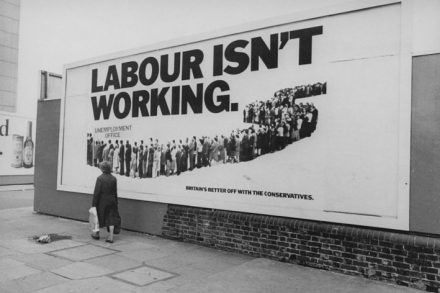
Modern British history is largely a history of Tory rule and misrule. The Tories governed Britain from 1886 until 1905 with only the Gladstone/Rosebery minority administration of 1892 to 1895 breaking their dominance. They were in power every year from 1916 until 1945, either on their own or in coalition, except for 11 months in 1924 and from 1929 to 1931, when minority Labour governments clung to office. The Tories governed on their own from 1951 to 1964, and from 1979 to 1997. They governed first in coalition and then on their own from 2010 until…Well, think of a number then double it. Opponents who know that the Conservatives are not only a party of privilege but are perfectly capable of betraying the best interests of every class in the nation ought to fear them.

Number 10 distancing itself from Law Commission’s secrecy proposals

From our UK edition

There has been an understandable, and justified, outcry about the Law Commission’s proposed changes to secrecy legislation. The current proposals present a serious threat to investigative journalism and whistle blowers. But Theresa May’s Number 10 is very keen to point out that this review was something commissioned not by them, but by David Cameron’s Number 10. ‘This is a consultation by an independent body instigated by the previous Prime Minister’ is how one May aide describes it—which is a clear attempt to distance the current Prime Minister from this whole business. I am told that it is highly unlikely that the proposals will be implemented in their current form.

Why the Lords won’t block Brexit

From our UK edition

The government has no majority in the House of Lords and a majority of peers were pro-Remain. But despite this, the Article 50 Bill will get through the Lords I argue in The Sun this morning. Why, because the reason that we still have an unelected chamber in the 21st century is that the House of Lords has a strong self-preservation instinct: it knows its limits. If the Lords were to try and block something that had been backed in a referendum and had passed the Commons with a majority of 372, then it would be endangering its very existence. Indeed, I understand that the Labour front bench have already made clear through the usual channels that they won’t try and block the bill. There will, of course, be attempts to amend it.

Motion of no confidence in Bercow tabled

From our UK edition

The Tory backbencher James Duddridge has formally tabled a motion of no confidence in the Speaker John Bercow. Duddridge’s attempt to remove the Speaker follows Bercow’s outburst against Donald Trump from the chair on Monday, which further called into question his impartiality and his judgement. Duddridge’s motion is unlikely to succeed. The SNP and nearly all Labour MPs will back Bercow while the government has no appetite for getting drawn into this fight. The vote, though, will be an embarrassment to the Speaker. There’ll be a sizeable number of Tories who vote for it, 150 is the number being talked about tonight, and it will show how Bercow has lost the confidence of a section of the House. But Bercow is not the type to be embarrassed into standing down.

The House of Commons votes for Brexit

From our UK edition

The drink will be flowing in the government whips’ office tonight. For the Brexit Bill has passed through the Commons unamended and with an absolutely thumping majority at third reading of 372. This means that a clean bill will go to the House of Lords. This will strengthen the government’s hand there as peers will be more reluctant to make changes to a clean bill and one that has passed the Commons with such a large majority. Despite all the talk of knife-edge votes, the government’s majorities tonight were pretty comfortable—30 or above on all the amendments.

A wake-up call for Parliament

From our UK edition

Parliament is the cockpit of the nation, but MPs have been on autopilot rather a lot in the past 40-odd years. Ever since the United Kingdom joined the European Economic Community, more and more powers have been passed away from Parliament to Brussels and its institutions. Brexit will see these powers come flowing back to Westminster. So it was appropriate that the Supreme Court has decided that Parliament must legislate for the triggering of Article 50, the two-year process by which this country will leave the EU. For MPs to vote against Article 50 would be to vote against the referendum result itself; it says nothing about the terms on which Britain will leave the EU.