Conservative party

Boris Johnson sets out his stall – but stops short of a challenge

From our UK edition

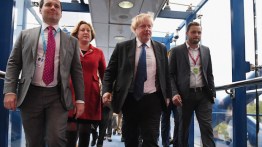
Boris Johnson's Brexit rally was everything that No 10 had been dreading. Queues for the event began three hours in advance and saw activists block stairways and corridors across the conference hall in a bid to see the former foreign secretary's moment in the spotlight. Some members in the audience even dressed up for the occasion – with Boris Johnson t-shirts. The front row was filled with Johnson's Parliamentary supporters – including David Davis, Zac Goldsmith and Iain Duncan Smith. His siblings – Jo and Rachel – were notably absent despite both attending this year's conference. Proving he is still a star attraction, Johnson received a standing ovation as soon as he arrived on stage.

Tories try to reinvigorate their party with money for ‘diverse’ candidates

From our UK edition

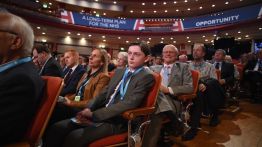
The Tory conference hall is, so far, struggling to replicate the size and excitement of Labour's gathering last week. This isn't entirely the party's fault: the venue itself might be great for listening to an orchestra, but it tends to dampen what atmosphere there is. But the decline in audience enthusiasm has been taking place over a number of years across a number of venues. The reasons for this are manifold. One is that the Tories simply do not have the grassroots membership that Labour does. Another is the way Conservatives struggle to give rousing speeches about what drives them in the way that Labourites do.

Why Tory conference will be a leadership parade

From our UK edition

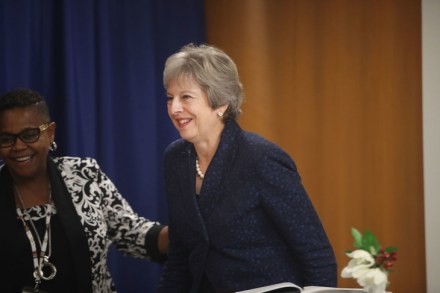
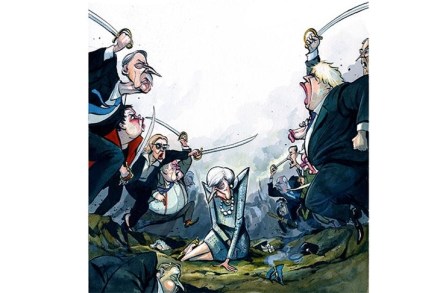
What does Theresa May want to achieve from this week's conference? No-one seems sure. There are some in No 10 who would be content so long as she survives it without a coughing fit. Others have higher hopes – that she could reset the dial and reinvigorate her flagging premiership. What seems most likely, however, is that the event will descend into a leadership parade that plays a role in deciding who the next Tory prime minister is. This year's conference has already got off to a bad start for the Prime Minister thanks to a massive data breach courtesy of CCHQ's conference app and a bad-tempered appearance by the Maybot on Marr (James has all the gruesome details here). The papers have a few traces of conference announcements.

The Tories need to remember how to fight Labour

From our UK edition

As you'd expect on the eve of Tory conference, everyone in the party is offering plenty of advice for Theresa May. Some are tugging the Prime Minister leftwards, while others are fretting that the Conservatives risk abandoning their values. There's Jacob Rees-Mogg arguing that the Tories need to support the institution of the family, Sam Gyimah worrying that the party has 'lost our way' and is both 'talking business down' and 'ignoring the concerns of voters', Boris Johnson complaining about, well, quite a lot, and Liz Truss saying Labour's latest PPB 'does capture the heart of where we need to be as a party'. And it's not even the real eve of party conference. We've got tomorrow and Sunday's papers to go yet.The debate isn't just about what Theresa May is doing, though.

Left in charge

From our UK edition

The worst of Britain’s post-war mistakes, ideas we thought long dead, are once more in the air. Yet again there are plans for ‘workers on boards’ (the govern-ment, of course decides who’s a worker), and for mandatory price caps, based on the delusion that government can make things cheaper by diktat. Intelligent people are once more agreed that British employers should pay the highest minimum wage in the developed world — a policy estimated to condemn tens of thousands to unemployment. The tax burden is at a 30-year high, yet many assume we should make that burden still heavier — as if the country can be taxed to prosperity. The Labour party has been pontificating along these lines in Liverpool all week, but these are in fact Tory ideas.

‘She will decide’

From our UK edition

David Lidington is the most powerful minister you’ve never heard of. He is Theresa May’s de facto deputy, tasked with both supervising the domestic agenda and solving the trickiest Brexit conundrums. Much of government business is, nowadays, done through committees of cabinet members: he chairs seven such committees and sits on another 20. ‘I am the man who stands on the stage spinning plates on the top of poles,’ he says cheerfully. ‘Every now and then the PM gives me another plate and I have to keep that going as well.’ That’s hardly a metaphor that inspires much confidence in the running of the government, but everybody will know what he means. Lidington was Europe minister under David Cameron and a committed Remainer in the referendum.

The hard centre

From our UK edition

The Conservative party has to move beyond Brexit and leaders: what is it going to be about? I suggest it has to be about healing capitalism. Capitalism is the only system that is capable of delivering mass prosperity, but it cannot be left on autopilot. Once every few decades it veers off track and requires active public policy. In the mid-19th century, the old Tory party was revolutionised by Disraeli’s ‘one nation’ agenda, correcting the social catastrophes of early industrialisation. In the 1930s, there was no Disraeli: indeed, no political party rose to the challenge of mass unemployment, which was addressed as an inadvertent by-product of rearmament.

Wanted: A Conservative policy agenda (two years late)

From our UK edition

Theresa May has quite a few challenges to meet this conference season. One is obviously to avoid the sort of farce that her speech descended into last year. Another is to try to unite the warring wings of her party and convince her MPs that Chequers really is the only game in town. But equally as important is the need to show she has things she wants to do when it comes to domestic policy. This is hard: May hasn’t really managed to give that impression at any stage of her premiership, so to start in what feels like the swan song isn’t ideal. Added to that is the general mood in the Conservative Party, which isn’t a million miles away from Labour in 2009/10 at the end of a much longer stint in government.

Naz Shah needs to make up her mind about abortion

From our UK edition

There are a couple of things I just don’t get. Maybe someone of liberal mind can explain them. Didn’t equalities minister Penny Mordaunt back in July throw her weight behind Theresa May’s promise to make it much easier to reassign your own gender? Of the current process (which requires you, for example, to provide medical evidence before being allowed to redefine yourself as a woman) she said: 'It is overly bureaucratic and it's highly medicalised with people making decisions about you who have never met you.' In other words, it’s your life and your decision as to which gender you wish to identify with – the state should keep its nose out and leave you alone.

How serious are the plots against Theresa May?

From our UK edition

Following last night's reports of open plotting against Theresa May, her critics in the Conservative party seem rather keen to row back on any suggestion that they really are planning a coup. Iain Duncan Smith, for instance, told BBC Radio 5 Live that he 'would stamp on' any attempted challenge, and that the talk of a plot was 'totally overblown'. Others have pointed out that there were notable senior absences from the European Research Group's meeting last night, including Bernard Jenkin, David Davis, Boris Johnson and Jacob Rees-Mogg. Of course, even if those big names had been present and plotting merrily away, their plans would have been seriously undermined by the easy leaks that came from the meeting.

The Brexiteer mutiny against Theresa May has begun

From our UK edition

I am just going to let this speak for itself. It’s a slightly edited but verbatim account of tonight’s weekly meeting of the Brexiter European Research Group faction of the Conservative Party. It requires no additional comment from me - other than that I have multiple sources vouching for its veracity. “We've just had an ERG mass meeting, 50 odd MPs present, where virtually the only topic of conversation for 40/50 mins was: how best do we get rid of her? What's the best way to use our letters? Comments included: ‘Everyone I know says she has to go’, ‘she's a disaster’, ‘this can't go on’. You might think that this is usual far for us, but it's not! Not in the mass weekly meeting, never in what's basically a public forum.

Conservatives’ warning from beyond the grave

From our UK edition

The Conservatives were given a reality check today in the form of new Electoral Commission data on the financial health of political parties in 2017. Under Jeremy Corbyn, Labour managed to break previous records and raise just under £56m in a single year – beating the Conservatives by nearly £10m. Adding insult to injury, the Tories received more money from the dead (in the form of bequests) than from the (living) Tory grassroots, with income from membership fees nearly halved. Where Labour received £16.2m in membership fees last year, the Tories managed a paltry £835,000. This touches on a wider issue for the Conservative party: its relationship with the grassroots.

Why are some Tories worried about an influx of new members?

From our UK edition

William Hague’s warning today that the Conservative Party mustn’t change the rules by which its leader is elected shows quite how much has changed in British politics over the past few years. Ideas that were very much in vogue in 2015 are now widely trashed. Where once it was considered a no-brainer that parties should make it easier and cheaper for members to join and even give them more say over policy making, now parliamentarians and commentators are running scared of just that. Why?

The Conservatives prepare for battle

From our UK edition

It’s been all out civil war in the Tory party since the disastrous snap election which saw Theresa May lose the Conservative majority. Now it looks as though the party, tired of all the infighting, might finally be turning their attention to Labour. A job advert on the site w4mp went up over the weekend for a Conservative ‘Battleground Manager’: Key tasks for the role include planning election campaigns, working out target seats, and taking the fight to the opposition. The ideal candidate will of course be a ‘self-starter,’ ‘manage multiple tasks under pressure,’ and have excellent campaigning skills.

Revealed: what voters think of party allegations of anti-Semitism and Islamophobia

From our UK edition

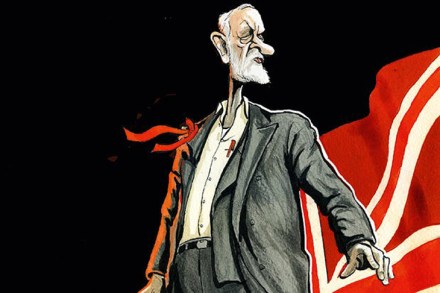
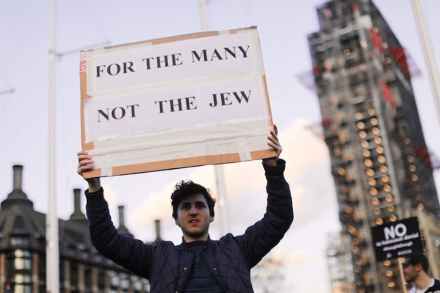
Commentators on the left and right have been fiercely arguing for the past few weeks over which political party is more racist: Labour or the Conservatives. Conservatives have pointed out Jeremy Corbyn’s numerous links and associations with anti-Semites, Labour’s refusal to adopt the IHRA definition and Jewish conspiracy theorists on Twitter. In response, prominent left wingers have flung back at them calls by Sayeeda Warsi for an inquiry into Tory Islamophobia and comments by Boris Johnson about women in burqas looking like letter boxes. But what do the public actually think about allegations of racial prejudice within the two main parties, and who do they think is worse?

Ukip should return – our politics depends on it

From our UK edition

‘The return of Ukip’ declared the headline on our cover story last week. The polling boffin Matthew Goodwin to whose analysis this referred was in fact more careful. Professor Goodwin did argue, however, that the potential may be there for a Ukip revival. So it may. But the figures for new recruits that he cites are modest. The doubt he describes as surrounding Nigel Farage’s chances of a comeback is real. Ukip’s present stance under its latest leader Gerard Batten (who has developed links with the campaign for the disgraced and imprisoned former leader of the English Defence League, Tommy Robinson) looks crazier by the week.

What does Andrew RT Davies’ resignation mean for Welsh Tories?

From our UK edition

Politicians in Wales sometimes complain, at least in private, about the lack of media and public attention they receive. But Andrew RT Davies' resignation as leader of the Conservatives in the Welsh Assembly, means that Welsh politics is back in the spotlight. With the prospect of simultaneous leadership elections running over the summer for all four Assembly parties, this looks set to continue. The announcement in April that First Minister Carwyn Jones would stand down as Welsh Labour leader by the end of the year was followed last week by Ukip in Wales declaring that they would ballot their membership over who should lead their fractious National Assembly group.

Rebels climb down on ‘crunch’ Brexit vote – again

From our UK edition

One of the laws of Brexit is that every Commons division and Cabinet meeting billed as being a 'crunch vote' or 'crunch talks' ends up postponing the crunching again, and again and again. This afternoon, Dominic Grieve announced that he would 'accept the government's difficulty' on the matter of a meaningful vote and 'support it'. He was speaking in the Commons shortly before a division was supposed to be called on this matter, and not long after the government had offered a compromise. That compromise involved David Davis issuing a Written Ministerial Statement which clarifies that the Speaker can decide whether or not a motion issued by the government using the EU Withdrawal Bill is amendable. Last week, the government had said that it would not be, but now it will.

The ‘Brexit dividend’ for the NHS is Theresa May’s new Magic Money Tree

From our UK edition

So the Tories have, as The Spectator predicted last month, announced an extra £384 million a week for the National Health Service - something Theresa May was perfectly happy to sell this morning as being the 'Brexit dividend' that Boris Johnson had been pressuring her for. This is an odd choice, given it is impossible to know what the real 'Brexit dividend' will be when we haven't yet left the European Union. Indeed, May couldn't say very much at all about how this extra NHS money will be funded: that's presumably because no Prime Minister wants to tell voters how much more tax they'll be paying, regardless of whether that tax is funding something as salient as the health service.

The Tories only have themselves to blame for the ‘upskirting’ row

From our UK edition

How embarrassing for Tory MPs: one of their own has managed to block the unblockable: a bill creating a new criminal offence of 'upskirting'. Plenty of Conservatives have turned on the culprit, Christopher Chope, both in WhatsApp groups and in public, to show that they do not have the same views as him. To be fair to Chope (and it is hard, especially for a magazine that prefers its motto of 'firm but unfair'), he wasn't suggesting that upskirting was in some way OK. He is part of a group of MPs with the odd hobby of objecting to Private Members' Bills on principle because they don't think that MPs from opposition parties should be able to write laws which could cost the government money or could be very bad policy. Oddly, though, this doesn't stop them introducing their own bills.