Conservative party

A matter of Truss: the unlikely rise of Lizmania

From our UK edition

If Boris Johnson were to vanish tomorrow, who should replace him? The American pollster Frank Luntz asked this of about 200 people at The Spectator’s live podcast last week, and the answer was Liz Truss. This took me by surprise – I’d have said Rishi Sunak – but there’s no doubting the Lizmania that was in the air in Manchester.  The new Foreign Secretary was pulling in the crowds, flirting with the right-wing think tanks (it’s time for her to be ‘reinfected with sound ideas’ she told them) posing for selfies and – later, in the nightclubs – dancing with her army of admirers. Her events were the ones with the biggest queues on the way in and the biggest smiles on the way out.

The Tories will pay a price for Boris’s housing strategy

From our UK edition

One of the themes of Conservative conference was that the government has dropped plans for a radical reform of the planning system, which was designed to get more houses built in the south east. Both Boris Johnson and the new party chairman Oliver Dowden were keen to stress this point. But, I say in the Times today, this is a mistake. The Tories are the party of the property-owning democracy, and live and die by this The Tories have been spooked by the Chesham and Amersham by-election where the Liberal Democrats ran hard against planning reform and took the seat on a 25 per cent swing from the Tories. Boris Johnson will pay little immediate electoral price for this U-turn. Indeed, at the next general election he’ll probably benefit from it.

Sunak faces the free-marketeers

From our UK edition

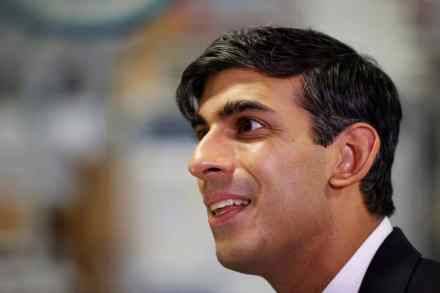
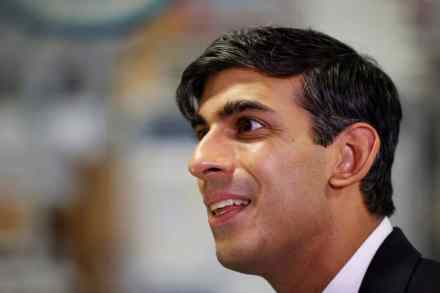
Rishi Sunak didn’t give too much away tonight when he spoke in the 'ThinkTent' at Conservative Party Conference. The Chancellor is known for being cautious with his words, and has been increasingly tight-lipped in the weeks leading up to his October Budget. But his presence at the fringe event was telling in itself. Sunak was only billed for one public fringe event this year, co-hosted by the Institute of Economic Affairs and Taxpayers’ Alliance. Their ‘ThinkTent’ boasts some of the most free-market, libertarian events you’ll find at conference: both organisations are strong advocates for a low-tax, smaller state. So, not necessarily an obvious place to find the Chancellor who has overseen record peacetime spending over the past 18 months.

Priti Patel strikes a bullish tone

From our UK edition

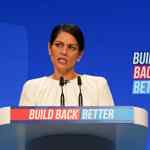
The theme of Priti Patel's party conference speech this afternoon was very much 'large and in charge'. She devoted much of her address to talking about the immigration system, as you'd expect, promising stronger crackdowns on people being smuggled across the Channel in boats. Patel focused on the Vote Leave favourite: taking back control Whereas Boris Johnson and Michael Gove have talked about Britain 'voting for change' in 2016, Patel focused on the Vote Leave favourite: taking back control. She told the conference hall this was the key theme of her reforms to immigration, saying: 'My new plan for immigration is already making its way through parliament. At the heart of this plan is a simple principle. Control. That is not unreasonable.

What’s on today at Conservative conference

From our UK edition

It's day three of four here in Manchester at the Conservative party conference. Expected highlights of the day include the recently demoted Dominic Raab making his first speech as Justice Secretary while Priti Patel and Sajid Javid will be well worth watching too. Elsewhere Raab's axed predecessor Robert Buckland appears at Policy Exchange while The Spectator again has a full day of fringes events.

Running on empty: the government is out of fuel – and ideas

From our UK edition

The Prime Minister is thought to thrive on chaos. If so, then he should be in his element. Wholesale gas prices have risen sixfold, winter heating bills are set to be the highest on record. Millions of people across the country are wondering what they might have to forgo to pay for heat. Supermarkets are warning of food shortages. There are 100,000 missing HGV drivers. The army has been called in to help, but has only 150 tanker drivers available. Queues for petrol jam the roads, and medics can’t get to work. The Prime Minister might thrive on chaos, but Tory members do not. ‘Tory grassroots are furious,’ says one MP. Not just about the prospect of energy bills rising, but about the increase to National Insurance too.

Tories brace for more tax rises to fund NHS

From our UK edition

Any Tory rebellion on social care is unlikely to be very big this evening when the Commons votes on a resolution introducing it. There are a number of reasons for this, not least that voting against a money resolution, particularly one on an issue that is as big as a budget, is a much bigger deal than rebelling on normal legislation. Then there's the prospect of a reshuffle, with everyone in Westminster busily trying to read runes about whether Boris Johnson will move around his front bench tomorrow. If it doesn't happen, disappointed MPs are hardly going to complain in public that they'd supported the policy in the hope of career glory. If the NHS won't willingly stop spending money, and the new care policy requires that money after three years, what's going to happen?

The Tories aren’t in party mood

From our UK edition

Nearly two years on from the general election and 11 years since the Tories took office, they remain comfortably and consistently ahead in the polls. This is remarkable. In September 2008, when Labour was in power, it was almost 20 points behind the Conservative party. Eighteen years before that, when the Tories were in power, they regularly trailed by double digits. You might think this Tory lead, and the poor numbers for the leader of the opposition — Keir Starmer’s latest approval rating is minus 39 — would have led to Tory triumphalism. However, when Tory MPs return to parliament next week, they will do so in a strikingly subdued mood. In part this is because of the issues at the top of the agenda.

Why isn’t the Tory party helping desperate leaseholders?

From our UK edition

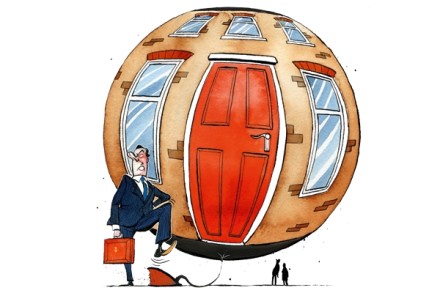
Marwa al-Sabouni is a Syrian architect who watched her home city of Homs destroyed during the Syrian conflict between 2011 and 2014. Out of that experience, she penned an  intensely moving and haunting account of what the idea of home means. She writes of how the dwellings we live in are intimately connected with our own sense of self: ‘Our homes don't just contain our life earnings, they stand for what we are. To destroy one's home should be taken as an equal crime to destroying one's soul.’ It’s a statement that echoes the biblical vision of every person able to ‘live in safety, under their own vine and under their own fig tree.

How do we stop the next David Cameron?

From our UK edition

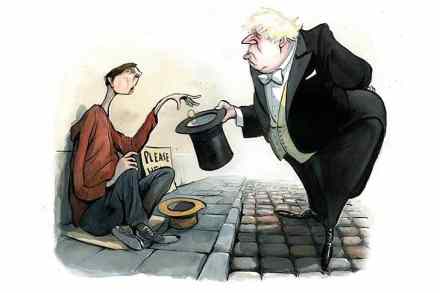
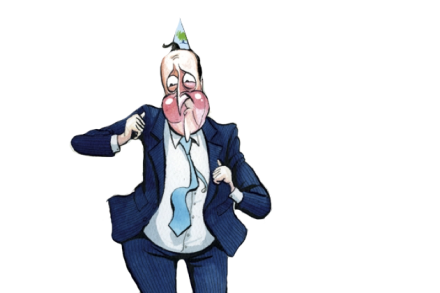
One of the enduring charms of British politics is how slight the pecuniary rewards are for taking up the job of prime minister. American presidents can look forward to stonking great advances on their memoirs. (Barack and Michelle Obama received a joint up-front payment of £47 million from Crown publishing group.) They claim rock-star appearance fees in exchange for a few platitudes to sandalled Silicon Valley execs. (Bill and Hillary Clinton raked in £110 million in speaking fees between 2001 and 2015.) A stint in the White House boosted George H W Bush’s net worth by 475 per cent and Richard Nixon’s by 650 per cent, pocket change compared to Bill Clinton’s 6,150 per cent. Unlike 1600 Pennsylvania Avenue, no one enters No.

Boris Johnson’s popularity problem

From our UK edition

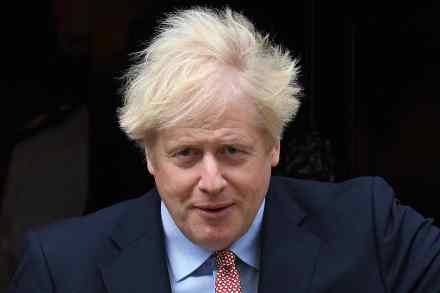
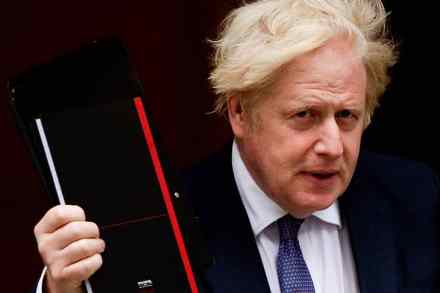
The Westminster rumour mill is in overdrive today on the question of whether Rishi Sunak will be Boris Johnson's successor in No. 10. It's not that there's a job vacancy. Instead, the first ConservativeHome poll on who Tory members would like to be the party's next leader has put Sunak out on top, with International Trade secretary Liz Truss in second and Cabinet Office minister Penny Mordaunt a close third. The poll isn't exactly helpful timing for the Chancellor. Given the weekend papers were filled with stories of Sunak calling on Johnson to relax travel rules, anything that fuels talk of leadership manoeuvres is problematic for No. 11.  However, the poll that ought to worry the Prime Minister most doesn't relate to who will eventually replace him.

Should Britain be vaccinating teenagers?

From our UK edition

Last week there was acute concern in government about the country’s re-opening. Would restrictions need to be reimposed when schools return in September? Ministers fretted. But those nerves have now been replaced by cautious optimism. Case numbers have been falling for a week straight and it increasingly looks as if this wave has peaked. No one in Downing Street wants to declare mission accomplished. What will happen to the numbers when people’s fear of being ‘pinged’ by Test and Trace eases and they start to socialise more? Cases need to be falling consistently between now and schools returning. Privately, scientists are stressing risks remain. They warn that there is still a danger of another wave with a bigger peak than this one.

The tax-and-spend Tories

From our UK edition

When you ask a government minister why something hasn’t happened, you get a one-word answer: ‘Covid’. It has become the catch-all excuse for manifesto promises not materialising. But in the case of social care, there is a particular truth to it. A meeting last week between the Prime Minister, the Chancellor and the Health Secretary nearly resulted in an agreed policy. A plan was expected this week. Then Sajid Javid tested positive for Covid, putting the three into isolation and the policy on hold. Johnson feels he needs a solution to social care, having promised to solve the issue when he became PM two years ago and again in the Tory manifesto.

In defence of ‘levelling up’

From our UK edition

Modern pragmatist political leaders are generally keen to reassure us that there is a unifying philosophy to be found running through their mish-mash of measures. In reality, perhaps they are keenest of all to reassure themselves of it. Tony Blair had the 'Third Way' and David Cameron the 'Big Society'. Boris Johnson has 'levelling-up'. But despite the largely hostile political class reviews being rolled out on Thursday in response to his speech on the latter, Johnson’s formulation is actually far more readily understandable than those of his predecessors. Many of you will vaguely recall that the Third Way was something to do with synthesising right-of-centre economics and left-of-centre social policy (and try selling that on the doorsteps on a wet Wednesday in Withernsea).

Can Boris crack the unwhippables?

From our UK edition

‘Nothing except a battle lost can be half so melancholy as a battle won,’ wrote the Duke of Wellington after the Battle of Waterloo. This sentiment, rather than any form of triumphalism, is what Tory whips should feel after winning the vote on the government’s decision to reduce spending on foreign aid from 0.7 per cent of GDP to 0.5. The vote is a sign of the battles to come in the rest of this parliament. The government put its authority on the line in the Commons debate. The Prime Minister opened it, the Chancellor closed it. The government also offered something of a concession, a pledge to return to 0.7 once the current budget was balanced.

Nanny Boris: the PM’s alarming flight from liberalism

From our UK edition

‘Freedom day’ is coming, but how free will we actually be when it arrives? Boris Johnson is to abolish all coronavirus restrictions on 19 July. But in the small print, we find a strange caveat. The government will be ‘encouraging’ businesses to demand proof of vaccination from customers if there’s a ‘higher risk’ of the virus spreading on their premises. If they do not do so, then the government reserves the power to force them to. It’s a voluntary system — until it’s not. In a rather Orwellian turn, ‘freedom day’ means freedom for some, but not others. The unvaccinated might find their freedoms curtailed in ways that would have seemed astonishing not so long ago.

Graham Brady defeats Tory 1922 Committee leadership challenge

From our UK edition

We will shortly find out who has been elected as the leader of the Conservative backbench 1922 Committee after incumbent Sir Graham Brady faced a challenge from Heather Wheeler. I’m told that turnout in the election for the chair was over 90 per cent and that counting has just begun. Rather than emitting white smoke, the committee is notifying the two candidates of the result by text message. Brady has been at the helm since 2010 and has generally been considered a reliable figure in representing the views of backbenchers to the Prime Minister.

Life is about to get harder for Boris Johnson

From our UK edition

Covid restrictions are meant to end on 19 July. But parliament will not return to normal until September. The Commons goes into recess on 22 July and there’s no desire in government to end proxy voting for the dregs of the session. The chief whip has told colleagues that he might struggle to get MPs to come to Westminster for just the last three days of term. The Commons chamber has been a strange place during the pandemic: less bear pit, more petting zoo. Since so few MPs have been allowed in, it has been far harder for them to persuade their colleagues by force of argument or to put a minister under sustained pressure. This has neutered the chamber as a force. The Covid restrictions have distorted things in other ways too.

No. 10 should expect an aid rebellion

From our UK edition

If a vote is called on the government’s aid cut on Monday, it will be very tight for the government. Andrew Mitchell is a former chief whip as well as a former development secretary and it is hard to believe that he would have put this amendment down if he didn’t have the numbers to defeat the government. This is, in some ways, an odd rebellion. The rebels claim they are not really rebels at all and just trying to uphold the Tory manifesto from the last election. But the size of this rebellion should concern Boris Johnson and the Tory whips. It highlights how many former ministers there now are on the backbenchers who are prepared to defy the government.