Conservative party

How Thérèse Coffey plans to help millions back to work

From our UK edition

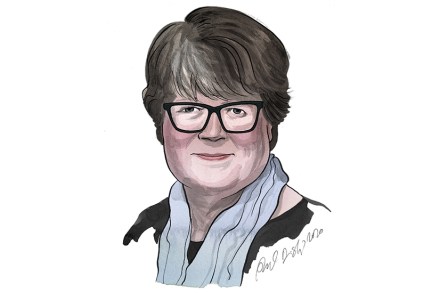
If you haven’t heard of Thérèse Coffey, then this will be — to her — a sign that she has been doing something right.  As Work and Pensions Secretary she has had to sign people on to benefits faster than anyone who has held the position before. If this had gone wrong during lockdown, she would be as infamous as Gavin Williamson. But the system, Universal Credit, managed 1.5 million claims in four weeks. Many things have gone wrong for the government over the past few months, but the welfare system has (so far) held up. Coffey has kept her anonymity.  ‘My main task has been making sure that DWP runs effectively. Being in the news would probably be a sign that it wasn’t,’ she says over lunch in The Spectator’s boardroom.

Divided nation: will Covid rules tear the country apart?

From our UK edition

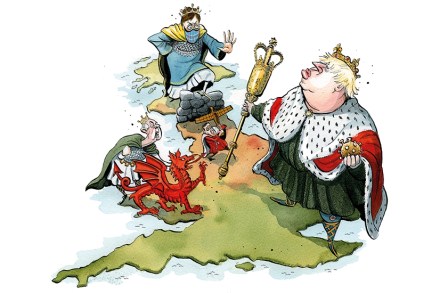
‘From this evening, I must give the British people a very simple instruction — you must stay at home,’ Boris Johnson declared on 23 March. At the beginning of the pandemic, when infection levels first began to rise, the country was all in it together. The prescription was a national one, and the Prime Minister could speak to the nation as one. Though infection levels have begun to surge again, the restrictions are now specific and local. The PM can no longer address the country as a whole, and this poses a problem for him. Last time, at least, there could be no claims that the Tories were favouring one particular area at the expense of the rest.

Prime ministers can’t pick the crises that define them

From our UK edition

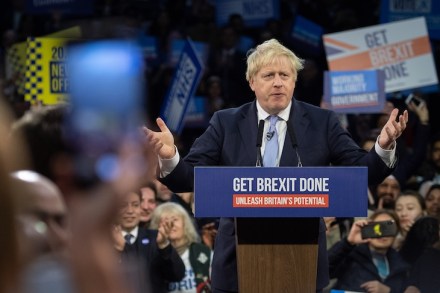
In a non-Covid world, next week would be the Tory party conference. Boris Johnson would march on to the stage in Birmingham to receive the adulation of his grassroots supporters. The biggest Tory majority since Margaret Thatcher’s final victory in 1987 would have been celebrated. There would have been cheer after cheer for the new intake of Tory MPs, elected in seats that had been Labour for generations. It would have been a triumphalist conference with much talk of how the Tories had won a two-term victory. The virus has changed everything. Tory conference is now an online only event with short speeches.

Laurence Fox is a political force to be reckoned with

From our UK edition

From the moment I started criticising the government’s handling of the coronavirus crisis people have been urging me to start an anti-lockdown party. The idea would be to run candidates in the local elections in May, particularly in those areas that have been under almost permanent lock and key for the past six months, such as Leicester. They might not win, but they could bleed enough support from the Conservative candidates to make the government think twice about its ‘forever lockdown’ policy. But I’ve resisted. For one thing, I don’t have the time. Running the Free Speech Union and posting daily updates to my Lockdown Sceptics blog, as well as trying to earn a living as a journalist, means I’m already working 14 hours a day.

At last, the Conservatives are showing some fight in the culture war

From our UK edition

A beautiful noise rang out last week in the wake of the news that the government is considering Charles Moore to become the new chairman of the BBC and Paul Dacre to be the head of the broadcasting watchdog Ofcom. The noise was the sound of the British left wailing that toys they thought were theirs alone might now (under a Conservative government) finally go to identifiable conservatives. The former editor of the Guardian Alan Rusbridger shrieked that ‘this is what an oligarchy looks like’. This and similar tweets were presumably sent from the lodgings of the Oxford college that Rusbridger was made principal of five years ago. Others who screamed themselves sick included BBC employees who briefed that Moore’s appointment ‘would shatter morale. People will leave.

Boris the builder mustn’t buckle over planning reform

From our UK edition

The government will pass the test it has set itself: schools in England will return next week. Pupils may well have to wear masks at times, but they will be back in the classroom. Yet ministers privately acknowledge this isn’t the real challenge. The bigger question is what effect the return of schools has on the prevalence of the virus and what happens to education in the case of further local outbreaks. The exams grading debacle and the various other summer U-turns have been damaging. As one minister concedes: ‘There’s only a limited amount of time before the “incompetence” label sticks. It hasn’t yet — but we can’t afford many more mistakes.

Trade minister quits after loan threats

From our UK edition

Trade minister Conor Burns has resigned from the government, after a parliamentary inquiry found that he had used his position as an MP to intimidate a member of the public in February 2019. In a statement announcing his resignation, the MP said it was ‘with deep regret I have decided to resign as Minister of State for International Trade.’ Adding that ‘Boris Johnson will continue to have my wholehearted support from the backbenches.’ According to the Committee on Standards, Burns used parliamentary stationery to contact a member of the public about a dispute over a loan with Burns’s father. In his letter, Burns implied that he could use parliamentary privilege and his status as an MP to raise the profile of the dispute.

The difficult balance of public vs political agony

From our UK edition

Fear is the politician’s friend. When terror grips the public, an opportunity arises for those in power to step forward as the people’s guide and protector in dangerous times. One sees this in wars. One sees it whenever the public suspects hostile conspiracies, networks of spies or mischief-makers. We likewise cleave to leaders who will confound predatory foreign powers, terrorist plots or the danger of being swamped by waves of immigrants. In fear or anxiety the people will hug their leaders closer, and their leaders know this as surely as every priest knows that despair and anxiety are his faith’s most reliable draw.

How Covid-19 will change the Tory party

From our UK edition

Politics is full of events that are meant to change everything but actually do little. Yet the coronavirus crisis will be one of those rare events that does have lasting political impact. This disease, and its aftermath, will change how the country works. Covid-19 has already directly affected every household, business and institution in the country in a way that not even the 2008 financial crash did. Boris Johnson’s government will now be defined by how it handles both the crisis and its aftermath. Before he went into isolation, Johnson remarked to Downing Street aides that he was keen to get back to the agenda on which he had been elected. This virus has so changed the landscape now, though, that there will be no easy return to the world before corona.

Right on: Boris Johnson’s Britain and the new political reality

Political realignments occur when large groups of voters desert one party for one or more other parties, shattering old coalitions and forming new ones. In America and northern Europe, working-class voters — mostly, but not exclusively, native and white — have been leaving established left-of-center parties. On their way out, they have met college-educated metropolitan professionals and managers migrating the other way. Center-left parties have exchanged the industrial workers who were once their core constituency for a new upscale clientele. The emerging center-left is supported by the college-credentialed middle classes, native minorities and immigrant diasporas.

boris johnson right neoliberalism

Who is Dominic Raab?

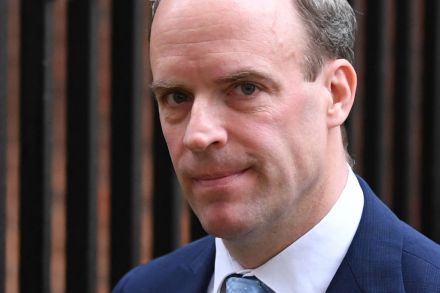
On Monday evening, Britain’s Prime Minister Boris Johnson, diagnosed 11 days’ earlier with COVID-19 and taken to hospital for ‘tests’ on Sunday afternoon after showing ‘persistent’ symptoms, was moved into an Intensive Care Unit at St Thomas’s Hospital in London. A brief statement from 10, Downing Street described Johnson’s ‘worsened’ condition and confirmed that Johnson, who had continued working in isolation throughout his illness, had asked foreign secretary Dominic Raab to ‘deputize for him where necessary’.Forty-six-year-old Raab is also the first secretary of state, the most senior member of Johnson’s cabinet.

dominic raab

Hall of Shame: The most pointless questions at PMQs

From our UK edition

Prime Minister's Questions might be shorter now that Lindsay Hoyle is the Speaker, but that doesn't necessarily mean that the quality of the session is any better. There are still MPs who don't really see it as an opportunity to ask the Prime Minister a question, preferring instead to compliment him. Today's worst offender was Michael Tomlinson, the Conservative MP for Mid-Dorset and North Poole, who asked this: 'For social justice, for life chances, for opportunities for the next generation, education is the key, and that is why the Prime Minister’s pledge for additional funding is so welcome, especially for historically underfunded areas such as Dorset and Poole; but equally important are discipline and standards.

How will new Tory MPs deal with constituency problems?

From our UK edition

MPs are back in Parliament today after the Christmas recess, and for some of them, this is the first real week of work after spending their first few days in the Commons reeling after winning their seats. New MPs are still waiting to be given offices, and are starting to hire new staff so they can start up with constituency work and trying to understand what's happening next on the parliamentary agenda. All new members go through a period of trying to work out what sort of MP they're going to be, but it's a particularly interesting question for the Conservative MPs who won former Labour 'red wall' seats in the December election.

The truth behind the election’s so-called fact checkers

From our UK edition

All election campaigns see politicians exaggerate, stretch the truth and make promises they can't keep. But if a report issued in early December is anything to go by, the 2019 general election campaign was a particularly dishonest affair - and one party was particularly guilty. On 10 December, Metro reported: Similarly, the Independent reported: Websites which make no attempt to be impartial were more vociferous. Under the headline, The Tory war on truth – and how to fight back, Open Democracy reported: Independent fact checkers have found that 88% of Tory Facebook adverts contain lies, while 0% of Labour’s do.

Nine lessons from the election: Boris was lucky – but he also played his hand right

From our UK edition

The 2019 general election will be remembered as one of the most consequential elections in Britain's recent history. Aside from rejecting a more economically radical Labour Party, the British people used the election to provide what their elected representatives had been unable to provide: an answer to Brexit. For Boris Johnson and the Conservative party, the election was a triumph. They won their largest majority since 1987 and the largest majority for any party since New Labour's second landslide in 2001.

Donald Trump is a Tory

People are seeing a comparison between Boris Johnson’s Conservatives and Trump Republicans. In the Wall Street Journal, Dominic Green tells us that both are populists, as if the Brits were emulating Americans. But it’s the other way around. We’re emulating the Brits. On the right, we’re enjoying a Tory Moment. Trump put together a coalition that was right-of-center on social issues and middle-of-the-road or left-of-center on economic issues. It was, as I explained at the time, the sweet spot in American politics, the place where presidential elections are won. Previously, we’d been asked to choose between extreme social liberals on the left and free market libertarians on the right, and the voters were tired of this. Trump gave them what they had been looking for.

tory

Boris Johnson: Perhaps my campaign was ‘clunking’. But sometimes, clunking is what you need

From our UK edition

You may wonder why I am up at 4.45 a.m. writing this diary when I have a country to run, Queen’s speech to prepare, vast mandate to deliver, and so on. The answer is simple. It is a question of obligation. When I bumped into the editor (at Sajid Javid’s 50th birthday party) a couple of nights ago, he explained — with a slightly glassy expression — that he had taken a gamble. He had already printed the cover of the Christmas treble issue, he said. I know all about the Xmas cover. It is lavish, laminated, and on much thicker stock than the normal cover. It costs a bomb. Once you have printed it, you can’t change it. ‘Your name is on it,’ said Fraser. What could I say? I became editor 20 years ago. I owe this magazine.

Boris’s Britain: How the PM intends to deliver for his new friends in the North

From our UK edition

The era of uncertainty has ended. Boris Johnson’s decisive victory has not only broken the Brexit deadlock created by Theresa May’s disastrous 2017 campaign, but also turned the page on almost a decade of weak government. The previous three general elections have all resulted in constrained prime ministers. First, David Cameron was forced to govern in coalition with the Liberal Democrats. Then, in 2015, his slim majority left him dependent on Tories who would be on the other side from him in the EU referendum he had had to promise. The May debacle left her at the mercy of — and defeated by — her own warring factions. But now we’re looking at something very different: a Prime Minister who is king of all he surveys at Westminster.

Politics has fractured along new fault lines – those elected must repair the cracks

From our UK edition

Boris Johnson stood for party leader as a One Nation Tory, he fought the campaign as a One Nation Tory and this is the agenda that has given him the largest Tory majority since 1987. Much is being made of the collapse of the Labour party’s vote, but something more profound is under way. The Tories are changing, and they have a message that was directed at – and understood by – a new cohort of voters. It has the potential to transform British politics. It’s wrong to say – as many do – that the phrase ‘One Nation Tory’ is senseless. Its meaning comes from Disraeli’s dictum, in Sybil, that Britain was divided into two nations: the rich and the poor.

The new Conservatism has begun

From our UK edition

Elections should be carnivals of democracy, yet the campaign we have just been through has felt more like amateur dramatics at times – the standard of debate has not risen to the importance of the issues at stake. Yet this election will go down as one of the most consequential in British history. It has brought a profound change to our politics: not just that Brexit is now certain to happen, but also in the way that both main parties have transmogrified before our eyes – in terms of what they stand for, and who they appeal to. The list of Tory gains shows the extent of the change that has just taken place: Leigh, Workington, Clwyd South, Darlington, Wrexham, Burnley, Redcar, Scunthorpe and a slew of other working-class seats north of the Watford Gap.