Conservative party

Cameron’s personnel issues

The past fortnight has been instructive in just how little control David Cameron has over the make-up of his Cabinet. Every choice he makes, it seems, has to be weighed against the fragile balance of the coalition, as well as against the internal divides of the two coalition parties themselves. I mean, Vince Cable calls the Tories “ruthless, calculating and thoroughly tribal” — only the latest of a series of provocations — and his position doesn’t look precarious in the slightest. Chris Huhne is mired in a scandal that may still terminate his political career, and yet there is little indication that the scythes of Downing Street are moving to

Labour’s apparent shift on free schools

As I wrote on Friday, there is a sense that some on Labour’s benches want to soften the party’s education policy. It seems that the first subtle shift may have come over the weekend. Total Politics’ Amber Elliott reports on a Fabian Society meeting where Andy Burnham apparently dropped his blanket opposition to free schools. Amber writes: ‘Speaking at the Fabian Society conference at the weekend, Burnham signalled that he is not against free schools such as the one former-No10-strategist-turned-teacher Peter Hyman is setting up. Labour blogger Anthony Painter tweeted from the conference: “@andyburnhammp supports Peter Hyman’s free school as a Labour alternative to the Tory concept. But also says

Lansley stands up for his reforms

If there’s anything that stands out from Andrew Lansley’s interview with the Sunday Times (£) it is his air of quiet defiance. Of course, the Health Secretary sounds some of the conciliatory notes that have crept in to the government’s rhetoric since they decided to pause, listen and engage on NHS reform. But he also stands up for the original reforms as he conceived them. “From my point of view,” he says, “the White Paper was setting out what sensible, intelligent people inside the NHS were saying.” For him, the concerns that remain are not with the general thrust of his reforms, but with “implementation, the nuts and bolts of

Another blow to the Lansley plan

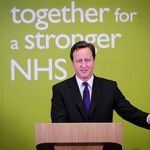
Number 10 has now taken charge of coalition health policy to such an extent that the Department of Health press office was caught unawares by the news that the Prime Minister was to deliver a major speech on health next week. David Cameron is determined to present the coming substantial changes to the Lansley reform plan as the changes he wants, not the ones forced on him by the Lib Dems. To that end, the head of the NHS future forum, a body Cameron has set up to oversee the NHS listening exercise, Steve Field telling The Guardian that he thinks all competition should be removed from the bill is

Cable talks similarities, not differences

Vince Cable, it seems, has notched his Tory-baiting down from 11 to about 8. Last weekend, in the bitter wake of the local elections, the Business Secretary labelled his coalition partners as “ruthless, calculating and thoroughly tribal”. Today, in an address to the Fabians, he would only argue that the Tories will benefit most from tribalism in politics — and it was an argument delivered soberly and without obvious malice. He even praised David Cameron (along with Tony Blair) as someone who has tried to suck the poisonous partisanship from Westminster’s bloodstream. Sunder Katwala has quoted the speech extensively here, so I won’t dwell for too long on what was

Labour councillors giving themselves pay rises

As the country tightens its belts, some councils are taking the courageous decision to increase spending on certain essentials. The Labour councillors who run the London borough of Southwark have identified a deprived group in need of urgent help: themselves. The council is amending its constitution (Page 48) to create 8 new executive posts to be filled by its own councillors, each of whom will receive an additional £2,800 a year. This comes while they take the axe to lollipop ladies, street cleaning services and libraries. Incidentally, for the extra they’re spending on these unprecedented “deputy cabinet members”, they could save 6 of the 12 crossing patrols they’re cutting. We

Another European squabble looms

There is much excitement in Westminster at the moment about Hugh Fearnley-Whittingstall’s campaign to end ‘discards’ under the Common Fisheries Policy. DEFRA and non-governmental organisations estimate that perhaps as much as 60 per cent of a catch will be returned dead to the sea because the CFP’s controversial quota system is based on the amount of fish caught. DEFRA has been pressing the European Commission to reform the quota system for years. At last, they seem to have succeeded. The commission is due to announce in July that the quota system will now be based on the amount of fish landed in port. With that apparently comes a concession to

The Tory right are the true liberals of this parliament 

In yesterday’s speech to commemorate 12 months of the coalition, Nick Clegg promised a stronger liberal identity in the future. His party was ‘not left, ‘not right’ but ‘liberal’ and would judge other parties by their commitment to liberalism. Above all, and despite professed disavowal of tribal politics, he claimed that the Lib-Dems were ‘more committed at heart to fairness than the Conservatives’. Critics of the coalition on the Tory backbenches are often dismissed as the Tory Right, a term intended to paint them as disgruntled reactionaries who can’t reconcile themselves to partnership with the Lib-Dems. But a closer look at the issues being raised by the Tory rebels shows

The challenge of demographic change

There may be a lot of debate about what the “big society” means, but there’s one thing we should all be able to agree on: we live in a big society – and it’s getting bigger. 62 million today. 64 million in five year’s time. And then on up to 70 million by 2028, according to the government.  (No, I’m not doing my bit, as my wife is about to have our third child.) What’s odd is how little debate there’s been at Westminster about all this. Why? Partly because it means you have to talk about immigration (still seen as toxic by many in SW1); partly because it is

The Lords punish Cameron over policing

In Number 10, they are already concerned that they are losing public support on crime and punishment. David Cameron is planning to give a speech on the subject that will, in the words of one senior coalition figure, ‘throw a lot of bones to his party’s right.’   But Cameron’s words will mean little if he can’t rescue the elected police commissioners policy from its defeat in the Lords last night. By introducing police commissioners who are accountable to the public, this policy will make the police concentrate on the crimes that have the greatest impact on peoples’ quality of life rather than form filling.   Even with the substantial

Garnering third party support

Third party support is an important political asset. Nobody trusts politicians any longer (when did they ever?) and so it’s useful to draft in supposedly apolitical backers to support your plans. Yesterday’s PMQs was a case in point, with David Cameron and Ed Miliband competing for support from GPs. As Jim Pickard writes over on the FT blog, having 42 GPs on side is a little less impressive than having support from the Royal College of GPs, which has 42,000 members. So the PM is seen to have emerged from the exchange as the loser. Therein lies a problem for the government. Since the general election, the Tories seem to

The Coffee House A-Z of the Coalition: T-Z

Here are letters T to Z in our A-Z guide the coalition’s first year. A-F are here. G-M are here. And N-S are here. T is for Tuition fees “Broken promises, there have been too many in the last few years.” So said Nick Clegg in a Liberal Democrat video during the last election campaign. It was favourite theme of his — and one that he deployed both during the TV debates and in signing a pledge to scrap tuition fees. This was to be a New Politics. Clegg was to be its champion. Shame it didn’t quite work like that. The coalition agreement was damaging enough to Clegg’s aura:

The Coffee House A-Z of the Coalition: N-S

Here are letters N to S in our A-Z guide the coalition’s first year. A-F are here. G-M are here. N is for No Nothing has frayed coalition relations quite like the AV referendum has. This was always going to be the case, but the viciousness it inspired has still been fairly shocking. Need we remind you of Chris Huhne’s outburst in Cabinet last week? Or of George Osborne’s stinging riposte? Even David Cameron seems to have relished taking it out on his coalition stablemates, trashing their pet policies with a vigour that would have been unthinkable only a few months ago. As Tim Montgomerie reveals in his exhaustive guide

A mixed bag for the coalition at PMQs 

So much for the de-Flashmaning project. At PMQs, a tetchy Cameron doled out his usual number of insults, comparing Ed Miliband to Eddie the Eagle Edwards. Frankly, I don’t think this really matters as long as Cameron appears to be in control of his temper, which isn’t always the case. But Ed Miliband definitely raised a chuckle when he told Cameron to ‘calm down, dear.’ But, perhaps, the most noticeable thing about today’s PMQs was the behaviour of the Liberal Democrats. Nick Clegg joined in with all the jeering at the Labour front bench, something which he very conspicuously didn’t do in the last few weeks. Chris Huhne happily chatted

PMQs live blog | 11 May 2011

VERDICT: An inconclusive sort of PMQs, where neither leader particularly triumphed, nor particularly sank. Ed Miliband was persistent, and more aggressive than usual, with his questions on the NHS — but failed, really, to properly discomfort the PM. Cameron dwelt lazily on the extra money going into the service, but it was enough to carry him through the session. Perhaps the most striking moment was when, during the backbench questions, Cameron pointed out that “[the Tories] were the only party at the last election to promise [real-terms spending increases for health]. If it wasn’t for us, it wouldn’t be happening.” This is, I suspect, all part of the new drive

The Coffee House A-Z of the Coalition: A-F

The coalition is 1 today. Unfortunately, we can’t serve jelly and ice cream over the internet — but we can write an A-Z to mark the first year of Cameron and Clegg’s union. Below is the first part of that, covering the letters A to F. But, first, a little piece of political nostalgia for CoffeeHousers. A year ago today, this happened: And now for the A-Z… A is for Andrew Lansley Rap John Healey, make way for MC NxtGen. The Loughborough rapper may not be part of Her Majesty’s Most Loyal Opposition, but his three-minute denunciation of the coalition’s health reforms — video above — did the job better

Cameron in new war with his backbenchers

The House is united in loathing of IPSA, which explains why Tory MP Adam Afriyie’s amendment to the Parliamentary Standards Bill 2009 is proving so popular. Afriyie’s aim is ‘to simplify the way in which expenses and salary payments to Members of Parliament are made’ and attempt to limit IPSA’s costs.   The government, however, is wary of Arfiyie’s reform – sensing, perhaps, that the public might not stomach changes to the expenses system so soon after the recent scandal.   The bill’s second reading will take place this Friday and it is now understood that enough Labour backbenchers will support the motion to allow it to pass. It is

Cameron sets out the bounds of Lib Dem assertiveness

Our coalition government was forged one year ago tomorrow — and we shall have more on that then. But the Sun has already marked the occasion by publishing an interview with David Cameron today. It is a wide-ranging sort of conversation, touching on everything from the Prime Minister’s workload (“every day feels like a week”) to the shelf life of the government (“five years”), although much of it is unsurprising. It does, however, contain one or two useful insights into how the coalition’s game of give-and-take is going to operate from now on. First up, Cameron’s insistence — contra Clegg — that the Lib Dems should not be portrayed as

The Dame departs

Pauline Neville-Jones was a first. She was one of the first women in the Foreign Office to climb the department’s male-dominated ladder, serving as Lord Tugendhat’s chef de cabinet at the European Commission, obtaining the coveted post of Political Director and eventually becoming JIC Chairman. She led the British delegation at the Dayton Peace Accords and she probably thought she would be the first British National Security Adviser. But it was not to be. Her usefulness to the Prime Minister seems to have been mainly in opposition, where she could add a voice of knowledge to a Shadow Cabinet with very little governmental experience. The Tory Green Paper on National