Conservative party

Vince puts his aggressive hat on

Ever since Chris Huhne’s departure from government, Vince Cable has become a more and more aggressive coalition figure. His deliberately provocative interview with The Guardian in which this Keynesian, corporatist lambasts the idea that deregulation is key to growth as “ridiculous and bizarre” has drawn a heated Tory reaction. One source told me earlier that “BIS [Cable’s department] imposes ten stupid expensive things on business for every one they’re forced to drop. BIS is mired in useless committees that churn out red tape because Vince loves the EU and hasn’t a clue about small business.’ Just how irritated some Tory Cabinet Ministers are with Cable spilled out into the open

JET — three letters that spell trouble for the coalition

JEET. That, according to Andrew Grice in the Independent, is the new ‘buzzword’ circling around Libdemville (population: 57 MPs, and a few others). And it stands for the issues that they want to keep mentioning whenever they can: jobs, education, environment and tax. Fair enough. Although it is striking that only one of these issues is unlikely to put them in close combat with the Tories. Both parties of the coalition support free schools and academies, and the Lib Dems are getting their pupil premium too, so education is relatively uncontroversial territory. But as for the others… Jobs. The conflict here focuses on the role of the state. As George

The Lib Dems could kick up a storm over the NHS Bill

Lib Dem spring conference is, perhaps, the most potent reminder of the cultural differences between the two coalition partners. In the Tory party pretty much the only thing that members get a real vote on is who the candidate in their constituency should be and who they want as party leader, even then that choice has been whittled down to two options by the MPs first. By contrast, the Lib Dems grassroots still get to determine the detail of party policy. The Health Bill’s problems really began at the last Lib Dem spring conference. It was a vote there that led to Nick Clegg seeking a whole host of changes

Why Cameron should pay heed to Romney

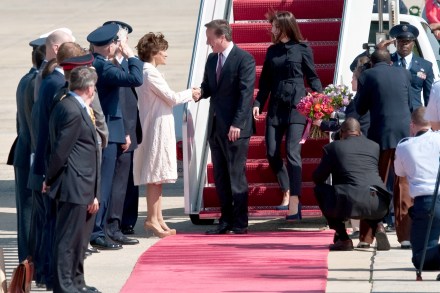
Cameron flies out to Washington on Tuesday, and when he gets there he’ll have no need to play the infatuated teenager. The days of Gordon Brown-style adulation are over, and Cameron has a more mature, less needy relationship with Obama. The truth is that there’s precious little he can learn from Obama, but there might be a thing or two he can learn from Mitt Romney. I look at this in my Telegraph column today. Cameron has never loved America, in the way that so many people in SW1 do. He toured America in his youth, but had never been to Washington until he became Tory leader. Cameron is more

Osborne eager to act on 50p

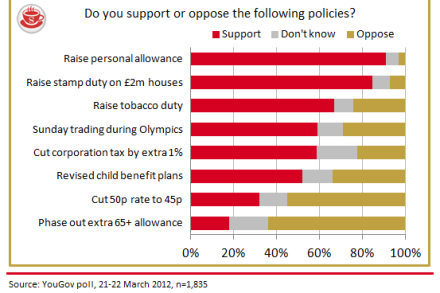
The debate on the 50p tax rate is moving fast. I was told by one Downing Street source today that ‘it is now more likely than not that it goes in the Budget.’ Now, obviously, there is a big caveat here. The Budget is not yet agreed: this is all subject to change. But I understand that the Chancellor is pushing hard to at least set out the roadmap to its abolition on the 21st March. I also hear that the Prime Minister is nervous about quite how determined Osborne is to do this. Cameron’s worry is that a Budget that tackles the 50p rate will be remembered solely for

Labour’s PMQs strategy: the Super-Vulnerable Voter ploy

A sombre and muted PMQs this week. Dame Joan Ruddock raised the issue of benefits and asked David Cameron if he was proud of his new reforms. Tory backbenchers cheered on the PM’s behalf. ‘Then would he look me in the eye,’ Dame Joan went on, ‘and tell me he’s proud to have removed all disability payments from a 10-year-old with cerebral palsy.’ This tactic — the Super-Vulnerable Voter ploy — is highly manipulative and highly reliable. But Dame Joan had forgotten something which Mr Cameron is unlikely to forget. Explaining his reform of the Disability Living Allowance he glared angrily at her. ‘As someone who has had a child

Afghanistan tragedy overshadows PMQs

I have rarely heard the House of Commons as quiet as it was at the start of PMQs today. The sad news from Afghanistan was, rightly, weighing on MPs’ minds. The initial Cameron Miliband exchanges were on the conflict there with the two leaders agreeing with each other. In some ways, though, I wonder whether the country would not benefit more from some forensic debate about the strategic aims of the mission. However the volume level in the House increased when Joan Ruddock asked the PM if he was ‘truly proud’ of taking benefits away from disabled children. Cameron, with a real flash of anger, shot back that ‘as someone

The child benefit cut risks alienating striving families

Why should someone on the minimum wage subsidise the childcare arrangements of someone on £100,000? So runs the argument for abolishing child benefit for higher-rate taxpayers. You can see why George Osborne went for this: in theory, we are talking about the best-paid 14 per cent. If he was going to cap benefits, he had to be seen to hurt the rich too. The 50 per cent tax was not enough; axing child benefit would be just the tool he needed to say ‘we’re all in this together’. The problem is that the 40p tax band is set far too low in Britain, and now takes in policemen and teachers.

The conservative case for equal marriage

With some right-wing voices — including Catholic Cardinal Keith O’Brien, Tory MP Peter Bone and the Daily Telegraph — speaking out against same-sex marriage, here’s a piece Douglas Murray wrote for The Spectator in October arguing that conservatives should instead be welcoming it: In America a new generation of Republicans is challenging the traditional consensus of their party on gay marriage. They — as well as some of the GOP old guard like Dick Cheney — are coming out in favour. In Britain the subject is also back on the agenda with the coalition government, at the insistence of the Prime Minister apparently, planning a ‘public consultation’ on the matter.

A significant moment in the battle for the 1922 Committee

It might mean little to people outside Westminster, but the decision of Mark Pritchard not to stand for re-election to his job as Secretary of the 1922 Committee is a significant moment. It suggests that the Cameroons might be making some progress in their attempt to gain control of the internal structures of the parliamentary party. Pritchard has been a thorn in Number 10’s side ever since he started warning against the ‘Purple Plotters’ who wanted to merge the two coalition parties back in January of last year. Since then, his positions on circus animals, his role in the rebellion of the 81 and his general willingness to speak out

The government’s options for a child benefit tweak

Nick Clegg has confirmed this morning that the coalition is looking at how to tweak its policy of removing child benefit from families in which someone pays the higher rate of income tax. As I wrote in the Mail on Sunday, there are three options being explored. The first is designed to address the fact that, a family where one parent works and earns £45,000 while the other stays at home raising the children would lose their child benefit while the one next door where both parents are on £40,000 would keep theirs. This change would see families with one higher rate taxpayer lose only half of their child benefit.

Will Osborne accept the Lib Dem offer?

Try telling George Osborne that ‘tax doesn’t have to be taxing’ — I’m sure he’d laugh at the sentiment. The story this morning is that he has a grand, gritty choice to make ahead of the Budget: to tax income or to tax wealth. The Lib Dems have apparently agreed to relent on the 50p rate, but only if they get a mansion tax on properties worth over £2 million in return. The thinking is that, in the current political environment, the government must always be seen to be hitting the well-off in some way. So, will Osborne accept the offer? He and other Tories will certainly be tempted to

Hilton’s return hinges on Cameron’s radicalism

It is a sign of the influence that Steve Hilton has on the Cameron project that there have been more column inches devoted to his departure from Downing Street than there would be to most Cabinet resignations. But even after he heads to California in May, Hilton will still be part of the Cameron brains trust. He is already scheduled to work on the Prime Minister’s conference speech. Hilton has, I understand, been mulling the idea of taking a sabbatical since last summer. His decision to go ahead and take next year off seems to have been motivated by a variety of factors. But those closest to him stress that

Cameron’s pitch to women voters

David Cameron’s speech today is another reminder of how concerned the Tories are about losing their traditional advantage among female voters. The message that the Tories are cutting so that the country is passed on in a better state to the next generation is a direct response to the fact that the party’s polling has found mothers to be deeply concerned that their children will not have as good a quality of life as they have had. At the away day for Tory MPs last week, Andrew Cooper — the PM’s chief political strategist — said that talking about deficit reduction in these terms was crucial to winning over female

After Hilton

Perhaps, the greatest testament to Steve Hilton’s influence in Downing Street is that everyone chuckles when you ask if anyone will replace him. His role in Number 10 as the senior adviser was one he had carved out for himself so that he could work on what he wanted to. It is deliberately designed not to fit on any ‘org chart’, the kind of document that the post-bureaucratic Hilton has little patience for. Hilton was for years caricatured as being not really right-wing. But, in reality, the opposite is true — he was, in some ways, the most right-wing man in Downing Street. Few matched him on subjects like 50p

Steve Hilton to leave Downing St

The Prime Minister’s strategy chief is heading to California to teach for a one year sabbatical, we learn. But who takes a one-year sabbatical in the middle of what’s supposed to be a five-year fight to save Britain? He did this before in Opposition, and came back. But this time, I doubt he’ll be back. He’s joining Stanford University as a visiting scholar, presumably to spend more time with his wife Rachel Whetstone who is communications chief for Google. Hilton’s friends say that, in his head, he never quite came back from California — his aversion to shoes (and sometimes manners) has led to much mockery. But overall, he is

Devo disunity

The trouble with the Unionist cause is that it’s so disunited. Douglas Alexander’s speech in Scotland today may appear to bring Labour in line with the Tories and Lib Dems by hinting at greater powers for Scotland in future, but the truth is that it’s just another piece of string in an increasingly tangled mess. And so we have Alexander saying that ‘we must be open minded on how we can improve devolution’s powers, including fiscal powers,’ while, we’re told, he’s also ‘cautious… about fiscal measures that undermine the stability of the block grant system used to fund the three devolved governments in Edinburgh, Cardiff and Belfast.’ We have the

Imagine if Cameron hadn’t vetoed…

When David Cameron headed to Brussels last December, it was far from certain that he would veto the proposed treaty. It was only when Nicolas Sarkozy proved totally uninterested in accommodating Britain’s demands that the Prime Minister decided that he could not sign up to it. In a way, Sarkozy did Cameron a favour. Imagine if Britain had got the safeguards the Prime Minister wanted and had signed up to the treaty. How would he then have reacted this week, when the Irish announced that they were going to hold a referendum on it? The pressure from the Tory benches to let the British people vote on it would have