Concrete poetry

Abstract ideas made concrete

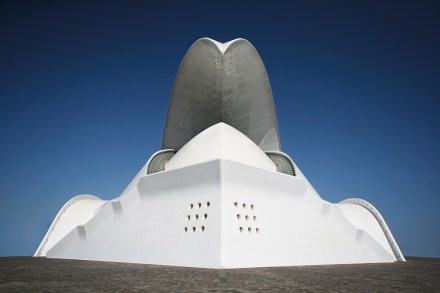
The Iron Curtain, or at least its most visible symbol, was not metal. Berlin’s Antifaschistischer Schutzwall (Anti-Fascist Protection Wall) was concrete. Its ugliness of form and function seemed to many proof of the evils inherent in this ancient building material. But for every hideous Berliner Mauer, you have a glorious Roman Pantheon. The dome of Hadrian’s incomparable temple is, after nearly two millennia, the largest unreinforced concrete structure in the world.  In our own era, concrete has allowed the best architects to do their best work. Witness  Le Corbusier’s Ronchamp chapel. And who would argue against Denys Lasdun’s National Theatre as the best late-20th-century British building?
The polarising poet, sculptor and ‘avant-gardener’ who maintained a private militia

Not many artists engage in the maintenance of a private militia, and it seems fair to assume that those who do may be bound to polarise. The Scottish poet, sculptor, ‘avant-gardener’ and would-be revolutionary Ian Hamilton Finlay was just such a figure: and boy, did he polarise. To his fans, he is a cult figure in the true sense, a limitlessly inventive visionary whose Lanarkshire home and garden remain a site of pilgrimage. To his detractors – notably, a number of vocal Finlay-bashers in the English press – he was a crank, a provincial megalomaniac possessed of artistic, literary and dictatorial pretensions quite out of proportion to his ability.