Comedy

Bookends: Laughing by the book

From our UK edition

Comedy is a serious business. The number of young people who seek to make a living making other people laugh seems to grow every year. Jonathan Lynn starts Comedy Rules (Faber & Faber, £14.99) by insisting that it is not a primer for would-be writers, but of course it is, and much more. Lynn was at Cambridge with the Pythons and the Goodies, co-wrote the Doctor series in the 1970s and Yes, Minister in the 1980s, and has since carved out a career directing comedy films in Hollywood, some of them funnier than others. But as Rule 138 (of 150) states, ‘Nobody knows how the audience will react to any play or film or joke.

Honour the most exalted poet

From our UK edition

What’s your punishment going to be, when you get to Hell? At least as envisaged by Dante, you might be somewhat surprised. Hitler (mass murderer) is in the outer ring of the seventh circle, up to his eyebrows in a river of blood and fire. Still, that’s a little better than the innocent manager of your local HSBC (banker), who is in the inner ring, running perpetually on burning sand. Both get off much lighter than the poor lady who, the other day, told me how much she’d enjoyed something or other I’d written (flatterer). She’s a whole circle lower down in the second bolgia, or pit, sitting in excrement forever, which seems rather harsh. Corrupt politicians are immersed in boiling pitch, but they are nowhere near as far down as the impersonators.

An existential hero

From our UK edition

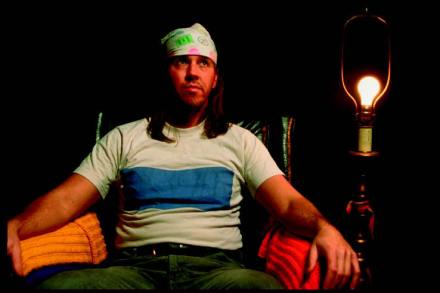
Sam Leith is enthralled by a masterpiece on monotony, but is devastated by its author’s death When David Foster Wallace took his own life two and a half years ago, we lost someone for whom I don’t think the word genius was an empty superlative. He was an overpowering stylist, and a dazzling comedian of ideas. He could be gasp-makingly funny, but had an agonising moral seriousness. There’s more on one page of Wallace than on ten of most of his contemporaries. His mind seemed to have more buzzing in it than the rest of us could imagine being able to cope with, and perhaps than he could. The Pale King, assembled from his notes and papers by his editor Michael Pietsch, is an unfinished novel of more than 500 pages about the American IRS.

Cross-cultural exchanges

From our UK edition

The 18 stories, each around a dozen pages long, in E.C. Osondu’s Voice of America seem to have poured out of him like water. They have a fluency, an evenness of tone and texture, that creates an illusion of transparency and simplicity. The 18 stories, each around a dozen pages long, in E.C. Osondu’s Voice of America seem to have poured out of him like water. They have a fluency, an evenness of tone and texture, that creates an illusion of transparency and simplicity. There’s great comedy — and also artistry — in this because almost every story actually describes some degree of false consciousness, wrong-headedness or pathetic illusion.

The Real New Statesman

From our UK edition

I am the last person to speak ill of the New Statesman. But even during those golden years when I worked at the magazine, I have to admit we struggled with a tendency towards earnestness. During the Kampfner era, the senior editorial team tried time and again to introduce a little levity among the wonkiness and hand-wringing. I am now prepared to admit we didn't often pull it off. But our successors have finally pulled it off -- by creating a spoof online business section. At first sight it looks like a crude aggregator of corporate press releases. But look a little closer and I defy you to find anything funnier on the web today. It is quite brilliant. Unfortunately, the NS has seen fit to pull down the piece "Cold Stone Creamery unveils chocolate-dipped strawberry ice-cream".

Twin peaks

From our UK edition

It’s that time of year. The great reckoning is upon us. Insurance is being renewed. Tax returns are being ferreted out. Roofing jobs are being appraised and budgeted for. And spouses are being trundled into central London for the annual session of dialysis at the theatre. It’s that time of year. The great reckoning is upon us. Insurance is being renewed. Tax returns are being ferreted out. Roofing jobs are being appraised and budgeted for. And spouses are being trundled into central London for the annual session of dialysis at the theatre. And here to meet them is Ayckbourn’s yuletide comedy Seasons Greetings, which features three hilariously miserable families bickering their way through the festival of ill-will. Ayckbourn is the Christmas blow-out of dramatists.

Forgotten laughter

From our UK edition

The Radio Times now lists 72 channels, and that’s not all of them. The Radio Times now lists 72 channels, and that’s not all of them. No wonder television has to feed on itself, like a hungry tigress scoffing her cubs. In particular, it devours the past, so this week we had a Morecambe and Wise evening on BBC2, starting with the Christmas show from 1976, a third of a century ago. These shows got peak audiences of 28 million, inconceivable now, and just as French education ministers can allegedly tell you what every child in the country is studying at any moment, programme controllers could sigh with pleasure and know precisely what flickering image was in front of more than half the population. They riveted the nation, in Bagehot’s sense: they tied us together.

Lords of laughter

From our UK edition

What do the following comedians have in common? Morecambe and Wise, Ronnie Barker, Frankie Howerd, Bob Monkhouse, Peter Sellers. They’re all dead, yes. But something else. None of them was knighted. Instead they were all made OBE, an honour Michael Winner once charmingly described as ‘what you get if you clean the toilets well at King’s Cross station’. Still, they did better than Les Dawson, Tony Hancock, Tommy Cooper and Peter Cook. Those four got nothing. I find this curious. In most cases, at least. Hancock died a bit too young (suicide at 44), and accepting anything from the honours system would have turned Cook from satirist to court jester, in two ways a fool. But the rest?

Dying of laughter

From our UK edition

Marcus Berkmann on the few genuinely funny books aimed at this year’s Christmas market It’s a worrying sign, but I suspect that Christmas may not be as amusing as it used to be. For most of my life, vast numbers of so-called ‘funny’ books have been published at around this time of year, aimed squarely at desperate shoppers lurching drunkenly into bookshops on 24 December, still looking for the perfect present for someone they don’t much like. But this year there aren’t anywhere near as many. Perhaps they stopped selling. Maybe the QI Annual and Schott’s Almanac saw them off.

The sound of broken glass

From our UK edition

What do Evelyn Waugh, Peter Cook and Chris Morris have in common? I would have said ‘irreverence’ and left it at that; but the social scientist Peter Wilkin has written a book on the subject, The Strange Case of Tory Anarchism. What do Evelyn Waugh, Peter Cook and Chris Morris have in common? I would have said ‘irreverence’ and left it at that; but the social scientist Peter Wilkin has written a book on the subject, The Strange Case of Tory Anarchism. It’s an arresting title, not least because it appears to be an oxymoron. But this is not so, according to Wilkin.

Follow your star

From our UK edition

In these straitened times it looks as if a great many more hours of most people’s days will have to be spent waiting in queues. In these straitened times it looks as if a great many more hours of most people’s days will have to be spent waiting in queues. The perfect companion for such a penitential exercise is the Divine Comedy of Dante Alighieri. Should you be able to read Italian, get hold of the pocket version known as the Dante Minuscolo Hoepliano, originally issued in 1904 by the enterprising Milanese publisher Ulrico Hoepli, with excellent notes by Professor Raffaello Fornaciari of Florence University and now in its umpteenth printing.

The winning entry

From our UK edition

So just how good is it? Because of course those splendid people, the Man Booker judges, have rather prejudiced this review by going and giving their prize to Jacobson’s latest. If only they’d had the patience to wait for the launch of this blog. Because although not on the panel this year (September is such a busy time), I am always more than happy to drop the odd word of wisdom, share my insights, and generally do my bit to see that contemporary novelists are held to account for their various crimes against culture. And all in all, perhaps this year’s prize hasn’t been too badly awarded, because Jacobson has less to answer for than most. That is praise, by the way.

Anything for a laugh

From our UK edition

A hundred years ago, when Britannia still ruled the waves, the Royal Navy fell victim to a humiliating hoax, reports of which kept the public amused for a few wintry days in February 1910. Disguised as ‘members of the Abyssinian Royal family’, with woolly wigs, fancy-dress robes and burnt-cork complexions, a gaggle of young people managed to trick naval leaders into receiving them on an official visit aboard the state-of-the-art battleship Dreadnought, Britain’s proudest national emblem. The ridiculous party, which included Virginia Stephen (the future novelist Virginia Woolf), were conducted solemnly round the wonders of the newest naval technology, jabbering in a nonsense language and escaping just as the spirit-gum holding on their beards began to melt.

A couple of drifters

From our UK edition

Paul Torday was 59 when his first novel, the highly acclaimed Salmon Fishing in the Yemen, was published in 2006. Since then, he can barely have stepped away from his keyboard. The Hopeless Life of Charlie Summers is his fourth novel and it represents a return to the comic tone of Salmon Fishing. Or at least it does in part. There are scenes of high comedy here, but some pretty dark swirls too. And hanging over the whole book is the question of what makes for a fulfilled life. The narrator, Hector Chetwode-Talbot — known, mercifully as ‘Eck’ — is a former soldier who has drifted into the City.

The World’s First Suicide-Bomber Comedy

From our UK edition

I think Chris Morris's new film Four Lions is probably the (English-speaking) world's first suicide-bomber comedy. So it's all but guaranteed to offend just about everyone. Splendid. Doubtless it's a sign of terrible, even craven decadence to admit to looking forward to seeing it...

Quirky books for Christmas

From our UK edition

After the Christmas ‘funny’ books, here’s an even larger pile of Christmas ‘quirky’ books. After the Christmas ‘funny’ books, here’s an even larger pile of Christmas ‘quirky’ books. In practice, quirky books aren’t just for Christmas, they’re for the whole year round. But try telling a publisher that. Thousands of them have been pouring out this autumn, and in the pre-Christmas jungle good books will surely be lost, consumed by larger and nastier predators in a single contemptuous gulp. In Ghoul Britannia (Short Books, £12.99), Andrew Martin muses on ‘a nation primed for ghostliness’.

The one that got away

From our UK edition

Michael Palin is the meekest, mildest and nicest of the Pythons. The latest chunk of his diaries traces his attempt during the 1980s to break away from his wacky colleagues and forge a film-making career in his own right. The title, Halfway to Hollywood, reflects his modest, circumspect nature. We first meet the millionaire filmstar living a monkish existence in Camden in 1980. He occupies an ordinary townhouse. His three children attend state schools. And he drives a Mini, albeit with a sun-roof. To concentrate on screen-writing he turns down $180,000 to appear in a Hollywood movie (you should multiply by about six to get today’s values) and a week later he goes to Hamleys, where he startles himself with his extravagance by spending £59.

But then the snow turned to rain

From our UK edition

My daughter when small came home from school one night singing these extraordinary lines: ‘Fortune, my foe, why dost thou frown on me/ And will thy favours never lighter be?’ My daughter when small came home from school one night singing these extraordinary lines: ‘Fortune, my foe, why dost thou frown on me/ And will thy favours never lighter be?’ Five hundred years on, this Tudor ballad, said to have been played at hangings, provides the theme, and the structure, of Seasonal Suicide Notes. Only, this being the 21st century after all, it is bawled, not from a cart to Tyburn but from a converted convent in Bromyard, being Roger Lewis’s latest book.

Cries and whispers | 23 September 2009

From our UK edition

The habit of dividing the past into centuries or decades might be historiographically suspect, but by now it seems unavoidable. And it is possible that, because we now expect decades to have flavours of their own, they end up actually having them. We change our behaviour when the year ends in 0. Can there be anyone who has never used ‘The Twenties,’ ‘The Thirties,’ ‘The Fifties’ or ‘The Sixties’ as historical shorthand, expecting his interlocutor to know exactly what he means by it? By comparison with the Sixties, the flavour of the Seventies is indistinct and muted.