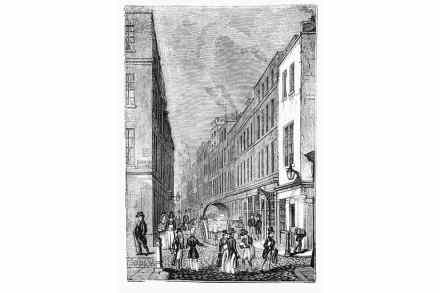
Coffee houses

Is coffee-drinking the new secular religion?

A lot of books, obviously depending on what mood you’re in and viewed from a certain angle, slantwise or squintlike, hover on the edge of self-parody: the Bible; poetry, particularly if American; pretty much everything on a Booker shortlist; Wittgenstein’s Tractatus; Ottolenghi’s cookbooks. Like most things, the best approach to books is to view them with a mixture of open-minded curiosity and outright hostility – is this thing actually profound, useful, interesting or an irritating waste of time and money, a bit of a joke, offensive, crass or just stupid and worth avoiding at all costs?

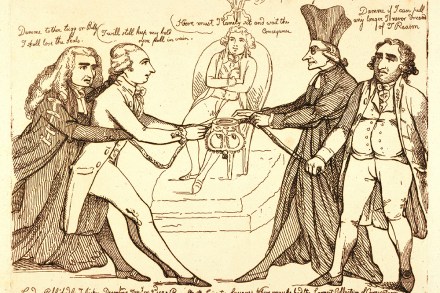
The furious tug of war between 18th-century Whigs and Tories

A foul-mouthed fantasist with a chin like an ironing board starts a wild conspiracy theory about the King’s brother. An alcoholic racing fanatic turns his gambler’s eye to the ballot box. A maniacal preacher gives such a polarising sermon that he paints himself as a second Christ and tours the country as a sex symbol. These are not the inventions of William Hogarth or Jonathan Swift; they are the figures who divided our political system in two, as George Owers tells us in his delightful new history of the birth of party politics. The Rage of Party traces the fevered rise of Whigs and Tories during the reigns of William III and Queen Anne.

Sex and politics in the precincts of St Paul’s Cathedral

In the tight dark maze of alleys that wind between the Thames and St Paul’s the pleasures of the living are intertwined with those of the distant dead. Try it for yourself on a late Saturday afternoon. Start by immersing yourself in the eerie darkness of the Temple of Mithras (ancient stones, reconstructed Roman voices calling for strong drink, a pagan pit beneath the guileless Bloomberg building); emerge and cross over to the Roman Watling Street, where you will see tribes of Essex women – Boudicca’s spiritual daughters – with faces of bronze, brandishing not fire but fags and lighters outside busy pubs and bars.