Classical music

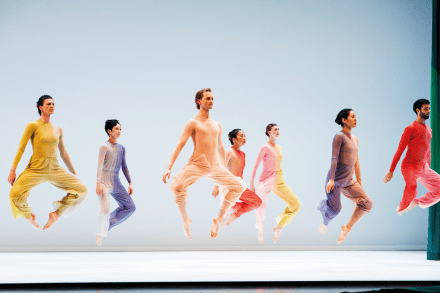
The Royal Opera’s Siegfried is magnificent

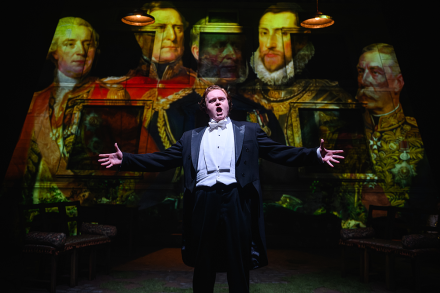
Covent Garden’s new Ring cycle has reached Siegfried, and once again, you can only marvel at Wagner’s Shakespeare-like ability to anticipate modern preoccupations. Want to talk about the manosphere? Well, here’s opera’s most profound study of the playful, disruptive, world-making energy of the adolescent male psyche. The least interesting thing that you can say about Siegfried is that he’s an impulsive oaf. Well, duh. Have you never met (or if you’re really unfortunate, been) a teenage boy? Wagner could hardly make it more clear. Siegfried’s upbringing has been toxic. He has been isolated from humanity, and his only inkling of love has been brutally transactional.

siegfried

Inside Mahler’s mind

The arc of Gustav Mahler’s career was staggering. Born in 1860 to a poor Jewish family in Bohemia, through tenacity and talent he climbed to dizzying heights, nabbing the conductorship of the Vienna Hofoper, New York’s Metropolitan Opera and the New York Philharmonic. He became a celebrity, hounded by paparazzi as he zipped back and forth across the Atlantic by steamer, a forerunner of today’s globetrotting conductors with their NetJet commutes.  Yet Mahler was plagued throughout his life by nagging existential fears, serious illness and marital strife. He poured this angst into his composing. “Why have you lived?” Mahler wrote in a letter to a friend. “Why have you suffered? Is it all some huge, awful joke?

mahler

A pleasant respite from the tumult in Cambridge

Cambridge, England Inscribed on the lid of a two-manual harpsichord in Holy Trinity Church at Hildersham in Cambridgeshire is the Latin tag Musica Donum Dei — music is a gift of God. It was a sentiment I could hardly quarrel with as I listened in the little twelfth-century church to a variety of baroque sonatas for violin, recorder, cello and harpsichord. They were expertly performed by the Azur Ensemble, which is comprised of recent graduates of the Royal College of Music. A particular standout was the French harpsichordist Apolline Khou, who has performed widely in Europe and in a solo concert for King Charles III.

Cambridge
symphony

Get with the program

It was Rust Belt versus Sun Belt. Over the holiday season, I visited Pittsburgh’s Heinz Hall, located in the heart of the city, and Miami’s New World Center, a concert hall in South Beach. The former, a one-time movie theater built in 1927, looks like an oversized jewel box stuffed with red velvet chairs and glitzy chandeliers. The latter, a spectacularly intimate venue designed by Frank Gehry, serves as the home of the New World Symphony, a local outfit that operates as a final training ground for musicians who have graduated from conservatories and want to go on to play in major orchestras. In their own way, each of the carefully executed performances underscored that the obituaries repeatedly pronounced for classical music as a preserve of elitist white males are so much bosh.

Tár is more than a #MeToo story

Life imitated art to a depressingly predictable degree when a clip from Todd Field’s Tár circulated online. It’s part of a scene where the film’s title character, superstar conductor Lydia Tár (played by Cate Blanchett), leads a masterclass at Juilliard. She haughtily dismisses students’ reluctance to learn the classical canon because of their difficulty “identifying” with its composers. To some, Lydia’s monologue was a vindication: a righteous tirade against "wokeness." To others, the speech exemplifies Lydia’s abuse of power, which includes not only dressing down students and mentees but sleeping with many of them and torpedoing their careers.  But oversimplified views of Lydia as a crusader or villain flatten the film’s wrenching complexities.

tar

A concert begun in darkness

It was all glitter at Blues Alley in Washington, DC when the trumpeter Terence Blanchard, who is the composer of a widely hailed opera called Fire Shut Up in My Bones that was recently performed at the Met, appeared in March with his E-Collective band as well as the Turtle Island Quartet to play several sets. Blanchard wore iridescent tennis shoes and played a miked trumpet with extra reverb that almost looked as though it was glowing in the dark. Periodically, he would tap his right foot onto an electronic device on the floor that manipulated his tones to extend them into the ether. Indeed, his audacious high notes lingered on long after he had stopped blowing. The collective is Blanchard’s foray into the world of deep funk. It definitely makes an impact.

Schächter

Of Mahler and mandates

On February 23, 1897 a slight Austrian eccentric walked into the parish church of St. Ansgar and St. Bernhard in Hamburg, affirmed his belief in the Holy Trinity, the one, holy, Catholic, and apostolic church, and received the sacrament of baptism. Some months later, Gustav Mahler was named principal director of the Viennese court opera — a post that would have been denied to him had he not converted from Judaism. One hundred and twenty-five years after his baptism, the Kennedy Center for the Performing Arts honored Mahler by performing his Second Symphony with legendary guest conductor Michael Tilson Thomas.

Mahler

Sibelius speaks

When it comes to music in the classical era, central Europe — or, to put it is where most of the action has taken place. Haydn, Mozart, Beethoven, Schubert and Brahms are, in a sense, the Big Five, commanding the limelight, with the likes of Mendelssohn and Mahler bringing up the rear. But if geography has somehow played a key role in the development of modern classical music, then another region has been gradually nudging its way into view. Names from northern Europe such as Kalevi Aho, Leif Segerstam, Per Nørgård and Vagn Holmboe must figure prominently in any tally of leading composers who have expanded the boundaries of musical expression.Take Holmboe’s brilliantly imaginative Concerto No. 11 for trumpet and orchestra.

Sibelius
Carnegie

Carnegie plus one

"A cable channel... but for classical music! It could be called ‘The Carnegie Hall Channel.’” I was on a beam reach to Eatons Neck about a quarter-century ago when a young man named Lawrence Perelman made this blustery pronouncement. We were Bill Buckley’s guests for an overnight sail across Long Island Sound. My first thought was: good luck with that. My second thought was no one wants to watch classical music on television. PBS’s Great Performances? More like lesser performances. With pixels the size of Cheez-Its and tin-can soundtracks, the experience was nothing like the real thing. But Perelman, an impresario who became an advisor to classical artists and institutions, as well as a friend, kept waving his baton long after we returned to Stamford.

The legend of forgotten musical genius Mieczyslaw Weinberg

Imagine a John Le Carré thriller — one of the Cold War ones, not the tedious lefty morality tales — in which we meet Moisey Vainberg, a Polish Jewish composer who defected to Russia in 1943 while the rest of his family was wiped out in the Holocaust. He dresses like a mid-level bureaucrat and seems nervous about drawing attention to himself. That’s sensible, given that under Stalin he was thrown into jail for ‘Jewish bourgeois nationalism’. Then he’s rehabilitated, his music enjoys a brief vogue, he’s performed by Rostropovich, Shafran, Gilels, Kogan and the Borodins — but he never boasts or promotes himself. A few recordings reach the West, but the critics wrinkle their noses.

Weinberg

Monumental Mahler

A kind of gigantism took hold of the European mind in the years before World War One. It shaped everything, from empires to poetry. In the confidence of new technology and new ideas, things could be attempted on a larger scale than ever before. The mental power of the age could be measured in the sheer size of the things it produced. This might be ‘Jacky’ Fisher’s Dreadnought of 1906, which set off a European arms race in huge battleships, or a great construction — the Victoria memorial in front of Buckingham Palace is nothing to the one built in Kolkata.

mahler

Don’t end blind auditions

The fight for equality in America has been long and hard-fought. Sometimes a multi-generational upheaval has been required to undo old notions and myths. But there have been a few times when a new process enabled these changes to happen almost overnight. In the world of classical music, no change was more consequential than the instituting of blind auditions, whereby the musician auditioning for a position is behind a screen, and the only thing a panel can adjudicate is the sound of music.How do we know this was so successful? Because even self-proclaimed bigots found themselves choosing differently, in spite of themselves. In Blink, Malcolm Gladwell describes how in 1980, Abbie Conant won a position as principal trombone with the Munich Philharmonic Orchestra.

blind auditions

Meet the Mozarts

It’s 1771, you’re in Milan, and your 14-year-old genius son has just premiered his new opera. How do you reward him? What would be a fun family excursion in an era before multiplexes or theme parks? Leopold Mozart knew just the ticket. ‘I saw four rascals hanged here on the Piazza del Duomo,’ wrote young Wolfgang back to his sister Maria Anna (‘Nannerl’), excitedly. ‘They hang them just as they do in Lyons.’ He was already something of a connoisseur of public executions. The Mozarts had spent four weeks in Lyons in 1766, and, as the music historian Stanley Sadie points out, Leopold had clearly taken his son (10) and daughter (15) along to a hanging ‘for a jolly treat one free afternoon’.

mozart

The virtuoso virtue-signallers of classical music

All my life I’ve wanted to compose music, and now I’ve done it. I’ve written a sonata for solo flute that boasts two highly original features; it’s five hours long and must be performed by a badger. Though it took me only five minutes to write, my opus one is guaranteed to get through to the second round of the next competition for new composers sponsored by Sheffield University and the Centre for New Music. That’s because they operate a ‘two ticks’ policy, as the Scottish pianist Philip Sharp — possibly the only classical musician in Britain who calls himself a classical liberal — revealed in his blog earlier this year.