Church of england

Was that Kemi Badenoch’s last conference? Quite right! live from Manchester

From our UK edition

42 min listen

This week, Michael and Maddie record Quite right! in front of a live audience at the Conservative Party conference in Manchester – with attendance down, the big question is whether Kemi Badenoch can survive as leader of the opposition. There is the unmistakable air of fatalism among MPs staring down electoral annihilation – but would another change in leadership cement the Tories as pathologically regicidal? They also debate Badenoch’s bold pledge to bar candidates who won’t back leaving the European Convention on Human Rights – a ‘calculated risk’ that could redefine the party’s identity or too little too late? Then, in the wake of the horrific Manchester synagogue attack, they turn to the rise of anti-Semitism and the crisis of policing.

What can we expect from the first female Archbishop of Canterbury?

From our UK edition

19 min listen

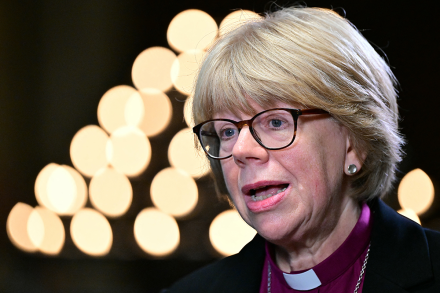
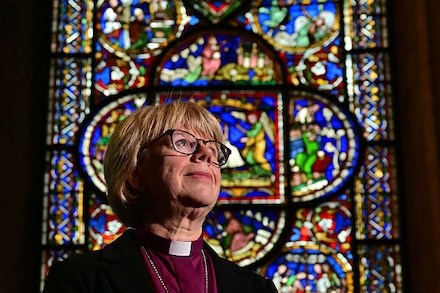
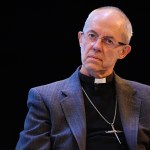
Dame Sarah Mullally has been announced as the new Archbishop of Canterbury. Previously the Bishop of London, she becomes the first woman to lead the Church in its almost 500 year history. She also had a 40 year career as a professional nurse, rising to be the most senior nurse in England and Wales. The Rev'd Marcus Walker, rector at St Bartholemew the Great in the City of London, joins Damian Thompson to react to the news – what can we expect from her leadership? Produced by Patrick Gibbons.

Letters: the Church of England still has something meaningful to say

From our UK edition

Moscow mule Sir: While visiting Russia, James Delingpole learned from the patriarchate’s press officer that under communism the Russian Church wasn’t allowed to exist (‘Letter from Moscow’, 27 September). However, that doesn’t accord with my own experience of being in the USSR during the Brezhnev era. As a student, I visited the 14th-century Zagorsk monastery complex just outside Moscow one Sunday and was spellbound by the heavenly chant of the Orthodox liturgy which lifted my soul. The church was full of babushkas as well as younger believers crossing themselves and kissing the icons. For all his faults and human-rights violations, Brezhnev, unlike Vladimir Putin, had not been indicted by the International Criminal Court for war crimes.

Reparations: the tyranny of imaginary guilt, with Nigel Biggar & Katie Lam

From our UK edition

19 min listen

The past few years have seen growing calls for countries in the global west to pay reparations to former colonies for their role in the transatlantic slave trade. The debate over reparations was already part of the so-called ‘culture wars’, but became louder following the Black Lives Matter movement, as many groups sought to re-examine their histories. Calls for reparations have been embraced by the Church of England which set up a £100 million fund, with the aim of raising £1 billion, to pay reparations for the role the Church played in the slave trade. But do the arguments in favour of reparations really stand up?

Let’s just ignore the Church of England

From our UK edition

How important do you think it is to know what the Church of England thought about that ‘Unite the Kingdom’ march in London two weeks ago? There is a very good argument for saying it is about as meaningful and relevant as finding out what Bonnie Blue, that young lady touring the country flat on her back and welcoming anyone who fancies a bit of frictionless poking, thinks about the fractious border dispute between Thailand and Cambodia. There are many institutions in this country that are irrelevant to the great mass of citizens, but few more resolutely so than our established Church.

Archbishop of Canterbury: who’s on the shortlist?

From our UK edition

22 min listen

It is 10 months since the resignation of Justin Welby as Archbishop of Canterbury. Now, finally, the Crown Nominations Commission is believed to have drawn up a shortlist of candidates, and a successor to Welby could be approved by October. Theologian and author Andrew Graystone joins Damian Thompson to talk through what he calls ‘a weak list’ of potential candidates – weak because there are no obvious frontrunners and the Commission is choosing between ‘half a dozen equals’.

What I’ll miss about Norman Tebbit

From our UK edition

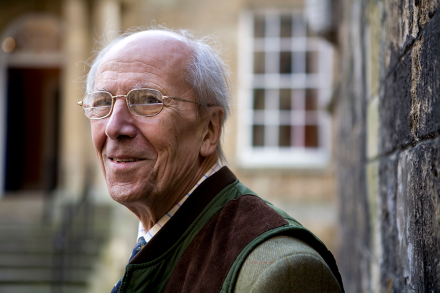
This column comes to you from Auckland Castle, former palace and hunting lodge of the Prince Bishops of Durham. We, the Rectory Society, are here by kind permission of its saviour, Jonathan Ruffer, celebrating our 20th anniversary. Jonathan rescued the castle not from the heathen but from the Church of England. The last Anglican bishop to inhabit it was Justin Welby, in his brief year at Durham before being translated to Canterbury, but it had been run down for many years before that. Bishop Auckland is in one of the poorest parts of England but it did not occur to the Church authorities to use the heritage of this astonishing place to minister to the poor.

Is God an Englishman?

From our UK edition

32 min listen

Bijan Omrani joins Damian Thompson to talk about his new book God is an Englishman: Christianity and the Creation of England. They discuss the spiritual and cultural debt the country owes to Christianity. The central question of Bijan’s book is ‘does it matter that Christianity is dying in England?’. The faith has historically played a disproportionate role in many areas of English life that we take for granted now – for example, by shaping both charity and the welfare state. Yet this is influence is often ignored as congregations shrink and the UK slides into secularism. But are there unexpected grounds for hope?

Easter special: in praise of faithful dissent, a conversation with Nigel Biggar and Mary Wakefield

From our UK edition

24 min listen

The Easter issue of the Spectator includes two provocative articles exploring aspects of Christianity.  Nigel Biggar, Regius professor emeritus of moral theology at Oxford University, now a Conservative peer, celebrates the heroic ‘faithful dissent’ of Christian heroes such as Thomas More and Helmuth von Moltke, who lost their lives rather than defend injustice.  Meanwhile Spectator columnist Mary Wakefield interviews Roman Williams, former Archbishop of Canterbury. She’s inspired by his holiness but depressed by his use of ‘C of E bureaucratese’ to uphold liberal orthodoxy on subjects such as gender ideology. But, she says they can share an uncomfortable space together within faith.

Bernie Sanders at Coachella shows time is not on the Democrats’ side

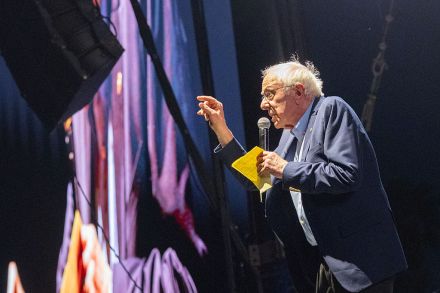
As the Church of England faces an exodus of parishioners, some of its more inventive clerics have rushed to embrace EDM as a new medium to draw young people back to their faith. “Our 90s-themed silent disco will be appropriate to and respectful of the cathedral,” curiously insisted the Very Reverend David Monteith, Dean of Canterbury Cathedral, to much derision over that sacred space’s conversion into a party zone for 3,000 revelers in 2024.

Who’d be a bishop today?

From our UK edition

In his recent interview with our American edition, The Spectator World, Donald Trump is reported to be faced by a picture of Franklin D. Roosevelt whenever he sits at his Oval Office desk. ‘A lot of people say, why do you have FDR?’ Trump says. His answer is: ‘Well, he was a serious president, whether you agree with him or not.’ He does not state what he particularly likes about FDR, though one might guess that his capacity to be elected president four times is an attraction. Surprisingly, perhaps, FDR is not anathema to all Republicans. He even appeals to their isolationist strand, because of Yalta. At that fateful conference, it was Roosevelt who gave Stalin what he wanted, despite Churchill’s protests, thus sealing the fate of Poland and much of eastern Europe.

Cruel Labour, the decline of sacred spaces & Clandon Park’s controversial restoration

From our UK edition

51 min listen

This week: Starmerism’s moral vacuum‘Governments need a mission, or they descend into reactive incoherence’ writes Michael Gove in this week’s cover piece. A Labour government, he argues, ‘cannot survive’ without a sense of purpose. The ‘failure of this government to make social justice its mission’ has led to a Spring Statement ‘that was at once hurried, incoherent and cruel – a fiscal drive-by shooting’.  Michael writes that Starmer wishes to emulate his hero – the post-war Prime Minister Clement Atlee, who founded the NHS and supported a fledgling NATO alliance. Yet, with policy driven by Treasury mandarins, the Labour project is in danger of drifting, as John Major’s premiership did.

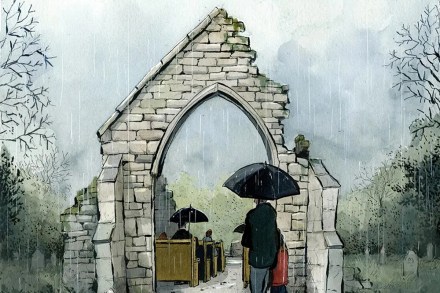
The C of E’s tragic misuse of its sacred spaces

From our UK edition

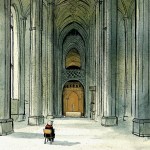
I am a priest in the high church tradition of the Church of England. The technical term is Anglo-Catholicism, but I come from a very different Christian background. My heritage is non-conformist evangelical – I was baptised in a swimming pool in the summer of my first year of university. St James’s in Piccadilly hosts events featuring ‘icons’ from RuPaul’s Drag Race UK It’s a long story as to how I’ve ended up wearing a chasuble and celebrating ‘Mass’, but a big part of it has been to do with church architecture. After several years in the charismatic evangelical scene, I became fascinated with the beauty of medieval churches, particularly cathedrals. I began to think of the large white-cuboid former bingo hall owned by our church as soulless and empty.

My manifesto for the next Archbishop of Canterbury

From our UK edition

When I told a Westminster political editor that my novel NUNC! was about the prophet Simeon and the Nunc Dimittis, he said: ‘Who? The what?’ I reminded him that the Nunc was one of the great canticles along with the Magnificat, Te Deum, etc. More blank looks. It is startling how scriptural knowledge has faded. Thirty years ago an understanding of Church worship was one of the things that bound us. Today we are expected to know about celebrities. Here the blank looks are mine. One day last week MailOnline had headlines about Sydney Sweeney, Blake Lively, Gigi Hadid, J.B. Gill, Allie Teilz and Young Scooter, ‘known for collaborations with Future and Gucci Mane’. Not known by me, he isn’t. I haven’t a clue what genders they are, even.

Justin Welby has cemented his reputation – for having a tin ear

From our UK edition

This is an excerpt from the latest episode of the Holy Smoke podcast with Damian Thompson, which you can find at the bottom of this page: The former Archbishop of Canterbury, Justin Welby, is back in the news following his interview this week with the BBC's Laura Kuenssberg. The interview – his first since he resigned last November – was clearly Welby's attempt to draw a line under the abuse scandal that cost him his job.  The 2024 Makin report concluded that the Church of England missed many opportunities to investigate the late John Smyth, one of the most prolific abusers associated with the Anglican Church. However, the biggest headline from the interview was that Welby would 'forgive' John Smyth were he alive today.

The tin ear of Justin Welby

From our UK edition

29 min listen

The former Archbishop of Canterbury, Justin Welby, is back in the news following his interview this week with the BBC's Laura Kuenssberg. The interview – his first since he resigned last November – was clearly Welby's attempt to draw a line under the abuse scandal that cost him his job.  The 2024 Makin report concluded that the Church of England missed many opportunities to investigate the late John Smyth, one of the most prolific abusers associated with the Anglican Church. However, the biggest headline from the interview was that Welby would 'forgive' John Smyth were he alive today. Albeit unintentionally, the former Archbishop of Canterbury ended up cementing his reputation as an inflexible micro-manager with a tin ear for the views of abuse survivors and his own clergy.

Christianity, culture wars and J.D. Vance: a conversation with James Orr

From our UK edition

62 min listen

James Orr was living the life of a young, high-flying lawyer when, after a few drinks at a New Year's Eve party, he asked for signs that God existed. The signs came; among other things, he narrowly avoided a fatal skiing accident. Now he is a passionate Christian and a conservative culture warrior who helped defeat an attempt to impose the tyranny of critical race theory on Cambridge University, where he is an associate professor of the philosophy of religion. He's also an intellectual mentor to the vice president of the United States; Politico describes him as 'J.D. Vance's English philosopher king'. Dr Orr says Vance is 'extremely articulate, but he takes no prisoners'.

Channel 4 shouldn’t get to decide the next Archbishop

From our UK edition

Obviously, it is difficult to defend the leadership of the Church of England, and I am inexperienced in that art; but I do feel strongly that its episcopal appointments should not be controlled by Channel 4 News and Cathy Newman. This, in essence, is what is happening. First went Justin Welby, Archbishop of Canterbury, because Channel 4 News was determined to show that he had not reacted vigorously over the John Smyth scandal. (In my view, the Makin report failed to prove Welby’s culpability.) Next was the turn of the Bishop of Liverpool, John Perumbalath, forced out after Channel 4 News reported his alleged sexual assault against an unnamed woman and alleged sexual harassment of Bev Mason, the (female) Bishop of Warrington.

How abuse scandals shattered the Church of England but were hidden by the Vatican

From our UK edition

13 min listen

In this end-of-year episode of Holy Smoke, Damian Thompson discusses the abuse scandals that have forced the current Archbishop of Canterbury, Justin Welby, to resign his post, his predecessor Lord Carey to resign his ministry as a priest, and now threaten the survival of the Archbishop of York, Stephen Cotterill.  These developments are an unprecedented disaster for the Church of England – but how many Roman Catholics realise that Pope Francis would also be facing demands for his resignation if the details of various horrifying scandals were not being allegedly concealed by the Vatican and its media allies?

Is the end of Christendom nigh? with A.N. Wilson

From our UK edition

25 min listen

Thousands of Brits will be attending Christmas and carol services throughout December. Yet festive attendance masks the reality that church congregations just aren’t holding up. The most optimistic of estimates suggest that regular church attendance has almost halved in the UK since 2009. This is just one of the factors that has led the historian and writer A.N. Wilson, in the Christmas edition of The Spectator this week, to declare that the end of Christendom is nigh. On this episode of Holy Smoke, A.N. Wilson joins Damian Thompson to discuss his thesis. Like Platonism, is Christianity doomed to become extinct in practice? When was the last time England was truly, and fervently, religious?