Christianity

It’s little surprise that an Israeli soldier was caught desecrating a crucifix

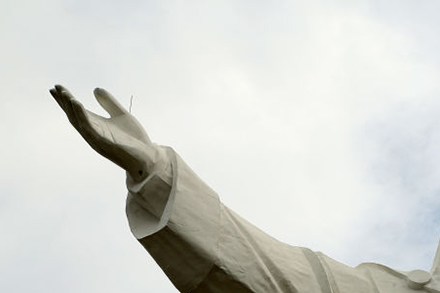
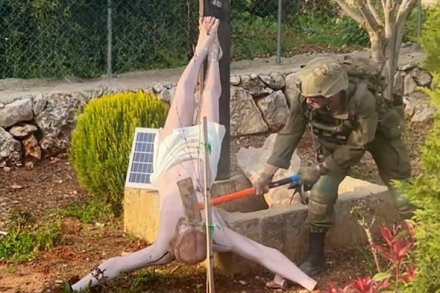
There’s something apposite, I suppose, about the desecration of a crucifix. In this case, it was an Israeli soldier in southern Lebanon who took a sledgehammer to one on private property and smashed the Jesus figure on the cross. The original crucifixion, as anyone who heard the gospels over Easter will recall, was marked by the humiliation of Jesus; this attack on the figure of one who took on suffering willingly was another humiliation, through the image. Mind you, if the charmer with the sledgehammer had reflected that the Christ-figure is, in Christian belief, not just God-made-man but God-made-Jew, he might have eased off a bit.

What’s really behind Trump’s clash with the Pope?

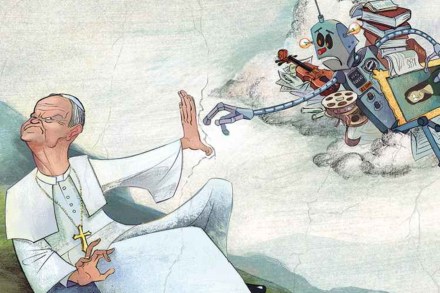
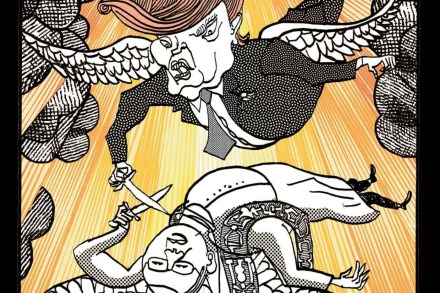
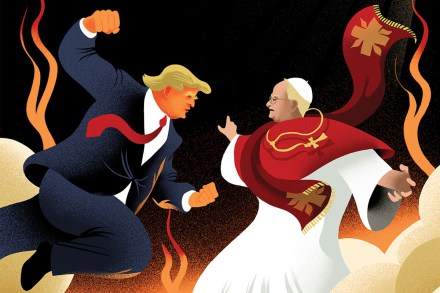
Donald Trump’s latest clash with the Catholic Church stunned even the most hardened veterans of culture-war X. According to the President of the United States, the Chicago-born Pope Leo XIV, the conspicuously holy spiritual leader of 1.3 billion people, is “WEAK on crime and terrible on foreign policy.” He also claimed that, “If I wasn’t in the White House, Leo wouldn’t be in the Vatican.” For commentators accustomed to the fog of modern diplomatic platitudes, such trash talk was the equivalent of a Holy Roman Emperor hurling insults at a medieval pontiff.

trump pope damian thompson

How different is Catholic and Protestant food at Easter?

I’m a New York-raised Italian Catholic, and my family’s inherited religious-cultural neuroses inform our meals every bit as much as the WASPs next door. This is particularly true at Easter, where centuries of European immigration have shaped the culinary traditions in New York. The Easter feast became a religiously sanctioned opportunity to indulge For my family, the Easter feast typically includes a herb-crusted leg of lamb (American only; New Zealand lamb is far too gamey), deviled eggs, rich scalloped potatoes, honey-glazed carrots, some fresh spring vegetables and an absurdly decadent chocolate dessert – all washed down with a robust Etna Rosso, generously poured.

Why Gen Z is troubled by Jesus

Many teenagers today find Christianity off-putting because Jesus seems too fond of "mansplaining." He appears to have a "God complex," while the Almighty is alienating on account of being "really violent and aggressive." These are the findings in the report Troubling Jesus, the third part of Youthscape’s "Translating God" project, based on a recent survey of British 14- to 17-year-olds. Drawing on five reading groups, in which teenagers reacted to passages of scripture traditionally understood as conveying "good news," Youthscape faced reactions "radically different" from what it says might have been expected. While Jesus was not only seen as a condescending male chauvinist and God the Father as a bully, many youths discerned other issues in the readings.

christianity gen z jesus

Christian nihilism is taking over American life

There’s something very religious about nihilism. For proof, look to the new capital of American nihilism, Minneapolis. A callousness toward death and danger has fallen over the city. Of the many disturbing videos to come out of Minnesota’s anti-ICE protests, one of the stranger examples shows a white man walking up to a line of heavily armed law-enforcement officers, shouting: “Shoot us in the fucking face! Shoot me in the fucking head!” What possesses someone to do that? I understand being against Donald Trump and Stephen Miller’s blitzkrieg deportation policy. And it’s not irrational, in the viral age, to protest theatrically. But this is psychotic. It is the death drive in overdrive.

christian nihilism

Americans will believe in anything

The US has not known social and domestic peace since the start of the present decade, and it is unlikely that it will know it again for the foreseeable future. This is because it has ceased to be a country at all, assuming that nationhood implies fundamental unity, which America no longer has. When novelist John Dos Passos wrote in the late 1930s, “All right, we are two countries,” the boundary he had in mind was economic, separating the rich from the poor. Today the obvious divide is political, between left and right. But what seems obvious is not always true, as in this case.

This Christmas, listen to Mary Did You Know?

A popular and poignant Christmas song, written late in the previous century for a church’s holiday program, incites passionate criticism from those who disagree with the way it phrases its message. Since first being recorded in 1991, “Mary, Did You Know?” has been performed by soloists and groups ranging from Carrie Underwood and Dolly Parton to Pentatonix, CeeLo Greene and Kathleen Battle. The lyrics are a series of questions to Mary, Jesus’s mother, asking whether she knew during his infancy about the profound impact he would make as an adult. Yet that powerful literary device annoys those who believe the song demeans its subject.

Are angels real?

One day while out walking, William Blake saw angels sitting in the trees: “bright angelic wings bespangled every bough like stars.” He was eight years old. His fascination – some have called it an obsession – with angels lasted for the rest of his life. When he sat to have his portrait painted by Thomas Phillips, the two men began to argue about who painted a better angel, Michelangelo or Raphael. Phillips, not unreasonably, suggested that since Blake had never seen even an engraving by Michelangelo, he was not qualified to give an opinion on the matter. “But I speak from the opinion of a friend who could not be mistaken,” replied Blake. “And who may he be, I pray?” asked Phillips. “The Archangel Gabriel, sir.

Yes, Europe’s civilization is being erased

Last week the Trump administration expressed its fear that Europe faces "civilizational erasure." Its concern was articulated in a 33-page National Security Strategy that outlined Donald Trump’s world view and how America will respond economically and militarily. The sentence that caused the most reaction on the other side of the pond was the assertion that, if current trends continue, Europe will be "unrecognizable in 20 years or less." Those trends are mass immigration and what conservative French commentators call the "Islamification" of Europe. If Europe doesn’t address these trends, the Trump administration predicts the continent’s "civilizational erasure.

Nicki Minaj and Mike Waltz team up at the UN

Before Nicki Minaj spoke at the United Nations today, Ambassador Mike Waltz referred to her as “the greatest female recording artist” and a “principled individual who refuses to remain silent in the face of injustice.” Adele, Beyoncé, Madonna, Lady Gaga, Barbra Streisand and many others would like to have a word with Ambassador Waltz (I hear he’s on Signal). But unlike Minaj, none of them appeared at the UN to speak out against the persecution of Christians in Nigeria.   “Ambassador,” Minaj wrote on X, “I am so grateful to be entrusted with an opportunity of this magnitude. I do not take it for granted. It means more than you know. The Barbz & I will never stand down in the face of injustice.

nicki minaj mike waltz

Pope Leo is following in Francis’s footsteps

Since Pope Leo XIV’s election in May, Catholics have wondered whether he would continue Pope Francis’s radical agenda or ignite a more conservative reaction. After five months, the verdict appears clear. Leo will not only promote the principal policies in Francis’s agenda, but work to solidify them. This includes suppressing traditionalist theology and liturgy while bolstering activism on the environment, migration and same-sex relationships. Traditionalists initially viewed Leo with hope. They noted his ability to recite the Latin Mass, his choice of papal livery favored by Pope Benedict XVI and his meeting with Cardinal Raymond Burke, who supports maintaining the Latin Mass. But the new pope refuses to discipline bishops who move against traditionalists.

leo
black metal

Are black-metal bands going Christian?

In his youth, Emil Lundin became obsessed with the idea of recording the world’s “most evil album.” The lanky, long-haired Swede formed a black-metal band and set to work. He faced an immediate obstacle. In making history’s most nefarious musical creation, he could hardly use Swedish, with its singsong tones. English was also out of the question: he didn’t want to sound like ABBA. That left Latin, the native tongue of the occult and, it is said, of demons. In a quest for suitably devilish lyrics, he pored over arcane texts. That led him to Latin editions of the Sayings of the Desert Fathers – badass early Christian monks – and St. Augustine’s Confessions.

How the occult captured the modern mind

The British science-fiction writer Arthur C. Clarke, author of 2001: A Space Odyssey, proposed a "law of science" in 1968: "Any sufficiently advanced technology is indistinguishable from magic." Clarke’s proposition had a quality of rightness, of stating the obvious with sparkling clarity, that propelled it into dictionaries of quotations. The timing was perfect: Concorde would soon be flying over rock festivals packed with hippies obsessed with "magick." Naturally Clarke’s readers understood the difference between aerodynamics and sky gods. But African tribesmen gawping at an early airplane, or Pacific Islanders watching an atomic explosion, could only conclude that they were witnessing a supernatural event: for them, a scientific explanation was literally inconceivable.

When foreign-policy critique becomes blood libel

“I’m a Christian man,” the college student at the University of Mississippi said to J.D. Vance, our future 48th (or 49th) President, during a TPUSA event attended by thousands. Uh-oh, here we go. “And I’m just confused why there’s this notion that we might owe Israel something… or that they’re our greatest ally or that we have to support this multi-hundred-billion-dollar foreign aid package to Israel… to quote Charlie Kirk, ‘ethnic cleansing in Gaza.’” That was nothing you wouldn’t hear outside of, say, Glenn Greenwald’s Twitter feed, but then it got dark. The student continued, “I’m just confused why this idea has come around considering the fact that not only does their religion not agree with ours but also openly supports the persecution of ours.

blood libel

The perils of Catholic social media evangelism

Jesus, it could be reasonably observed, recruited a motley cast to serve as the first heralds of the gospel. An endlessly squabbling band of fishermen, with a few tax collectors and zealots thrown in, the biblical narratives have them endlessly jockeying among themselves for prominence and status before they, to a man, flee when the going gets tough and their Messiah gets arrested. In the two thousand years since, the Catholic Church has done its best to balance the inevitable imperfections of its messengers with the perfect truths they are supposed to announce. It’s not always an easy task – and as with so many other things, the internet has made it much more complicated.

Catholic

Is the religious right shifting?

In 2021, for the first time in 1,400-odd years, Britain ceased to have a Christian majority. The United Kingdom, the political entity of which the island of Great Britain has been a part since 1801, has had its share of not-quite-Christian prime ministers over the years, with a handful of agnostics and quiet atheists. But in 2022, for the first time, the UK had a prime minister who practiced a non-Christian religion – and Hinduism had the distinction of claiming the first post-Christian head of state, Rishi Sunak. The West’s ethnic and religious foundations have already shifted in our great cities It may be some time before an American president is Hindu. Already, however, there are several prominent Hindus in the Trump orbit and near the top of the Republican party.

religious

The inadequate response of Christian leaders to Charlie Kirk’s death

It has been very heartening to see all the clips online of people saying they are going back to church for the first time in ages – or going for the first time ever – because of Charlie Kirk. They’re picking up Bibles, even leaving the left. As the Wall Street Journal reports, the Charlie phenomenon is going global. You should also know that in some of the European media, he is being described as a right-wing extremist and freak (strong implication: who had it coming). Felix Nmecha, a Christian soccer player for a leading German team, got in trouble for posting mild, apolitical support for Charlie. “Rest in peace with God. Such a sad day,” wrote Nmecha. He later changed that to: “May the Lord assist the Kirk family with special grace at this time.

Christian
churches

Two wholly different but complementary ways of looking at Christianity

In Philip Larkin’s 1954 poem “Church Going,” the narrator walks into a deserted English country church, and observes that it isn’t up to much. Larkin writes that there is “a tense, musty, unignorable silence/ Brewed God knows how long,” feels a sense of “awkward reverence” and, on the way out, “Reflect the place was not worth stopping for.” It is one of the great vignettes of church-crawling, as the practice is generally known – wandering into an empty ecclesiastical space, not being wildly impressed and strolling out again, unblessed by the visit. Yet for Larkin, that it will be “A shape less recognizable each week/ A purpose more obscure” is a tragedy, even for a non-believer.

Murder of the innocents in Minneapolis

​For the second time in two years, a deranged assassin has committed a mass shooting at a Christian school in America. Like Audrey Hale, Robin Westman identified as transgender and once attended the school he attacked. In Minneapolis on Wednesday, Westman murdered two children and injured seventeen more people in a terrifying attack on the Annunciation Catholic School. Westman chose to target the children’s morning mass before turning a weapon on himself to commit suicide. ​Before his attack on the children of Annunciation Catholic School, Westman posted YouTube videos showcasing firearms, ammunition, and a manifesto. Weapons bore handwritten messages reading “Kill Donald Trump,” “Where is your God?

Minneapolis shooting

How progressivism killed American Protestantism

Mainline Protestantism, once a primary cultural and political pillar of American life, is in freefall. Traditional Protestant denominations – Episcopalians, Methodists, Presbyterians, Lutherans and others – now account for less than 11 percent of the population, down 40 percent since 2007, according to the Pew Religious Landscape Study. The Evangelical Lutheran Church in America (ELCA), the main Lutheran body in the United States, had more than five million members when it was formed in 1988. That number now stands at fewer than three million. By 2050, the ELCA projects that membership will have dropped to a mere 67,000. At that point, American Lutheranism will virtually cease to exist as a denomination – soon to be joined, no doubt, by other stalwarts of the Reformation.

Protestantism