China

Pearl of the Orient

From our UK edition

When she was a little girl, playing in the countryside around her missionary parents’ home in China, Pearl Buck used to come across the scattered body parts of babies abandoned for animals to devour. She would bury them, and tell no one. When she was a little girl, playing in the countryside around her missionary parents’ home in China, Pearl Buck used to come across the scattered body parts of babies abandoned for animals to devour. She would bury them, and tell no one. Born in 1892, she buried painful experiences all her life, telling no one, apparently forgetting — but they came out in her stories and novels. Her most famous novel, The Good Earth, has never been out of print and has sold millions of copies in many countries.

A welcome return of defence diplomacy

From our UK edition

Shadow Defence Secretary Liam Fox has given an interview to the Sunday Express, where he talks about overcoming a sense of "colonial guilt" bestowed by revisionist historians and the need for a new government to forge defence links with commonwealth nations, such as Australia and New Zealand, but he also cited India and Saudi Arabia. They have a “strong appetite” for closer defence links with the UK, he argues.   Looking at variable defence relationships with countries like India, and non-NATO partners like Australia makes good sense. Nicolas Sarkozy has done the same – and even invited Indian troops to march down the Champs-Élysées last year on Bastille Day.

Hague’s modern Realism

From our UK edition

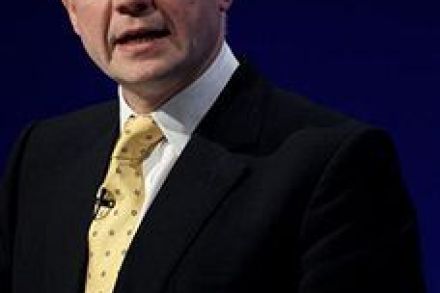
In a splurge of activity, William Hague gave both an interview to the FT and another foreign policy speech at RUSI outlining the views of a Conservative government. It was time for an update on Tory thinking, not least because David Cameron’s description of his policy as “liberal conservatism” and his unwillingness to march into a “massive euro bust-up” has had little effect. That is because a struggle over how to engage with the world continues to run beneath the party leader’s message of party unity.

Future foreign policy

From our UK edition

If the Tories win power (still a big “if” these days), William Hague will walk into King Charles Street, be greeted by the FCO’s Permanent Secretary Peter Ricketts, meet his new staff and be briefed on the Office he will lead and the foreign challenges Britain faces. There will be plenty on his plate. Calls from foreign dignitaries, preparations for forthcoming summits, a discussion of key priorities, and suggestions for how to reorganise the machinery of government. There will also be a need to prepare the FCO’s contribution to a cost-cutting exercise.      But there ought to be an early discussion about how the world is changing and the new context of Britain’s foreign policy.

Wanted: The Hague Doctrine

From our UK edition

Out of the conference hall, and back on to the campaign trail, it would nice to see the Tories talking about the things which make them ready for government.  In particular, William Hague should make a foreign policy speech setting out what ideas he has, and which would merit him being referred to as the likely “greatest foreign secretary in a generation” by David Cameron. Hague’s past foreign policy speeches have been solid, but unspectacular. He ticks off the likely issues, talks about global trends and looks knowledgeable about the crises that could emerge. But there is no overaching concept, such David Miliband’s idea of Britain as a "global hub". There is no Hague Doctrine.

Throw it in a stream

From our UK edition

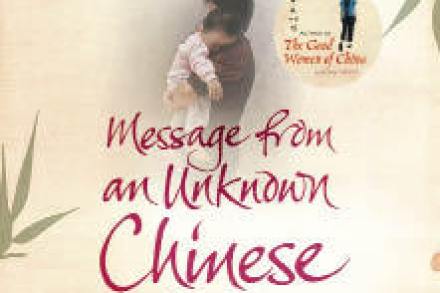
I know a British couple with a Chinese daughter, pretty and fluent in English. Of course the little girl was adopted. It is necessary to steel one’s self against three agonising thoughts: how did such children come to be here, why does one never meet an adopted Chinese boy, and what does one reply when the adopted Chinese child asks, ‘Why did my real mother let me go?’ There is already substantial information on this subject, including television documentaries, none of it mentioned by Xinran.

The lady from Shanghai

From our UK edition

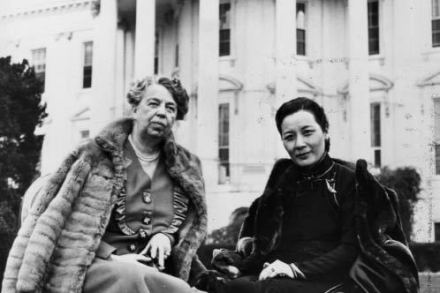
By the middle of the second world war, May-ling Soong was the world’s most powerful woman, at the centre of events in China’s history and its relationship with the USA. By the middle of the second world war, May-ling Soong was the world’s most powerful woman, at the centre of events in China’s history and its relationship with the USA. Hers is an engrossing life which spanned the 20th century and included a cast of extraordinary admirers, from Chinese warlords to Churchill. ‘I think your bark is worse than your bite,’ she cooed at him during the Cairo conference. Born in 1897, she was one of three sisters whose lives and marriages would dominate Chinese politics during the first half of the 20th century. The Last Empress is a misleading title.

Much to do if Britain is to manufacture its way out of trouble

From our UK edition

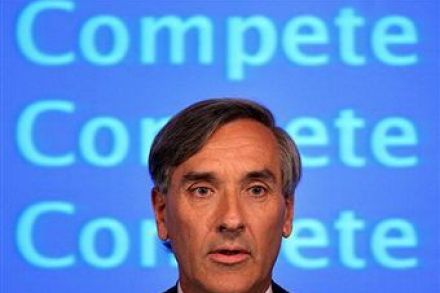
The City had hoped that Britain would export its way out of trouble. Dream on City Boys: Britain’s trade deficit is £7.3bn. It is perverse that the Thatcher government is blamed for manufacturing’s decline. Certainly, deficits were a feature of the Thatcher years but Labour came to power with a £1.8bn trade surplus and the gap has widened every year thereafter; Britain was £56bn in the red by 2006. With a possible inflation crisis louring in the distance, precipitated in part by weak sterling and a dependency on imports, British manufacturing needs to be stimulated. John Redwood has a typically incisive post:       ‘It is quite possible to make things in Britain, make them well and make a profit.

The rebirth of history

From our UK edition

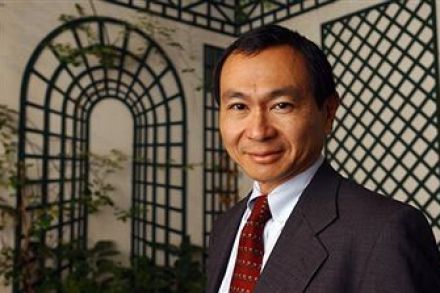
We have Francis Fukuyama writing a cover piece for us this week, revisiting his 'End of History' thesis. When he first published it, in 1989, he anticipated what was to become a consensus shared by many, including myself: that autocracy was on the way out. Communism had failed, and was being supplanted by the free society (aka the free market). Capitalism was creating wealth and liberty, and from Minsk to Gdansk people wanted it. Eastern Europe was managing a transition brilliantly. Fukuyama¹s thesis seemed to sum up an incredible spirit of optimism. Perhaps this optimism turned to hubris. After 9/11 Tony Blair and George Bush wanted to accelerate history, and bring democracy to countries which just needed to get rid of their dictatorships.

Not yet a post-American Europe

From our UK edition

I'm in Brussels where the only news is Obama's cancellation of a trip to Madrid to join an annual EU-US confab.  The FT's Gideon Rachman explains the anxiety caused by the decision: 'There is no doubt that the Spanish government, which currently holds the rotating presidency of the EU (You thought it had been abolished? Fooled you!), will treat this as a bitter blow. The Spanish prime minister Jose Luis Zapatero was royally snubbed by George W. Bush and so it was really important to him to underline that he has a great relationship with the sainted Obama. (...) The Spanish are not the only Europeans feeling snubbed by Obama.

Google poses Obama a problem

From our UK edition

Google’s decision to publicly confront the Chinese government over cyber attacks that have been hitting Google customers for the past year or so poses a difficult challenge for the Obama administration. The threat by Google to shut down its operations in China over the attacks is the first public acknowledgement by a major US corporation of the attacks which the US intelligence community has known about for almost a decade. The facts are that China has been waging a cyber war against the US government and companies that involve literally millions of attacks each day. Every major US corporation operating in China has been targeted, as have universities, research laboratories and other American companies that have intellectual property worth stealing.

Dealing with China in 2010

From our UK edition

The execution of Akmal Shaikh has brought China to our frontpages, and to the forefront of diplomatic thinking, as the New Year begins. The question is not just how to respond to this single and, in many regards, sad event – but how to deal with growing Chinese power more generally. How will we shape our relations with China for this decade and beyond? It would obviously be wrong to end all UK-China links over Akmal Shaikh’s execution. The Labour government's use of pique as a guiding principle of foreign policy had little effect on Russia and will not move China. Nor should anger over the excecution – however righteous or justified – occlude Britain's real interests in cordial Sino-Anglo relations.

Can you be pro-British and pro-European?

From our UK edition

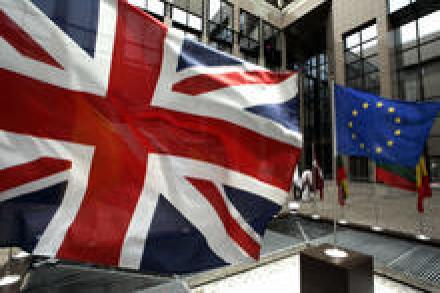
Last night in a speech at the IISS, David Milliband laid out the case against the Tories’ Europe policy. As he started off saying: "It is very strongly in the British national interest for the EU to develop a strong foreign policy; that to be frightened of European foreign policy is blinkered, fatalistic and wrong; that Britain should embrace it, shape it and lead it." In that one sentence lies the case for Britain’s role in shaping a liberal, open and outward-focused EU. It is probably also the line of attack that the Foreign Secretary will use against the Tories until election day and possibly beyond, if Miliband eventually assumes the Labour leadership. I have never made a secret of my support for the EU.

A new world order – don’t be silly

From our UK edition

Go to any international think-tank conference and you will hear one complaint repeated ad nauseam: the intenational system, built after World War II - and incorporating the UN, NATO, the IMF, WHO etc. - is no longer fit for purpose. It needs to change to accomodate new threats, like climate change, and new powers like India and Brazil. The last point is particularly oft-heard. If India provides the majority of UN peacekeepers, should Delhi not have a permanent say on the UN Security Council? Now that China has become a pillar of the global economy, should the Beijing government not have more votes on the IMF board? The limited representation of these states is thrown into relief when compared with the over-representation of European states like Britain and France.

Aung Sang Suu Kyi, a victim of the post-American world

From our UK edition

Today the Burmese junta convicted pro-democracy campaigner Aung Sang Suu Kyi to a further 18 months under house arrest after a U.S. man swam uninvited to her lakeside home in May and stayed there for two days, breaching the terms of her house arrest. Gordon Brown and Nicolas Sarkozy have led the world’s outrage, urging the UN Security Council and European Union to impose tougher sanctions on the regime.   Unfortunately, not much is likely to happen to the Burmese generals. They remain protected not only by their neighbors, but by China and India who have both economic and strategic interests in keeping the regime intact. Like China, power-hungry India is keen on exploiting Burma's huge oil and gas resources.

Lessons for 2012 from 1992

From our UK edition

John Huntsman's decision to accept Obama's invitation to serve as the US Ambassador to Beijing is, as James suggested, interesting given the recent rise in Huntsman stock. The advantages for Obama are several: firstly, and most obviously (if also most grubbily) he removes a potential 2012 opponent from the fray. Secondly, picking someone like Huntsman who not only has diplomatic experience (as ambassador to Singapore and, more importantly, as Deputy US Trade Representative) but also speaks Mandarin tells the Chinese that Obama appreciates their importance and is determined to take their relationship seriously. How could he not, you might ask, and there'd be something in that.

Smoking To Recovery

From our UK edition

Good and bad news from China: A Chinese county has rescinded a rule urging its government workers to smoke more in order to boost tax income. The authorities in Gong'an county had told civil servants and teachers to smoke 230,000 packs of the locally-made Hubei brand each year. Those who did not smoke enough or used brands from other provinces or overseas faced being fined or even fired. The Good news is that the Chinese recognise the contribution smokers make to the public finances; the Bad news is that they seem to be encouraging a rather stern form of protectionism. Still, you can't have everything - though it's a sad day when you can argue that the Chinese have a more sensible attitude towards sweet Lady Nicotine than we do...

Humbling Free Expression Awards

From our UK edition

I am always blown away by the Index on Censorship Freedom of Expression Awards. But for some reason, last night's event seemd to throw up an even more astonishing roster of award winners than usual. It was also good that so many were there in person. (In a surreal touch, Paul Staines, aka Guido Fawkes, was also there in person at a table he had bought for the occasion). The Sri Lankan paper, The Sunday Leader, won the journalism award, which was collected by Lal Wickrematunge. Lal explained he and his brother Lasantha had started the magazine 15 years ago on a shoestring budget and distributed it from the back of a car. Unfortunately, Lasantha couldn't be there because he was assassinated in January.

No longer at home

From our UK edition

The Writer as Migrant, by Ha Jin Three quest-ions, labelled as ‘Aristot- elian’ by the author, begin the Rice University Campbell Lectures delivered by Ha Jin in 2007: to whom, as whom, and in whose interest does a writer write? To which the reader might respond: can any writer truthfully answer any of these questions? The identity of a writer and of his readers is a matter debated long before Aristotle and well into the groves of post-modernist academe. From Homer blindly taking dictation from his muse to Joyce sweating away in the smithy of his soul, the writer has been perceived by himself and by his audience as innumerable things, none truer than another. Ha Jin’s own experience exemplifies these changes of identity.

Quote for the Day

From our UK edition

Chris Dillow - always worth your time - casts a weary eye over a number of government policies and concludes: What this shows, I think, is that New Labour’s claim to believe in technocratic, evidence-based policy is a sham. They are not technocrats at all, but either priggish moralists or cowardly panderers to mob prejudice. Quite so. And as he says, we may need a revolution. Lord knows, however, where that might come from.