China

Unseating Gaddafi

From our UK edition

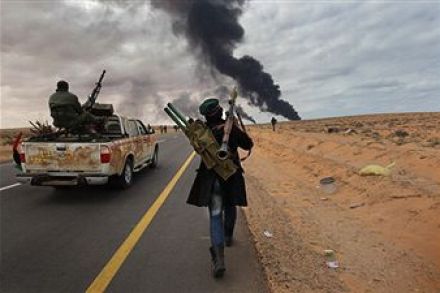
The pressure is being turned up on Colonel Gaddafi, but it may still take a while to have an effect. The Libyan dictator retains some form of power and has told the only person who has been granted access to see him, South Africa's Jacob Zuma, that he intends to stay on in Libya. He wants a ceasefire before anything else is discussed. The rebels in Benghazi, meanwhile, want him to go before anything else is discussed. And so the bombing goes on. At the UN, people talk of negotiated settlement, fearing that chaos would follow Gaddafi's killing. That may be true, but there has been little evidence so far that the colonel is willing to negotiate in anything approaching good faith.

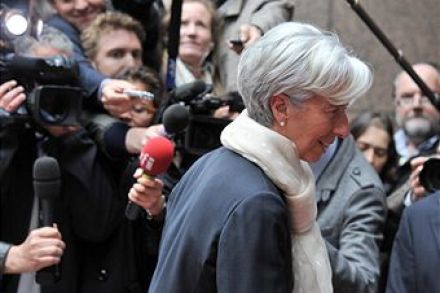
Meeting Christine Lagarde

From our UK edition

The FT has been speaking to Christine Lagarde, the French finance minister tipped to become managing director of the IMF. A few salient points emerge from it. First, she has more than a dash of hard-nosed Gallic defiance. Responding to the charge of a lack of a qualification in economics, she reiterated the comments she made to the Today programme earlier in the years: “From what I know of the job, I think I can do it. One of the qualities that people recognise in me is my ability to reach out, to try to build a consensus, to bring people to the common interest while still being a very firm and no nonsense person.” Her empathy is well documented, as is her sympathy for all things American.

Hillary Clinton: Chinese regime can’t defy history

From our UK edition

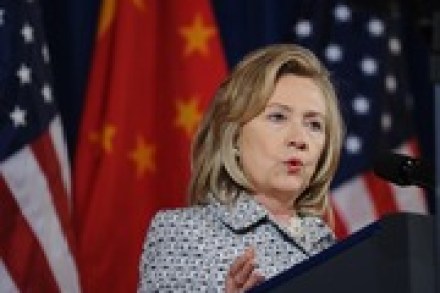
Hillary Clinton has given a fascinating interview to the Atlantic Monthly’s Jeffrey Goldberg. The main topic of it is the Arab spring but it is her comments about China that are making waves. When Goldberg comments that the Chinese have been scared by the sight of dictatorships toppling across the Middle East, Clinton replies:“They're worried, and they are trying to stop history, which is a fool's errand. They cannot do it. But they're going to hold it off as long as possible. “ As Goldberg says, it is quite remarkable to hear the US Secretary of State say so frankly that the Communist dictatorship in China will collapse at some point.

Reasons for optimism in the Middle East | 22 April 2011

From our UK edition

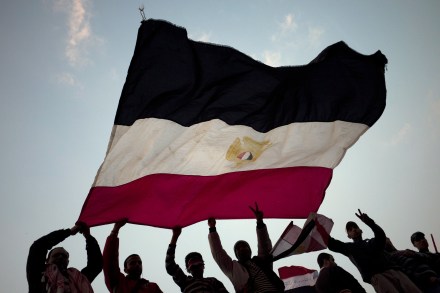
As the Libya crisis drags out, and Bashar al-Assad orders a crackdown in Syria, many have begun to doubt whether the changes seen in Tunisia and Egypt will actually spread to the rest of the Middle East. One former British ambassador recently suggested that perhaps the peoples of the Middle East preferred a mixture of authoritarianism and democracy — and that Britain should accept this; not impose its values and views.   But there is plenty of reason for optimism. The first is to look at the countries that have transformed themselves over the course of the last fifty years. Powerhouses like India and Brazil, but also smaller countries such as Vietnam, were mired in poverty, maladministration and the consequences of war.

Ferguson’s triumph

From our UK edition

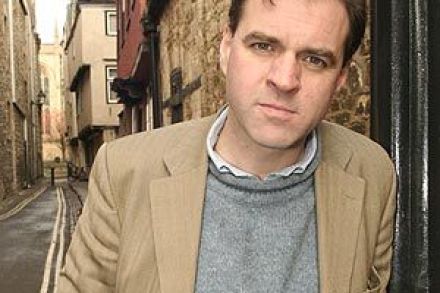
The last episode of Niall Ferguson’s documentary series, Civilization, has just been aired — and for those who missed it, it’s time to buy the DVD box set. Or, better still, read the book. Ferguson is, for my money, one of the most compelling, readable and original historians writing today. His books stand out for throwaway lines which can change the way you think about what’s happening now. Understanding of history shapes our politics, whether we admit it or not. And myths about history also fuel political myths. How often do we hear it said that the Great Depression came about because government didn’t borrow in the hard times? A myth — but if enough people believe it, it can justify a government embarking on ruinous debt binge now.

Dylan urged to stop blowing with the wind

From our UK edition

As one famous artist vanished in Beijing, another appeared. Bob Dylan has begun a tour of China in the same week as Ai Weiwei became the most prominent victim of Beijing’s current repression drive. Ai has been unlawfully incarcerated for what the authorities describe as ‘economic crimes’, and the cry has gone out for his release. Except that the cry has been more of a whimper. Western governments have largely ignored Beijing’s clampdown, which began in February as democratic activism spread from Cairo to Chinese websites. No trade sanctions or UN Resolutions are being issued here, just stern communiqués. Some human rights activists have called on Bob Dylan’s celebrity to condemn the Chinese government outright.

The Myth of the Golden Age of Bipartisan Comity

From our UK edition

Via Hendrik Hertzberg, here's Charles Dickens reflecting upon the spirit of American politics: If a lady take a fancy to any male passenger’s seat, the gentleman who accompanies her gives him notice of the fact, and he immediately vacates it with great politeness. Politics are much discussed, so are banks, so is cotton.

Osborne gets his man

From our UK edition

So Martin Sorrell is set to move WPP back to Britain. This was always part of Osborne's Budget plan, as I revealed in my News of the World column and also mentioned on Coffee House. As I said in the newspaper: "The Chancellor has been on bended knee, pursuing Sorrell with energy that would make Berlusconi blush. 'What do we need to do?' he asks. Sorrell’s answer is to cut the tax on overseas profits. So Osborne will, hoping to lure back companies who generate most of their cash abroad." Today, Sorrell will announce that he'll come back from Ireland if the Budget is made law. Of course it will be made law, governments collapse if they can't have their budget passed. So he'll redomicile, as will (perhaps) other multinationals.

China steps into the breach

From our UK edition

Singapore China has lost little time pledging rescue help and aid to Japan, even though it is burying its own dead from the earthquake that shook Yunnan on Thursday. Beijing is keenly aware the world is watching it like never before – so its leaders are keen to make all the right noises. But dig deeper, and the reaction is more ambivalent, especially amongst ordinary Chinese, many of whom seem to have mixed feelings about Japan’s disaster. On sites such as Sina Weibo, China’s version of Twitter, some microbloggers have been snide – and some downright sadistic. (The Wall St Journal blog translates some here). It’s a reminder that Sino-Japanese enmity can run very deep. The war seems a long time ago for Europe, but not so in Asia.

What the Libya crisis means long-term

From our UK edition

The multiple crises in North Africa, from the revolution in Tunisia, through the protests in Egypt and to the conflict in Libya, has reinvigorated British foreign policy. In the last couple of years classic international issues have been pushed to the side by a need to focus on economic statecraft. Foreign ministers became less important as finance ministers gained prominence. This will now change, as leaders shift their focus onto the Libya crisis. The UN is again in focus, not the G20. The second change may be on East/West dynamics.

New World temporarily postponed

From our UK edition

We are meant to be living in a multi-polar world, one where US power is waning, and where countries reject the prying interference of the West. Except, erm, we aren't. Today's world looks exactly as it did yesterday. First, many of the 20th century issues people thought would disappear – dictators, repression and democracy – remain as prevalent now as then. The Iraq War has tempered people's appetite for humanitarian interventions without extinguishing it. The key difference seems to be that support is now minimal on the Left and still strong on the neo-con Right. Everyone is also still focused on what the US will or will not do, even in Britain.

Act soon or face another Guernica

From our UK edition

We now know that Libya is heading into a full on civil-war and that Gaddafi is prepared to do pretty much anything to stay in power. The former interior minister Abdel Fattah Younes al-Abid, admittedly a partial source, says that he defected after arguing with the Libyan leader over his plan to bomb the rebel stronghold of Benghzai. In an ideal world, the United Nations would move to impose a no fly zone on Libya. But this is unlikely to happen. Russia and China, for obvious reasons, want to uphold the principle of non-interference in another state’s affairs even if that state is brutally repressing its own people.   This puts the ball in Nato’s court as the largest military alliance of liberal democracies there is.

Hothouse hell

From our UK edition

Amy Chua, Tiger Mother and John M. Duff Professor of Law at Yale, was born in the Chinese year of the tiger, and a tiger, she says, ‘the living symbol of strength and power, generally inspires fear and respect’. She describes her own personality: ‘Hot- tempered, viper-tongued, fast-forgiving’. Amy Chua, Tiger Mother and John M. Duff Professor of Law at Yale, was born in the Chinese year of the tiger, and a tiger, she says, ‘the living symbol of strength and power, generally inspires fear and respect’. She describes her own personality: ‘Hot- tempered, viper-tongued, fast-forgiving’. I missed the last quality in this disturbing book; she should have written ‘monomaniacal’.

Pillars of Sand

From our UK edition

The Middle East is set for renewed displays of public anger towards the region's governments. Events in Bahrain are particularly worrying. Troops took control of the capital, killing at least four protesters in the worst violence in the Gulf kingdom in decades. The trouble in Bahrain, which houses the U.S. Navy's 5th fleet and is home to a large U.S. military base, illustrates a point Ben Judah and I make in a new article: that the three pillars of US post-World War II power in the Middle East - commercial ties, military bases and client states - are crumbling: "A new Middle East is taking shape, buffeted by Pacific trade winds and owing allegiance to more than one power.

China eclipses the Japanese economic miracle

From our UK edition

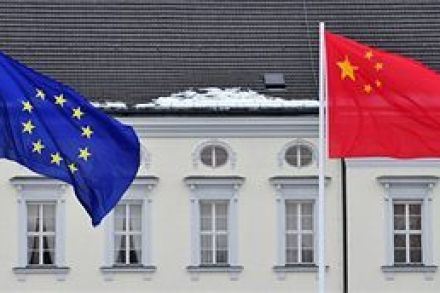
Official figures suggest that China has replaced Japan as the world’s second largest economy, after an estimated 10 percent growth rate left China with an economy worth close to $5.8trillion at the end of quarter four 2010. Japanese growth hovered around the 3 percent mark in 2010 with a total GDP value of $5.47 trillion. Analysts have told the BBC that it is ‘realistic’ that China will overhaul the US’ economy in about a decade, which, as Pete has demonstrated, does not look too outrageous a suggestion.  All of this puts me in mind of the European Union. The CIA World Factbook records that the EU leads the globe in GDP (purchasing power parity): with an estimated value of $14,890,000,000,000, against the US’ $14,720,000,000,000.

Tibet should not despair

From our UK edition

Surely no political process in the modern world is more shrouded in mystery than the way the Chinese select a new supreme leader — except perhaps the occult divination practised by the Tibetans. Surely no political process in the modern world is more shrouded in mystery than the way the Chinese select a new supreme leader — except perhaps the occult divination practised by the Tibetans. We may already be sure that Xi Jinping will succeed the dour and uncharismatic Hu Jintao as the 14th General Secretary of the Chinese Communist Party in 2012, but precious little is known about him or his views. By contrast the 14th Dalai Lama is a global celebrity, as venerated as Nelson Mandela, welcomed by kings and presidents as if he were indeed the head of state.

It’s China’s world. We just live in it.

From our UK edition

Yesterday was momentous, but we should not lose sight of the head of the IMF saying that the Chinese renminbi could take steps to becoming a global reserve currency. To be specific: Dominique Strauss-Kahn has in mind adding renminbi to the IMF’s Special Drawing Rights system. In itself, no big deal - but a notable kiss being blown to Beijing. It fits a trend. The Chinese, notoriously, manipulate the value of their currency to keep their goods cheap, so they can’t have their currency treated with reserve status. But power is shifting - and America’s fiscal misbehaviour has unsettled international investors. John Peace, chairman of UK bank Standard Chartered, put it well the other day: “the last decade was characterized by ‘made in China’.

The China arms embargo should be discussed – though not lifted

From our UK edition

Today's Times splashed on the spat between Britain and EU foreign policy "czar" Catherine Ashton over the embargo barring arms sales to China. The embargo was put in place after the Tianamen Square massacre and has remained in place, largely at US insistence, ever since. But is it the right policy? The policy has not prevented China from becoming a military power — its annual defense budget officially stands at $70 billion, although the Pentagon believes the real figure to be twice as high. China is developing carrier-killing missiles that even NATO does not have, and will soon sell weapons rather than seek to import them. There is, of course, a moral argument: the sanctions were put in place because of China's human rights violations.

Panda Politics

From our UK edition

A coup for the Royal Zoologocial Society of Scotland which announced today that it will take delivery of and house two Giant Pandas, courtesy of a deal with the Chinese government. A coup too, I dare say, for Alex Salmond who will be happy to accept whatever credit you may care to bestow upon him. I believe the going rate for a panda is something like $1m a year but Edinburgh Zoo will certainly be able to afford that. Hard to imagine pandas actually breeding in Edinburgh, but who knows? If a McPanda ever emerges I hope it gets a better name than "Butterstick" - the unfortunate moniker slapped upon the infant panda born in Washington a few years ago. Readers are invited to suggest possible names...

China in a bullshop

From our UK edition

As if to illustrate Pete’s post about the rise of China and India, Chinese Vice Premier Li Keqiang has just finished a visit to Spain during which agreements worth 5.7 billion euros were signed. The Chinese delegation is said to have committed itself to buying six billion euros of Spanish debt, which helped calm markets and provided some relief for Spain’s recession-hit economy. Around the time that the Soviet Union collapsed, the Chinese used to say only they could save communism. Twenty years on, it seems only they can save capitalism. The Spanish are certainly in no doubt about the importance of their newfound Chinese friends. The left-leaning Spanish newspaper El País wrote that that Li was received in Madrid as "a new Mr.