China

Will China kill all of Africa’s elephants?

From our UK edition

In 2010, Aidan Hartley, our ‘Wild Life’ columnist and Unreported World presenter, asked in his feature below: 'Will China kill all Africa’s elephants?' And, as I type, politicians from over 50 countries are discussing this very issue at the London Conference on the Illegal Wildlife Trade. Meanwhile, David Beckham, Prince William, and the Chinese basketball player Yao Ming have made a video highlighting the plight of the rhino. William Hague – hosting the summit – said at a reception last night that ‘we are on the brink of a crucial global turning point in the struggle against wildlife trafficking’, adding that the British government ‘has a responsibility to push for an international action plan to urgently tackle this trade’.

The mutant meat industry

From our UK edition

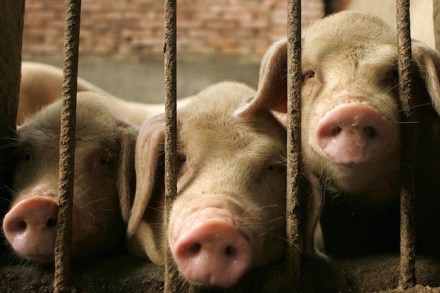
When it emerged that there was horsemeat in cheap burgers, some people thought it might spark a revolution in the British meat industry. Now that the public are more aware of the ins and outs of it all – the complicated and murky supply chains, the potential drug contamination, the images of badly-wrapped frozen meat – perhaps cheap meat would lose its attraction. But it doesn't seem to have done so. Despite the stories about sales of game meat soaring and of people going back to basics and cooking from scratch, sales of processed meats such as sausages and burgers are still booming – both in the UK and abroad. Perhaps a book called Farmageddon will do what previous meat 'scandals' have failed to do.

China’s banking problems are snowballing — fast

From our UK edition

The world's largest bank by assets, Beijing-based ICBC, has announced it won't take full responsibility for a trust investment worth 3-billion yuan (£300 million) that may go bust. In other words, one of China's 'big four' banks may be linked to a default on a loan pretty similar to the sort that started the Lehman crisis in 2007. In fact, it may be worse, due to the lack of transparency. The troubled Chinese loan was sold through a trust company that belongs to the nation's vast and opaque shadow-banking system, which offers credit to companies that might find it hard to raise money otherwise. Many of these trust loans are of the convoluted, 'structured' kind that sparked Lehman's downfall and rocked the world. China's total shadow-banking debt now equals $4.

Portrait of the week | 5 December 2013

From our UK edition

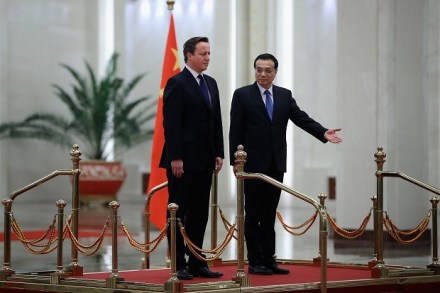
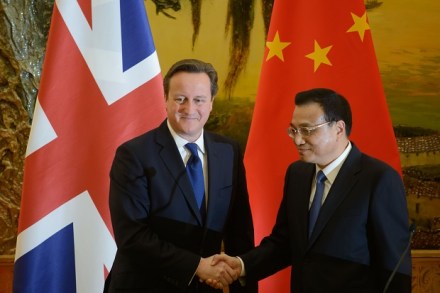
Home George Osborne, the Chancellor of the Exchequer, said that average energy bills would be brought £50 lower through government intervention to reduce the obligation of energy companies to subsidise insulation. The government also said it would cut subsidies for onshore wind turbines and solar energy, and increase those for offshore wind farms. David Cameron, the Prime Minister, said that new arrivals from Bulgaria or Romania found to be begging or sleeping rough would be thrown out of the country and barred from returning for a year, unless they had a job. He then flew to China to further British trade. A bridge across the Thames from Temple to the South Bank, the idea of Joanna Lumley, and designed by Thomas Heatherwick, attracted government support.

David Cameron’s craven surrender to China follows a pattern

From our UK edition

‘This week I make a visit to China. I come with a clear ambition: to build a lasting friendship that can become a blueprint for future cooperation between our countries. We have a responsibility through our ongoing dialogue to work together on a range of wider international issues – from negotiations with Iran, to counter-terrorism and climate change.’  North Korea’s President Kim on the verge of his latest visit to Beijing? It must be. North Korea is China’s only ally in the normal sense of the word. With all other countries, Beijing’s relationship waxes and wanes depending on how ‘friendly’ Beijing deems them to be. But no, actually.

PM dodges ‘small island’ moment in China

From our UK edition

David Cameron's visit to China is rather different to some of his recent trips. Firstly, as Douglas Murray outlined yesterday, he's not making as big a noise about human rights as he did when he was in Sri Lanka recently (and in Sri Lanka, it wasn't just noise: it was the body language, with an awkward handshake summing up how he felt about Sri Lankan President Mahinda Rajapaksa). Secondly, he's not going to bother getting all Love, Actually about the country he represents. When he was in St Petersburg, the Prime Minister got rather overexcited about a comment from a Putin official about Britain being a 'small island no-one listens to'. His wife Samantha now jokes that the Prime Minister in Richard Curtis' film is also called David and that her David fancies imitating the fictional one.

David Cameron has his price: the Dalai Lama or ‘the global race’?

From our UK edition

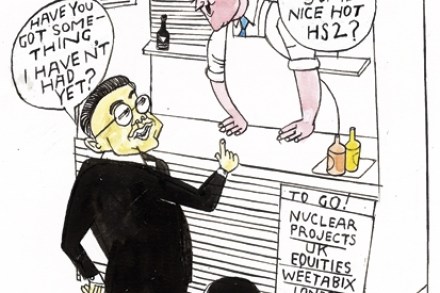
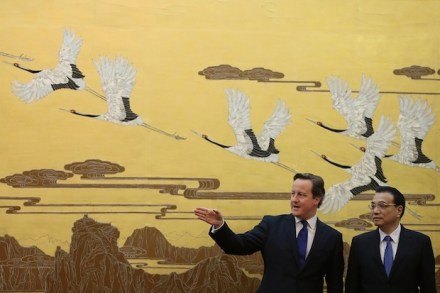
David Cameron has taken a trade delegation to see the People's Republic of China. The hope is obviously to stir up trade for Britain. Nothing wrong with that. Except that when Mr Cameron was in Sri Lanka the other week he chose to lecture the Sri Lankan government over the manner in which they put down their Tamil separatist problem a few years back. This must have been galling to more than a few Sri Lankans since much of the funding for the Tamil Tigers over the years came from open fundraising in the UK. However, you may recall that relations between London and Beijing turned very frosty after David Cameron met with the Dalai Lama. Indeed, an earlier trade delegation was cancelled by Beijing. But now we are told that Britain has 'turned a page' with China.

The CofE doomed? Only because it’s surrendered to phony soullessness

From our UK edition

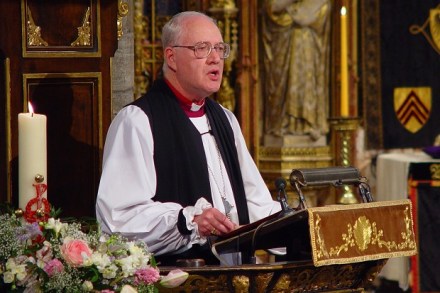
The Church of England is doomed, Lord Carey has said, warning that Anglicanism is just ‘one generation away from extinction’. To be fair people have been saying this for a long time; in the mid-19th century the Church decided to make a survey of churchgoing, and were stunned to find out that only a quarter of people in England attended Anglican services and a similar number to non-Conformist services. Half the population wasn’t going at all. Now you’d be lucky to get that many at Christmas.

Does Xi Jinping really want reform? If so, he would unravel China

From our UK edition

It is now 35 years since Deng Xiaoping gained mastery of China and launched a process that changed the world. The diminutive, chain-smoking ‘paramount leader’ adopted market economics to make his nation a great power once again and to cement the rule of the Communist party with no room for political liberalisation. The formula he adopted at a Party plenum after winning the power struggle at the end of 1979 that followed the death of Mao Zedong has been amazingly successful by its own lights, but is fast running out of steam.

How a marine reserve could make Pitcairn the crown jewel of the South Pacific

From our UK edition

Last week, while the Mayor of London (pop. 7.8 million) was visiting China, the Deputy Mayor of Pitcairn (pop. 50) was visiting London.  I met Simon Young for afternoon tea in a riverside restaurant near the Tower of London.  Both he, and a fellow member of the Pitcairn Council, Mrs Melva Evans, had travelled thousands of miles to Britain with one specific purpose: to persuade the Government to designate a vast area around the Pitcairn Islands as a marine reserve. Most of us, I suppose, know the Pitcairn Islands as the place where the mutineers from the Bounty settled, with their Tahitian companions, in 1790.  The majority of the current population are their direct descendants.

The global race means swallowing pride every so often

From our UK edition

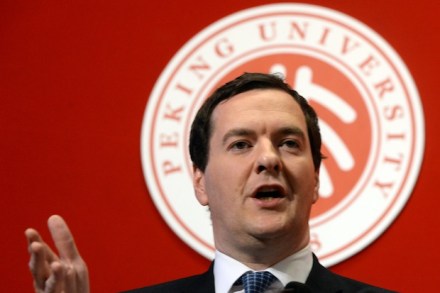
George Osborne is in Beijing at the moment, drumming up support for Britain in the global race. Although that doesn't quite work because Britain is obviously racing China in this global race, but all the same, he wants China to run alongside Britain cheering it, rather than sledging as it steams ahead. And to be able to do that, this country apparently needs to swallow some of its pride about the sort of country that China is.

Edward Snowden and the Guardian have started a debate…in the Kremlin and Beijing

From our UK edition

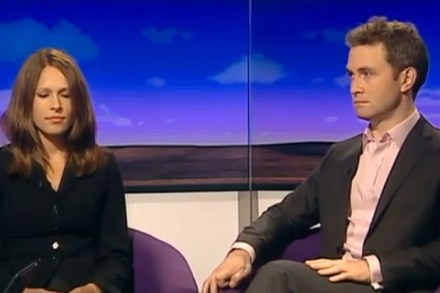
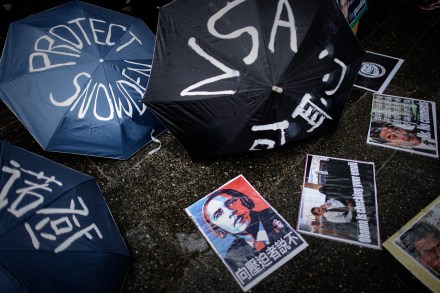
I was on the Daily Politics earlier, discussing the Guardian / Snowden leaks and debating against a representative from the campaign group 'Liberty'. The 'Liberty' representative kept saying what a lot of apologists for the actions of the Guardian (now including Vince Cable) have been saying - that Snowden and the Guardian should in some way be respected because they have started 'a debate'. They appear incapable of realising that while such leaks may be simply fascinating to them, they are infinitely more fascinating to the Kremlin, Chinese Communist Party, al-Shabaab et al. One other thought.

The Empress Dowager was a moderniser, not a minx. But does China care?

From our UK edition

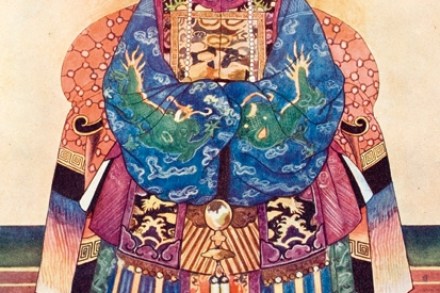
For susceptible Englishmen of a certain inclination — like Sir Edmund Backhouse or George Macdonald Fraser — the Empress Dowager Cixi was the ultimate oriental sex kitten, an insatiable, manipulating dominatrix who brought the decadent Manchu empire to its knees. While all seems lost, as foreign troops burn the Summer Palace in Peking, she is to be found, thinly disguised, in the pages of Flashman and the Dragon, locked in our hero’s rugged embrace. More recently, it has suited communist historians to concur with Flashman that she was ‘a compound of five Deadly Sins — greed, gluttony, lust, pride and anger — with ruthlessness, cruelty and treachery thrown in’.

If you think British banks are bad, you’ve never tried China’s

From our UK edition

It’s hard to think of anything more badly run than a Chinese bank. Somalia perhaps, or the BBC’s remuneration committee. Certainly, Beijing’s embattled lenders make ours look like paragons of financial rectitude. We may dislike RBS et al for bringing our economy to its knees, but at least we’re not saddled with a cabal of banks inextricably linked to whoever resides in Downing Street. Let’s start with good old-fashioned service. We may complain about our banks, how they all look the same and bombard us with adverts that would patronise a two-year-old. But at least they pretend to care. China’s banks don’t. Service is dire wherever you go. Internet or mobile banking ranges from poor to non-existent.

Ed Miliband needs to get out more

From our UK edition

They say travel broadens the mind, and Ed Miliband needs to travel more. To China, India and Brazil, but also to South Korea, Mexico, Turkey and Indonesia. If he did he would see the evidence before his eyes of a global revolution taking place. This revolution, and how Britain can best be a contender in the global race, is the biggest fact of life in politics today. To dismiss this phenomenon as a 'race to the bottom' is so breathtakingly arrogant, parochial and ignorant that it demonstrates Ed Miliband's lack of seriousness and suitability as a national leader. The whole world order, that has existed since at least the Industrial Revolution, is undergoing an upheaval. The change is incremental but it is also fast.

Extremists and the mainstream: the case of Comrade Newman

From our UK edition

The Chippenham Labour Party has decided that its candidate to contest the 2015 general election will be one Andy Newman. As the anti-totalitarian blogs Howie’s Corner and Harry’s Place have already argued he is almost certain to be the worst politician to stand for a mainstream party. An innocent observer, who believes the British Left’s protestations that it is for workers’ rights and against sexism, racism and homophobia, could go further wonder how such a man could get close to the Labour Party – let alone close enough to run on a Labour ticket. Newman manages the laughably named “Socialist Unity" website: laughable, not just because it engages in vicious factionalism, but because it indulges the religious strain of far-right thinking.

The Tragedy of Liberation, by Frank Dikötter – review

From our UK edition

The historian of China Frank Dikötter has taken a sledgehammer to demolish perhaps the last remaining shibboleth of modern Chinese history. This is the notion, propagated in countless books and documentaries, that Mao’s regime started off well, deservedly coming to power on a wave of popular support and successfully tackling the evils left behind by the corrupt and incompetent Nationalists. Then, at the end of the 1950s, it all started to go wrong. There were terrible natural disasters, followed by famine; and, seemingly unaccountably, the brotherhood of brave revolutionaries fell out, creating the bloodbath of the Cultural Revolution. This is the version still served up to A-level students in Britain.

Andrew Marr’s diary: Holidays after a stroke, and what the Germans really think of us

From our UK edition

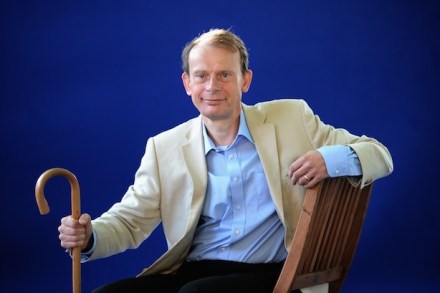
It’s been a strange summer. After a stroke, holidays are not what they used to be. We went to Juan-les-Pins for a week in a hotel. It seemed perfect because it had beaches for the family, and at nearby Antibes there is a great little Picasso museum for me to haunt. It has the best drawing of a goat ever made. My daughters and wife doggedly manhandled me across hot sand into and out of the water and I enjoyed that. But being surrounded by so many fit people running, cycling and swimming was a little dispiriting. Mind you, I’ve always been useless at holidays. I hate being too hot. I hate lying around on grit (rebranded as ‘sand’). I hate airports. I hate long car journeys. My idea of a good break involves a bracingly cold northern city and some good art galleries.

Korea – the 60 year war

From our UK edition

In the early morning hours of June 25, 1950 the opening shots of the Korean War were fired. At the time, few could have predicted how seminal this event would be in shaping world history. While the Korean War itself was only fought over a period of three years, no peace agreement was ever reached. In her new book ‘Brothers At War’, Sheila Miyoshi Jager provides a compelling historical analysis of a conflict that set the agenda for much of the Cold War.  Sheila Miyoshi Jager is Luce Associate Professor and Director of East Asian Studies at Oberlin College, Ohio. She has written extensively on modern and contemporary Korean politics and history. Would you describe the various phases of the Korean War?

Who’s talking the most nonsense about Edward Snowden? It’s a tough contest

From our UK edition

From which of the actors engaged in the thoroughly entertaining case of Edward Snowden has come the biggest spewing-out of cant, do you reckon? Edward himself? The Guardian? Or the Yanks or -Chinese? Edward was a fairly low-level CIA technical contractor in Hawaii when he released to the world details of his government’s clandestine electronic surveillance programme (Prism) and also some stuff about our own much-loved GCHQ in Cheltenham. Apparently shocked to the core to discover that the security services were secretly spying on people, Edward was gripped by a spasm of narcissistic outrage and said: ‘I don’t want to live in a society which does these sorts of things.