China

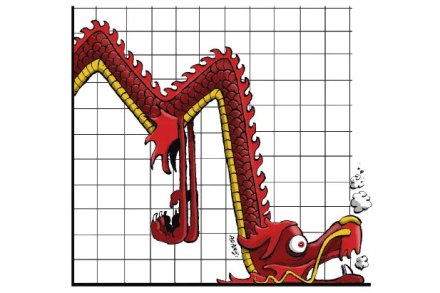
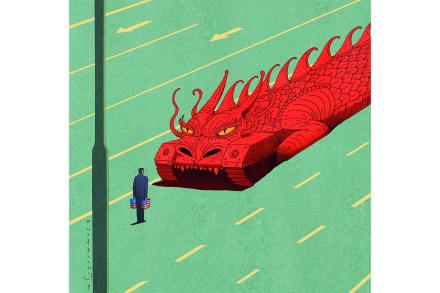
Carbon capture: how China cornered the green market

From our UK edition

30 min listen

On the podcast: In her cover piece for the magazine, The Spectator's assistant editor Cindy Yu – writing ahead of the COP28 summit this weekend – describes how China has cornered the renewables market. She joins the podcast alongside Akshat Rathi, senior climate reporter for Bloomberg and author of Climate Capitalism: Winning the Global Race to Zero Emissions, to investigate China's green agenda. (01:22) Also this week: Margaret Mitchell writes in The Spectator about the uncertainty she is facing around her graduate visa. This is after last week's statistics from the ONS showed that net migration remains unsustainably high, leaving the government under pressure to curb legal migration.

Kissinger

China will miss Henry Kissinger

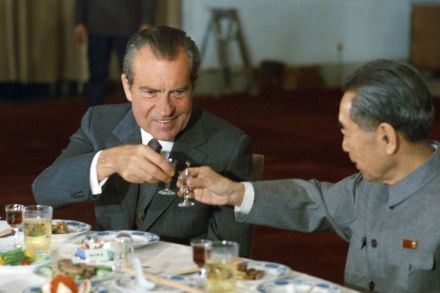
A hero to some and a villain to others, the late Henry Kissinger impacted American foreign policy thinking in the last six decades more than anyone else. Of the former secretary of state and Nobel Peace Prize winner's contributions, one of the most significant was the strengthening of Sino-American relations. His détente policy was once celebrated by Nixonites when the Soviets were seen as the US’s main competitor. More recently, though, as anti-China sentiment has risen in America, Kissinger’s desire to soften relationships with the Asian giant has gained him some detractors on the right — and he already had more than enough on the left. Arguably his death will be mourned more in China than America.

Dialect and identity: is Mandarin bad for China?

From our UK edition

44 min listen

Across the span of China, a country as big as Europe, there are countless regional dialects and accents – perhaps even languages. Often, they're mutually unintelligible. The Chinese call these ‘fangyan’, and each Chinese person will likely be able to speak at least one fangyan, while also understanding Standard Mandarin, the official language of the People's Republic. It means that the Chinese are more multilingual than you might think. But it also means that the question of language is inherently a political one. Standard Mandarin has a relatively short history, created by the country’s founding fathers to unify the spoken word in a huge country. But with the ubiquity of Standard Mandarin now, is fangyan at risk of dying out?

China cons US on green energy agenda

Right before President Biden and Chinese president Xi Jinping met in San Francisco this week, the US State Department and the Chinese Ministry of Ecology and Environment each released a statement on “enhancing cooperation to address climate change.”  “[T]he United States and China reaffirm their commitment to work jointly and together with other countries to address the climate crisis,” the Sunnylands Statement says. Addressing “energy transition,” the statement declares that both countries support pursuing efforts to triple renewable energy capacity globally by 2030 and accelerate renewable energy deployment as a substitute for fossil fuels.

Facing the facts of the West

The century began with a global celebration — the West’s belief in liberal democratic capitalism had battled foes for centuries and emerged victorious. All that remained was for the rest of the globe to melt into the West’s soft and loving embrace. Two decades in, things look much less rosy. China’s rapid rise has not spurred democratization, as many suggested it might; instead it has nourished a massive ideological and political competitor that may supplant the West not only economically but as an arbiter of global culture and behavior. Western decline is not yet inevitable, but Western values will survive and spread only if leaders recognize two clear facts. The first is that the spread of Western values has in large part been due to the dominance of Western power.

west
xi

Biden and Xi will resolve nothing in San Francisco

A year ago today, President Biden and Chinese President Xi Jinping shook hands with each other on the sidelines of the G-20 Summit in Bali, Indonesia, in an attempt to reset the world’s most important bilateral relationship. The two men, who knew each other during their previous encounters at the vice presidential level, hoped to exploit their familiarity with one another to bring US-China relations onto a more productive plane. And for a moment, the Bali talkathon seemed to have that effect.

Is California the new China?

Recently, Gavin Newsom, the greasy-haired governor who may or may not run for president, made a trip to Beijing to meet with Xi Jinping. It went swimmingly, according to various reports.  When it comes to US-China relations, “divorce is not an option,” Newsom, who divorced from Kimberly Guilfoyle in 2005, told CNN on November 8. America’s answer to Justin Trudeau argued that the US and China must “reconcile our strategic red lines.” The idea of being cozy with China, a country that actively uses cyber espionage to undermine the US economy, may strike many as odd, even dangerous — but not Governor Newsom. In fact, according to reports, he is so inspired by his trip to China, that he now wants to bring a CCP-like “social credit system” to the Golden State.

california governor gavin newsom

From the Odyssey to The Wizard of Oz: Praiseworthy, by Alexis Wright, reviewed

From our UK edition

Among many other prizes for her stunningly original work, Alexis Wright has won Australia’s greatest literary honour, the Miles Franklin Award, for a novel of the highest literary merit representing Australian life. It is ironic, but sadly apt, that her epic Praiseworthy should be published in the year that Australians, offered a chance to give greater political rights to their indigenous peoples, have voted not to. Everything blends together: dream and reality, donkeys and butterflies, the Odyssey and The Wizard of Oz Wright is an Aboriginal activist as well as a writer. Praiseworthy, which has already won the Queensland Literary Award for Fiction, is an impassioned environmental Ulysses of the Northern Territory, and not an easy read. It does not care to be.

Cambridge’s China complicity

From our UK edition

UK-China Transparency (UKCT) was formally launched this week (see Notes, 16 September). Its aim is in its name. There is sadly little transparency about UK-China dealings, especially in our universities. I first reported this problem early in 2020 when I investigated the behaviour of Jesus College, Cambridge, and its China Centre, run by the CCP apologist Professor Peter Nolan. It is probably not a coincidence that the three founders of UKCT – Sir Bernard Silverman, Martin Village and the young freelance reporter Sam Dunning – are all Jesus alumni. The more they looked, the more uncomfortable they became about their college’s advancement of CCP networking and propaganda and its role as the ramp for the courting of the Chinese regime by the whole of Cambridge University.

Rethinking Chinese food with Fuchsia Dunlop

From our UK edition

50 min listen

All cultures care about their cuisine, but the Chinese must have one of the most food-obsessed cultures in the world. It may be because we have the best food... Those listeners of Chinese Whispers who’ve been to China will know exactly what I’m talking about. For those of you who haven’t, you may have come across the classic Chinese takeaway with dishes like sweet and sour pork, or you may like Cantonese dim sum, and some of you may be big fans of Sichuanese cooking. But China has so much more to offer than what has made across into the West’s Chinese restaurants. Thankfully, that’s changing and quite fast. Part of the education campaign to bring more of the diversity and richness of Chinese cuisine to the West is the work of people like Fuchsia Dunlop.

‘The mask has slipped’ – Tuvia Gering on China, Israel and Hamas

From our UK edition

43 min listen

When China brokered a historic detente between Saudi Arabia and Iran earlier this year, it seemed that a new phase in world history – and certainly in Chinese foreign policy – had opened up. Instead of the US being a policeman of the world, it was the rising power, China, that was stepping into that role. Whereas Chinese foreign policy had previously only really cared about promoting trade and silencing dissidents, it seemed that perhaps, now, Beijing was taking a more leadership role in global diplomacy and security issues. And yet the events of the last week and China’s response to them have shown that perhaps the country isn’t ready for that responsibility just yet.

What exactly is the new space race all about?

The recent spate of articles about attempts by different countries to land vehicles on the Moon make it clear that a new space race is on. Just last month, Russia launched its first mission there in forty-seven years. And although the automated Luna-25 spacecraft spun out of control and crashed at the last minute, India’s heavily-instrumented Chandrayaan-3 landed successfully just four days later. NASA itself aims to return humans to the lunar surface in 2025 with its Artemis program. Remarkably, more than eighty countries, including Israel and the United Arab Emirates, have thus far established some kind of presence in space.

space

Democrats bring a CCP-tied witness to education hearing

A hearing about the Chinese Communist Party’s funding of American K-12 education took a surprising turn when the Democrats’ witness — and several members of the House Education and Workforce Committee — took pains to conflate opposing foreign investments in public schools with Asian-American hatred. Gisela Perez Kusakawa, the executive director of the Asian American Scholar Forum (AASF), kicked off her remarks by linking concern over the Chinese Communist Party’s investments in public schools to America’s incarceration of Japanese-Americans during World War Two. Warning the Asian-American youth could end up as “collateral damage,” Kusakawa repeatedly conflated opposing the CCP with anti-Asian-American racism.

ccp Chinese President Xi Jinping delivers a speech during a ceremony at Tsinghua University ceremony (KENZABURO FUKUHARA/AFP via Getty Images)

What we know about Beijing’s spies

From our UK edition

32 min listen

Two years ago, Richard Moore, head of MI6, said that China was now the organisation’s ‘single greatest priority’. Parliamentarians and the British public have been starkly reminded of this by last week’s news that a parliamentary researcher had been arrested on suspicion of spying for China. On this episode, we won’t be commenting on the ins and outs of that case, but talking more generally about Chinese espionage. What forms does it take, what are its goals and how successful are the Chinese secret services at achieving those? I’m joined by a brilliant and knowledgeable guest. Nigel Inkster is the former director of operations and intelligence for MI6.

Cindy Yu, Charlie Taylor and Petroc Trelawney

From our UK edition

17 min listen

Cindy Yu tells the story of how she got to know Westminster’s alleged Chinese agent and the astonishment of seeing herself pictured alongside him when the story broke (01.12), Charlie Taylor, His Majesty’s Chief Inspector of Prisons, talks breakouts, bureaucracy and stabbings, and wonders – where have all the inspirational leaders gone (06.45), and Petroc Trelawney shares his classical notebook and describes a feeling of sadness as the BBC Proms wraps up for another year (11.54). Produced and presented by Linden Kemkaran.

Why is America is giving up our panda to China?

America is surrendering its native-born panda to the Chinese Communists, and the Chinese Communist Party — and a premier taxpayer-funded museum and a top defense contractor are helping to foot the bill for the goodbye party. Xiao Qi Ji, an American-born panda whose name means “little miracle,” will be shipped back to China later this month — and the Smithsonian’s National Zoo is having an entire panda-fest to celebrate this humiliation. “We are going big because they are going home,” the National Zoo boasted in its announcement of a nine-day celebration filled with screenings of Kung Fu Panda, yoga sessions and panda-themed items. “Tasty celebratory treats will be provided courtesy of the Embassy of the People’s Republic of China.

panda

World events are not going America’s way

Contrary to the conventional wisdom, the world situation is grim for America. And it could actually get far worse. Why, then, are many of our national leaders acting as if things are going well? We need not doubling down but fundamental change. That starts with understanding that we are in serious trouble. The war in Ukraine, which is manifestly the Biden administration’s priority, is sadly likely to be protracted. While the Ukrainian counteroffensive is still ongoing, the best analysis indicates that the war has become a struggle of attrition. Russia is substantially mobilizing its economy and society for a long-haul war effort — and its armed forces appear to have at least partially adapted from their earlier failures.

world

How to do business with China

From our UK edition

Amid reports of Chinese spies in Westminster, we learn that Huawei – the telecoms manufacturer western governments shun for fear of cyber espionage – has launched a smartphone containing microchips more advanced than anything China was previously thought capable of making. Some analysts say China is now ahead of the US in tech fields ranging from AI to robotics, while, in the auto sector, BMW chief executive Oliver Zipse (announcing plans to make electric Minis at Cowley from 2026) described Chinese electric carmakers with improved battery technology as an ‘imminent threat’ to his industry in Europe.

China is spying on us, so what?

From our UK edition

That China is spying on us is hardly the revelation of the century. The Sunday Times broke the story that police have arrested two men amid allegations that a parliamentary researcher was spying for China. The spy, working on international policy, had alleged links to senior Tory MPs with sensitive information. He had previously lived and worked in China, leaving officials apparently fearing he may have been a ‘sleeper agent’ recruited to infiltrate British political networks.  Cue howls of indignation all round.

Is China still a Confucian country?

From our UK edition

29 min listen

For thousands of years, Confucianism has run through the fabric of Chinese society, politics and culture. Decades of Communism has taken its toll on China, so can it still be considered a Confucian country? Joining the episode is one of the world’s leading experts on the philosophy, Professor Daniel Bell. In 2017, he was appointed the dean of Shandong University, an unusual appointment for a foreigner in China but one based on his expertise in Confucianism, in the province of Confucius’s birth. His new book, The Dean of Shandong: Confessions of a Minor Bureaucrat at a Chinese university, details some of the ups and downs of his time in that position.