Childbirth

Why is maternity care in Britain getting worse?

From our UK edition

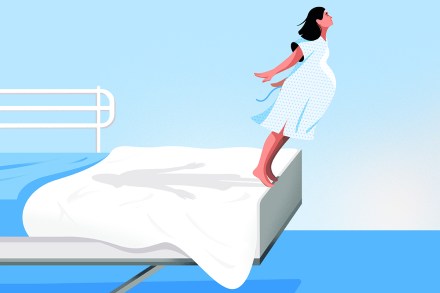
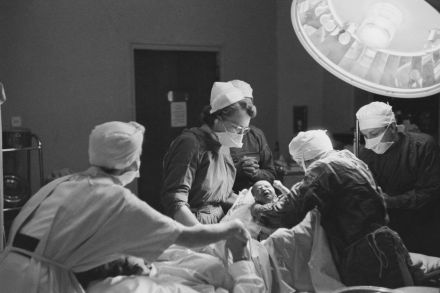
Chelsea and her partner had been trying for a baby for two years. Following several miscarriages, she became pregnant again last spring. ‘We were overjoyed,’ the 26-year-old says. ‘We thought this time everything would finally be different.’ Joy rapidly turned to worry when Chelsea began to suffer headaches and visual disturbances and made several trips to Worthing Hospital, part of University Hospitals Sussex NHS Foundation Trust. Eventually, foetal distress was picked up during a scan; after a transfer to another hospital and an emergency Caesarean, Bonnie was born in September at just over 26 weeks’ gestation. She had suffered a brain bleed and had chronic lung disease. ‘I knew something wasn’t right,’ Chelsea says.
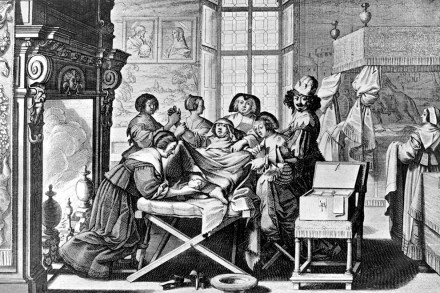
The enduring miracle of human birth – a history

From our UK edition

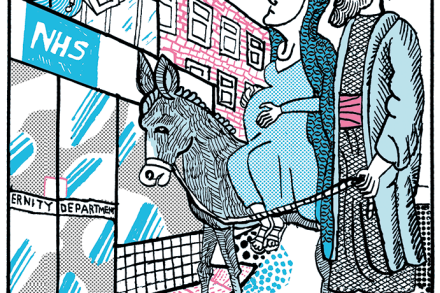
One of the most compelling artefacts described in this history of human birth is a stone carving discovered at an ancient temple site in what is now Turkey. The Gobekli Tepe totem pole, 11,500 years old, 6ft 3in tall and weighing 1,100lb, shows successive generations giving birth: a faceless figure at the top delivers a woman, who delivers another woman, who delivers a man, who is ‘proffering his phallus’. The exact meaning and function of this object is long lost, but it is clear that it has something to do with fertility. For as long as humans have had a culture, that culture has been – understandably – concerned with the mystery of reproduction and birth. The totem pole is a reminder of a very basic truth: everyone who has ever lived came out of a woman’s body.

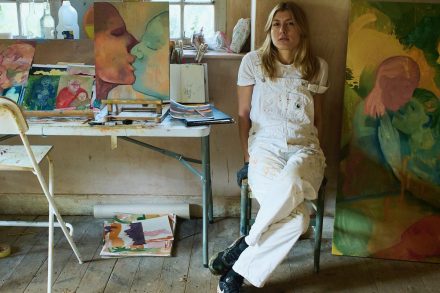
Figures emerge like ghosts from Antonia Showering’s canvases

Figures emerge like ghosts from Antonia Showering’s canvases, their sketchy lines and expressionistic color palette relaying an atmosphere of deeply personal narrative as much as an emotional message, wordless but with universal resonance. Take 2025's "The Waiting Room" (2025), from her current show, titled In Line, at Timothy Taylor: A woman, resting on a bed in a pool of maroon, has just given birth; her belly appears aglow in a warm yellow as her newborn, outlined in pale purple, rests next to her, umbilical cord still attached. “I wanted to talk about the vulnerability about someone postpartum,” says the artist. The hues she’s employed are bodily, those of flesh, fat, and veins, yet here transcend into a surreal haze of life’s first moments. Antonia Showering, 5L (2024).

Antonia Showering

In, sigh, defense of Meghan Markle

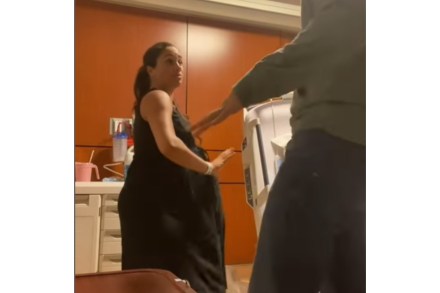
Here we are again, Meghan’s latest cringe-inducing social media offering: an 80-second video of her twerking in a hospital delivery room while heavily pregnant with her daughter Lilibet. The clip, posted to mark her daughter’s fourth birthday, shows the Duchess of Sussex doing what can best be described as suggestive dance moves beside her hospital bed, complete with shimmies and rowing motions, while Haz joins in wearing a hoodie. It’s peak Meghan, really – simultaneously oversharing and attention-seeking while complaining about the invasion of privacy.

meghan markle

The fundamental flaw in Britain’s maternity care

From our UK edition

Just over a year ago, I gave birth to my daughter. Labour was surprisingly smooth, unlike my previous emergency c-section. Once I started pushing, my daughter came quickly. I heard the reassuring sound of a newborn crying, and I felt the most indescribable sense of relief. Then, I started haemorrhaging. Before I knew it, I was under general anaesthetic in the operating room. When I came to my senses a few hours later, my first thought was the hospital’s policy: no visitors after 8 p.m. I had 12 hours before being left alone overnight with my daughter in a room full of equally badly injured mothers. A sense of panic set in. The countdown had begun.

Why must medieval mysticism be treated as a malady?

From our UK edition

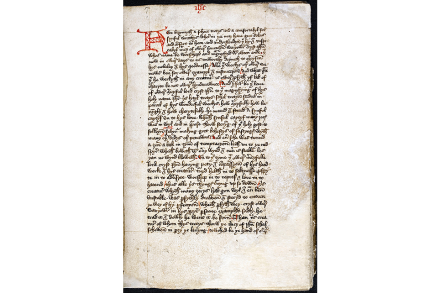
Medieval women – they were ‘just like us’. Except that they weren’t. Poet, Mystic, Widow, Wife is the first popular book by the academic and New Generation thinker Hetta Howes. It is a history of medieval women in relation to four celebrated figures – Marie de France (poet), Julian of Norwich (mystic), Christine de Pizan (widow) and Margery Kempe (wife) – whose lives have been retold recently in excellent studies by Anthony Bale, Marion Turner and Janina Ramirez. Howes’s book is highly readable and informative, placing the works of this quartet within a broad range of cultural documents – treatises, guidebooks, wills, court records and folklore. There are some great details, such as the theological debate about the Virgin Mary’s orgasm.

birth

The radical alternative to a hospital birth

Giving birth hurts. A lot. Like any other major physical feat, it’s risky, but it’s not the inherently dangerous medical event some have come to believe. Plenty of women know this. Many are skeptical of the need to give birth in a hospital. But some are taking things further, deciding to forgo medical care entirely and give birth at home totally unassisted. Free birth, or unassisted birth as it’s called by most birth workers, is an intentionally unassisted birth: no professional, no midwife, no nurse, no doctor. For hardcore freebirthers, even having a doula present for your birth means you’re not doing it properly. Thanks to Instagram and one very compelling podcast called The Free Birth Society, the movement is growing.

A mother-daughter love story

From our UK edition

In Splinters, the American novelist and essayist Leslie Jamison leaves behind the issue of her addiction and recovery – the subject of her previous memoir, The Recovering (2018) – and takes us through her pregnancy, experience of childbirth, marriage, divorce and post-separation dating life. Each stage of her journey is related with the author’s trademark love of the telling detail: On the postpartum ward my window ledge filled up with snacks from friends: graham crackers, cashews, cheddar cheese, coconut water, oranges with tiny green leaves. Someone hands her a form to fill out. ‘Did I want bone broth?’ We can assume she does, as bone broth appears later on. Much of Splinters recounts her marriage to the author Charles Bock – referred to throughout as ‘C’.

The case against surrogacy

Last July, Albert and Anthony Saniger filed a lawsuit against a high-end California fertility clinic after their dreams of having a second boy were destroyed when their surrogate gave birth to a baby daughter. After already choosing male names and Gmail accounts for their future son, the couple had explicitly made clear that no female embryos were to be transferred into the body of their surrogate, who had experienced two failed cycles of in vitro fertilization before a successful pregnancy in 2020. To add to the trauma of being forced to live with a healthy baby girl instead of a male, the Sanigers were now forced to spend “staggering” amounts of money raising the two boys they wanted and a girl, all bought via costly fertility clinic services.

surrogacy

Labour of love? What women need to know about childbirth

From our UK edition

‘The birthing mother is surrounded by the dusts of death,’ reads an inscription on a 3,000-year-old clay tablet, thought to be an ancient Assyrian incantation to ward off death in childbirth. There have been pressings of beads into clay, writings on vellum or cave walls and singing and making art about childbirth and motherhood for as long as small humans have been emerging from women’s bodies. Yet contemporary depictions of the process of becoming a mother – known as ‘matrescence’ – can be misleading or simply absent.

Why are we so squeamish about describing women’s everyday experiences?

From our UK edition

The way that language is shaped by the facts of biological sex is a rich subject. (The way that biological sex is framed, and sometimes refuses to be shaped, by language is perhaps one for another day.) Some languages have evolved forms which are distinctly those of male or female users. Japanese has speech patterns described as male or female, such as (male) the informal use of da instead of desu. There are scripts used exclusively among women, such as the syllabic Nüshu in Hunan, China. Many languages have gendered grammatical forms in ways that are not just metaphorical. Nouns such as ‘boy’ and ‘girl’ are masculine and feminine in French, but ‘girl’ is neuter in German. Some have masculine and feminine forms of adjectives and other parts of speech.

I am woman. Watch me push

My husband and I recently attended the virtual childbirth classes offered by the hospital where I am registered to deliver our first child. We are classic first-time parents. We have no idea what to expect. Excited and terrified, we’re aware that no matter how much we prepare, there is really no way to. So we signed up for the six-hour class on a Saturday, hoping to get some sense of what labor would be like and the standard procedures at the hospital. The three nurses who taught the class had been bringing babies into the world for well over a decade. They seemed funny and capable. However, it wasn’t long into the training before they started referring to us as variations on a theme of pregnant: “pregnant people,” “pregnant persons,” “birthing persons.

women

Why are people dying at gender reveal parties?

A New Hampshire man has turned himself into the police after setting off 80 pounds of explosives as part of a 'gender reveal' party. NBC reports that the explosion, which was apparently caused by a legal explosive called Tannerite, led to fears of an earthquake and cracked the foundations of nearby homes. 'Are you kidding me?' said one local, 'I’m all up for silliness and what not, but that was extreme.' Extreme? Yes. Unique? No. 'Gender reveal' parties, for those who are unfamiliar, involve the announcement of whether a couple’s new child is a boy or a girl through the release of blue or pink smoke or other substances. Sounds innocent? Sure. But the elaborate risk-taking that goes into these events has escalated to frightening, fascinating levels.

gender reveal

Having a baby is like joining a cult — full of other, more capable mothers

From our UK edition

When you’re not a mother it’s hard to imagine what motherhood is like. Anyone you know who becomes one assures you that you have no idea what it’s like, and replaces you with some other woman who does, and you never see her again. The End. So then you have to tax your mother on the subject. ‘What’s it like — giving birth?’ And she says: ‘It’s fine. You just breathe,’ before snorting derisively, ‘but she had gas and air’ when an aunt later claims to have done it without any pain relief.