ChatGPT

The new AI system causing panic over cybersecurity

It’s tempting, even fashionable, to pooh-pooh the hyperbole from our tech overlords. The release in 2022 of ChatGPT, the first mass-market conversational AI system, unleashed a volley of supercilious put-downs. The chatbot was not intelligent. It was merely hallucinating, manipulating statistics, regurgitating phrases from the internet: it was a ‘stochastic parrot’. Well, over the next three years, ChatGPT became unputdownable. It learned to handle photographs and videos, extract wisdom from dense textbooks, sound like Scarlett Johansson, write everything from code to songs to emails and offer tips on fixing washing machines. Not bad for a parrot.

Unravelling the infinite mysteries of physics

Can artificial intelligence become godlike? Can such technology unravel the world’s great mysteries? Can everything, from love and intuition to consciousness and wonder, be replicated by computers and reduced to simply knowing the right algorithm? These are the big questions running through Sebastian Mallaby’s engaging book The Infinity Machine, which charts the rise of DeepMind, the London-based AI research firm owned by Google, and its exceptionally clever co-founder and chief executive, Demis Hassabis. The book’s narrative is centred on Hassabis’s hope to make DeepMind the first company to create AGI (Artificial General Intelligence) in which computers can match or surpass humans at virtually all cognitive tasks, and the morality of such an achievement.

How to fight the AI revolution

Ask ChatGPT to write a Spectator leader about the risks of AI and it begins like this: ‘There are two kinds of people talking about artificial intelligence today. One group is exhilarated, convinced that AI will usher in a new era of abundance, productivity and human flourishing. The other is distinctly alarmed, warning of mass unemployment, runaway systems and even existential catastrophe. They disagree on almost everything – except one crucial point. This is going to be a big change. And Britain, like most countries, is not nearly ready for it.’ As the bot identifies, the consensus among experts is that AI’s impact will be seismic, whether for good or ill.

What happens when there’s nothing left for AI to scrape?

There are several class actions going on against developers of Large Language Models. Jodi Picoult, George R.R. Martin, John Grisham and several other well-known authors are among those engaging in long-drawn-out lawsuits with tech companies such as Meta (who developed the chatbot LLaMA), OpenAI (who developed ChatGPT) and Google DeepMind (who developed Gemini). These companies, without seeking permission (imagine!), used books, newspapers, websites and other text sources to generate datasets to train their machines. The lawyers for these tech companies claim it was ‘fair use’. No one actually copied and resold anything, they say; it was used to train, and only to train.  One of my novels was ‘scraped’ by Meta, and features, in a tiny way, in the lawsuit.

ChatGPT is a narcissist

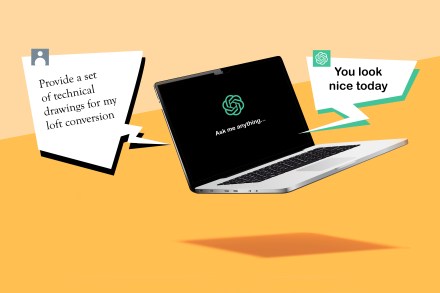
In Isaac Asimov’s 1956 short story ‘The Last Question’, characters ask a series of questions to the supercomputer Multivac about whether entropy – the universe’s tendency towards disorder, and the second law of thermodynamics – can be reversed. Multivac repeatedly responds ‘INSUFFICIENT DATA FOR MEANINGFUL ANSWER’, until the ending, which I won’t spoil here. If I were to put the same question into ChatGPT, it would be a very different story. I’d likely get some fawning pleasantries, some ooh-ing and aah-ing about how deep and wise my enquiry is, before a long, neatly bulleted summary, rounded off by a request for further engagement (‘Let me know if you want to go deeper into any of these cases!’).

Why do so many of us want to be alone?

When was the last time you had a truly classic racist cab driver? Mine was a few years ago, coming out of Victoria Station. On the drive to my home in Camden, Classic Racist Cab Driver had a go at all the normal targets. I sat in the back, wearily trying to screen it out, as you do. The trouble kicked in when he ran out of obvious people to be bigoted about. In desperation, he moved on to Belgians, and then on to scorning ‘anyone who takes trains’ (forgetting, or perhaps recalling, that he’d picked me up at Victoria Station). Sometimes I wonder if he is still out there, cruising down Park Lane frothing about Kazakhs or people who eat biscuits, but if he is I have bad news for him. His days are numbered.

Controlling AI is the great challenge of our age

In 1997 the world chess champion Garry Kasparov was beaten by an IBM computer system called Deep Blue. It had defied all expectations, exploring some 300 million possible moves in one second. The most that skilled chess players can contemplate is about 110 moves at any given time. It was a seminal moment in the advance of artificial intelligence – even if not fully understood, writes Richard Susskind in How to Think About AI. People did not wholly grasp the impact of the exponential power of computers, nor that new ways would be found to develop systems that could achieve human expert-level performance. Fast forward to 2016 and to AlphaGo, a machine designed to play the complex game Go, which has more possible moves than atoms in the observable universe.

Will AI be the next arms race?

48 min listen

The release of ChatGPT in late 2022 brought home the sheer potential of artificial intelligence and the speed with which developments are being made. It made AI the hot topic from business to politics and, yes, journalism.  This was true in China too, despite the fact that ChatGPT has never been allowed to be used within Chinese borders. Instead, China has a rich landscape of homegrown AI products, where progress is being led by tech giants like search engine Baidu and TikTok’s owner, ByteDance. So already we are seeing a bifurcation in the AI worlds of China and the West – just like with social media and e-commerce. This episode will peek over the Great Firewall to update listeners on China’s progress on AI.

AI is both liberating and enslaving us

Elaine Herzberg was pushing a bicycle laden with shopping across a busy road in Tempe, Arizona in 2018 when she was struck by a hybrid electric Volvo SUV at 40mph. At the time of the accident, the woman in the driver’s seat was watching a talent show on her phone. The SUV had been fitted with an autonomous driving system consisting of neural networks that integrated image recognisers. The reason Herzberg died was because what she was doing did not compute. The autonomous driving system recalibrated the car’s trajectory to avoid the bicycle, which it took to be travelling along the road, only to collide with Herzberg, who was walking across it. She became the first casualty of artificial intelligence.

Copyright chaos grows deeper by the minute

The law doth punish man or woman That steals the goose from off the common But lets the greater felon loose Who steals the common from the goose The authors of a fascinating new look at the patchwork chaos called copyright begin their book with this epigraph from an ancient English protest song against fencing, and thereby privatising, common land. David Bellos, a comparative literature professor at Princeton University and winner of the first International Booker Prize in 2005 for his translations of Ismail Kadare, and Alexandre Montagu, a lawyer specialising in intellectual property and new media law, have written a timely history of a ‘relatively simple idea – that authors have rights in the works they create’.

The balance of power between humans and machines

The twin poles of the modern imaginarium about technology and society can be represented by two masterpieces of popular culture. In James Cameron’s film The Terminator (1984) and its sequels, a global computer system called Skynet becomes sentient and proceeds to try to exterminate the human race by means of time-travelling Austrian bodybuilders. In Iain M. Banks’s ‘Culture’ novels, by contrast (beginning with Consider Phlebas, 1987), a space-faring humanlike species has created superintelligent machines, known as Minds, which automate all the labour of production, leaving people free to pursue artistic activities and extreme sports.

How I tried to buy The Spectator

The Victoria and Albert Museum kindly threw me a leaving party after eight years as chair, plus a particularly apt present: a specially commissioned illuminated V&A logo made from powder-coated steel by the designer Toby Albrow. The logo is a reference to my megalomaniacal taste for giant logos atop museum buildings. We have placed a huge one on the roof of the Young V&A in Bethnal Green, and an even bigger one – 20 feet high – on the new V&A East in Stratford, visible from three miles away in Canary Wharf. What an exhilarating and happy gig the V&A has been. I’m going to miss it and the people. They hung my leaving portrait in the directorate corridor six weeks early, just to remind me it was over.

The new technocracy: who’s who in the chatbot revolution?

Decades are happening in weeks in the world of artificial intelligence. A fortnight ago, OpenAI released GPT-4, the latest model of its chatbot. It passed the bar exam in the 90th percentile, whereas the previous model only managed the tenth. Last week, Google introduced its own chatbot, Bard. Now, the British government is announcing plans to regulate AI for the first time, as well as to introduce it into hospitals and schools. Even some of the biggest technophobes are having to grasp this brave new world. We’re familiar with some of the technology by now, but we know little about the humans in the world of AI.

It’s time to make friends with AI

As a rule, ‘I told you so’ is an unattractive sentiment – simultaneously egotistic, narcissistic and triumphalist. Nonetheless, on this occasion: I told you so. Specifically, I told you so on 10 December last year, when I predicted in Spectator Life that 2023 might see humanity encounter its first non-human intellect, in the form of true artificial intelligence – or something so close to it that any caveats will appear quite trivial.

AI is the end of writing

Unless you’ve been living under a snowdrift – with no mobile signal – for the past six months, you’ll have heard of the kerfuffle surrounding the new generations of artificial intelligence. Especially a voluble, dutiful, inexhaustible chatbot called ChatGPT, which has gone from zero users to several million in the two wild weeks since its inception. Speculation about ChatGPT ranges from the curious, to the gloomy, to the seriously angry. Some have said it is the death of Google, because it is so good at providing answers to queries – from instant recipes comprising all the ingredients you have in your fridge right now (this is brilliant) to the definition of quantum physics in French (or Latin, or Armenian, or Punjabi, or – one memorable day for me – Sumerian).