Central America

Why did Spain leave behind such terrible food?

From our US edition

I can still remember it: probably the worst seafood dinner of my life. A slice of fish that was simultaneously cold, hot, dry, crumbly and rubbery, surrounded by overcooked vegetables and accompanied by a mysterious whiff of cigarette smoke. It was so repellent that even though I was famished, I summoned the waiter, returned the dish and retired to my room, there to endure a dinner of Pringles from the minibar. What made it worse was that I was in a celebrated fishing port. All I had to do was look out the window and I could see trawlers bringing in some of the world’s finest fish from some of the planet’s richest seas. It was dismaying, saddening, deflating and left me starving. What it was not, however, was surprising.


Spanish

A war reporter bravely faces death – but not from sniper fire

When you are a foreign correspondent and have covered wars in dozens of countries, the last place you’d expect a threat to your life to come from is your own cells. Yet this was the predicament in which the New York Times reporter Rod Nordland found himself in July 2019. Despite close shaves in Lebanon, Iraq, Afghanistan, Central America and Darfur, he only really became aware of his mortality after collapsing with a seizure in India and discovering the existence of a ‘space occupying lesion’ (SOL) in his brain – a euphemism for a growth, benign or malignant. On transfer to a hospital in Manhattan, Nordland learned that his was a stage 4 glioblastoma multiforme, a primary brain cancer with a poor prognosis.

What would securing the border actually look like?

From our US edition

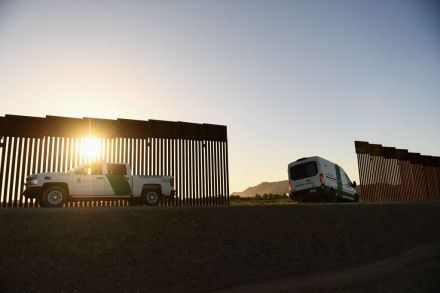
It's always easier to break something than to build it. Joe Biden broke the immigration control system that he'd inherited from Donald Trump and that had been built up over several administrations of both parties. Rebuilding it after Biden's vandalism will take time. Even if Republicans win the majority in both houses of Congress in November, it will take a change in administration before any real reconstruction can begin. With more than 2 million "encounters" with illegal border-crossers over the past year, more than any year in history, restoring order may seem like an insuperable task. But as we saw right after Trump's election and during the first months of his presidency, a simple expression of will can have a huge influence on prospective illegal aliens and their smugglers.

How the border crisis could define Biden’s presidency

From our US edition

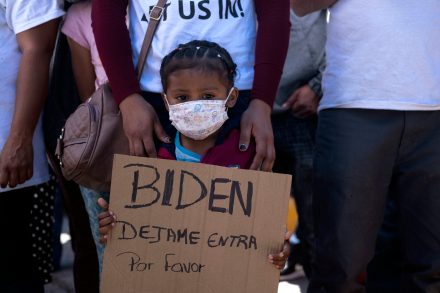
Joe Biden has spent his first couple of months in office enjoying what his predecessor never had: a presidential honeymoon. Americans have rewarded Biden with early approval ratings of 60 percent or higher. He may be benefiting from the inevitable diminishing of the coronavirus as cases decline and more states reopen. Or the public may simply be relieved to have a president who isn’t perpetually in the spotlight, even if he doesn’t always seem aware of the fact he is president. But no honeymoon can last too long, and Biden’s is coming to an end at America’s southern border, where a crisis is escalating. Eighty thousand people tried illegally to cross the border in January, double the figure of a year ago. In February, nearly 100,000 did the same.

border crisis

If you don’t believe in borders, should you be deciding US immigration policy?

From our US edition

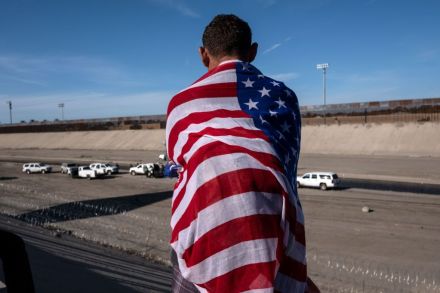
As the teeming mass of mostly male, partly criminal, humanity stews about on Mexican side of our Southern border, entertaining itself by throwing rocks at US border officials, emoting for CNN cameras, and periodically rushing the fence in an effort to break through to America, it is worth stepping back to ask a few large questions. But first, let’s step out of the rancid pool of sentimentality with which the media, in its anti-Trump frenzy, has surrounded this episode.

immigration border

The caravan of the saints

From our US edition

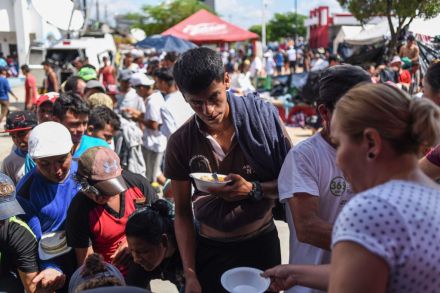
You can feel the excitement in Fox News’s reports that a DHS spokesman, backing the claims that Trump has now walked back, has confirmed that the migrant caravan that has just entered Mexico includes ‘gang members’ and people with ‘significant criminal histories’, as well as people from the Middle East. How hot and uncomfortable they must be, walking all that way in an explosive vest. You can feel the disappointment in CNN’s report that by November 6, the migrant caravan ‘could still be somewhere in the middle of Mexico’, and well short of what CNN recommends as the ‘safest route’, to San Diego via Tijuana.

migrant caravan honduras food