Ccp

How China meddles in American academia

From our US edition

"Congress has dropped language from a must-pass bill governing US defense policy that would have effectively prevented US scientists from participating in Chinese programs aimed at attracting foreign scientific talent,” reported Science, the journal of the American Association for the Advancement of Science (AAAS) in December. The journal cautions, however, that the provision may reappear in another bill. The AAAS is the most authoritative voice for American scientists. It has generally opposed any restrictions on relations between US academics and China, and favored the US government’s stepping back from investigating and prosecuting scientists for lying about their service to China.
china ccp

The BBC’s mysterious missing Xinjiang evidence

Parliament has packed up for the holidays, with MPs and peers spending their final days in SW1 desperately dodging the omnipresent Omicron variant. But Mr S was intrigued to see an interesting intervention in the Lords on the day that recess was declared. Crossbench peer Baroness Finlay popped up to grill Foreign Office minister Lord Ahmad about China's treatment of Uighurs in Xinjiang, an unusual topic for the professor of palliative medicine to raise.  She told Ahmad that she understood the BBC 'has film evidence of the atrocities' that have been addressed in the Uyghur Tribunal, but that the Corporation has been 'reluctant to show the programmes to date, having set the evidential test so unrealistically high that it cannot be met.

Ending our corporate dependence on China

From our US edition

In the toxic world of American politics, the bipartisanship showed by the House of Representatives last week in overwhelmingly passing a bill to stop the import of Chinese products made with forced labor from Xinjiang is a rarity. The 428-1 vote on the Uyghur Forced Labor Prevention Act, the second in as many years, is the clearest indicator yet of how a new era in American relations with the People’s Republic of China (PRC) is developing. It's one where national security and moral concerns find common ground in opposing the oppressive and predatory policies of the Communist Party of China (CPC).

taiwan china

China’s obsessive attempts to subvert the West

Most people who think themselves well informed know little or nothing about China. They – or I should say ‘we’ for I am just as ignorant – understand what the CIA and FSB are, and what they want. But what is the CPAFFC, and, if it arrives in your neighbourhood, should you worry? How about the United Front, the ‘magic weapon for strengthening the party’s ruling position,’ in the words of Xi Jinping? What does it do and why does China’s dictator praise it so? I am back from the last place I expected to learn about the Chinese Communist Party: the Budapest Forum, a conference of progressive European mayors in Hungary.

China tightens its grip on Cambridge

The revelations this week of the alarming influence of Huawei within the Cambridge Centre for Chinese Management provide the latest evidence of the tightening grip of China on Britain’s leading university. The Times reports that three out of four directors of the centre — part of the university’s Judge Business School — have ties to the telecoms giant, which has close links to the Chinese Communist party. The centre’s ‘chief representative’ is a former vice-president of the company who has been paid by the Chinese government. An honorary fellow of the centre wrote a book praising Huawei’s ‘ability to transform the intellectual elite into a band of soldiers with the same set of values and resolve'.

Who can take on China in the tech arms race?

The government’s decision to water down new foreign investment rules designed to protect national security casts serious doubt about its resolve to keep China out of the most sensitive parts of the British economy. Raising the threshold above which an overseas stake must be examined from 15 per cent to 25 per cent will sharply reduce the number of deals facing scrutiny. The amendment to the National Security and Investment Bill, now wending its way through parliament, was presented by business secretary Kwasi Kwarteng as necessary to show Britain is still ‘open for business’.

Why fear a society that’s tearing itself apart?

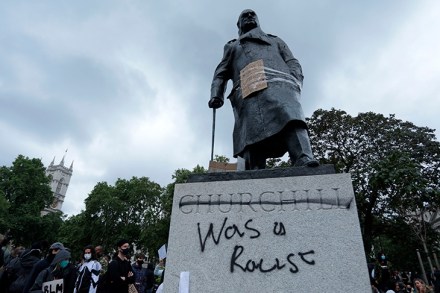
In my teens, rubbishing the implacable edifice of the United States felt like kicking a tank in trainers. Richard Nixon’s ‘silent majority’ was patriotic. Railing about my country’s disgraceful historical underbelly — slavery, the Native American genocide — seemed edgy. Fast-forward, and in the West trashing your own country has become a central preoccupation of the ruling class. University administrators, corporate board members and media pundits compete with one another over who can denounce their disgusting society with more fervour. Shame, or what passes for it, is the new ostentation. America’s own President decries his country’s ‘systemic racism’.

Beijing revels in Washington’s chaos

The events on Capitol Hill were always going to be met with schadenfreude — perhaps even glee — amongst autocracies in one-party states. They suddenly had the best ammunition they could have hoped for. From Turkey and Zimbabwe to Russia and Iran, state media and spokespeople latched on, turning the language often thrown at them back at America — calling for ‘restraint’ and ‘dignity’. For the Chinese government, which has been no stranger to violent mass movements in recent years, the analogy was obvious. Hong Kong’s legislature had been stormed just last year, with pro-democracy activists forcing their way into the building and vandalising the walls with anti-Beijing slogans.