Cancel culture

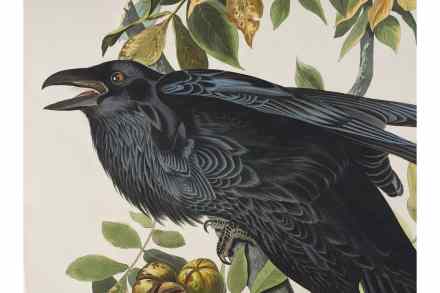
It’s a miracle this exhibition even exists: Audubon’s Birds of America reviewed

From our UK edition

In 2014, an exhibition of watercolours by the renowned avian artist, John James Audubon, opened in New York. The reviews, from the New York Times to the Guardian, were unambiguously enthusiastic, celebrating the painter as a legendary genius who ‘exceeded the limits of his era’. Fast forward eight years, and a rather different vibe hangs over the latest outing of his bird portraits, one that reflects both the limits of that era and the limits of the man. Visitors to the National Museum of Scotland’s Audubon’s Birds of America are welcomed with an acknowledgment that the artist was ‘full of contradiction and controversy’. His charge sheet is substantial.

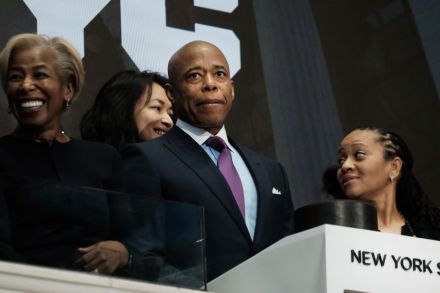
New York City’s desperate attempt to lure Floridians

In his latest desperate attempt to prove that New York is “back,” the city’s hapless mayor Eric Adams has taken a hysterical potshot at Florida — a much happier jurisdiction to where many of his constituents have had the good sense to move. Adams announced that private funds made available to his cash-strapped city would be used to place billboard and digital ads in five booming Florida markets: Jacksonville, Orlando, Tampa, West Palm Beach and Fort Lauderdale. These ads invite Floridians to “come to a city where you can say and be whoever you want.” The jibe is directed at Florida’s recently approved Parental Rights in Education bill, which prohibits instruction in sexuality and gender identity for children from kindergarten through third grade.

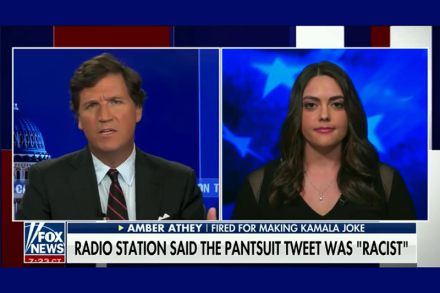
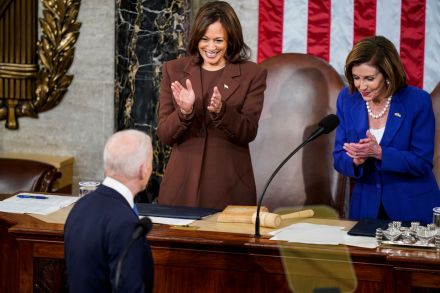
I was fired for a joke about Kamala Harris’s outfit

I am no stranger to cancel culture — or what we know more commonly (and accurately, in my opinion) as censorship. When I was one of a handful of conservatives on a liberal college campus, my peers on the left reported me to our resident advisor for "creating an unsafe environment" and demanded the administration step in to cancel speaker events I hosted through the College Republicans. They later would ask the university to revoke my degree. Throughout my six years as a political journalist and commentator, left-wing activists have tried every trick in the book to drive me out of the industry: digging up old tweets, demeaning my appearance and harassing my employers. None of it has worked... until now.

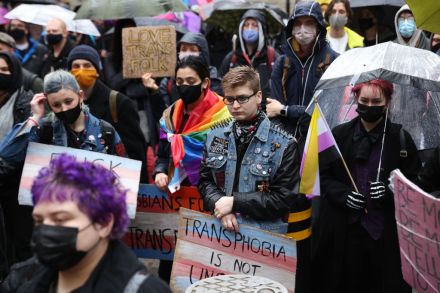
cancel culture

There’s nothing ‘pro-trans’ about deleting women

I can pinpoint the moment I knew I wouldn’t be able to remain, as I had thought of myself until that time, “pro-trans.” I had grown up in 1990s New York City and had known many gender-bending people. Very few called themselves “trans,” but androgyny was in. Drag queens ran the club scene. “Girls who want boys/Who like boys to be girls/Who do boys like they're girls/Who do girls like they're boys,” the 1994 Blur song went. What was the big deal about being a girl who wanted to look like a boy or a boy who wanted to present as a girl? No one was hurting anyone. You like red lipstick, that boy likes wearing a dress. Who cared? I certainly didn’t. It was the early 2000s, the heyday of the blogosphere, and the comment sections were lit.

Are cancel-culture activists aware of their sinister bedfellows?

From our UK edition

Is there a woke case to be made for freedom of expression? Jacob Mchangama certainly seems to think so. This 500-page door-stopper, which combines a history of free speech with a persuasive case for its defence, is aimed squarely at snowflakes and social justice warriors. Mchangama deals patiently and methodically with all the objections they might make to ‘the first freedom’ and then tries to convince them it’s in their interests to defend it. Take the assumption that untrammelled free speech perpetuates current inequalities, favouring the privileged and penalising the disadvantaged.

Cancel culture gets its comeuppance

Cancel culture has struck again, but this time its would-be victims aren’t apologizing. The Daily Mail — a publication notorious for being “free” with its own speech — is leading the anti-cancel culture charge this month with a series of stories that point to an encouraging trend. A handful of prominent creatives are standing up to woke bullies and noting the dangers (and impracticalities) of their demands, which essentially amount to writers and entertainers forsaking their imaginative talents by only addressing things they’ve personally experienced. Except they aren’t supposed to be candid about those things, either, as they might offend someone if they’re too honest.

When Harvard canceled a black professor

Roland G. Fryer is a tenured professor of economics at Harvard — an anointed member of the elite by most definitions. He is also black, widely published and the recipient of numerous awards, including a MacArthur “genius” grant for his work on the black “achievement gap” in grade school. Fryer was a student of Nobel laureate Gary Becker and a close associate of other economists who focus on rigorous analysis of empirical data. That's led him to observations that were a bit unsettling to higher education orthodoxies. For example, Fryer found that the academic achievement gap accelerates between kindergarten and eighth grade. He also found that controlling for a few variables, the initial disparity disappeared.

Joan Collins

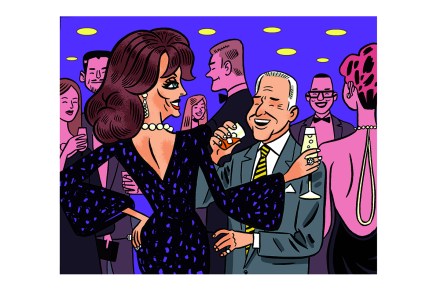
Hollywood, fist-fights and getting canceled

Introductions Scene: a drawing room in London. When the recording starts, Taki is already mid-anecdote... Taki: I was sent out to Monte Carlo to speak to Roger Moore. The Spectator offered to pay all my expenses. I said thank you, I’ll pay my own. I went and had a terrific drunken dinner with Roger who really spilled the beans, cos we were buddies. I came back. The tape was empty because I’d never turned the recorder on. Joan: I’d known Roger since I was fifteen, because my father was a big agent in London and I came back from school — oh, fourteen actually, because I left school at fifteen — and there’s the most gorgeous man I’ve ever seen standing there. He came over and said, “How do you do? You must be Joan, my name is Roger Moore.

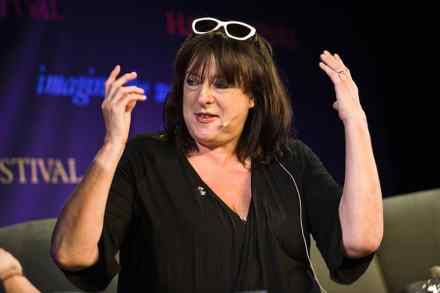
Julie Burchill has found a new way to provoke: she’s turned sincere

From our UK edition

The greatest ever social media spat took place before the first tweet was sent, and was conducted via fax, which was like email but with the satisfyingly tangible tear of a fresh missive just arrived from across the planet. It was early 1993 and Julie Burchill, then of the Modern Review, was locked in a war with Camille Paglia, then of any US talk show you cared to tune into. The conflict began with a disobliging review Burchill filed of Paglia’s Sexual Personae, before shifting to the Xerox front, where Paglia made the mistake of questioning her interlocutor’s working-class credentials. Burchill brought hostilities to an abrupt close with her final communiqué, which read in toto: ‘Dear Professor Paglia, Fuck off, you crazy old dyke. Always, Julie Burchill.

Peter Boghossian’s fight for freedom

The prospect of my meeting with Peter Boghossian seemed to have angered the gods, so furious was the disruption to road and rail as I tried to make my way from Seattle to Portland. Torrential rain and flash floods summoned a ricochet of mudslides which abruptly terminated my Amtrak journey in Centralia, a middle-of-nowhere town in Washington State. There was no rail in either direction for at least forty-eight hours, no buses and seemingly just one Lyft — which I managed to slip into an hour later with a few other stranded passengers. Or perhaps it was the anger of very particular gods that rule over the Pacific Northwest, that hotbed of wokeness so concentrated you can feel it like toxic humidity in the air.

boghossian

When did artists become the mob?

From our UK edition

‘The mob’s going to want a chicken to kill and they won’t care much who it is,’ wrote John Steinbeck. ‘Why don’t people look at mobs not as men, but as mobs? A mob nearly always seems to act reasonably, for a mob.’ I’ve been thinking about those words in recent days as more ‘cancelled’ headlines fill the news. I was a co-founding member of the band Mumford and Sons, which I quit last year. I praised a book critical of far-left extremism in the United States and all hell broke loose, so I decided better to leave my band and save my bandmates the trouble. Better that than stay and self-censor.

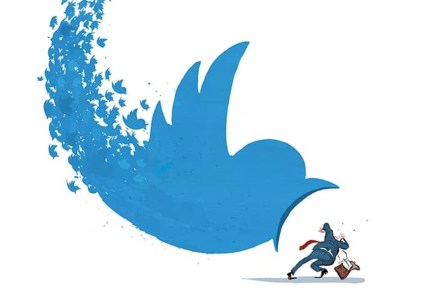
Twitter has taken the place of the ancient curse-tablet

Twitter and other easily accessible means of online communication have encouraged the public to believe that Their Voice Will Be Heard. When it isn’t, they express their frustration through abuse and threats or by blocking roads. In this way, the mentality of the ancient curse-tablet lives on. In the Ancient world, the purpose of the curse was to “bind” the person you disliked — i.e. frustrate them from achieving the end they wanted and you did not. It was written on a thin lead plate, rolled up tight, sometimes twisted (to “hobble” the victim) and pinned (to constrain him), then placed into the tomb of someone who had died before his time. The belief was that the dead man, resentful of his early demise, would be happy to enact the curse against the named victim.

curse-tablet

What Norman Mailer’s ‘cancellation’ reveals

From our UK edition

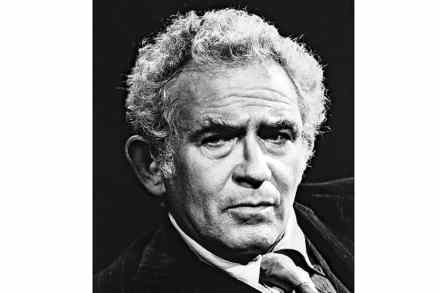
New York Recently a story about my father, the writer Norman Mailer, getting ‘cancelled’ tore across the internet. What started the hoopla was Random House, Mailer’s long-standing publisher, suggesting that his estate bring a proposal for a book. The book was to contain excerpts from several of his political writings and interviews in which he presciently laid out the fragility of democracy. The collection was intended to honour his centenary next year. Random House received the proposal favourably, but then weeks later declined to publish it. The reasons are hearsay. One suggestion is that there were objections by junior executives to the use of the word ‘negro’ in Mailer’s essay ‘The White Negro’.

Robert Harris on Boris Johnson, cancel culture and rehabilitating Chamberlain

From our UK edition

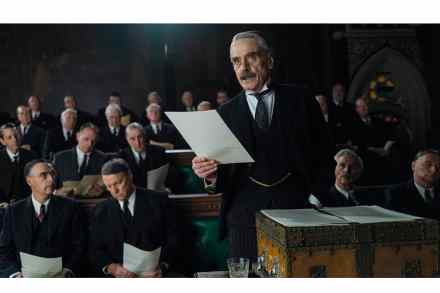
Robert Harris has long been on a one-man crusade to reverse history’s negative verdict on the architect of appeasement. He argues that it was Neville Chamberlain’s duty to go the extra mile for peace and give Britain the moral authority to fight Hitler in the second world war. ‘There seems to be a general feeling that he couldn’t have done much else. He bought us precious time.’ Now the appearance of an acclaimed Anglo-German Netflix film Munich — The Edge of War, starring Jeremy Irons as Chamberlain, and based on Harris’s 2017 novel Munich, gives him the chance to bring his quixotic campaign to a mass audience.

The mind virus killing academia

From our UK edition

We lost a giant last month with E.O. Wilson’s passing. A man who stood on Darwin’s shoulders, Wilson had that rare distinction of inspiring a whole discipline in the form of evolutionary psychology. The great sense of loss did not seem to be shared by Scientific American, however, which soon afterwards put out a piece reflecting on the ‘complicated legacies of scientists whose works are built on racist ideas’. Among the ‘problematic’ aspects of Wilson’s work, the author argued, was the ‘descriptions and importance of ant societies existing as colonies’. This was ‘a component of Wilson’s work that should have been critiqued’ because ‘context matters’.

Marjorie Taylor Greene’s Twitter ban is nothing to celebrate

From our UK edition

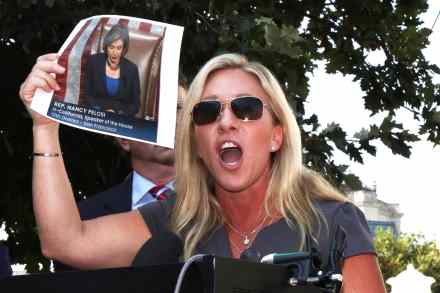
Marjorie Taylor Greene is nuttier than M&M World. Not your garden-variety conservative, or even a conservative at all, but a conspiracy theorist who rode these febrile times into a seat in Congress. She describes American Airlines Flight 77 as ‘the so-called plane that crashed into the Pentagon’ on 9/11, remarking that ‘it’s odd there's never any evidence shown for a plane in the Pentagon’. She suspects the 2018 California wildfires were started by a Rothschild-funded ‘laser beam or light beam coming down to Earth’ in order to help Democrats build a high-speed rail project. Her Facebook account has liked a post proposing ‘a bullet to the head’ for Nancy Pelosi.

Why I love to be hated

From our UK edition

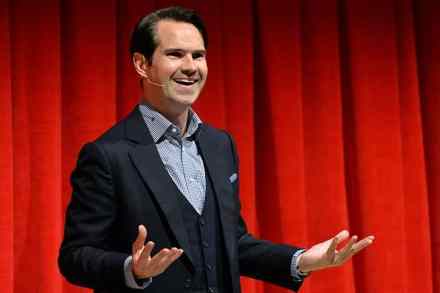
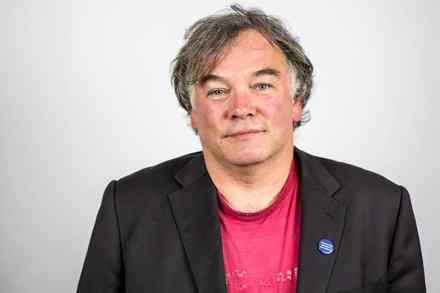
I’ve never been keen on the idea of popularity. Courting disapproval has been a large part of my career and I find it bracing, like an early dip in a cold sea. I remember back in 2003 feeling put out because the Most Hated People In Britain list featured me at a mere 85, sandwiched between Damien Hirst and Richard Branson. So imagine my excitement this week on reading that the alleged comedian Stewart Lee had dispatched me into his New Year Pedal Bin, a list of his least-favourite people, alongside such chucklesome types as Ricky Gervais, John Cleese, Graham Linehan, Maureen Lipman and Dave Chappelle.

The Colston verdict is the triumph of values, not law

From our UK edition

The verdict is in on the case of the Colston statue in Bristol. Not guilty. Every one of the accused is innocent. And I mean that: everyone is innocent until proven guilty. If found not guilty, they must — at all times — have retained their innocence. But something feels wrong. Eminent lawyers have described the verdict as both absurd and perverse. In the UK we ‘relate’ to law. We aren’t taught it in schools. Our parents, teachers, instead introduce it to us by osmosis. We have a feel for it, a grasp of it. We might have felt we knew what criminal damage was, and we might have felt that pulling down a statue was wrong. That turns out to be an error.

Country music drowns out cancel culture

They got him! Another prominent white male called out by the mainstream media for being racist has had his career destroyed, tossed down the memory hole, never to drawl about beer, trucks, or girls ever again! Or did they? In January 2021, the 28-year-old, mullet-rocking, cutoff flannel shirt-wearing, small-town Tennessee country music star Morgan Wallen arrived home late at night (or early in the morning?) with his friends and yelled by means of farewell to one of them, “Take care of this p****-ass mother******  — Take care of this p****-ass n*****.

reformation

The Tudor roots of wokecraft

In January 2019, I received an email from an administrator at Georgetown University, where I was a graduate student. She and my department chair wanted to meet with me to “discuss concerns that have been raised by some of your peers about classroom comments and behavior.” This meeting, they told me, would “function as the start of a conversation.” They didn’t say where the conversation might lead. I concluded that the next step would be a formal disciplinary hearing. I was terrified. Three-quarters through a two-year program, I was in danger of being forced to leave without a degree. And for what? I scanned my memory for deviant statements. There were a few: I’d alluded in print to certain essential biological differences between men and women.