Cancel culture

My Epstein confession

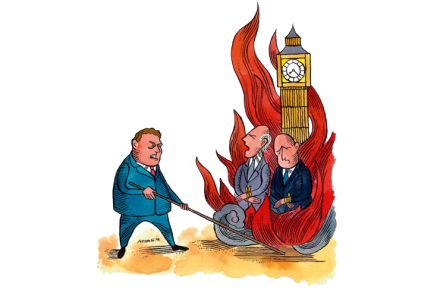
As the flames of the Epstein Inquisition burn higher, let me get my general confession into the public domain before the guardians of public morality come for me. Here begins my deposition. I, Matthew Francis Parris, do solemnly confess that I know slightly and have been on mostly friendly terms with former British ambassador to the US Peter Mandelson; and continue to believe him to have been a far-sighted force in the creation of a sane and successful Labour government such as we so notably lack now. I CONFESS: that I know former prime minister Sir Tony Blair, who knows Lord Mandelson, who knew Jeffrey Epstein, and appointed Mandelson to high office in the last century.

epstein

Remembering Scott Adams

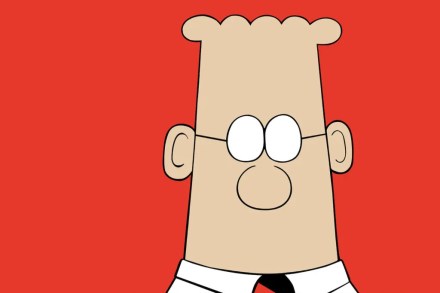
Dilbert taught me how to read. Stacked perilously high – between Calvin & Hobbes and The Far Side – in my childhood home’s bathroom, Scott Adams’s cartoon provided the perfect reading material for the porcelain throne. Even before I knew what most of the words meant, I’d belly laugh at page after page of banal workplace humor. This is bizarre: why, as a preschooler, was I so tickled by these jokes about human-resources departments and fax machines? Adams, who died in the night, enjoyed more than a three-decade run as honcho of the funny pages, starting in 1989.

Woody Allen’s first novel takes on cancel culture

Say what you like about the actor, director and writer Woody Allen – and people have undeniably been known to – but it takes a certain amount of gall to publish your first novel at the age of 89. Not that Allen doesn’t have form in this regard: he has brought out five collections of short stories, most recently 2022’s Zero Gravity and a 2020 memoir, Apropos of Nothing, which was greeted with horror by the publishing industry and literary critics alike. The New York Post described it as one of “the most tone-deaf, disgusting, bitter, self-pitying, horrifically un-put-downable memoirs since Mein Kampf.

woody allen

Kimmel makes the case for free speech

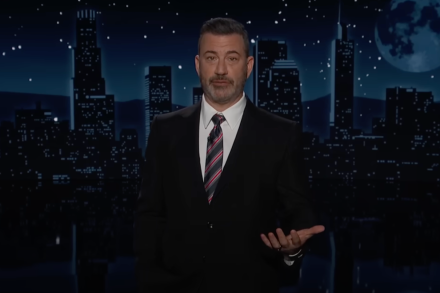
After a few days in politically-induced time out that felt like a decade, Jimmy Kimmel made a triumphant return to late night TV on Tuesday. “I’m not sure who had a weirder 48 hours,” he said. “Me, or the CEO of Tylenol.” Given that Tylenol is a brand name and has no actual CEO, let’s say Kimmel, who Disney/ABC pulled off the air last week under political pressure from station ownership and the chairman of the FCC after he made a bad-taste joke about Charlie Kirk’s assassin.  Kimmel suddenly became the most famous man in America not named Donald Trump, and his audience met his return with a roaring standing ovation, chanting “Jimmy! Jimmy! Jimmy!

Kimmel

The mechanics of cancel culture

Must we approve of an author’s private life in order to enjoy his or her books? Possibly not, to judge by the continuing popularity of writers as diverse as Charles Bukowski, Allen Ginsberg, P.L. Travers, Roald Dahl and Norman Mailer, to name but a few of those whose domestic affairs have fallen short of the temperate or monogamous ideal. And what of the sage of Cornish, J.D. Salinger, most of whose interactions during his long years of New Hampshire exile involved hanging around with local teenagers? In 1972, a fresh-faced journalism student named Joyce Maynard left college and went to live with the 53-year-old author of The Catcher in the Rye at his invitation. After eight months, she was unceremoniously dumped.

Bailey

Is Shiloh Hendrix the new Luigi Mangione?

When a white mom called a black kid the N-word the immediate expectation was that she’d be canceled, possibly arrested. It was not that just a few days later she would have $700,000 in the bank.Shiloh Hendrix accused a five-year-old Somali boy of rummaging through her diaper bag in Rochester, Minnesota, last week. “Did you call that child the N-word,” a man who filmed her asked. “Yeah,” Shiloh snarled back, “if he’s gonna act like one.”She didn’t back off. She repeated the accusation, then turned on the man filming her with a string of insults. The video quickly went viral. But Shiloh didn’t follow the usual playbook of hunkering down to weather the online storm. She fought back. On GiveSendGo, Shiloh painted herself as the victim.

shiloh hendrix

Harry Sisson and trial by TikTok

This week, a story emerged about a dozen or so young women who each thought they were monogamously dating 22-year-old Democratic influencer Harry Sisson, albeit digitally. The 11 women, all around the same age as Sisson, claim that he had convinced each of them separately that they were the only woman on his “roster”; that they were the only women he was speaking to. He spoke to many of them for months at a time, with the conversations often being erotic in nature. Nudes were exchanged. But while each woman claims they believed to be the only person Sisson was doing this with, via social media, they have now come to learn that this wasn’t the case – he’d been flirting and sexting with several women at a time.

harry sisson

Who is Katherine Long?

Marko Elez. If that name means anything, you might spend a little too much time on the internet. Elez is a whizz kid at DoGE, the newly minted Department of Government Efficiency, which is currently taking a flamethrower/bazooka/heavy weapon of your choice to whole departments of the federal government. Cue much wailing and gnashing of teeth from politicians, journalists and common-garden liberals everywhere. On Thursday, a Wall Street Journal article uncovered some embarrassing tweets Elez had made on an anonymous account, and he was forced to resign his post. What Elez said was no doubt offensive to some — “I was racist before it was cool,” “You could not pay me to marry outside my ethnicity,” “normalize Indian hate” — but isn’t that always the way?

elez

Coercion and coddling take campus

On October 7, 2023, I was the chairman of the political science department at a large public university, but not for long. I did what I presumed universities are for, encouraging students to talk with professors about big questions and important issues of the day. So on October 18, I held a faculty-student discussion with a Middle East expert. I opened the event by stating some facts: that a terrorist organization committed to the death of Jews had attacked Israel, raping and murdering many young people at a peace concert and seizing hostages. I said that these events raised deep moral questions about what should be done in response, regarding the destruction of Hamas and the fate of thousands of noncombatant Palestinians. Discuss. The discussion did not go well.

campus

Yes, Will Smith is still a movie star

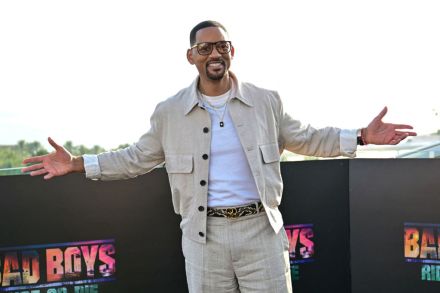
If you were standing somewhere around Hollywood today, you would hear a long, deep exhalation. The new Bad Boys film, snappily subtitled Ride or Die, has indeed ridden, rather than expired, at the US box office. It grossed $56 million in its opening weekend — and not only is this the highest opening for an R-rated film since Oppenheimer nearly a year ago, but it indicates that in a summer where blockbusters have been routinely un-performing (Furiosa and The Fall Guy may have been critically acclaimed, but it looks unlikely either will cover their considerable production costs), there is still hope for a crowd-pleasing action film that appeals to a wide audience. Yet the film’s success was also a quasi-referendum on the pulling power of its leading man.

will smith

Nellie Bowles critiques progressivism and the media that covers it

One of many fascinating things to be learned from Morning After the Revolution: Dispatches from the Wrong Side of History, by former New York Times correspondent Nellie Bowles, is the process by which someone gets canceled. I was of course familiar with the concept of cancel culture and figured it meant blackballing the wicked, but I’d never gotten a clear idea of how the thing was actually done. On the evidence of Bowles’s book, it means going on Twitter (OK, X) and posting derogatory tweets (X-pressions, whatever) about the offending party contemporaneously with others doing the same thing.

Bowles

X and the return of the social-media sandbox

Elon Musk’s X, the social media site once known as Twitter, is a wasteland. It consists of uncontrolled pornography, crypto spambots, broken “mentions,” unpaid invoices for subscriptions, a useless search algorithm and unverified accounts spreading baseless conspiracy theories and being financially rewarded for juicing controversial or untrue content. It has become practically unusable as a functioning social media platform. But old Twitter, after what it had become, had to be absolutely and unequivocally destroyed for the sake of the future of open online discourse. The Jack Dorsey-Parag Agrawal iteration of Twitter had become part of an intelligence and corporate media censorship apparatus, which would spring into action against any user it viewed as an ideological opponent.

X

The loss of Joss Whedon

Cheerleaders save the world. Vampires gain souls. Ellen Ripley comes back to life as a half-alien. In the case of Willow Rosenberg, Buffy the Vampire Slayer’s geeky, lesbian BFF, she’s a good witch one year, Southern California’s equivalent of the Wicked Witch of the West the next, and only a year later, the key to stopping an apocalypse. One season, you’re good; the next, you’re bad; then, finally, you’re the savior. This is the world Joss Whedon envisions across six television shows (Buffy the Vampire Slayer, Angel, Firefly, Dollhouse, Marvel’s Agents of S.H.I.E.L.D.

Whedon

Shane Gillis and the year cancel culture dies

The news that comedian Shane Gillis is walking back into 30 Rock to host Saturday Night Live this month isn’t just a great moment for comedy or a testament to how much America loves a comeback story. It’s also a definitive moment in the history of cancel culture — a live representation on national television of how much the media’s power to achieve personal destruction has diminished. Gillis was by no means a famous comedian when he was chosen for the SNL cast five years ago, but the media (aided by some jealous comics) did successfully make him infamous within the space of a week. The story is familiar to everyone by now, but rather than hang his head and walk away from comedy, Gillis battled back by being really, really outrageously funny.

shane gillis

Sean Young has lessons to share

The year was 1991. Actress Sean Young was trending — which in the Nineties means tabloids were dumping on her. The scandal: she barged onto the Warner Bros. lot dressed as Catwoman for an audition for Batman Returns. Two years earlier, Young was set to play Batman’s love interest in the first film, but she fell off a horse on set, fracturing her shoulder, so director Tim Burton replaced her with Kim Basinger. Young believed she deserved an audition for the sequel’s villain. After all, she was Sean Young. She played Chani in David Lynch’s original Dune (a role a not-yet-born Zendaya would reprise in a remake). She made love to future Yellowstone star Kevin Costner in No Way Out.

sean young

Morgan Wallen bests the mob, again

It’s officially Spotify Wrapped season! For the uninitiated, this is the time of year when Spotify subscribers receive their year-end data on what they listened to the most throughout the previous twelve months. The streaming app tells you your top songs, artists, albums, genres and any other cookie they’ve been tracking. Every user’s Spotify Wrapped is packaged up nicely into an immensely shareable infographic that dominates social media for days. I do not share mine because my music listening habits when no one is watching are completely embarrassing! But a lot of people do, usually to show how cool or niche their music or podcast tastes are.

Cancel culture comes for two new victims

A couple of weeks ago my husband and I plopped on the couch for a quiet evening in and turned on the new Netflix comedy special Natural Selection by Matt Rife. We were both vaguely aware of Rife because he’s posted some videos of his crowd work that have gone viral on social media. Young women in particular seem to like him because he can be quite charming on stage and will openly flirt with female audience members (Gen Z would describe Rife’s charisma as “rizz,” I think). The set was fine but not super memorable, so I was caught by surprise when I recently saw an article on BuzzFeed explaining that Rife’s fans were furious with him over a joke he made regarding domestic violence.

The rise of the underground free speech groups

Robin McDuff still lives in the same California town where she and other feminists formed a community back in the 1970s, during the heyday of the women’s movement. But by the end of the decade, McDuff had already begun to drift away from feminist orthodoxies. She’d been working in the anti-rape movement where victims said they wanted the man who assaulted them to understand the pain they caused, apologize and learn why never to do it again. They didn’t want them in jail. But most of McDuff’s feminist peers were fixated solely on incarceration as justice. “These women had no interest in considering any nuance of a case,” McDuff, now sixty-nine and retired, told me. “Nuance and feminism have never done well together.

free speech

Welcome to the new counterculture

The mantle of song of the summer generally belongs to whichever hit Americans heard the most in clubs and bars, at cookouts or on their way to the beach: the earworm that dominated the airwaves and was the soundtrack to their fun in the sun. But as temperatures cool, the most talked-about song of the summer of 2023 wasn’t a mega-hit from a superstar, but a stripped back political ballad by a previously unknown country musician from southern Virginia. Oliver Anthony’s “Rich Men North of Richmond” is an angry song for a restive country — and, astonishingly, given Anthony’s status as a complete outsider, it shot to number one in the charts. His rise is unprecedentedly steep: never before has an artist with no prior chart history debuted in the top spot.

oliver anthony rolling stone counterculture
kevin spacey

Is a Kevin Spacey comeback possible?

In late July, I had dinner in a London restaurant with Spectator World contributor Fergus Butler-Gallie. Behind us was sitting an American who clearly had a high opinion of himself, judging by the volume with which he spoke, the almost manic fashion he treated his dining guest — the theater director Trevor Nunn — to a series of impersonations and Shakespearean soliloquies, and the way he dominated the dining room. When Nunn left the table, I glanced over and was both amused and vaguely appalled to discover that the diner was none other than Kevin Spacey, fresh from being acquitted of charges of sexual assault, and now, presumably, set on rebuilding his career. We’d overheard snippets of conversation.