Caen

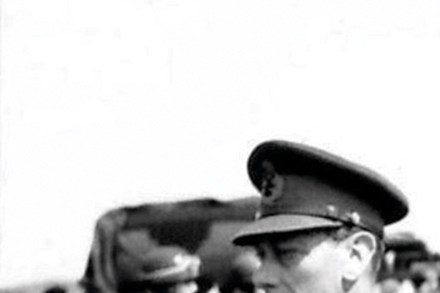
They don’t make men like Erroll Prior-Palmer any more

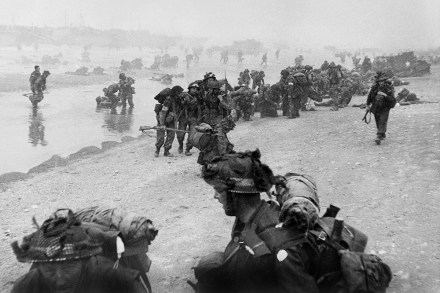
Erroll Prior-Palmer had one decision to make on D-Day. It wasn’t as momentous as Eisenhower’s to launch the invasion, having postponed it for 24 hours due to bad weather, but, for the 40 or so tanks that were meant to swim ashore and give covering fire to the infantry as they stormed Sword Beach, it was life and death. Sword Beach, the easternmost of the Allied landing sectors, guarding the vulnerable left flank of the entire Allied landings, was entrusted to the 3rd (British) Infantry Division. Their task was to reinforce the overnight airborne landings and take Caen, the route centre that would open up Normandy to rapid advance inland.
When ordinary men did extraordinary things – D-Day revisited

The ferry from Portsmouth to Caen is the most atmospheric way to visit the D-Day battlefields, if not always the most comfortable. As the Normandy coast emerges from the haze, the sand and shingle of Sword beach stretch away to starboard. This was the easternmost of five landing areas assaulted on 6 June 1944 with nearly 30,000 soldiers landed there that day. Over the port bow, on the far side of the River Orne, looms a ridge. Here the British 6th Airborne Division parachuted in by night to neutralise enemy artillery and guard the eastern flank. Out of sight ahead, some eight miles inland past the Pegasus Bridge, lies Caen, the largest city in the area and a strategic road junction.