Budget

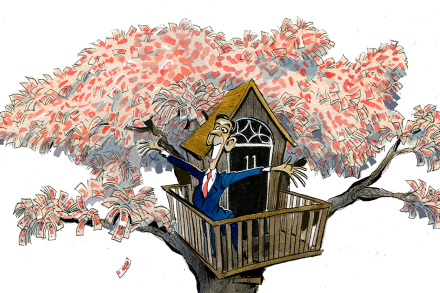
Is Rishi ready to splurge?

From our UK edition

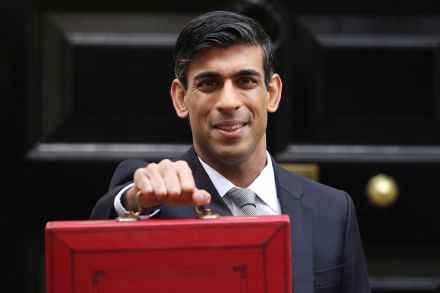
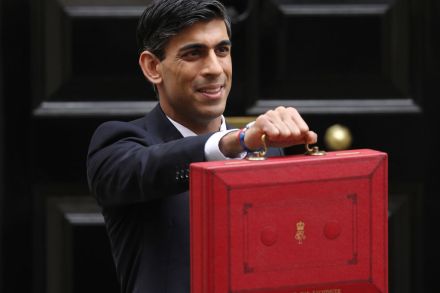
Is Rishi Sunak losing his battle within the Cabinet to promote fiscal responsibility? We’ll find out this week, when he unveils his Budget and three-year Spending Review on Wednesday, but there were hints this morning that more spending is coming down the track. Speaking to Andrew Marr on BBC One, Sunak laid out the principles that guided his Budget process this time round: ‘Strong investment in public services, driving economic growth by investing in infrastructure, innovation and skills, giving businesses confidence and then supporting working families. Those are the ingredients of what makes a stronger Budget and that’s what we will deliver next week.
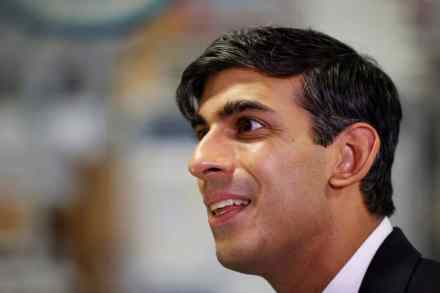
Sunak faces the free-marketeers

From our UK edition

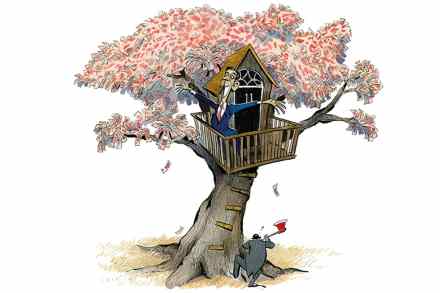
Rishi Sunak didn’t give too much away tonight when he spoke in the 'ThinkTent' at Conservative Party Conference. The Chancellor is known for being cautious with his words, and has been increasingly tight-lipped in the weeks leading up to his October Budget. But his presence at the fringe event was telling in itself. Sunak was only billed for one public fringe event this year, co-hosted by the Institute of Economic Affairs and Taxpayers’ Alliance. Their ‘ThinkTent’ boasts some of the most free-market, libertarian events you’ll find at conference: both organisations are strong advocates for a low-tax, smaller state. So, not necessarily an obvious place to find the Chancellor who has overseen record peacetime spending over the past 18 months.

Republicans’ fiscal responsibility theater

If you think Washington couldn't get any more dysfunctional, think again. On Monday night, Senate Republicans blocked a Democratic attempt to avoid a government shutdown. This raises the temperature in a Congress that’s already had, shall we say, a pretty high fever since being sworn in on January 3. Depending on who you ask, the Republicans’ latest action is either a brave attempt at stopping Biden’s massive spending package — Mitch McConnell’s stated perspective — or a foolish gamble bringing us one step closer to a debt default, as Democrats claim. In a sense, both sides are right. But Washington also needs to remember that refusing to raise the debt limit is akin to cutting up the credit card after maxing it out. It doesn’t solve the actual problem.

fiscal responsibility

Why Biden’s domestic agenda is in big trouble

The Senate parliamentarian, Elizabeth MacDonough, delivered another major blow to President Joe Biden's domestic agenda this week, ruling that Democrats may not include a path to citizenship for millions of illegal immigrants in their $3.5 trillion reconciliation package. The parliamentarian's decision was based on the 'Byrd rule', proposed by Sen. Robert Byrd and adopted by the Senate in the 1980s, which limits what can be passed under the reconciliation process. Under the Byrd rule, laws must be 'more than incidental' in their impact on spending or the budget in order to be included in a reconciliation package.

biden ok agenda

When will Boris get serious about balancing the budget?

From our UK edition

Should we be pleased that net government borrowing for June came in below expectations, at £22.8 billion – £5.5 billion less than June 2020? Should we see it as a sign that the economy is recovering a little faster than had been hoped? That is the spin being put on the public borrowing figures released this morning. An alternative, and less rosy, view might come from examining two figures in particular. Firstly, while borrowing is down compared with June 2020, public spending is actually up. Over the month the government spent £84.1 billion of our money, £2.5 billion more than in the same month a year earlier. Balancing the budget seems to have become a deeply unfashionable debate in UK politics That is extraordinary.

How the US military got rich from Afghanistan

The departure of American troops from Afghanistan is being lamented (or hailed — see the Chinese press, passim) as a defeat. But this is a shortsighted attitude, at least from the point of view of the US military and the multitude of interested parties who feed at its trough. For them, the whole adventure has been a thumping success, as measured in the trillions of taxpayer dollars that have flowed through their budgets and profits over the two decades in which they successfully maintained the operation. The truth of this was forcefully brought home to me once by a friend of mine who, as a mid-level staffer, attended a conclave of senior generals discussing Donald Trump’s Afghan mini-surge back in 2018.

afghanistan military

The thinking behind Rishi Sunak’s cash grab

From our UK edition

Rishi Sunak’s tax hikes pack a punch: by 2025, over £19bn is estimated to be raised from the freeze to the personal tax threshold, and a staggering £50bn from a new, tiered corporation tax structure. That’s a lot of people out of pocket, and businesses diverting their profits away from workers and consumers and towards the state. Criticisms of the cash grab are splashed across the front pages of the papers today. Across the pond, the Wall Street Journal has lambasted Sunak’s policies: 'Britain’s political class, and especially the governing Conservative party, prides itself on fiscal rectitude. So Mr. Sunak already faces pressure to “pay for” all this relief. We sympathise, but in this instance he would have been better off waiting.

Sunak’s Covid budget offers a glimpse of Britain’s Brexit freedoms

From our UK edition

Rishi Sunak’s planned corporation tax hike is a reminder of the importance he sets by trying to put the public finances on a sounder footing. He think that his room for manoeuvre in this crisis has been, in part, because the public finances were in reasonable shape before it.  The vaccination programme remains this government’s most important economic policy As I say in the magazine this week, his concern about debt has long been about the cost of servicing it (which remains low) rather than its precise level. But the debt pile is now so large that small movements in interest rates have big consequences. But straightening out the public finances will need growth.

Labour is right to be scared of Rishi Sunak

From our UK edition

Labour is terrified of Rishi Sunak. Today's Budget showed exactly why. The Chancellor put in an impressive performance: It was assured and hit the right notes at the right times. It also laid the groundwork for a narrative on the economy that will work very well for the Tories. Sunak told voters that George Osborne's cuts created the money that comprised the Covid recovery spending. This ties together the whole of the last decade of Tory rule in a neat package – something Boris Johnson has avoided doing with his ‘I’ve only been Prime Minister for five minutes’ routine. Labour folk will now complain and shout ‘Tory austerity!’ until they are blue in the face.

20 taxes Rishi should bin

From our UK edition

When Rishi Sunak takes to the Despatch Box on Wednesday it will be against a backdrop of colossal national debt, the recent rise in government bond yields and the ongoing Coronavirus crisis. The British state owes £2.1 trillion, ten times the size of the entire economy of an independent Scotland. Yet some concerns over the health of the public finances are misguided – or at least exaggerated. The increase in borrowing to pay for Covid does not itself have to be repaid (at least in the short term). Why? Because provided the government can continue to make the interest payments, debt can simply be rolled over. What's more, the UK economy is already at – or close to – its maximum taxable capacity.

Labour doubles down on opposition to tax hikes

From our UK edition

Rishi Sunak kept his Budget cards close to his chest this morning as he toured the studios for both BBC One’s The Andrew Marr show and Sky News’ Ridge on Sunday. The Chancellor batted away questions about spending and possible tax hikes, repeating over and over again that it’s only ‘appropriate’ to wait until the fiscal event this Wednesday to reveal the details of his plans. There were hints towards areas that have taken the Chancellor’s interest, including a passing comment about ‘business investment’ on Sky News – a bugbear of many on the right, who have long-argued that the UK’s corporate tax rate regime is ungenerous to businesses that would invest money into making their company more efficient.

Sunday shows round-up: Chancellor says rebalancing the books won’t ‘happen overnight’

From our UK edition

Rishi Sunak – Government will do ‘whatever it takes’ to protect people and businesses Ahead of the Budget this Wednesday, both Andrew Marr and Sophy Ridge were joined by the Chancellor of the Exchequer Rishi Sunak. With the government’s roadmap for ending the lockdown having been published last week, all eyes are now on Sunak and the economic levers that he will be pulling as the pandemic hopefully begins its journey out of the news and into history. Sophy Ridge asked the Chancellor if the government’s furlough scheme would be extended beyond the current deadline of April. Without going as far as to say ‘yes’, Sunak suggested that an extension was on the cards: https://twitter.com/RidgeOnSunday/status/1365947358668816385?

The Budget could be an awkward moment for fiscal conservatives

From our UK edition

There is no getting around the fact that these are awkward times for fiscal conservatives, such as myself. It has never been harder to make the case for lower taxes. We have the largest national debt for half a century as we come out of the worst recession for three hundred years, with zero political appetite for public spending cuts. It is essential – for both the Conservative party’s political prospects and the country’s economic prospects – that the UK retain our reputation for sound finance. This is why the Treasury Select Committee have been gathering evidence on the options for tax after coronavirus, with our recommendations to be published tomorrow. One thing is clear: there are no easy options for the Chancellor in his budget this Wednesday.

Are the Tories about to ditch one of their biggest policy achievements?

From our UK edition

We already know much of what will be in Rishi Sunak’s Budget next week. Another £30bn for Covid-relief measures: furlough scheme into the summer, stamp duty holiday and the uplift in universal credit (which is also expected to be time-limited, despite pressure from the opposition to make a permanent adjustment). But this year’s spending splurges are becoming a footnote in a Budget dominated by the prospect of tax rises, for which the Chancellor is already receiving backlash from the left and right. Rumours of a corporation tax hike, circling for a week now, have not been denied. There’s also talk of capital gains tax coming under the Treasury’s spotlight, with some saying that Sunak aims to align it with income tax.

Tory nerves grow over Sunak’s Budget

From our UK edition

How will Rishi Sunak's Budget land with Tory MPs? As reports circulate in the press that the Chancellor is considering raising corporation tax and capital gains tax as well as bringing in a stealth tax for pensioner savings, nerves are growing among Conservative politicians.  The Northern Research Group of MPs, chaired by Johnson's old friend Jake Berry, have called on Sunak not to tax his way out of pandemic debt by raising business taxes in the budget. Tory MPs such as David Davis have warned they could refuse to vote for it if the reports are true. So who will Sunak listen to? Meanwhile, former prime minister David Cameron has popped up to say tax rises 'wouldn’t make any sense at all', comparing the Covid crisis to a wartime situation.

Rishi Sunak’s definition of a ‘sustainable’ deficit

From our UK edition

Last week, Katy Balls and I interviewed Rishi Sunak for the Christmas issue of The Spectator (out today) and his comments on debt have caused some interest in today’s newspapers. As ever with such interviews, there’s only so much you can squeeze into two pages but I thought it worth elaborating on his position today. I suspect it will come to define the political debate next year: yes, 2020 was a year of almighty splurge. Sunak has borrowed more in ten months than Gordon Brown did in ten years: but there was a pandemic. The question is how you get that back to normal. For a surprising number of Tories, it’s a question of 'whether' you get it back to normal. Why not let debt rip? Let it go from today’s 100 per cent of GDP to 120 per cent or even 150 per cent?

Rishi Sunak should try something new: silence

From our UK edition

A huge increase in job centre advisers; special grants for companies taking on trainees; free cash for anyone insulating their home; cuts to National Insurance; reduction in VAT, and a £500 shopping voucher to re-boot a collapsing High Street. Oh, and an emergency GCRF, or Garden Centre Rescue Fund, to subsidise anyone who helps our heroic horticultural industry by building a new rockery or water feature. Okay, I’ll admit, I made that last one up. But all the others are suggestions that have been put forward for the Chancellor’s mini economic statement tomorrow. But perhaps Rishi Sunak should try something new: silence. In truth, the government has done an extraordinary amount to help people and businesses through this epidemic.

Rishi Sunak’s Budget is a watershed moment

From our UK edition

There are three dimensions to a UK budget: the political theatre, its underlying economics, and the measures themselves. My view is that the new Chancellor’s Budget speech was the most effective financial statement of any Chancellor since Nigel Lawson, for whom I worked as a Special Adviser. Rishi Sunak had a command of the economics, mastery over the detail to the measures and brought a political brio – not seen for 30 years or more – to the statement. The Budget offers an empirical, Conservative response to the circumstances of early 2020s. Understandably, however, some people are asking: what is Conservative about spending and borrowing hundreds of billions of pounds? In terms of borrowing, put simply, the central question is not the scale of borrowing but the cost.

How Rishi Sunak outshone Corbyn’s five years in one speech

From our UK edition

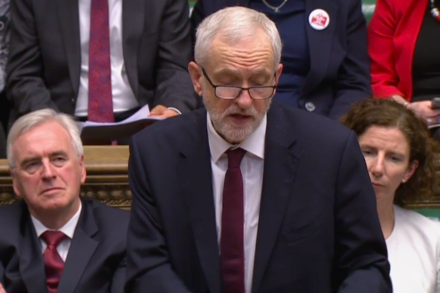
If Jeremy Corbyn had been saving his energy by giving a poor performance at PMQs, he wasn't saving it for his Budget response. He sounded bored, almost as though he too is fed up of waiting for the Labour leadership contest to trundle to an end so that he can pack off and not have to respond to economic statements. Beside him, John McDonnell looked a little envious that the final big fiscal event of the duo's time at the top of the party was the one Corbyn got to respond to, rather than the Shadow Chancellor. He even failed to notice that the debate was being chaired - as it always is - by the deputy speaker Eleanor Laing, and spent much of his speech referring to 'Mr Speaker’.

Full text: Rishi Sunak’s Budget statement

From our UK edition

Rishi Sunak unveiled his first Budget today. The Chancellor has promised a £30bn war chest for tackling coronavirus. There is also £6bn of new funding for the NHS, a new £2.5bn pothole fund and £5.2bn for flooding defences. Here is his full speech: I want to get straight to the issue most on everyone’s mind– coronavirus COVID19. I know how worried people are: worried about their health, the health of their loved ones, their jobs, their income, their businesses, their financial security. And I know they get even more worried when they turn on their TVs and hear talk of markets collapsing and recessions coming. People want to know what’s happening, and what can be done to fix it.