Buddhism

The sham shaman: the fantastic lies of Carlos Castaneda

From our UK edition

On a day in the early spring of 1998 I found myself sitting in a hotel room in Hollywood waiting to hear whether or not I would be interviewing Carlos Castaneda. He was the author of The Teachings of Don Juan, published in 1968, a book which recounted his apprenticeship in the deserts of Mexico at the feet of an elderly Indian shaman and his induction through mind-altering substances into ‘the Yaqui way of knowledge’. In revealing the deeper reality behind the illusion of existence, providing a blueprint for the life of ‘a warrior’ free from the fear of death, Don Juan’s teachings were perfectly attuned to the zeitgeist of the age.

No passive utopia: Tibetan Sky, by Ning Ken, reviewed

From our UK edition

We often forget to ascribe agency to modern Tibet. Politically, it seems to lie mute in the behemoth shadow of China. Culturally, we encounter it more as the backdrop to journeys of self-discovery than a producer of modern culture in its own right. But the villages of the Tibetan plateau are defiantly cosmopolitan in Ning Ken’s novel, the first by this important Chinese writer to be translated into English. Sardonic and erudite, it’s the only major literary treatment of Sino-Tibetan relations to appear in English in decades. The author belongs to the generation of such era-defining Chinese novelists as Mo Yan and Yan Lianke, publishing his first fiction in the heady days of reform and opening-up.

Ignorance, madness or folly – what exactly constitutes stupidity?

From our UK edition

Best remembered now in the English-speaking world as a lyricist, Friedrich Schiller is often quoted for his line: ‘Against stupidity the gods themselves struggle in vain.’ I was waiting for that observation in A Short History of Stupidity. It didn’t appear, but Stuart Jeffries assembles an impressive team of thinkers who have come to the same conclusion. You can’t win: imbecility will always ace you. The great crime for Socrates was ignorance – something often mistaken for stupidity There is of course the question of what exactly constitutes stupidity. It’s a hard thing to pin down and the definition strays into many areas. Jeffries offers a learned, picturesque ramble through world civilisation in an attempt to come up with some answers.

How do you exhibit living deities?

From our UK edition

The most-watched TV programme in human history isn’t the Moon landings, and it isn’t M*A*S*H; chances are it’s Ramayan, a magnificently cheesy 1980s adaptation of India’s national epic. The show has a status in India that’s hard to overstate. Something like 80 per cent of the entire population watched its original run; in rural areas entire villages would crowd around a single television hooked up to a car battery. When the show ended, omitting the ‘Uttara Kanda’, the fairly controversial last book of the original poem, street sweepers across the country went on strike, demanding the government fund more episodes. The government caved. But while every country has its pieces of cult media, in India the cult is literal. Some viewers would take a ritual bath before tuning in.

India radiates kindly light across the East

From our UK edition

‘Everywhere I could see India, yet I could not recognise it.’ So said India’s great national poet Rabindranath Tagore of South-East Asia, after travelling there in 1927. Tagore was fascinated by how elements of ancient Indian culture had found their way eastwards: gods, temple architecture, the Sanskrit language and the great epics the Ramayana and the Mahabharata. A nationalist but also a universalist, Tagore welcomed the reshaping of these ideas by the people who received them, a process whose fruits he encountered in Malay literature and Balinese dance. He even hoped that one day a ‘regenerated Asia’, making creative use of its shared cultural heritage, might heal the world of the wounds he believed had been inflicted on it by the modern West.

The problem with westerners seeking enlightenment in Asia

Call it a prejudice if you like. Living in Japan in the 1970s, I had a slight aversion to a particular type of westerner. He — for it was mostly a he — usually lived in Kyoto, sometimes wore a kimono and liked to sit in ancient temples chasing after that presumably blissful moment of enlightenment, awakening, satori, or whatever one wishes to call it. These seekers were less interested in Japan as a society of human beings. They wanted to float in higher spheres. As Christopher Harding explains in The Light of Asia, the Zen adepts, the Buddhist chanters, the rock-garden worshippers, the kimonoed fools (in my no doubt blinkered eyes) were part of a long western tradition.

Asia

Meeting Eric Ripert, chef of America’s best restaurant 

For Eric Ripert, cooking is like jazz. Ad-libbing, balance, motion. “One day the garlic is very pungent, one day it is not pungent. One day the onion is very juicy and sweet, one day it’s less, so you have to adapt all the time,” says the celebrated chef, who is the co-owner of Manhattan’s Le Bernardin, a close friend of the late Anthony Bourdain and a TV personality in his own right. “So, it’s very similar to music — I do not play the same notes all the time, I take a lot of freedom and liberties. Because I can.” Ripert is French but has — like his storied restaurant — become a New York institution. The chef lives on the Upper East Side with his glamorous, dark-haired wife Sandra (a real-estate broker who is Brooklyn born-and-raised, of Puerto Rican descent).

Ripert

The phoney mystics who fooled the West

From our UK edition

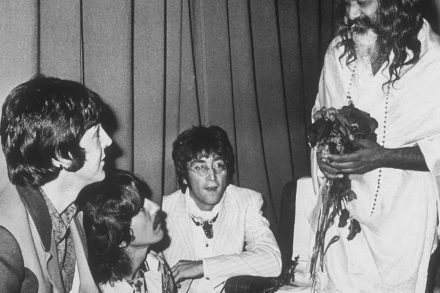
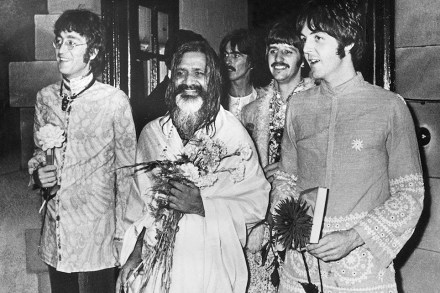
In recent years when we’ve talked about the relations between India and the West, we’ve gone back to stressing the impossibility of interchange. A hundred years ago, E.M. Forster ended A Passage to India with the certainty that Aziz and Fielding could not be friends. Forster thought things would be different after Indian independence, but the spectres of cultural appropriation and the assertion of ongoing imperialist guilt have discouraged equal exchange.  Meher’s spiritual energy was soon devoted to persuading Hollywood to make a massive movie about his life That may explain why the excellent story Mick Brown tells in The Nirvana Express has hardly been covered in the past.

Finally, the Sherpas are heroes of their own story

From our UK edition

John Keay has for many years been a key historian and prolific contributor to the romance attaching to the highest mountains on Earth. His latest book is described as a summation of that lifetime’s contribution, offering an overview of the Himālaya – the Sanskrit version (‘Abode of Snow’) that Keay bids us use – both as a physical place and as a realm of intellectual inquiry. The book opens with a bang. Its first theme is the astonishing mountain-making forces that created the region. Specifically, Keay gives us the prolonged intellectual skirmishes among geologists as they tried to piece together the formative processes.

The amazing grace of Bruce Lee’s fight scenes

From our UK edition

Early on in Enter the Dragon our hero, the acrobatic Kung Fu fighter Bruce Lee, tells a young pupil to kick him. Needless to say, the kid’s kick comes a cropper. ‘What was that?’, Lee sneers, clipping the lad’s ear. ‘An exhibition? We need emotional content, not anger.’ Even at 12, when I first read about this scene (in the poster magazine Kung Fu Monthly, whose first 26 issues are handsomely reproduced in Volume I of Carl Fox’s Archive Series), I thought it sounded like a load of chop suey hooey. An exhibition is precisely what I’d have wanted, if by some miracle I could have wise-guyed my way into seeing Lee’s X-rated picture. Anyway, if anger isn’t an emotion, what is it?

Comfortably numb: Sam Harris on meditation

Sam Harris has been in several tangles in his busy career. This is to be expected from a leader of the New Atheist movement, a vocal critic of Islam (he called the term ‘Islamophobia’ a ‘pernicious meme’), a member of the Men’s Movement (shocker: some non-men found it anti-woman), and a gleeful saboteur of the notion of free will. But for years now, Harris has been using his background in neuroscience and meditation to help people untangle their minds through his podcast Making Sense. It’s hard to find a podcast about meditation that is not made by or for quasi-spiritual, anti-vaxxer yoga moms. Making Sense is for the more serious inquiring mind. Harris, dry and wry, discusses not only meditation but philosophy, science, politics and ethics.

sam harris

Spectacular and mind-expanding: Tantra at the British Museum reviewed

From our UK edition

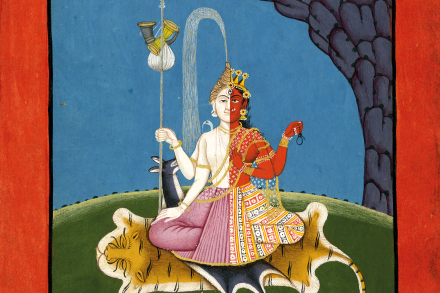
A great temple of the goddess Tara can be found at Tarapith in West Bengal. But her true abode, in the view of many devotees, is not this sacred structure itself but the adjacent, eerily smoking cremation ground. There she can be glimpsed in the shadows at midnight, it is believed, drinking the blood of the goats sacrificed to her during the day. Many holy men and women live in that grisly spot too, adorned with dreadlocks, smeared with ash, and dwelling in huts decorated with lines of skulls painted crimson. As a domestic setting this wouldn’t suit everybody. But the varieties of religious experience (to borrow the title of a celebrated work by William James) are many and extremely diverse.

Oracles, perverts and the Dirtbag Left

From our UK edition

For 500 years the State Oracle of Tibet has worked as a kind of angry immortal advisor to the Dalai Lama, a Tibetan hybrid of Dominic Cummings and John Dee. The current incumbent, like all previous ones, alternates between his human incarnation and his spirit version. ‘In Tibetan Buddhism, the unseen parallel world of spirits is not to be taken lightly,’ explains anthropologist David Sneath on Heart and Soul (BBC World Service). ‘There are so many other living species,’ the Minister of Religion and Culture tells Sneath, ‘many of which we don’t even see.

The Dalai Lama’s beauty contest

The Dalai Lama said that if his successor were female, she’d have to be pretty. The internet freaked out. The Lama, the reincarnated head of the Buddhist religion and the household deity of the Hollywood left, was doubling down on remarks made in a 2015 interview with the BBC: ‘“If a female Dalai Lama comes, she should be more attractive,” he says while laughing.’ The Lama, who was wearing his usual outfit of a loose orange robe with a red blanket casually thrown over one shoulder, was roundly critiqued at the time for these unfashionable remarks. Every woman on the internet crossed her digital arms and uttered exclamations of disgust.

dalai lama