Brussels

Trump, Europe and the power of delusions

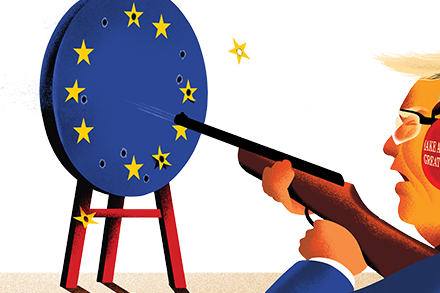
German Chancellor Friedrich Merz suggests to a classroom full of youngsters that Donald Trump has been “humiliated” by his war in Iran – and the President cancels deployment of the long-range missile systems around which Germany had planned its defense strategy for the coming decades. Spanish Prime Minister Pedro Sánchez observes a strict neutrality on Iran, declaring his country’s bases out of bounds – and Trump urges Spain be kicked out of NATO. British Prime Minister Keir Starmer hesitates to sacrifice his country’s navy in a war on which he wasn’t consulted – and Trump mocks him in public for a week.
europe

America’s free-speech war on the EU

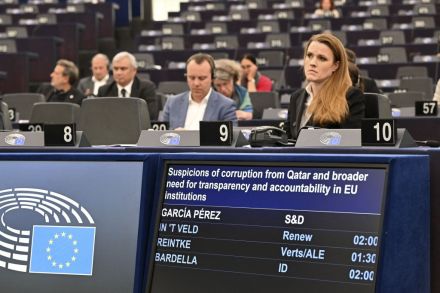
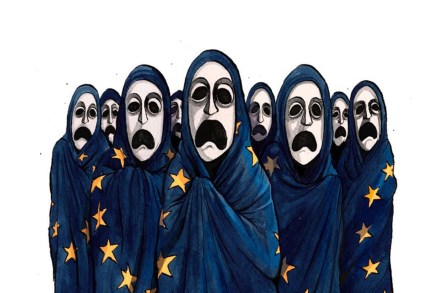
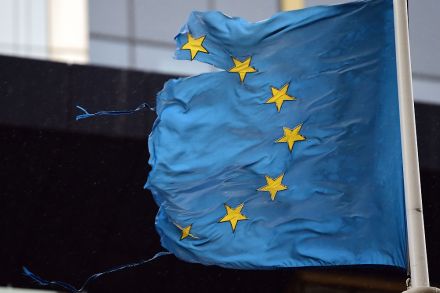
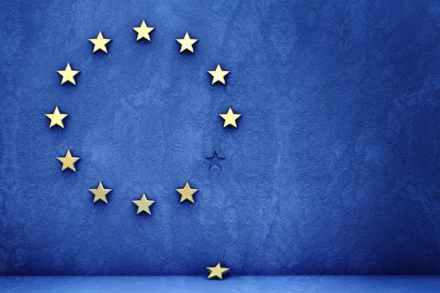
If I were a bookie, I would be making odds now about when the European Union will finally unravel and die. Unless there is an imminent and drastic course correction, the blessed event cannot be far off.  I might need a Doomsday Clock akin to the one publicized by the Bulletin of the Atomic Scientists. Their clock hovers near midnight, which signifies nuclear Armageddon, the minute hand pushed closer or farther away from the blast depending on minatory world events. My clock would measure the EU’s proximity to implosion. Its recent decision to fine Elon Musk and his company X €120 million for “non-compliance with transparency obligations” has me nudging the minute hand closer to midnight. “Non-compliance with transparency obligations.” What do you reckon that means?

Marco Rubio treads a fine line at NATO

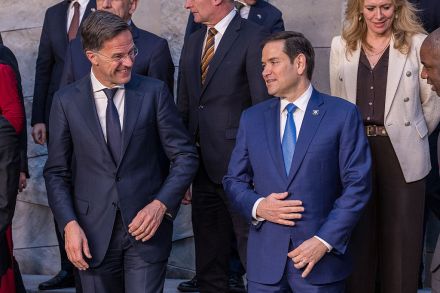
Secretary of State Marco Rubio’s trip to NATO headquarters in Brussels couldn’t have been easy for either Rubio or the Europeans.  The normally copacetic relationship between the United States and Europe isn’t in shambles as the more overly sensitive lawmakers and pundits would have you believe. But it’s not exactly rosy either. European policy elites for the most part like to downplay their differences with Trump’s Washington and emphasize the positive, but it’s hard to be a European politician these days and not be terrified of the future.

nato

London to Amsterdam via Brussels: taking the long way

Brexit, the gift that keeps on giving: from June 14, 2024 to January 2025, a reduced Eurostar service will run between London and Amsterdam. Why? Part-closure of Amsterdam Centraal leaves no space for the extra bureaucracy now necessary. Passengers returning to London will change at Brussels to go through security and passport checks, adding up to almost two hours of extra journey time. Global travel booking platforms such as OMIO have reported a surge in train travel in recent years. Cheaper prices (compared to flying) and environmental concerns are cited as the main drivers. But Eurostar’s capped passenger numbers and indirect routes will surely increase air travel in 2024, literally flying in the face of Dutch sustainability policies.

brussels

Brussel or Bruxelles? Even the locals can’t agree

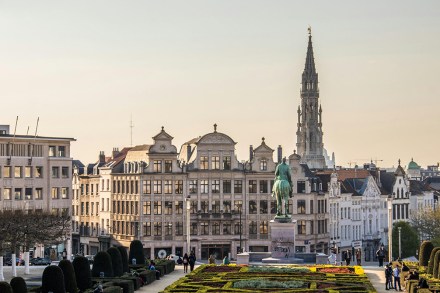
Brussels is the source of all evil to many of those who supported Brexit, and even for Americans. “What’s a good Christian boy like you doing in Satan’s den?” was the question of an Austin friend when I told him work had brought me to the capital city of the European Union. To its critics, Brussels is the bastion of the worst sort of Big Government, with the European Commission and Parliament issuing diktats to more than 500 million people across twenty-seven nations. But while the city is “full of nets” with which to trap you, as described by another friend who worked here on human rights legislation, it’s also a city of “hope.” Brussels has a rich comic book culture. There are the intrepid reporter Tintin and his sidekick Snowy.

brussels

Iran and Russia: the new Axis of Evil?

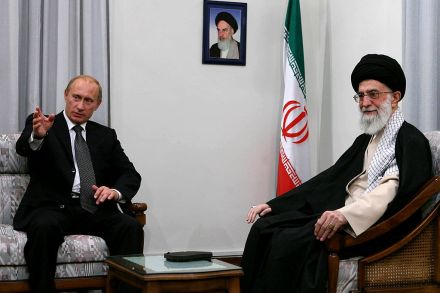
Russian President Vladimir Putin’s visit to Tehran last week brought attention to a growing partnership between Russia and Iran. The Russian shook hands with Iranian Supreme Leader Ali Khamenei, a rare gesture since both men are notorious coronaphobes. The old cleric expressed support for the Russian invasion of Ukraine, while the old KGB man offered Iran supplies of grain. US intelligence even claims Iran will open its drone arsenals to Russia. This strange friendship has its limits, but its growth could spell trouble. History does not suggest this is a natural partnership. The list of grievances between Iran and Russia is long. Great powers are often rough with middle-power neighbors.

Hungary’s Orbán remains a thorn in everyone’s side

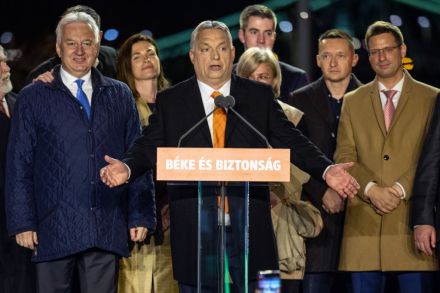
Viktor Orbán has just won another election. The Hungarian prime minister has secured a hefty majority in his country’s legislative elections, and in his victory speech, Orbán revealed once again that he is a thorn: in the side of Europe most obviously but, if need be, in the side of all. I’ll leave for others the discussion of Hungarian democracy — whether Orbán has so manipulated national life that his continued electoral successes are unimpressive, even fraudulent. But Orbán, in his own mind, thought an “overwhelming force” ranged against him. “We never had so many opponents,” Orbán said.

Ukraine won’t join the European Union any time soon 

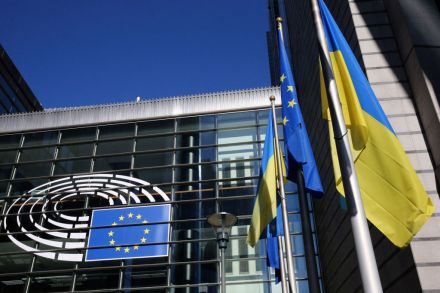
In the wake of Russia’s aggression in Ukraine, President Volodymyr Zelensky has renewed his country’s wish to join the European Union. This week, the European Parliament approved Ukraine’s application to join the EU with an overwhelming majority. But Ukraine will not join the European Union this year, and possibly not even in the next five years to come. The reasons for that lie within the structure of the EU. The closening ties between Brussels and Kyiv had been the reason for Ukraine’s revolution back in 2014. Then Ukrainian president Viktor Yanukovych had rejected the EU-Ukraine association agreement, which tied both partners closer together, politically and economically.

european union

The president of platitudes

President Joe Biden turned up almost three hours late to his Nato press conference tonight. He offered no apology, because, well, why should he? He then gave a short speech. It was adequate enough, albeit predictable and rigid — read as it was almost entirely from a teleprompter. It wouldn’t be Biden if he didn't open with a gaffe, though. He managed to stumble early by saying ‘we’re still averaging in the last seven days the loss of 300 deaths per day.’ In answer to a press question about Putin, he said ‘I’ll be happy to discuss with you when it’s over, not before, about what the discussion will entail’. That didn’t make much sense. He successfully quoted Benjamin Disraeli and said ‘the proof will be in the pudding’ without jumbling the words.

platitudes