British museum

Stupendous: The World of Stonehenge at the British Museum reviewed

From our UK edition

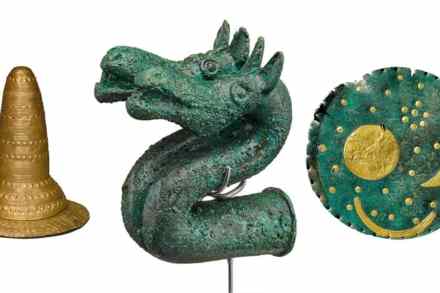
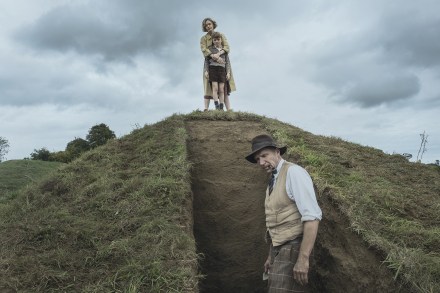
This exhibition is Hamlet without the Prince, and all the better for it. Stonehenge is not there; it remains in Wiltshire. But 430 astonishing artefacts from the neolithic and bronze ages fill a hairpin course like a Roman chariot-racing circuit in a vast room. It is blessedly free from videos of prehistoric Britons tugging on ropes to move monoliths. There is a henge on display, though. (The word in its technical sense was invented in 1932 by Sir Thomas Kendrick, later director of the British Museum.) This is the Seahenge that emerged on the shore at Holme-next-the-Sea in 1998: 55 big oak posts round a two-ton upturned rooted trunk. Gloriously, being trees, they can be dated to a year: 2049 BC. It was sad that it had to be dug up, but here it is, anatomised in a museum.

A show of ample and eerie majesty: British Museum’s Peru: A Journey in Time reviewed

From our UK edition

Growing up on a farm outside Lima, I was aware that indigenous Peruvians did not understand time in the same way that their white countrymen did. On our visits to the highlands, we would encounter a very different mode of thinking. Ask an Andean villager where the next settlement was and you’d be told, ‘aquisito no más’ — just over here. Whether ‘aquisito’ meant around the next bend or four days’ schlep across the mountains was, for aboriginal people, a meaningless question. They were not ruled, as their European-descended neighbours were, by clocks. You’d sometimes see Quechua-speaking herdsmen sitting motionless for so long that they seemed to have switched off and become part of the landscape.

Who really owns the Benin Bronzes?

From our UK edition

Should the British Museum return its priceless collection of Benin Bronzes? For years, the museum has stood firm in its refusal to hand back artwork looted from the ancient kingdom of Benin, in what is now southern Nigeria. In doing so, it has defied the trend set by regional institutions in Britain, such as the university of Aberdeen. Earlier this year, the university confirmed that it would repatriate a bust of an Oba, or king of Benin, which it has had since the 1950s. As a result of refusing to take a similar stance, the British Museum has been heavily criticised – but there is a strong case to be made that its approach is the correct one.

A nicer side of Nero

From our UK edition

New York I haven’t felt such shirt-dripping, mind-clogging wet heat since Saigon back in 1971. The Bagel is a steam bath, with lots of very ugly people walking around in stages of undress that would once upon a time have embarrassed that famed stripper Lili St Cyr. How strange that very pretty girls do not shed their clothes as soon as the mercury hits triple figures, but less fortunate ones do even if the number is a cool 80. June is my London party month, or used to be before the city was transformed into a prison camp. And what about The Spectator party? I haven’t heard a woid, as they say over here, so I’m sending a little boid over to find out. I have ordered a brand new white suit for the occasion — if it takes place, that is.

Why Thomas Becket still divides opinion

From our UK edition

Visitors to the British Museum’s new exhibition will become acquainted with one of the most gloriously bizarre stories in the history of English Christianity: the tale of Eilward, a 12th-century Bedfordshire peasant. One day Eilward is in the pub when he has the misfortune to run into his neighbour Fulk, to whom he owes a small debt. An angry confrontation follows; eventually Eilward storms off drunkenly — in the direction of his creditor’s house, where he breaks in and starts trashing the place. Fulk catches him red-handed, beats him up and then hands him over to the authorities. One account suggests Eilward was framed; but whatever the truth of the matter, the judge sentences him to blinding and castration.

The problem of the Benin Bronzes will never go away

From our UK edition

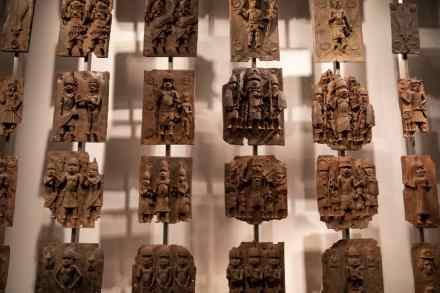
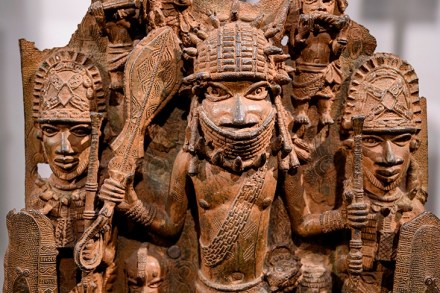
A book about the looted African art known as the Benin Bronzes begins by clarifying that most of them are not actually bronze, and none of them comes from the country of Benin. Yet as this gripping work of live history makes clear, such name ambiguity feels entirely appropriate for art so sophisticated in creation yet so controversial in acquisition. Little about the Benin Bronzes is black and white. The exact age is unknown for the cache of carved ivory, coral and metal plaques, heads, statuary, swords and other ceremonial objects, the best guess emphasising the circa in ‘circa 16th century’.

The distortion of British history

From our UK edition

The British Museum has announced the appointment of a curator to study the history of its own collections. On the face of it, nothing could be more anodyne. The history of collecting has been a fashionable topic in academic circles for decades. What sort of people collected, why, and how, tells us much about their cultural assumptions and their ways of seeing the world. It would be mildly surprising that the BM has been so slow to catch on – except that there seems more to it than scholarly pursuit of knowledge. While the research will indeed cover ‘wider patterns’ of collecting, the Museum announced that it is ‘likely that issues such as the role of the slave trade and empire... will be relevant to some of the research undertaken’.

Our love affair with the Anglo-Saxons

From our UK edition

On 5 July 2009, an unemployed 54-year-old metal detectorist called Terry Herbert was walking through a Staffordshire field when his detector started to beep and didn’t stop. Herbert guessed almost immediately that he’d found gold. What he didn’t realise was that he had made Britain’s greatest archaeological discovery since the second world war. Three hundred sword-hilt fittings, many of them spectacular examples of Anglo-Saxon metalwork; a mysterious gold-and-garnet headdress, apparently for a priest; miniature sculptures of horses, fish, snakes, eagles and boars.

These rediscovered drawings by Hokusai are extraordinary

From our UK edition

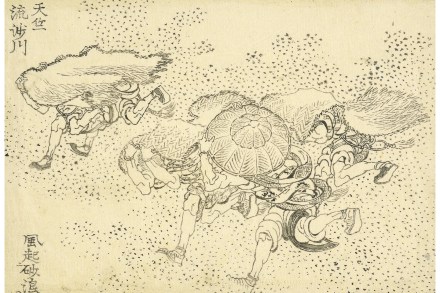
Lost boys, lost women, lost civilisations, lost causes — the romantic ring of the word ‘lost’ is media gold. So when the British Museum announced last autumn that it had acquired 103 ‘lost’ drawings by Hokusai, one was tempted to take it with a large pinch of salt. How do 103 drawings by Japan’s most famous artist simply disappear? The answer is, surprisingly easily. Hokusai’s works have never commanded the sorts of prices a draughtsman of his calibre would be expected to fetch, not even in Japan. His art was designed to be affordable: in his day, you could buy a print of ‘The Great Wave’ for the price of a double portion of noodles — and still stretch, if you were lucky, to a side order of ‘A High Wind of Yeijiri’.

Spectacular and mind-expanding: Tantra at the British Museum reviewed

From our UK edition

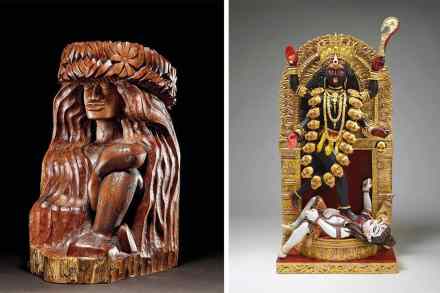
A great temple of the goddess Tara can be found at Tarapith in West Bengal. But her true abode, in the view of many devotees, is not this sacred structure itself but the adjacent, eerily smoking cremation ground. There she can be glimpsed in the shadows at midnight, it is believed, drinking the blood of the goats sacrificed to her during the day. Many holy men and women live in that grisly spot too, adorned with dreadlocks, smeared with ash, and dwelling in huts decorated with lines of skulls painted crimson. As a domestic setting this wouldn’t suit everybody. But the varieties of religious experience (to borrow the title of a celebrated work by William James) are many and extremely diverse.

Museums need wonder, not wokery

From our UK edition

The British Museum’s aim is to use its collection ‘for the benefit and education of humanity’. If that manifests itself in jerking the knee to Black Lives Matter’s anti-colonial agenda, the Museum might do well to learn from the ancients. Near Eastern conquerors used to dedicate their loot in temples, and so exhibit it. It was Nebuchadnezzar II of Babylon (6th C bc) who gathered reliefs, weapons, inscriptions (one going back to 2,400 bc) etc. and placed them in a ‘Wonder Cabinet of Mankind’ for the public to enjoy. Greeks and Romans took up the idea, filling their temples with collections of relics, statuary and art. The temple of Lindos on Rhodes contained a bracelet of Helen of Troy, Orpheus’s lyre and the weapons of Heracles.

In defence of Hans Sloane

From our UK edition

‘The British Museum stands in solidarity with the British Black community, with the African American community, with the Black community throughout the world. We are aligned with the spirit and soul of Black Lives Matter everywhere.’ So blogged the director of the British Museum, Hartwig Fischer, shortly after the death of George Floyd. Many such messages were rushed out by institutions, colleges and businesses at the time. It was never really clear why. Why did one cruel death, above all the other cruel deaths always happening in the world, require this collective response? What led Dr Fischer to assume that ‘the British Black community’ must be at one with the aims of Black Lives Matter?

What really happened at Troy?

From our UK edition

Heinrich Schliemann had always hoped he’d find Homer’s Troy. Although he had no archaeological background to speak of, he did have money, and spades, and in the 1870s this would do. Tipped off as to the probable location of the ancient citadel — beneath Hisarlik on the west coast of modern Turkey — the Prussian businessman got zealously to work, pushing through the soil until he struck what he assumed to be the treasure of King Priam himself. In the Iliad the Trojan king lived lavishly. His palace was ‘surpassingly beautiful’. Its 50 rooms were built of ‘polished stone’. The terracotta wares Schliemann lifted from the ground did not quite evoke such splendour. There were fat-bellied pots with nipples and navels and rustic two-handled cups.

Tat Britain: Museum gift shops are naff – but necessary

From our UK edition

Exit through the gift shop. Pick up a postcard, a magnet, a novelty eggcup in the shape of Queen Elizabeth I. Treat yourself to a replica Rosetta Stone, a Babylonian bookend, a build-your-own Leonardo trebuchet. Tuck your little one up at night with a cuddly Anubis the dog. Nicholas Coleridge, chairman of the Victoria & Albert Museum, has put the tat among the pigeons by telling the Cheltenham Literature Festival that the V&A shop is more successful than the BM’s.

All money is dirty

From our UK edition

Whitney museum: no space for profiteers of state violence // dismantle patriarchy // warren kanders must go! // supreme injustice must end // we will not forget // choking freedom is a crime // enough // greed is deadly // humanity has no borders // we grieve the harm… If that array of posters paving the entrance to New York’s Whitney Museum of American Art hasn’t plunged you into such an insensate catatonia that the print has blurred, here’s the drill. For months protesters have been campaigning to have Warren B. Kanders, the museum’s vice chairman, who’s already donated $10 million to the institution, removed from the board. Eight artists withdrew from the Whitney’s esteemed Biennial exhibition in solidarity.

The art of repetition

From our UK edition

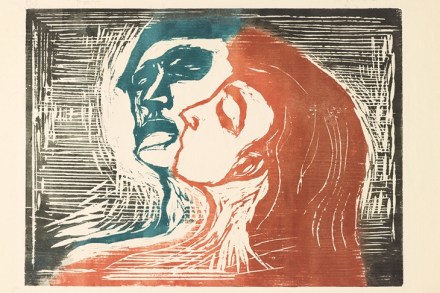
An eyewitness described Edvard Munch supervising the print of a colour lithograph in 1896. He stood in front of the stones on which the head of a masterpiece was drawn. He then closed his eyes tightly, stabbed the air with his finger, and gave his instructions. ‘Print... grey, green, blue, brown.’ Then he opened his eyes and remarked, ‘Now it’s time for a glass of schnapps.’ The whole performance, including the air of melodrama and that shot of spirits, was highly characteristic. The resulting colour lithograph, ‘The Sick Child’, is one of the artist’s masterpieces. It is on show in Edvard Munch: Love and Angst at the British Museum — an exhibition that attempts to do two jobs, and succeeds in doing one better than the other.

Hunter, scholar, boaster, dreamer

From our UK edition

The Assyrians placed sculptures of winged human-headed bulls (lamassus) at the entrances to their capital at Nineveh, in modern Mosul, to ward off evil. The mighty lamassu to the right of the Nergal Gate had been on guard for some 2,700 years when Isis vandals took a drill to it in 2015 and blew away its face. Today a copy, crafted out of date syrup cans, stands on the Fourth Plinth in Trafalgar Square. It wears the oblong beard and proud look of the Assyrian kings. The original sculpture dated to the time of Sennacherib, who ruled Assyria from 705 to 681 BC, and transformed Nineveh into a magnificent metropolis. No stranger himself to violent desecration, he made his eldest son king of Babylon, but went on the rampage when the Babylonians rebelled and had the ruler dispatched.

The true face of Islam

From our UK edition

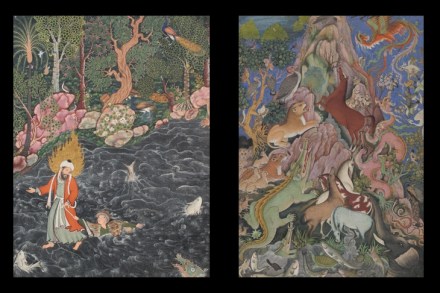
In Britain today, Islam in its original essence is not to be found in mosques or Muslim schools, but on the first floor of the British Museum. There, the Albukhary Islamic gallery, newly opened to the public, dazzles visitors and defies every certainty promoted by today’s hardline Muslim activists. This spectacular exhibition of objects from across continents and centuries shows us a history of continuity of civilisations, coexistence of communities. It offers a compelling corrective to current popular notions of Islam as an idea and a civilisation. Too often, we assume that Islam’s arrival on the world stage involved some violent break with the past that brought forth a new Muslim civilisation.

Object lesson | 6 September 2018

From our UK edition

‘If liberty means anything at all it means the right to tell people what they do not want to hear,’ wrote George Orwell in his preface to Animal Farm. It is a line that has gone down as one of the great capsule defences of dissent, made all the more prescient by the fact that the preface, an attack on the self-censorship of the British media during the second world war, wasn’t published until the 1970s. But the lines that follow it are too often overlooked. ‘The common people still vaguely subscribe to that doctrine and act on it,’ Orwell goes on, ‘it is the liberals who fear liberty and the intellectuals who want to do dirt on the intellect’.

Acropolis now

From our UK edition

‘My Acropolis,’ Auguste Rodin called his house at Meudon. Here, the sculptor made a Parthenon above Paris. Surrounded by statues of ‘mutilated gods’, he cast himself as the Phidias of the age. His collection was part cabinet of curiosities, part charnel house. He bought Nile crocodiles and Peking ginger jars, painted sarcophagi and chipped red-figure vases. Crowded among his 6,000 Greek, Roman, Egyptian, Assyrian, Chinese and Japanese objects were his own plasters, bronzes and clay models: hands by the hundred, legs vast and trunkless, arms beckoning, fidgeting, reaching. Isadora Duncan set up her ‘Dionysian’ dance school nearby to teach Hellenic rhythms.