British museum

Museum relic

From our UK edition

On 1 July, at a swanky party at Tate Modern, one of Britain’s museums will bank a cheque for £100,000, as the Art Fund announces this year’s Museum of the Year. Sure, the money will come in handy. Sure, the publicity will be useful. But this posh bunfight can’t disguise a growing sense that museums face an existential crisis. Cuts are one problem — some say the present round will take museums ‘back to the 1960s’. But they also face a more profound dilemma. In the age of Wikipedia and Google Images, what are modern museums actually for? When I was a child museums were my adventure playgrounds, but was my enthusiasm merely relative? After all, in the 1970s there really was very little else to do. Shops were shut on Sundays.

Reimaging the lost masterpieces of antiquity

From our UK edition

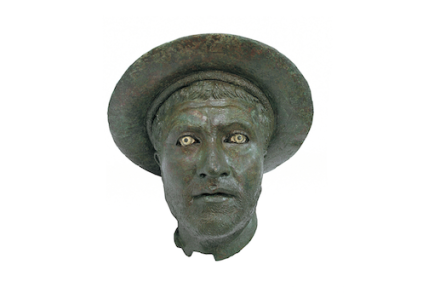
For centuries there has been a note of yearning in our feelings about ancient Greek and Roman art. We can’t help mourning for what has irretrievably vanished. In 1764 Johann Joachim Winckelmann wrote that we have ‘nothing but a shadowy outline left of the object of our wishes, but that very indistinctness awakens only a more earnest longing for what we have lost’. In the same spirit, Power and Pathos, an exhibition of Hellenistic bronze sculpture at the Palazzo Strozzi, Florence, begins with an empty plinth. It is the marble base of a statue, found in Corinth, on which are written the words ‘Lysippos made [this]’. The inscription is poignant for a series of reasons.

James McAvoy is wrong – the arts are better off without subsidy

From our UK edition

The season of cringe-making acceptance speeches at arts awards ceremonies is nearly over, thank heavens. But it hasn’t passed without a most fatuous contribution from James McAvoy as he accepted a nomination for best actor at the Olivier Awards this week. He should have stuck to sobbing and thanking his agent. Instead, he launched a feeble and trite attack on the government for supposedly thwarting social mobility by failing to fund the arts. According to McAvoy’s thesis, ‘Art is one the first things you take away from society if you want to keep [people] down.

Many more Germans were displaced in 1945 than Indians during partition

From our UK edition

What Radio 3 needs is a musical version of Neil MacGregor. The director of the British Museum and now a stalwart of Radio 4 is an intellectual powerhouse but his talks on radio are so clear, so crisp, so deceptively easy to follow that he draws you in and makes you feel that you too can understand the world in the way he does, with his enormously broad vision and his deep understanding of the way things connect.

For my family, the Vikings exhibition was about as much fun as being raped and pillaged

From our UK edition

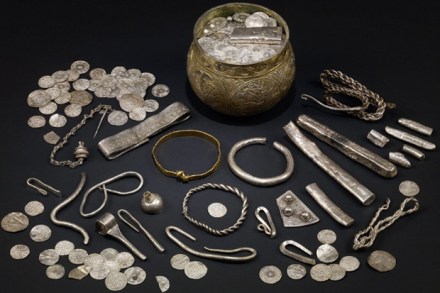
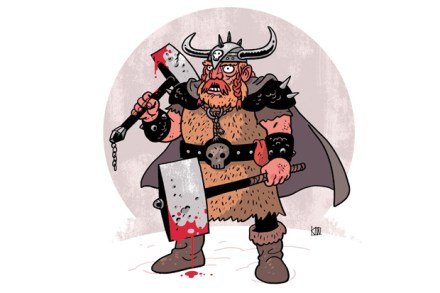
[audioplayer src="http://traffic.libsyn.com/spectator/TheViewFrom22_10_April_2014_v4.mp3" title="James Delingpole and Peter Robins discuss the Vikings exhibition" startat=1656] Listen [/audioplayer]Have you managed to book tickets to the Viking exhibition at the British Museum yet? If you haven’t, my advice is: don’t bother. I know what the critics have been saying: that it’s an unmissable treat. But it’s only an unmissable treat if you visit under the privileged conditions of a previewing journalist. Go as an ordinary punter on the other hand — as the Delingpole family discovered to their cost last week — and you’ll find it about as much fun as being pillaged, raped and having your ribcage torn open to form a ‘spread eagle’.

Upside down and right on top: the power of George Baselitz

From our UK edition

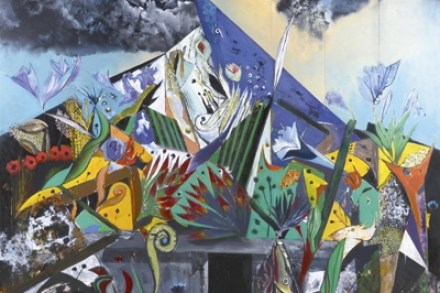
It’s German Season in London, and revealingly the best of three new shows is the one dealing with the most modern period: the post-second world war era of East and West Germany and the potent art that came out of that split nation. In Room 90 is another immaculately presented British Museum show of prints and drawings, focused this time around Georg Baselitz (born 1938). Of the 90 works on display, more than a third has been donated to the BM by Count Christian Duerckheim, the remainder lent by this assiduous collector. The show begins with Baselitz’s contemporaries and I was surprised to find myself quite liking some things by Gerhard Richter, currently the most overrated artist in the world.

The British Museum’s Vikings: part provincial exhibit, part gripping drama

From our UK edition

Exhibitions are made for two main reasons: education and entertainment. Although I recognise the importance of education I am, by nature, a devotee of pleasure and want people to enjoy what they see in museums — not just feel that they must learn from it. Great exhibitions marry the two impulses effortlessly, and on balance the Vikings show, supported by BP, in the marvellous new Sainsbury Exhibition Gallery at the BM, is a great exhibition, though it does rather fall into two sections, the first somewhat more earnest than the last. But this also has the effect of significant build-up: the first half is like Sir Les Patterson and Sandy Stone warming the audience before Dame Edna appears after the interval.

The night that saved England

From our UK edition

Thanks to the centenary of the first world war, counter-factuals are much in vogue. How different might history have been had Archduke Franz-Ferdinand never been assassinated, had Britain kept out of the conflict, had the Allies been defeated? Questions such as these are more than just a parlour game. They serve to cast the shadow of contingency over events that otherwise can seem all too predetermined. Deep and strong though the tides of history are, there have indeed been moments in the past when their flood-surge might have been diverted along profoundly different courses — moments when the fate of nations did truly hang in the balance. The protagonists of one such episode are currently starring in the British Museum’s latest spectacular.

Art shows you simply mustn’t miss in 2014

From our UK edition

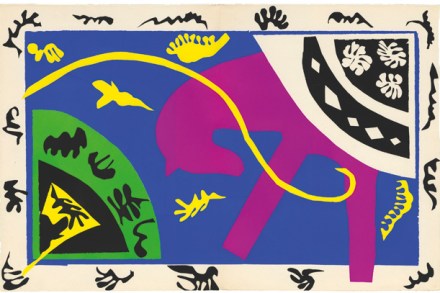
One of the great treats of the exhibiting year will undoubtedly be Henri Matisse: The Cut-Outs (17 April to 7 September) at Tate Modern. The last phase of Matisse’s productive career was devoted to making extraordinarily vivid images from painted paper cut with scissors, as the physical effort of wielding a paintbrush became too much for him. Matisse’s greatest strengths were as draughtsman and colourist, and the cut-outs combine these skills in abundant measure, releasing a new sense of joyous celebration almost unmatched in the history of art. The largest ever exhibition of the cut-outs, the Tate’s show will feature 120 works, many seen together for the first time. Unmissable.

Sorry – the Vikings really were that bad

From our UK edition

Sometimes the really obvious take on history turns out to be the right one. For generations, we all assumed that the atrocities perpetrated by the Germans in Belgium at the outset of the first world war and enthusiastically reported in the British press were Allied propaganda. Yet recent research suggests that quite a lot of it was true. Well, the same goes for the Vikings. For almost half a century, the academic line on Vikings has been that our old idea of them as raping, pillaging bastards who’d sack a monastery as soon as look at it was a childishly transparent bit of propaganda, perpetuated by Christian monks who were obviously biased against the pagan Northmen.

Exhibitions: Why can’t the critical fraternity make up its mind?

From our UK edition

As more time elapses since the regrettable fracas over Kitaj’s 1994 Tate exhibition and his tragic suicide in 2007, he comes more and more into his own as a great but still underrated artist. When I last wrote about him in this column, back in April, I had not yet seen the portion of his Berlin-originated retrospective which was shown at Pallant House in Chichester. Happily I managed to get there before it closed and was once again deeply impressed by the range and painterly intelligence of this extraordinary artist. Now another couple of shows pay justified tribute to his genius, this time as manifested through his printed work.

It’s madness to slash the British Museum’s budget

From our UK edition

The best argument in favour of state funding of the arts was made in the middle of the 18th century. In 1753 an Act of Parliament established the personal collection of Sir Hans Sloane as a national resource, ‘to be preserved and maintained not only for the Inspection and Entertainment of the learned and the curious, but for the general Use and Benefit of the Public’. But a dark cloud looms over the British Museum today. Rumour suggests (and ministers won’t deny) that the Chancellor is keen to lop a few million quid from its budget in the 2015/16 spending review which is due to be published this month. Culture Minister Ed Vaizey is being encouraged to fight like a weapon dog in defence of this invaluable cultural asset.

Death watch

From our UK edition

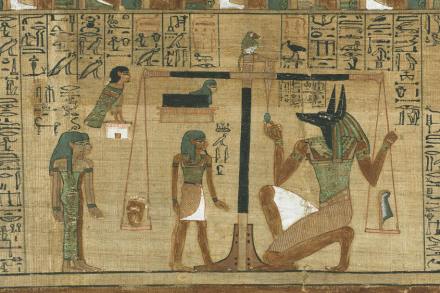
Although I stopped watching TV some years ago, films are a continuing solace and pleasure. Among the Christmas treats was a previously unseen Jack Nicholson movie, entitled The Bucket List. The plot revolves around two very different Americans, Nicholson and Morgan Freeman, both of whom are suffering from cancer and are given a mere matter of months to live. The Bucket List is their wish list of things to do before they die, some of the more exotic of which the wealthy Nicholson enables them to achieve. The excellent Freeman, a poorer man but the greater philosopher, reminds Nicholson of a more important consideration: the two questions asked of Ancient Egyptians at the gates of Paradise. Have you found joy in your life? And, has your life brought joy to others?

Objective thoughts

From our UK edition

Timothy Clifford enjoys the British Museum director’s tour of human history – but misses the beauty of Kenneth Clark’s ‘Civilisation’ ‘Mission Impossible’ is how Neil MacGregor, in the preface to this book, describes the task set for him by Mark Damazer, controller of BBC Radio 4. MacGregor was to introduce and interpret 100 objects chosen by colleagues from the British Museum and the BBC. They had to range in date from the beginning of human history, around two million years ago, right up to the present day. The objects were intended to cover the whole world equally, as far as it is possible. They would necessarily include the humble things of everyday life as well as great works of art.

Director’s cut

From our UK edition

In the spring of 2008 I went on a press trip with the director of the British Museum, Neil MacGregor, to Hadrian’s wall. It was one of a series of jaunts planned by the BM in the run-up to its great Hadrian exhibition, a little Roman holiday. But though the wall was fascinating, I spent most of my time inspecting the director. He’s charming and universally admired — but also enigmatic. What are his politics? What does he do for fun? Nobody seems to know. So I watched him at Segedunum in Newcastle, talking to local grandees, charming, mercurial, alert. I watched him out by Housesteads fort, chatting to the curators.