British empire

Letters: The British Empire was a force for good

From our UK edition

Unjust William Sir: It is a bad idea for schools to be recommending their pupils listen to William Dalrymple’s podcast Empire (‘Striking back’, 4 July), without also suggesting they listen to, for example, Niall Ferguson on the same subject. Dalrymple does not prize the British Empire, but many of us who have studied it in detail admire the many benefits it conferred on its subjects. Balance is essential in educating children and from Dalrymple they will get an unduly pejorative view. Hearing his analysis, one might wonder how such an inefficient and corrupt entity succeeded in governing about a third of the world for a long period. There were two main failures.

The truth about how the British Empire is taught in schools

From our UK edition

William Dalrymple says that children ‘don’t learn’ about the British Empire at school. It is an ‘elephant in the room’, he claimed on the Green party leader Zack Polanski’s Bold Politics podcast last week. This isn’t true. I learnt about the Empire at school. Studying A-level history a decade ago, we spent a year covering the Raj. The Indian Mutiny, 1857. The Amritsar Massacre, 1919. On viciously cold mornings, my teacher, Ms Pearmain, would open the windows and say that boys’ brains were slowed by comfort. It kept her lessons in my head. It would have taken Dalrymple a few seconds to do some research and realise his error. In schools which follow the national curriculum, lessons about the British Empire are prescribed by the government.

Riddled with contradictions: the enigma of Jan Morris

From our UK edition

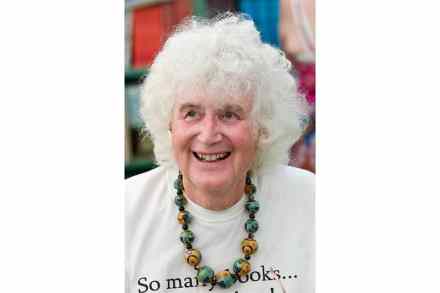
Jan Morris was driven by almost super-human levels of energy and ambition, producing more than 40 books as well as news and travel articles, introductions, interviews, reviews and essays, travelling incessantly and taking on every job that was offered. That’s as far as I can go without a pronoun, because of course Morris’s life is divided into two parts. For the first half he was James, for the second she was Jan. James Morris was born in 1926, aware from early on that she was female, trapped in a male body. The transition to Jan, made in the early 1970s, remains at the heart of our fascination with Morris.

Will colonialism’s psychological legacy ever cease to be a source of pain?

From our UK edition

Whenever the legacy of colonialism comes up for debate, a Monty Python sketch springs to mind. It’s the one from Life of Brian in which Reg, the leader of the People’s Front of Judea, exclaims: ‘What did the Romans ever do for us?’ Corrected, he eventually concedes: ‘OK, apart from the sanitation, the medicine, education, wine, public order, irrigation, roads, a fresh water system, and public health, what have the Romans ever done for us?’ It’s a brilliant exchange. But as Simukai Chigudu’s beautifully written memoir testifies, one that misses an essential point, in that colonialism’s bequest extends beyond infrastructure and administrative systems. Its most abiding – if tantalising – legacy has been psychological and emotional.

The strange death of England

Whatever happened to Britain, or the UK, or England, or whatever they're calling it? We can't even agree on what it's called. But what happened to England, the England that, if you're over 50, you grew up learning about, the England that controlled the world, the England that ran the largest empire in human history at the end of World War One?  Britain, which is an island in a pretty inhospitable climate, controlled literally a quarter of the Earth's surface – and not controlled in the way the United States controls the rest of the world with an implied threat or with economic ties through trade, but with administrators and people sitting at desks with eyeshades, counting things.

What we can learn from Singapore

From our UK edition

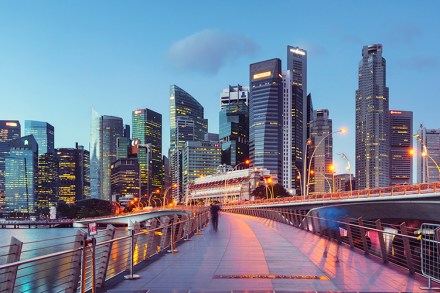
I was in Australia last week, having been invited to give the annual oration by the Robert Menzies Institute, and stopped off in Singapore on the way home. I’ve always been curious about this Southeast Asian city state, having read so much about Lee Kuan Yew, its Cambridge--educated founding father, who holds the record of being the world’s longest-serving prime minister. When he assumed office in 1959, Singapore was a fading outpost of the British Empire, seemingly destined to be swallowed up by one of its larger neighbours. The population was impoverished, illiterate and riven with racial conflict. It had no natural resources and most of its 224 square miles was swampland.

The bitter cocktail of British decline

From our UK edition

You can’t get a Pegu in Rangoon any more. That may not sound like a disaster for the ages – nothing, say, compared to the ongoing chancellorship of Rachel Reeves, MP for Blankstare-upon-Derr – but it is quite telling, once you know the background. To explain, the Pegu is a cocktail. Here’s the recipe, if you fancy making one: Take 2 oz of gin. Add ¾ oz of orange curaçao or triple sec. Squeeze ½ oz of fresh lime juice. Include 2 dashes of Angostura bitters. Add 1 dash of orange bitters. Fill a cocktail shaker with ice and combine all the ingredients. Shake vigorously for 15 to 20 seconds until well chilled. Strain into a chilled coupe or martini glass. Sounds nice, right?

The Roman roots of ‘colony’

The word “colony” meets with a sharp intake of breath these days, but “province” raises no eyebrows. How very odd. The ancient Greeks invented the western notion of the colony. But “colony” is the term the Romans applied to it and is of Latin derivation, from colo, “I cultivate, inhabit” and so colonia. The ancient Greek term was apoikia, literally “a home apart, away”, or perhaps a “home from home.” Greeks established these apoikiai widely around the Mediterranean, mainly from the 8th to 6th centuries BC, clustering along the coasts of Turkey, northern Greece, all around the Black Sea, southern Italy, the eastern Adriatic, Sicily, parts of southern France and Spain, and Cyrene, as Plato said, “like frogs around a pond.

colony

Jan Morris’s ‘national treasure’ status is misleading

From our UK edition

Almost two years after the death of Jan Morris, the jaunty travel writer and pioneer of modern gender transition, her first post-humous biography has arrived. (I follow Paul Clements in using the feminine pronoun throughout.) It is lively and well written, but it’s not the finished product. It lacks access to the private papers of its subject and her wife Elizabeth. That extra layer of insight into a fascinating but elusive personality must doubtless await the authorised life by Sara Wheeler. In the meantime, Clements deserves plaudits. He has worked his personal knowledge and existing sources well.

The uncomfortable lessons of the new Fourth Plinth statues

From our UK edition

The Revd John Chilembwe – whose statue now adorns Trafalgar Square – is notorious for the church service he conducted beneath the severed head of William Jervis Livingstone, a Scottish plantation manager with a reputation for mistreating his workers. The night before, Chilembwe’s followers had broken into his house and chased him from room to room as he tried to fend them off with an unloaded rifle. Eventually, they pinned him down and decapitated him in front of his wife and children. It was the most significant action in the 1915 Chilembwe rebellion, a small, short-lived affair in an obscure corner of the British Empire today known as Malawi. It says a lot about our times that a figure with Chilembwe’s record should be vaunted with a public statue.

Joe Biden and the grand battle of ideas

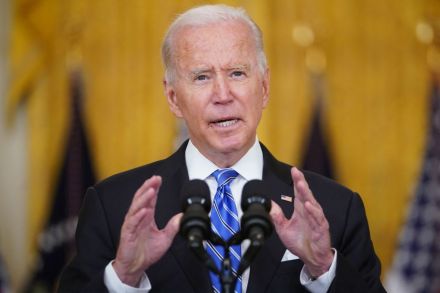
Well, Donald Trump doesn’t seem so bad now, does he? I don’t say that because Joe Biden has turned out to be as competent or less, but because at his press conference in reaction to the fall of Kabul, he sounded Trumpian. By which I mean, honest. Honest that staying in Afghanistan so long was a mistake, that their government was corrupt, that if its army wasn't prepared to defend itself then we shouldn't do it for them, and that this is what a withdrawal looks like: horribly, brutally honest. The endgame was a disaster because America’s intel was wrong, so the US had less time to get out than it thought, and because Biden lacks the acuity to respond to changing conditions. Biden looks like Brezhnev after heart-attack number seven.

biden

Cicero knew that we should study the past, not cancel it

From our UK edition

Modern historians, excoriating the past evils of e.g. slavery and imperialism are taking the understanding of history back to its roots in the western world, when the past was used as a vehicle for moral lessons. Cicero said that study of the past ‘casts light on reality and is a guide to life (magistra vitae)’. Ancient historians lived up to this noble agenda. Livy (d. ad 17) said that history provided ‘examples of behaviour from which to choose what to imitate and avoid what is shameful’. The historian Tacitus (d. c. ad 120) said: ‘This I hold to be history’s highest function, to ensure that no worthy actions are passed over in silence, and that crooked words and deeds be feared for the castigation that posterity will visit upon them.

Does the curriculum really need ‘decolonising’?

From our UK edition

Layla Moran, the Lib Dems’ education spokesman, has written to Gavin Williamson urging him to do something about ‘systemic racism’ in schools. ‘Changes to the history curriculum, such as learning about non-white historical figures and addressing the darker sides of British history honestly, are a vital first step to tackling racism in our education system,’ she wrote. ‘This chasm in information only serves to present students with a one-sided view of the events in history.’ I’m not sure Moran knows very much about how the education system works. For one thing, Williamson cannot dictate how history is taught in free schools and academies — they don’t have to follow the national curriculum.

We should build more memorials to controversial people

From our UK edition

I have been making the best of lockdown by reading properly, from start to finish, Edward Gibbon’s Decline and Fall of the Roman Empire, in a seven-volume edition that is less daunting than it sounds, when you consider how addictive his rolling prose is. I have just reached the point, near the end of the great work, where Gibbon describes the sack of Constantinople by the armies of the Fourth Crusade in 1204. The blind Doge of Venice had persuaded the crusaders to interrupt what was supposed to be an attack on Muslim Alexandria by diverting to the Byzantine capital, where Venetian merchants had a large number of grievances to settle. Gibbon lists the marvellous classical statues, many of bronze, that were melted down by the victors and turned into coins for everyday use.

In defence of the British Empire

From our UK edition

Is it my imagination, or are the whitened bones of the British Empire being yet again dug up and trampled underfoot? The latest Labour party manifesto promised ‘an audit of the impact of Britain’s colonial legacy to understand our contribution to the dynamics of violence and insecurity across regions previously under British colonial rule’. The New York Metropolitan Museum of Art is redesigning its British galleries to link every statue and teapot to the Empire ‘with all of its systems of exploitation’. Jesus College Cambridge intends to return a bronze cockerel seized from Benin in a punitive expedition in 1897.

The forgotten masterpieces of Indian art

From our UK edition

As late as the end of the 18th century, only a handful of Europeans had ever seen the legendary Mughal capital of Delhi, which, within living memory, had been the largest, richest and most spectacularly beautiful city on earth, twice the size of London and Paris combined. But after a century of anarchy, Delhi was not what it once was. By 1805, it lay half-ruined and sparsely populated, ruled by a blind Emperor from a crumbling palace. Delhi’s ruins bewitched the young artist James Baillie Fraser when he arrived in the 1810s from Calcutta. Fraser was already planning two series of aquatints, one on Calcutta, the other of the Himalayas.

This election will change Britain – and Europe – for good

From our UK edition

This election campaign feels unreal. Commentators focus on spending plans and personal foibles, but what will make next week’s vote historic is something else, something so momentous that we draw back from discussing it seriously. The Lib Dems boast of Stopping Brexit, knowing that as things are now they will never have to try. Jeremy Corbyn pleads neutrality: the first leader not sure which side he was on since poor Henry VI in the Wars of the Roses. The Conservatives, whose hopes of office depend entirely on this issue, downplay its importance: ‘Get Brexit Done,’ ministers repeat, as if it were a tiresome distraction from real politics. Perhaps it is, if ‘real politics’ is only about mending potholes and recruiting nurses.

Just another Sunday soap

From our UK edition

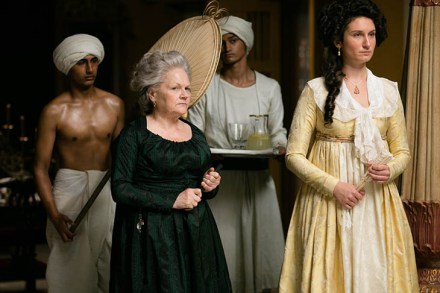
ITV’s new drama Beecham House is set in late 18th-century India where the British and French were still battling it out for supremacy. Its opening credits feature the east at its most exotic, with a montage of ceremonial elephants parading, sari-clad women gliding and lotus flowers opening. The hero is John Beecham (Tom Bateman), a hunky Englishman who proves honourable to the point of mild priggishness as he navigates his way through a world of dusky beauties, inscrutable orientals and treacherous Frenchies. If there were any Indians around at the time who weren’t gorgeously attired rich people, violent bandits or servants who took real pride in their work, we’ve yet to meet them.

Teenage kicks | 8 November 2018

From our UK edition

Lauren Gunderson’s play I and You opens in the scruffy bedroom of 17-year-old Caroline. Lonely, beautiful and furious, she’s unable to participate in school life owing to a chronic liver problem. Into her hideaway barges Anthony, a handsome geek, who wants her to help with a Walt Whitman project. Caroline tries to chase him off but resourceful Anthony charms her into accepting his presence. What follows is a hilarious and beautifully observed study of modern teenage romance. Parents will recognise details like this: Caroline offers her guest a Coke but instead of asking him to fetch it from the kitchen she sends the request to Mom by text. Five minutes pass. ‘Where’s that Coke?’ huffs Caroline. ‘I ordered it, like, a month ago.

Imperial measures

From our UK edition

It’s been a heavyweight week on Radio 4 with the start of the annual series of Reith Lectures and a talk on empire by Jan Morris, and thank heavens for that. We need serious, we need facts, we need to think in these trying times, beset as they are by Love Island and persistent presidential tweeting. As it happens, both talks were given by women, and I can’t help wondering whether their gender has something to do with the way neither of them plugged a definite line but instead suggested there are more ways than one of looking at things. On Wednesday morning Morris looked back at Britain’s imperial past in her own inimitable fashion, calling her programme The British Empire: An Equivocation (produced by Gareth Jones).