
Unjust William
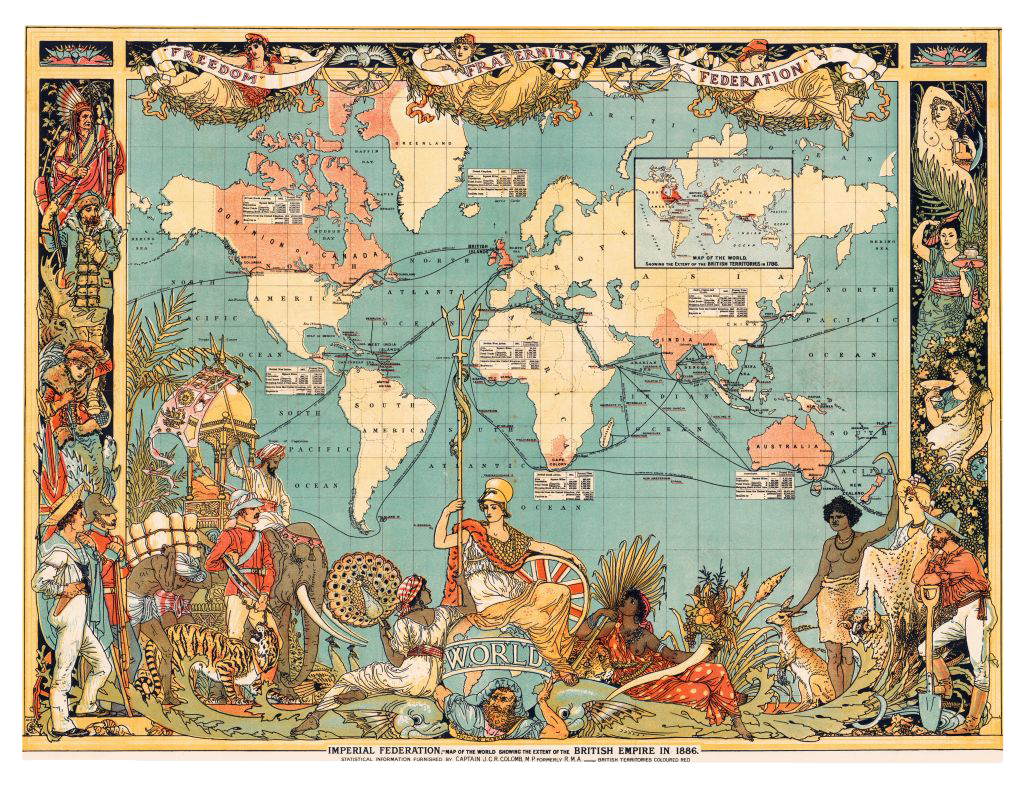
Sir: It is a bad idea for schools to be recommending their pupils listen to William Dalrymple’s podcast Empire (‘Striking back’, 4 July), without also suggesting they listen to, for example, Niall Ferguson on the same subject. Dalrymple does not prize the British Empire, but many of us who have studied it in detail admire the many benefits it conferred on its subjects. Balance is essential in educating children and from Dalrymple they will get an unduly pejorative view. Hearing his analysis, one might wonder how such an inefficient and corrupt entity succeeded in governing about a third of the world for a long period.
There were two main failures. The first was the empire’s inability after the second world war to afford the cost of its African colonies long enough to ensure the development of a significant local middle class before independence. The second was the withdrawal from India in 1947, which was both too early and not properly thought through, resulting in partition and shocking intercommunal violence. What was needed in both cases was more empire, not less. All governmental systems have their weaknesses, but, by and large, the British Empire was a force for good.
Gregory Shenkman
London SW7
Norwegian good
Sir: Your article ‘Dark Green money’ (4 July) mentions the argument that decarbonisation will prevent the UK from being held ‘hostage’ by autocratic regimes. With Norway accounting for about 70 per cent of our gas imports and about a third of our oil imports, I think not. China, on the other hand, manufactures around 80 per cent of the world’s solar panels, with the UK importing about 65 per cent of these – a fascinating inversion of an oft-cited argument for net zero.
Trevor Pitman
Beckenham, Kent
Foreign objects
Sir: Lionel Shriver is surely right that some commentators are more invested in Donald Trump’s embarrassment than in US success (‘My own Epic Fury’, 4 July). But one need not share their priorities to question whether ‘utter devastation’ was ever the only measure of such success. It’s possible to detest the Iranian regime, wish America well and still believe that foreign policy is ultimately judged by outcomes rather than by the scale of its ambitions. Not every imperfect settlement is a humiliation, nor every compromise a capitulation. Shriver’s column is characteristically forceful. But in foreign affairs, the most satisfying conclusion is not always the most prudent.
Federico Forni
London SW15
Liner notes
Sir: Peter Bradshaw in his review of Lido Land (Books, 27 June) compares lidos to ocean liners. The now demolished Kenwood swimming pool in a Leicester suburb had a white art-deco snack bar facing the water. Here we bought our Bovril and KitKats over a large mahogany counter. A little brass plate informed us that this was from the purser’s office on the liner RMS Mauretania, scrapped in 1935.
Peter Ashley
Slawston, Leicestershire
A load of balls
Sir: Tali Fraser’s cautionary words on ‘cheap, knock-off squishies’ (Notes on…, 4 July) hit close to home for me. One thing I won’t miss about teaching when I leave this year is the endless gimmicks teachers are encouraged to embrace to meet the growing demand of dyslexia, ADHD and autism profiles. With Send diagnoses through the roof, I’m increasingly sceptical about the integrity of assessment clinics that stand to gain from a rise in customers. But who knew the stress-ball industry would be an indirect beneficiary of this farce?
Sam Finniear
Guildford, Surrey
Pimm’s numbers
Sir: Bruce Anderson wonders why Pimm’s has never been marketed properly in the USA (Drink, 27 June). Properly or not, it was and remains a staple at polo matches and sailing events. From my time there in the 1980s, I have eight white plastic tumblers showing the Pimm’s logo and pictures of a mounted polo player and a yacht. Also shown is ‘Alc. 33.5 % by Vol’. Those were the days – now it’s down to 25 per cent (worldwide).
Malcolm Watson
Ryde, Isle of Wight
Marriage of convenience
Sir: Following Charlie Baker’s excellent article about smaller weddings (‘Marry in haste’, 4 July), I recommend a clandestine trip to Gretna. These days you have to book in advance, and at Gretna registry office, the ‘legal’ part is a normal civil ceremony. But we then went to the old blacksmith’s shop at nearby Gretna Green for the original anvil ceremony, officiated by two very Scottish gentlemen who were true professionals and for whom this was the only real ceremony.
By not having a ‘normal’ wedding we could also afford to charter a yacht in the British Virgin Islands. I rest my case.
Alastair Wray
Herefordshire
Shorts story
Sir: I do not usually find much to disagree with in Rory Sutherland’s excellent articles, but I confess I am not with him on the subject of gentlemen’s shorts (The Wiki Man, 4 July). In this town there is now a surfeit of men displaying semi-trousered limbs of varying aesthetic coupled with strange hosiery and sandals. Has Labour’s imperative for a Summer of Sex been exchanged for a Summer of Sox?
John Bennett
Southwold, Suffolk
We have a consignment of Gentleman’s Relish, a pot of which will be sent to the writer of the best letter each week. This week’s winner is Gregory Shenkman.





Comments