Brics

The rise of the Orienfluencers

The term “Orientalism” has always implied some kind of caricature of the eastern world. It was originally coined as a way of describing how the West imagines the East as its negative to shore up self-confidence and justify conquest: “The Oriental is irrational, depraved (fallen), childlike, ‘different’; thus the European is rational, virtuous, mature, “normal,’” Edward Said wrote in Orientalism. Now, reverse “the Oriental” and “the European” and you have an idea of the new Orientalism, where the enlightened East becomes the foil to a decadent, violent, barbaric West. The new Orientalists aren’t academics, policymakers or Wall Street Journal opinion columnists.

Chinamaxxing

The US currency is under attack like never before

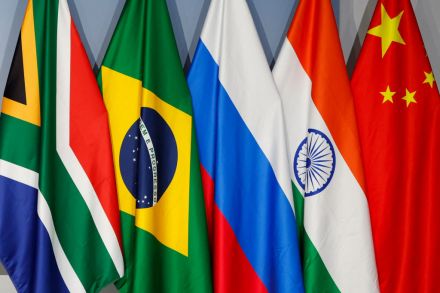
It was, on the surface, a fairly routine proposal. Officials from the BRICS nations, made up of Brazil, Russia, India, China and South Africa, have decided to discuss, at a summit in New Delhi later this year, how to deepen trade and collaboration. No one was paying very much attention when the decision was made. And yet, according to a report in the well-informed newspaper Berliner Zeitung, a resolution was quietly suggested that might turn the global monetary system upside down. It was the start of what might be termed the “plot against the dollar.” America’s currency is likely to face its most serious challenge of the post-World War Two era. BRICS Pay may not sound very exciting.

Nixing BRICS: how to counter the China-led alliance

Americans are used to exercising influence through international entities such as NATO, the World Trade Organization or the World Bank. Each of these groups was set up with American leadership or at its instigation; all have been used to advance Washington’s vision of global liberal-democratic capitalism. No comparable international organization or collection of nations has been influential since the Soviet Union’s collapse. That may be changing. The so-called BRICS alliance (its founding countries were Brazil, Russia, India, China and South Africa) recently added new members Iran, Ethiopia, Egypt and the United Arab Emirates.

BRICS

What does Javier Milei’s win in Argentina mean to America?

Javier Milei, a messy-haired bombastic libertarian economist, won Argentina’s presidential elections against socialist minister of economics Sergio Massa this Sunday. With the backdrop of inflation that the International Monetary Fund projects will trail only that of Zimbabwe and Venezuela by the end of the year, Milei triumphed with over 55 percent of votes in the runoff with more than 94 percent of votes counted, according to data from the country’s National Electoral Chamber. In a brief speech before the results were announced, Massa, who came first in the October 22 election that led to the run-off, said, “Milei is the president elected for the next four years,” adding that he had called Milei to personally congratulate him on his victory.

javier milei

Facing the facts of the West

The century began with a global celebration — the West’s belief in liberal democratic capitalism had battled foes for centuries and emerged victorious. All that remained was for the rest of the globe to melt into the West’s soft and loving embrace. Two decades in, things look much less rosy. China’s rapid rise has not spurred democratization, as many suggested it might; instead it has nourished a massive ideological and political competitor that may supplant the West not only economically but as an arbiter of global culture and behavior. Western decline is not yet inevitable, but Western values will survive and spread only if leaders recognize two clear facts. The first is that the spread of Western values has in large part been due to the dominance of Western power.

west